
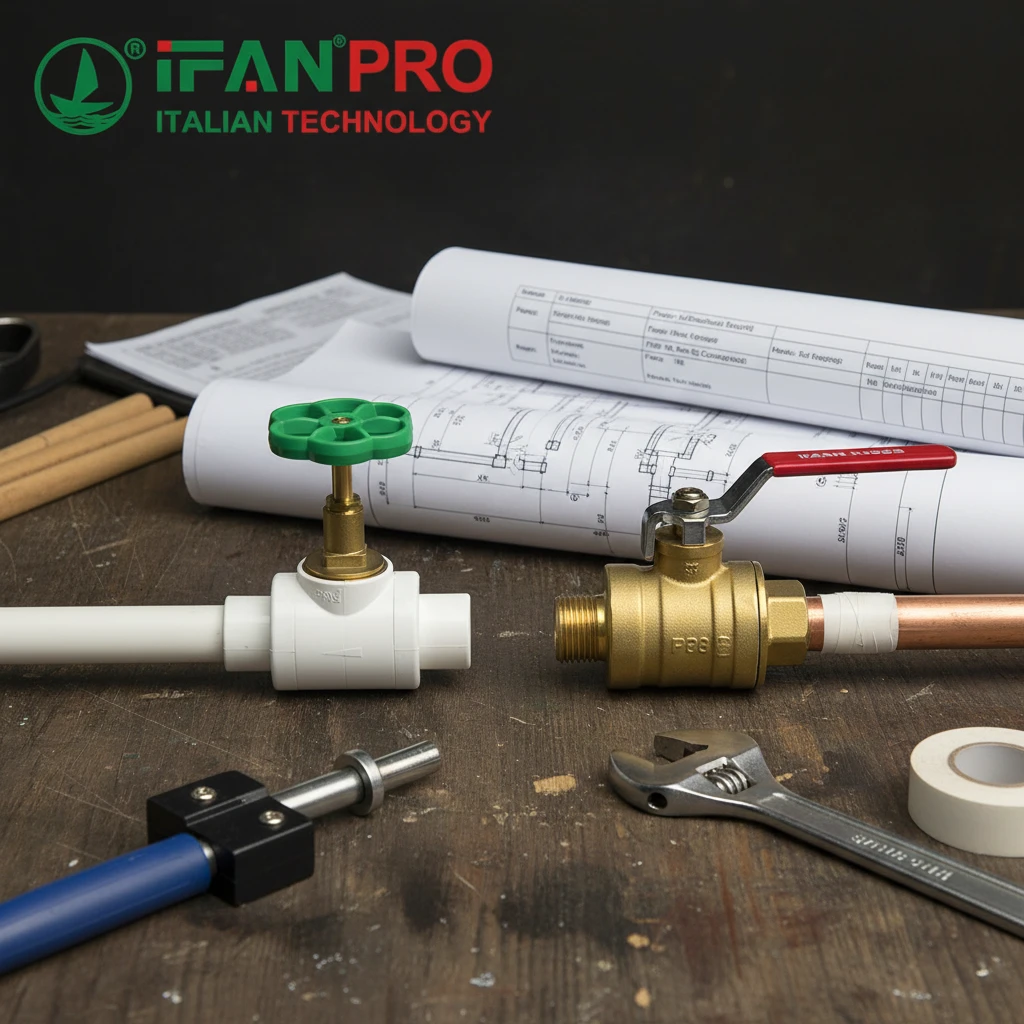
I once saw a client face a costly shutdown because a valve failed. This experience showed me that picking the right valve is just as important as picking the right pipe.
The main difference between PPR and brass ball valves is their material and how they connect. This difference changes their durability, corrosion resistance, and installation. PPR valves weld directly to PPR pipes, creating one solid, leak-proof piece that fights corrosion well. Brass valves screw onto pipes and are known for their strength and reuse in normal jobs.
Your choice changes how long your system lasts and how much it costs. Let’s look at the key differences to help you decide.
How Do PPR Valves and Brass Ball Valves Differ in Sealing and Durability?
A leaking valve causes constant problems. The sealing method is the first defense, and PPR and brass use very different methods here.
PPR valves seal better and last longer because they weld permanently to the pipe. This creates one leak-proof piece that stops joint failure. Brass ball valves use screwed connections and internal seals. These seals can wear out over time, or vibrations can loosen the threads. This makes brass valves potentially less durable in fixed, high-pressure systems.
Understanding the Permanent Seal
First, let’s talk about sealing. Sealing is how the valve stops water from leaking at its connections and inside its mechanism. For PPR valves, the seal is built-in. The valve body is made of polypropylene plastic for welding. During installation, a welding machine heats the PPR pipe end and the valve socket at the same time. The melted plastic mixes and cools into one solid piece. This fusion welding removes the connection point as a possible leak source. The valve becomes a seamless part of the pipe line.
On the other hand, a brass ball valve is a separate metal part. It connects to pipes with screw threads. You need extra materials to seal these threads, like Teflon tape or sealant paste. How well it seals depends a lot on the installer’s skill. Turning it too tight can damage the threads, but not turning it enough can leave gaps. Also, the internal seal that lets the ball turn shut is usually soft washers. These washers can wear out or get hard after years, causing drips inside even when the valve is closed.
Looking at Long-Term Durability
Next, durability means how well the valve handles daily use and pressure over many years.
PPR Valve Durability:
- No Rusty Threads: The welded joint cannot rust or corrode.
- Even Stress: The fused joint spreads physical and heat stress over a wide area.
- Same Material Movement: The whole piece (pipe + valve) expands and shrinks at the same rate with temperature changes. This stops stress cracks.
Brass Ball Valve Durability:
- High Strength: The brass body itself is very strong and can handle high instant pressure.
- Weak Threads: The screwed connections are the weakest point. Vibration or heat changes can loosen threads slightly, leading to leaks.
- Seal Wear: The internal seals are parts that wear out. They are the most common point of failure in the end.
Comparing Durability and Seals
| Feature | PPR Ball Valve | Brass Ball Valve |
|---|---|---|
| Connection Method | Heat Fusion (Welding) | Threaded (Screwed) |
| Primary Seal | Single fused plastic piece | Thread tape/sealant + internal washers |
| Risk of Connection Leak | Extremely Low | Moderate (Depends on installation skill) |
| Vibration Resistance | Excellent (Fused joint is rigid) | Poor (Threads can loosen) |
| Expected Service Life | 50+ years (matches PPR pipe) | 20-40 years (often limited by seal wear) |
In short, for a permanent, “install and forget” job where the pipes don’t move, a fused PPR valve gives you the best sealing reliability. A brass valve is a strong mechanical device, but its durability depends on how long its threads and internal seals last.
Which Valve Resists Corrosion Better in Various Water and Chemical Environments?
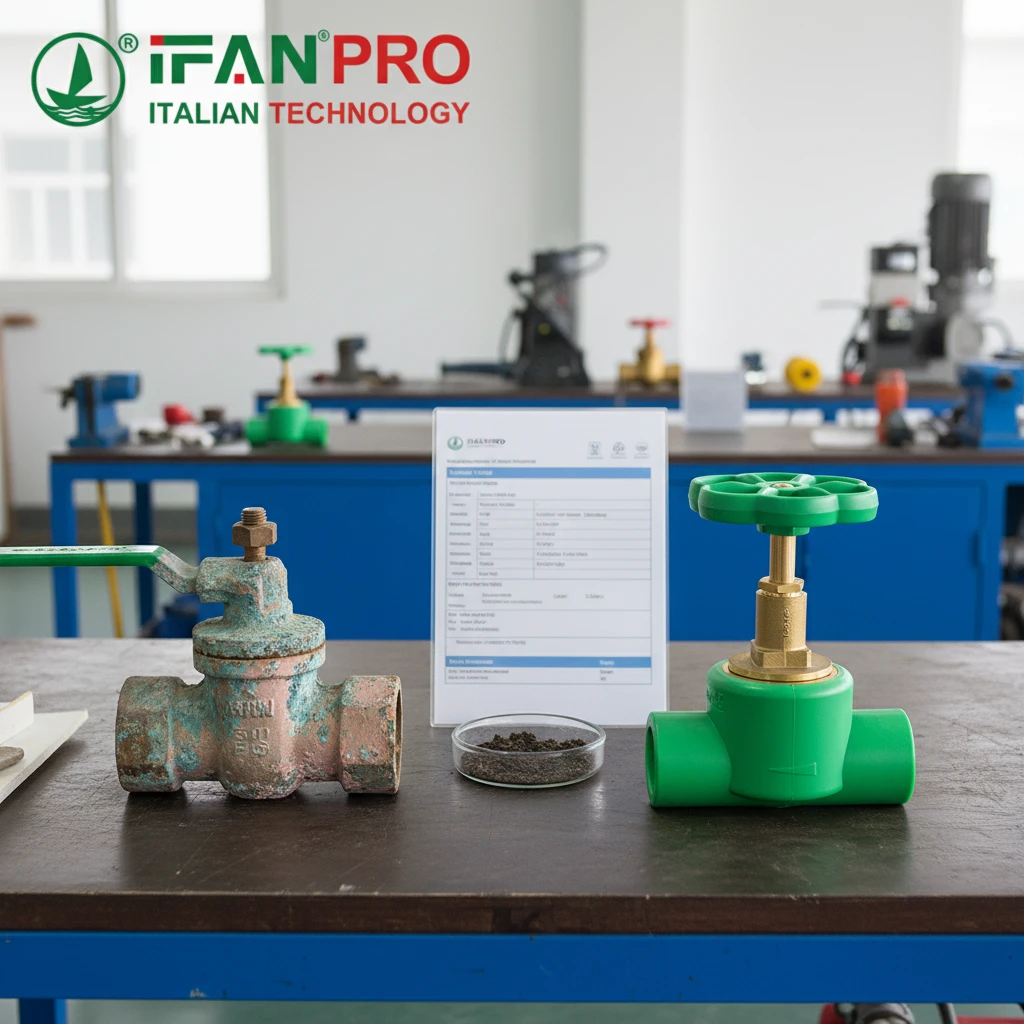
I’ve seen brass valves turn green and crusty in aggressive water, while PPR valves nearby looked like new. The environment decides the winner here.
PPR valves resist corrosion much better because the polypropylene material does not react. They are not affected by water chemistry, rust, electrolysis, or most chemicals. Brass valves can corrode, lose zinc, or tarnish with soft water, chlorides, or certain pH levels. This makes their performance depend heavily on the specific water quality.
How Corrosion Works
First, corrosion is the slow destruction of a material by chemical reactions with its surroundings. For plumbing valves, this comes from water, what’s in it, and outside conditions.
PPR’s Strong Defense:
Polypropylene plastic is very non-reactive. This means it does not easily react with other chemicals. Here is what it resists:
- Electrolytic Corrosion: PPR does not conduct electricity, so it completely avoids galvanic corrosion. This happens when two different metals touch in water.
- Chemical Attack: It strongly resists many acids, alkalis, and salts common in water or soil.
- Oxidation (Rust): As a plastic, it cannot rust.
This makes PPR valve performance steady and excellent in almost all home, business, and industrial water settings. It also works well in aggressive soil for buried pipes.
Brass’s Conditional Weakness:
Brass is a mix of copper and zinc. It resists corrosion well in many cases, but it has key weaknesses:
- Dezincification: This is the most common failure. In soft, acidic, or low-salt water, the zinc in the brass can wash away. This leaves a weak, porous copper structure that can crack under pressure. “Red brass” with less zinc resists this better but costs more.
- Galvanic Corrosion: If a brass valve connects to a different metal pipe (like steel), it can create a battery effect in water. This speeds up corrosion of the less noble metal.
- Chloride Attack: High chloride levels (from water softeners or some supplies) can stress and crack brass.
- External Tarnishing: The green color on brass shows oxidation. This is often just visual but can indicate a problem.
Guide to Corrosion by Application
| Water/Chemical Environment | Recommended Valve Type | Key Reason |
|---|---|---|
| Standard City Drinking Water | Both can work. Brass is traditional; PPR is modern & secure. | Brass is usually fine, but PPR removes any long-term risk of dezincification. |
| Soft or Acidic Water (Low pH) | PPR is much better. | PPR is non-reactive. Brass risks dezincification and lead leaking. |
| Chlorinated Water (Pools, Treatment) | PPR is better. | High chlorine can speed up brass corrosion. PPR resists it well. |
| Chemical Transport Lines (Acids, Alkalis) | PPR is the best choice. | Must check chemical compatibility, but PPR handles a wider range than brass. |
| Underground/Buried Installations | PPR is superior. | Immune to soil electrolysis and corrosion. Brass needs special coatings. |
| Sea Water / High Salt Environments | Special Brass (Naval) or Plastic. | Standard brass corrodes fast. PPR is a great cost-effective choice. |
For reliable performance with different or unknown water qualities, PPR is the safer, more dependable choice. Brass requires you to know your exact water chemistry to ensure it lasts.
What Makes the Installation Process Different for PPR Versus Brass Valves?
The installation process sets the project’s speed, cost, and final reliability. I always tell clients that the valve choice decides the tools and skills needed on site.
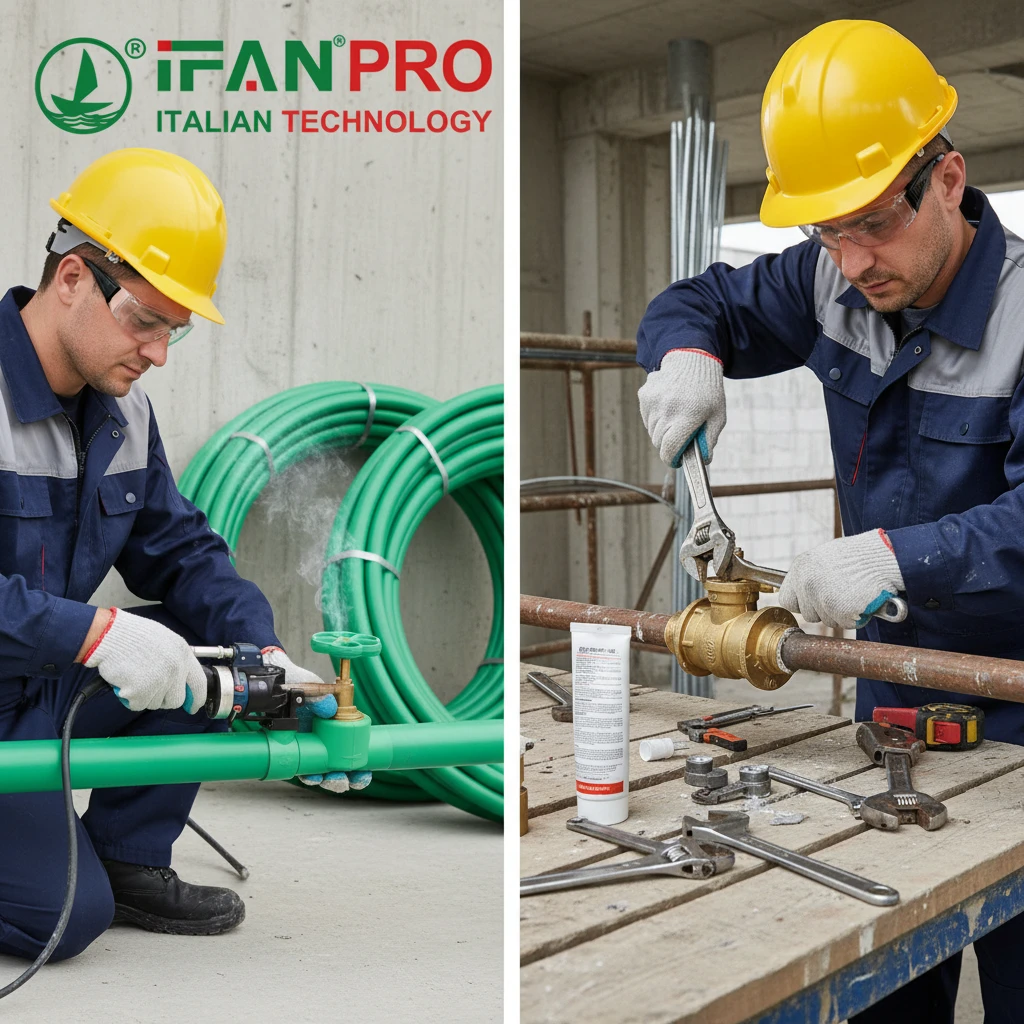
PPR valve installation needs a heat fusion welder. It makes a permanent, single-piece connection that is fast and leak-proof, but you cannot undo it. Brass valve installation needs threading tools, sealants, and wrenches. It offers a reversible connection that is slower, needs more skill, and can leak if not done right.
Step-by-Step: Two Different Methods
The tools, steps, and results for installing these valves are completely different. Let’s go through each process.
Installing a PPR Ball Valve:
This process is clean, quick, and standard.
- Cutting: First, cut the PPR pipe straight with a simple plastic pipe cutter.
- Marking: Next, mark depth lines on the pipe and valve socket.
- Heating: Then, place the pipe end and valve socket on the hot plates of a fusion welder at the same time.
- Fusing: After heating for a set time (just seconds), quickly join the parts in a straight push and hold them still to cool.
- Completion: Now the joint is done. It is as strong as the original pipe, and you cannot disconnect it without cutting.
Key Advantages:
- Speed: A joint takes under a minute.
- Cleanliness: No threads, no sealants, no mess.
- Consistency: The welding machine controls time and temperature, reducing mistakes.
- No Leaks: A correctly done fusion joint is guaranteed not to leak.
Installing a Brass Ball Valve:
This is a traditional mechanical process.
- Cutting & Preparing Pipe: First, cut the pipe (often copper, steel, or CPVC) and clean the ends.
- Threading (If needed): If the pipe isn’t already threaded, you must thread it using a die. This is slow and hard work.
- Applying Sealant: Next, carefully put thread seal tape or paste on the male threads.
- Tightening: Then, screw the valve onto the pipe using wrenches. Be careful not to cross-thread or over-tighten, which can crack the valve body.
- Support: Because screwed joints are not rigid, the valve often needs extra support (a bracket) to prevent stress on the pipes.
Key Challenges:
- Skill-Dependent: A good seal relies completely on the plumber’s skill.
- Reversible: You can undo it later, which is useful for changes.
- Risk of Leaks: Threads and internal seals are always possible leak points.
Installation Comparison Table
| Aspect | PPR Valve Installation | Brass Valve Installation |
|---|---|---|
| Primary Tool | Fusion Welding Machine | Pipe Wrenches, Threading Dies |
| Connection Type | Permanent, Single Piece | Removable, Threaded |
| Skill Level Required | Low to Medium (easy to learn) | Medium to High (needs experience) |
| Typical Joint Time | 30-60 seconds | 2-5 minutes (plus threading time) |
| Cleanup Required | None | Thread chips, extra sealant |
| Leak Test Ready | Right after cooling | Right away, but higher chance of initial leaks |
For new construction or full system replacements using PPR piping, valve installation is very efficient and strong. For repairs, spot fixes, or connections to existing metal systems, the threaded flexibility of brass is necessary.
How Should You Choose Between PPR Valves and Brass Ball Valves for Cost and Application?
The final choice isn’t about which valve is better overall, but which one is right for your specific project. Let’s match the valve to the job.
Choose PPR valves for new PPR piping systems, corrosive water, buried lines, or where you want zero maintenance and perfect sealing. Choose brass ball valves for repairs on existing metal systems, jobs needing frequent take-apart, or where you need very high impact resistance and you know the water quality is not aggressive.
Making the Decision: A Practical Guide
To make the best choice, weigh your project’s specific conditions against the strengths and weaknesses of each valve type. Here is a simple guide to help you decide.
Start by asking these questions:
- What is the pipe material?
- PPR Pipes: Always use PPR valves. Mixing materials would need unreliable threaded adapters, ruining the point of a fused system.
- Copper, Steel, CPVC Pipes: You usually need brass valves (or valves that work with those materials).
- What is the water chemistry like?
- Unknown, Soft, Acidic, or Chemical-Filled: PPR is the safer, standard choice.
- Known, Balanced, Neutral Water: Brass is a traditional and acceptable choice.
- Is this a permanent or temporary installation?
- Permanent, “Lifetime” System: PPR fits this idea.
- Equipment that may need removal (e.g., water heaters, pumps): Brass allows for easy disconnection.
- Where is it installed?
- Buried, In Concrete, Behind Walls: PPR. Its corrosion resistance and fused reliability are critical.
- Easy to Reach, in Utility Rooms: Both are okay.
Total Cost of Ownership Analysis
The initial valve price is only part of the cost. You must think about the total cost, which includes installation time, risk of failure, and future maintenance.
| Cost Factor | PPR Valve System | Brass Valve System |
|---|---|---|
| Valve Unit Cost | Generally Lower | Generally Higher (for good brass) |
| Installation Cost | Lower (Faster, less labor) | Higher (Slower, more skilled labor) |
| Tool Investment | Needs welder (cost for pro) | Needs standard hand tools |
| Risk of Leak/Failure | Very Low | Moderately Higher |
| Future Maintenance Cost | Almost Zero | Possible seal/valve replacement |
| Ideal Application | New builds, full repipes, risky water | Repairs, connections to metal systems |
Final Recommendations by Situation
- For a New Home Build with PPR Piping: Use IFAN PPR Ball Valves. This gives you a unified, corrosion-proof, and leak-free system for decades.
- For Replacing a Valve under a Sink on Copper Pipes: Use a Good Quality Brass Ball Valve. It’s the practical, compatible choice.
- For an Apartment Building with Changing Water Quality: Use IFAN PPR Valves. They give steady performance for all units without risk from water chemistry.
- For an Industrial Chemical Line: Use Chemically Rated PPR Valves (after checking compatibility). Brass is often not suitable.
- For a Garden Irrigation System that Freezes: Use PPR Valves. They handle freezing better than brass, which can crack.
Заключение
Choose PPR valves for integrated, corrosion-resistant systems and brass for mechanical repairs on metal pipes. For a complete, reliable PPR plumbing solution, explore the range of ИФАН PPR Ball Valves and Fittings made for seamless performance.







 Русский
  English
  Français
  Español
Последние комментарии