
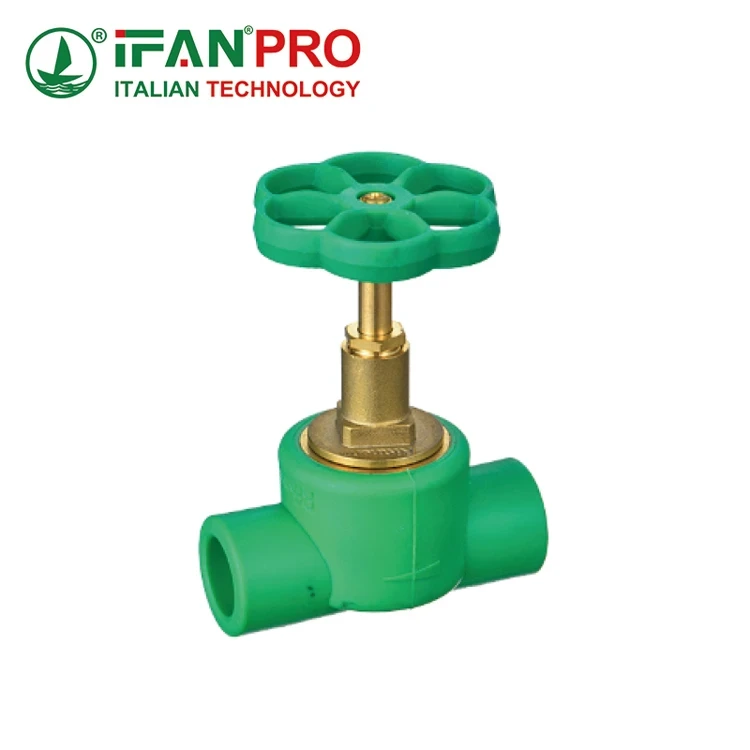
I once faced a flooded utility room because a corroded brass valve failed. This moment pushed me to understand the real differences between valve materials, beyond just price tags.
The core difference lies in material and performance: PPR stop valves are made from polypropylene plastic, offering complete corrosion resistance and seamless integration with PPR piping systems. Brass stop valves are metal alloy fittings known for high mechanical strength and temperature tolerance but are prone to corrosion over time in certain water conditions.
Choosing the wrong valve can lead to leaks, water damage, and costly repairs. Let’s break down the key differences to help you make the best choice for your plumbing system.
What are the material differences between PPR and brass stop valves?
The material is the heart of the valve. I’ve seen how a valve’s composition dictates its entire behavior in a plumbing system.
PPR valves are made from Polypropylene Random Copolymer, a thermoplastic polymer. Brass valves are made from an alloy of copper and zinc. This fundamental difference makes PPR valves lightweight, chemically inert, and thermally fusible, while brass valves are heavier, more rigid, and joined via threaded connections.
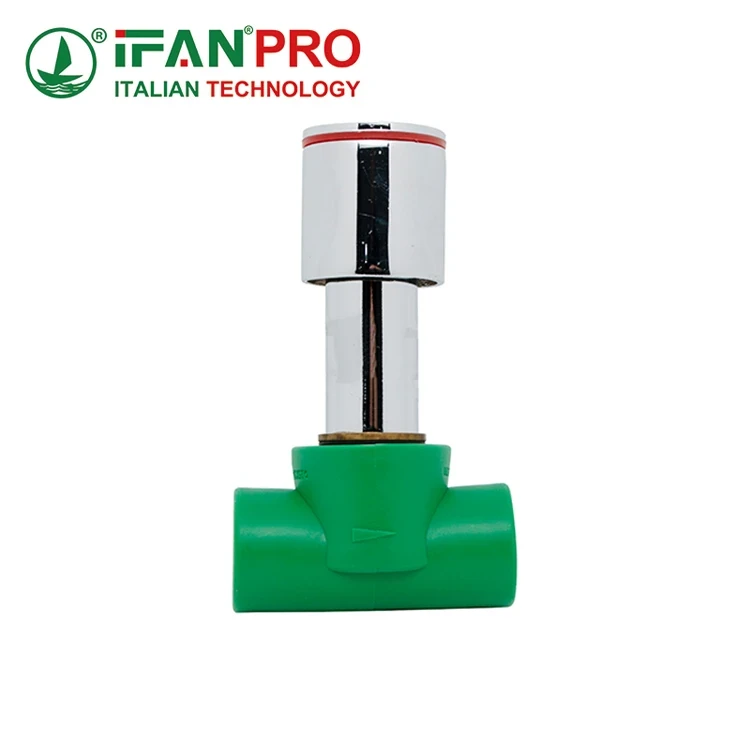
Breaking Down PPR Material
PPR is a type of plastic. Its main advantage for valves is its uniformity with PPR piping systems. Because it’s the same type of material as the pipe, it allows for a unique joining method.
- Joining Method: A PPR valve is connected to a PPR pipe using heat fusion. A welding machine heats both the pipe end and the valve socket until they melt. They are then pushed together. As they cool, they solidify into a single, monolithic piece. There is no seam or joint line where a leak could start. This creates a perfectly smooth inner bore for better water flow.
- Material Properties: The plastic is lightweight, which makes installation easier. It is also an excellent thermal insulator, meaning it doesn’t lose heat from hot water lines as quickly as metal. Most importantly, the material is inert. It does not react chemically with water or the disinfectants commonly found in it.
Breaking Down Brass Material
Brass is a metal alloy, typically composed of about 60-70% copper and 30-40% zinc. The zinc adds strength and machinability to the copper.
- Joining Method: Brass valves use a traditional mechanical connection. They have threaded ends (male or female). You screw them onto corresponding threaded pipes or fittings. To prevent leaks, you must use thread seal tape or pipe joint compound. This creates a physical seal that can be susceptible to vibration, thermal expansion, and corrosion over time.
- Material Properties: Brass is much heavier and stronger than PPR. It has a higher tolerance for sudden pressure spikes (water hammer). It can also withstand higher continuous temperatures, making it a traditional choice for applications very close to hot water heaters. However, being a metal, it is an excellent conductor of heat and electricity.
Direct Material and Connection Comparison
| Feature | PPR Stop Valve | Brass Stop Valve |
|---|---|---|
| Base Material | Polypropylene Plastic | Copper-Zinc Alloy (Metal) |
| Primary Connection Method | Сварка плавлением | Threaded (Screwed) Connection |
| Weight | Light | Heavy |
| Internal Surface | Smooth, seamless joint | Potential ledge at thread joint |
| Thermal Property | Insulator (Reduces heat loss) | Conductor (Loses heat quickly) |
In summary, PPR offers a fused, homogeneous system, while brass relies on a mechanical, threaded interface. This single difference impacts everything from leak potential to long-term maintenance.
How do corrosion resistance and lifespan compare for each valve type?
Corrosion is the silent killer of plumbing components. My clients’ biggest complaints about brass valves always link back to corrosion issues they didn’t anticipate.
PPR valves have superior corrosion resistance and a longer potential lifespan because the plastic material is completely immune to rust, electrolysis, and chemical attack from water. Brass valves can suffer from dezincification and galvanic corrosion in aggressive water conditions, which weakens the metal and leads to premature failure and leaks.
The Corrosion-Free Nature of PPR
For lifespan, corrosion resistance is the most critical factor. PPR plastic is inherently non-corrosive. It does not rust, and it is not susceptible to any form of electrochemical reaction. This means:
- No Scale Buildup: Lime and mineral deposits in hard water do not adhere strongly to the smooth plastic surface, maintaining flow rate.
- No Electrolysis: Unlike metals, PPR is not affected by stray electrical currents in the plumbing system, a common cause of pinhole leaks in metal pipes and valves.
- Chemical Resistance: It is highly resistant to a wide range of acids, alkalis, and salts found in some water supplies or soil environments.
Because it avoids these degradation mechanisms, a properly installed PPR valve can reliably last as long as the PPR piping system itself—often 50 years or more. Its failure mode is typically not sudden rupture but gradual embrittlement from extreme UV exposure (not a concern for indoor plumbing).
The Corrosion Vulnerabilities of Brass
Brass, while more corrosion-resistant than plain steel, is still vulnerable. Its lifespan is highly dependent on local water chemistry.
- Dezincification: This is the most common problem. In water with specific pH levels (often acidic or soft water), the zinc in the brass alloy can be slowly leached out. This leaves behind a porous, weak, copper-rich structure that looks like red or pink brittle sponge. A valve affected by dezincification can crack or develop leaks under normal pressure.
- Galvanic Corrosion: If a brass valve connects two different metals (like connecting a copper pipe to a galvanized steel pipe), it can create a galvanic cell. This electrochemical reaction accelerates the corrosion of the more “active” metal. Even within the brass alloy itself, minor galvanic action can occur between the copper and zinc.
- Stress Corrosion Cracking: Brass under constant stress (from tight installation or water pressure) in a corrosive environment can develop tiny cracks.
Factors Affecting Valve Lifespan
| Corrosion Factor | Effect on PPR Valve | Effect on Brass Valve |
|---|---|---|
| Hard Water (Minerals) | Minimal effect; scale does not bond strongly. | Can cause scaling, reducing flow but not directly corroding. |
| Soft/Acidic Water | No effect. | High Risk: Can cause aggressive dezincification. |
| Stray Electrical Currents | No effect (non-conductive). | High Risk: Can cause electrolytic corrosion and pinhole leaks. |
| Chlorine in Water | Highly resistant. | Can accelerate corrosion over very long periods. |
Therefore, while a high-quality brass valve in perfect water conditions might last 20-30 years, its lifespan is unpredictable and often shorter. A PPR valve’s lifespan is more consistent and typically longer, as it is not playing a chemical lottery with the water supply.
Which valve type offers better cost-effectiveness for plumbing systems?
The true cost isn’t on the price tag. I’ve calculated total system costs for clients and found the cheaper initial option often becomes the more expensive long-term headache.
PPR stop valves are generally more cost-effective over the full lifecycle of a plumbing system. While sometimes cheaper to purchase initially, their major savings come from zero corrosion-related maintenance, no risk of leaks from failed valves, and perfect compatibility that reduces installation time and complexity in PPR systems.
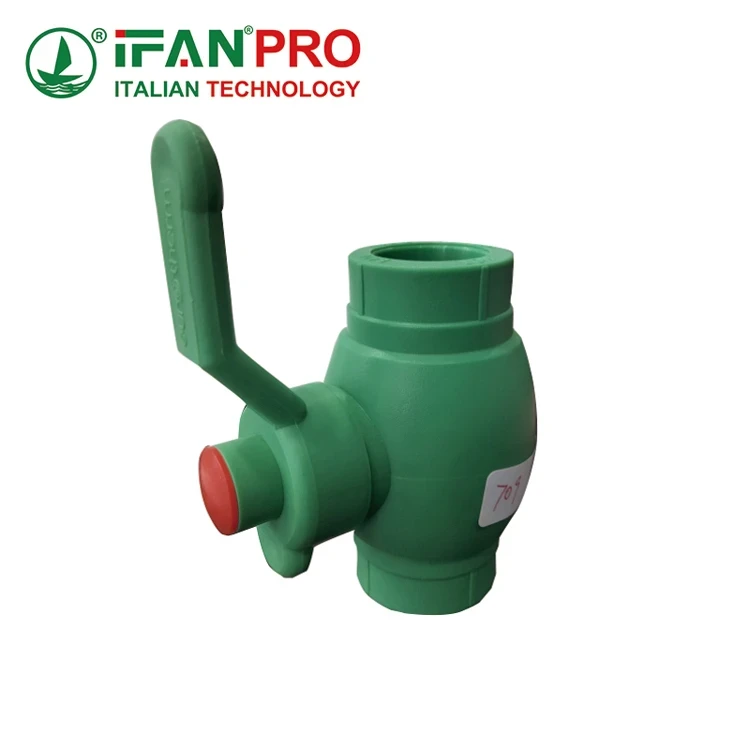
Analyzing Initial Purchase and Installation Cost
To understand cost-effectiveness, we must look at three phases: Purchase, Installation, and Long-Term Ownership.
- Purchase Price: The unit price for a standard PPR ball valve is often lower than that of a comparable quality brass ball valve. However, for very small sizes or basic models, prices can be similar. The key is to compare valves of equivalent pressure ratings and quality standards.
- Installation Cost: This is where a significant difference emerges. Installing a PPR valve requires a fusion welder (a one-time tool investment for a plumber) and takes about 30-60 seconds per joint. It is a clean, straightforward process. Installing a brass valve requires threading pipes correctly, applying sealant precisely, and wrenching the valve into place without over-tightening. This process is more labor-intensive and skill-dependent. In a full PPR system, using PPR valves eliminates the need for any transition fittings, simplifying the entire installation bill of materials and labor.
The Hidden Long-Term Costs of Brass Valves
The real financial advantage of PPR valves becomes clear years after installation. Brass valves introduce several potential long-term costs that PPR valves avoid entirely:
- Replacement Costs: A brass valve that fails due to dezincification or corrosion must be replaced. This involves shutting off the main water supply, draining the system, cutting out the old valve, and installing a new one—a service call that can cost hundreds of dollars in labor alone, far exceeding the valve’s original price.
- Water Damage Costs: A suddenly failing brass valve can release a large volume of water, causing catastrophic damage to walls, floors, and personal property. This risk, while low, carries an enormous potential cost that PPR’s fused, leak-proof system virtually eliminates.
- Maintenance Worry: There is no need for periodic checks or re-tightening of PPR valves, as there might be with threaded connections that can loosen slightly over decades.
Total Cost of Ownership Comparison (20-Year Outlook)
| Cost Category | PPR Stop Valve (in PPR system) | Brass Stop Valve |
|---|---|---|
| Initial Unit Cost | $ | $$ |
| Installation Labor Time | Lower (Fusion is fast) | Higher (Threading/sealing is slower) |
| Risk of Leak at Joint | Extremely Low (Fused joint) | Moderate (Depends on sealant/install skill) |
| Expected Maintenance | None | Possible re-tightening or replacement |
| Risk of Corrosion Failure | None | Moderate to High (Depends on water) |
| Potential for Water Damage | Very Low | Significantly Higher |
| Total Projected 20-Year Cost | Low (Mostly initial cost) | Moderate to High (Initial + risk cost) |
For a pure PPR plumbing system, PPR valves are undoubtedly the most cost-effective choice. Their lower lifetime cost and risk profile provide greater value and peace of mind.
When should you choose a PPR stop valve over a brass stop valve?
The best tool for the job depends on the job itself. My advice to clients always starts with assessing the specific application.
You should choose a PPR stop valve when you are working with a PPR piping system, when the water chemistry is unknown or aggressive (soft/acidic), when seeking a maintenance-free, leak-proof solution, and when total system cost-effectiveness is the priority. It is the default modern choice for residential and commercial potable water systems.
Clear Scenarios for Choosing PPR
Making the right choice prevents future problems. Here are the specific situations where a PPR valve is the superior and recommended option:
- For New PPR Plumbing Systems: This is the most straightforward rule. Always use PPR valves in a PPR pipe system. The fusion-welded connection creates a homogeneous, reliable system. Introducing threaded brass valves into a PPR system requires transition fittings, which add cost, potential leak points, and complexity. It defeats the main advantage of the PPR system.
- In Areas with Problematic Water: If you have soft water, acidic water (low pH), or water with high chlorine content, choose PPR. Its immunity to corrosion and dezincification makes it the only safe choice to ensure a long, trouble-free service life. You eliminate the guesswork about water quality.
- For Prioritizing Reliability and Safety: In applications where a leak would cause significant damage or inconvenience—such as in multi-story apartment buildings, inside finished walls, or in server rooms—the fused joint of a PPR system offers a much higher level of leak security than any threaded connection.
- When Total Life-Cycle Cost Matters: For builders, developers, and homeowners planning to stay long-term, the lower lifetime cost of a PPR system with PPR valves is a major financial advantage.
Scenarios Where Brass Might Be Considered
While PPR is the versatile champion, there remain a few niche scenarios where brass is still specified:
- High-Temperature Applications: For connections immediately at the outlet of a hot water heater where temperatures may consistently exceed the PP-R limit (typically around 70-95°C depending on grade), a short section of metal piping with brass valves may be used. However, modern PPR grades (like PP-RCT) are constantly improving temperature resistance.
- Retrofitting into Existing Metal Systems: When adding a valve to an existing copper or galvanized steel system, it is often simplest to use a threaded brass valve that matches the existing connection type.
- Extreme Physical Impact Risk: In rare cases where a valve might be exposed to severe physical abuse (e.g., in some industrial settings), the higher mechanical strength of metal might be a deciding factor.
Decision-Making Guide
| Your System / Priority | Recommended Valve Type | Key Reason |
|---|---|---|
| New PPR Pipe Installation | PPR Valve | Seamless, leak-proof fusion connection. |
| Unknown or Aggressive Water Quality | PPR Valve | Complete corrosion immunity. |
| Desire for Lowest Lifetime Cost | PPR Valve | No maintenance, no corrosion replacement. |
| Retrofit into Old Copper Pipes | Латунный клапан | Compatible threading; simpler install. |
| Very High Temp. (>90°C) Location | Brass Valve (or specialty metal) | Higher temperature tolerance. |
Заключение
For most modern plumbing, especially with PPR pipes, PPR stop valves offer better corrosion resistance, long-term value, and reliability. For a complete and worry-free PPR system, specify high-quality ИФАН PPR valves and fittings.










 Русский
  English
  Français
  Español
Последние комментарии