
Whether you’re managing an industrial fluid system, a residential water line, or an agricultural irrigation project, choosing the right ball valve is essential. The two most common options—plastic ball valves (like PPR or PVC) and metal ball valves (such as brass or stainless steel)—each have distinct advantages.
So, how do you decide between them?
In this article, we compare plastic vs. metal ball valves in terms of performance, cost, durability, and use cases—helping you make an informed purchasing decision based on your specific project needs.
🔧 What Is a Ball Valve?
A ball valve is a shut-off valve that controls fluid flow using a rotating ball with a hole through its center. When the hole aligns with the pipe, flow is allowed. When turned, flow is stopped—providing a fast, secure on/off control.
Ball valves are widely used in:
- Water supply and plumbing systems
- Chemical and industrial processes
- Agriculture and irrigation
- HVAC systems
🥇 Plastic Ball Valve: Key Features
Материал: Typically made from PPR, PVC, or PPH
✅ Advantages:
- Corrosion-resistant: Excellent for handling water and non-aggressive chemicals
- Lightweight: Easier and cheaper to transport and install
- Non-reactive: No metal leaching, safe for potable water
- Cost-effective: Lower material and installation costs
- No rust or scaling: Long-term performance in water systems
🔧 Best Use Cases:
- Domestic plumbing
- Irrigation and garden systems
- Chemical drainage
- Low to medium-pressure water supply lines
🔍 Example Product:
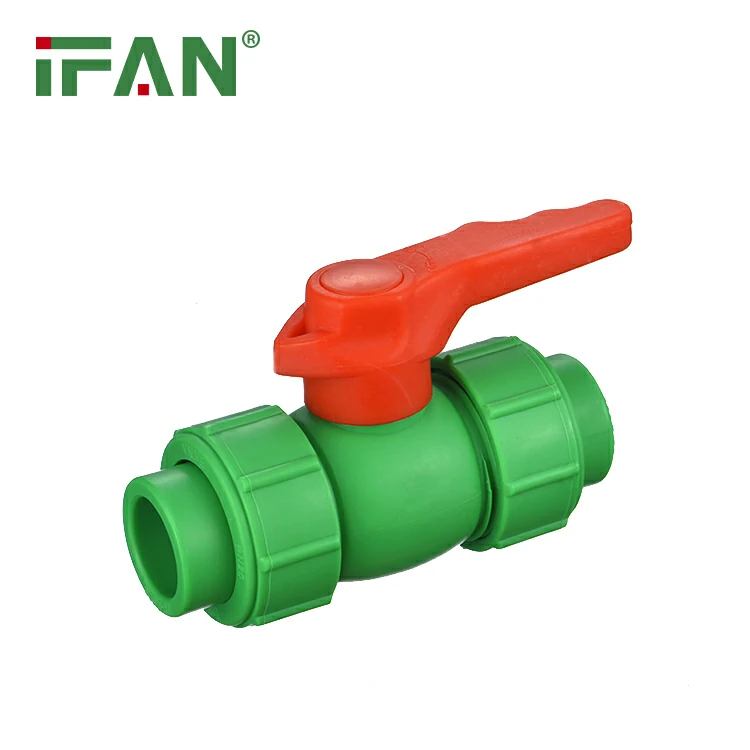
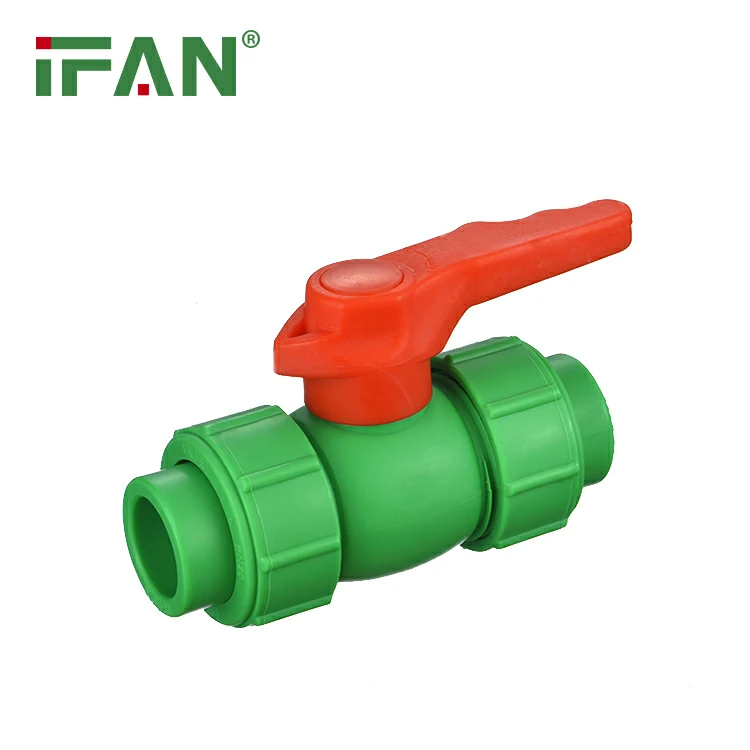
PPR Plastic Ball Valve – ifanpro
- DIN 8077/8078 certified
- Fusion-welded connections
- Available in PN16 & PN25 pressure classes
👉 View product on ifanpro.com
🛠️ Metal Ball Valve: Key Features
Материал: Made from латунь, нержавеющая сталь, or bronze
✅ Advantages:
- High pressure and temperature resistance
- Durable under mechanical stress
- Suitable for aggressive fluids or gases
- Long lifespan in industrial use
- Threaded, flanged, or welded options available
🔧 Best Use Cases:
- Industrial piping systems
- High-temperature water or steam lines
- Gas pipelines
- Commercial HVAC systems
- Oil and fuel distribution
⚖️ Plastic vs. Metal Ball Valve Comparison Table
| Feature | Plastic Ball Valve | Metal Ball Valve |
|---|---|---|
| Устойчивость к коррозии | ✅ Excellent | ⚠️ Can corrode |
| Weight | 🟢 Light | 🔴 Heavy |
| Cost | 🟢 Low | 🔴 Higher |
| Max Pressure | 🔴 Moderate (≤25 bar) | 🟢 High (up to 100 bar+) |
| Диапазон температур | 🔴 Up to ~95°C | 🟢 Up to 200°C+ |
| Potable Water Use | ✅ Safe | ✅ Safe (if lead-free) |
| Химическая стойкость | ✅ Most chemicals | ⚠️ Depends on alloy |
💡 How to Choose the Right Valve?
Here’s a quick decision guide:
| Situation | Recommended Valve |
|---|---|
| Residential hot/cold water | ✅ Plastic (PPR Ball Valve) |
| Outdoor irrigation | ✅ Plastic |
| Industrial steam line | 🔧 Metal |
| Oil, fuel, or gas lines | 🔧 Metal |
| Large-scale building HVAC | 🔧 Metal |
| Chemical processing | ✅ Plastic (for non-aggressive chemicals) |
🌍 Why Buy Ball Valves from ifanpro?
ifanpro is a trusted pipe and valve manufacturer in China, supplying high-quality PPR ball valves and piping systems to global markets. When you choose ifanpro, you get:
- ✅ DIN & ISO-certified plastic valves
- ✅ Custom branding / OEM service
- ✅ Wholesale pricing and flexible MOQ
- ✅ Fast global shipping
- ✅ Dedicated engineering support for project orders
👉 Browse our full catalog at ifanpro.com
✅ Conclusion
Both plastic and metal ball valves have their advantages. The right choice depends on your system’s pressure, temperature, fluid type, and budget. For most residential, irrigation, and low-pressure chemical applications, plastic valves offer cost-effective, reliable performance. In contrast, metal valves are the go-to solution for industrial and high-demand environments.
Need help choosing the right valve for your project? Contact ifanpro today for expert advice and product support.







 Русский
  English
  Français
  Español
Последние комментарии