
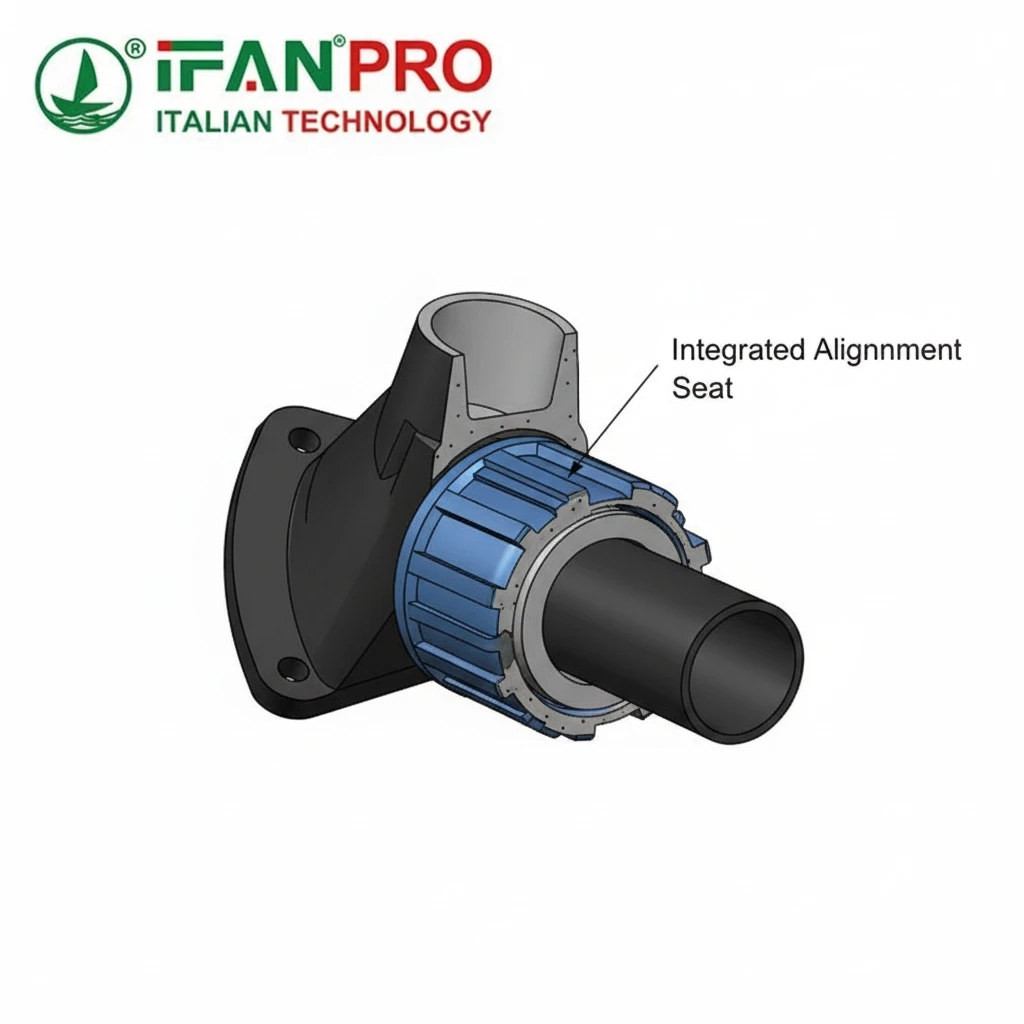
I once watched a crew struggle for hours to align a standard HDPE elbow, the pipe stress was visible. That moment cemented the value of a design feature many overlook: the integrated seat.
A custom HDPE elbow with an integrated seat ensures precise alignment by providing a physical stop and registered mating surface during the butt fusion process. This seat acts as a built-in guide, guaranteeing the pipe and fitting are concentrically aligned before heating begins, which eliminates human error and prevents misaligned joints that cause system stress.
This simple yet critical feature transforms the fusion process from an art into a repeatable, precise science. Let’s look at exactly how it achieves this.
How Does the Integrated Seat Act as a Built-in Alignment Guide During Installation?
Installers often fight to keep pipes and fittings straight. I’ve seen makeshift tools used, but a machined seat makes this struggle obsolete.
The integrated seat acts as a built-in alignment guide by offering a precise, flat shoulder for the pipe end to butt against before fusion. This guarantees the pipe is inserted to the exact correct depth and maintains perfect concentric alignment with the fitting’s bore, setting the stage for a flawless joint.
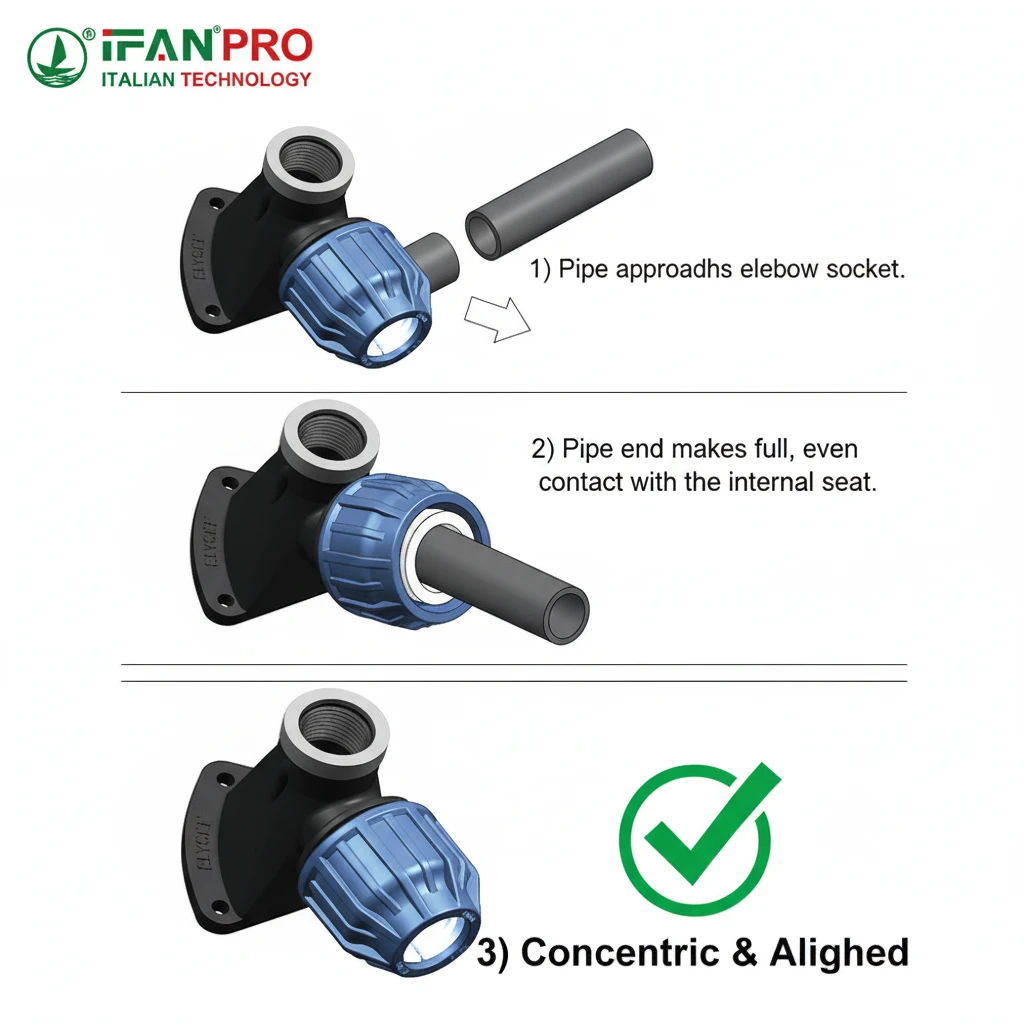
The Mechanics of the Alignment Guide
To understand why this is so effective, we need to picture the standard butt fusion process without a seat. The pipe end and the fitting face are brought together lightly to check alignment. This relies heavily on the operator’s eye and skill to keep everything perfectly straight—a difficult task, especially with larger diameters.
Now, let’s add the integrated seat. This seat is a machined, flat surface located at a precise distance inside the fitting’s socket.
The Step-by-Step Alignment Process
Here is how it guides the installation:
- Initial Placement: The pipe is inserted into the elbow’s socket until its end makes full contact with the seat’s flat surface. This immediate contact provides tactile feedback to the operator.
- Concentric Registration: Because the seat is machined concentrically with the fitting’s own bore, the pipe is automatically centered the moment it touches the seat evenly around its entire circumference.
- Depth Verification: The seat defines the exact fusion depth. You cannot over-insert the pipe. This consistent depth is critical for creating a strong, uniform bead.
This process removes all guesswork. It turns alignment from a skill-based variable into a guaranteed outcome dictated by the part’s design.
Comparison: Standard vs. Seated Elbow Fusion
| Alignment Step | Standard HDPE Elbow | Custom Elbow with Integrated Seat |
|---|---|---|
| Depth Control | Measured and marked on the pipe by the installer. Risk of human error. | Defined by the physical seat inside the fitting. Consistent every time. |
| Concentricity Check | Relies on visual checks and the operator’s feel. Can be inconsistent. | Forced by the machined geometry; the pipe centers itself against the seat. |
| Pre-Fusion Setup | Can be time-consuming and requires skill to hold alignment. | Quick and foolproof. Contact with the seat confirms correct positioning. |
| Risk of Misalignment | Higher, especially in field conditions or with less-experienced crews. | Extremely low. The design physically prevents misalignment. |
In short, the seat is not just a feature; it is a quality control checkpoint built into the part itself. It ensures every joint starts from a position of perfect alignment.
What Machining Tolerances Guarantee the Precise Angle of a Custom HDPE Elbow?
A few degrees off in an elbow can cause major flow problems downstream. Precise angles are non-negotiable for system integrity.
The precise angle of a custom HDPE elbow is guaranteed by holding tight machining tolerances on the elbow body itself, typically within +/- 0.5 degrees of the specified angle (e.g., 45° or 90°). This is achieved using computer-controlled (CNC) machining equipment on a pre-molded fitting blank, followed by coordinate measuring machine (CMM) verification.
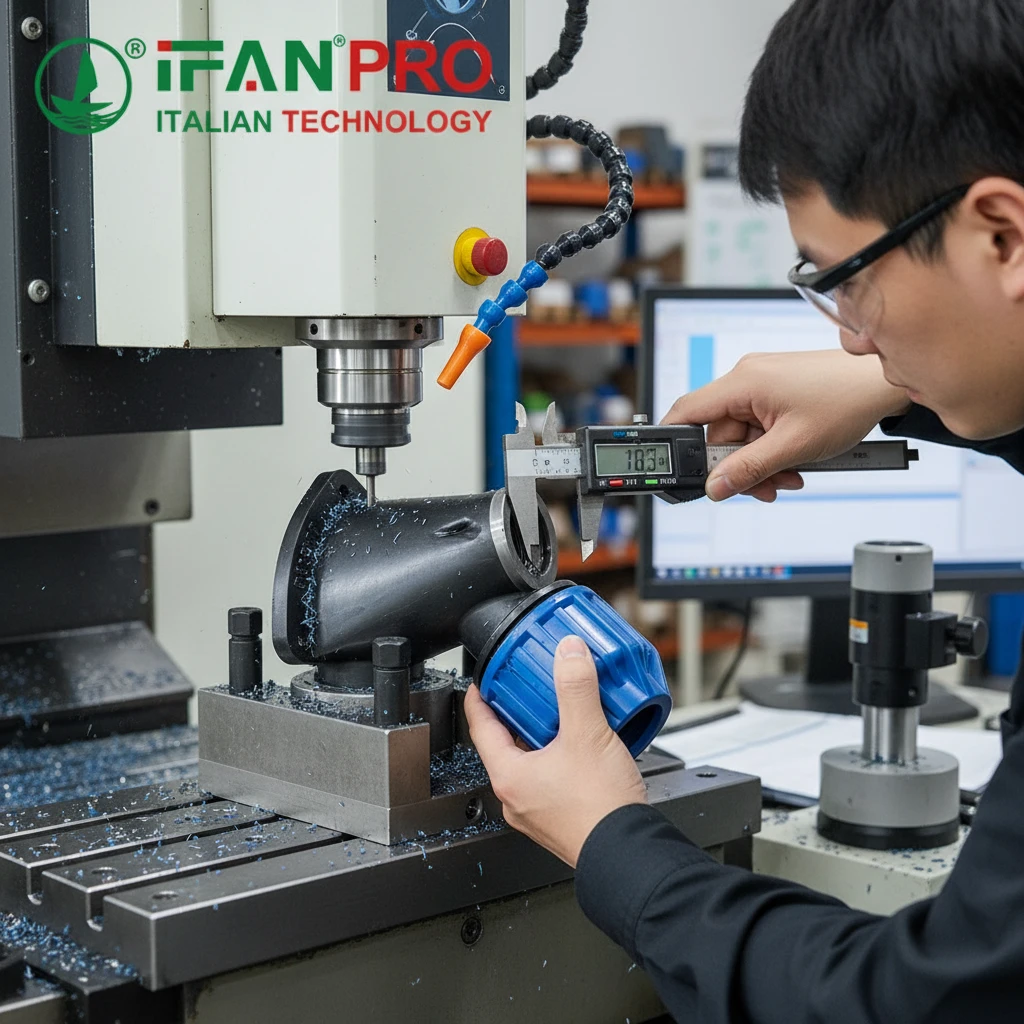
From Mold to Machine: Achieving Precision
A custom HDPE elbow doesn’t start as “custom.” It begins as a standard, injection-molded elbow “blank.” This blank has the basic shape and material properties. The customization—creating the precise bevel ends and the critical integrated seat—happens in the machining phase.
This is where tolerances come into play. A tolerance is the acceptable limit of variation from the exact dimension.
Key Machined Features and Their Tolerances
For a custom elbow to function correctly, several features must be machined with extreme precision:
- Fusion Bevel Angle: The angle cut onto the pipe end must match the manufacturer’s fusion machine specifications exactly (e.g., a specific degree). Tolerance is often within a fraction of a degree.
- Socket Depth & Seat Location: The depth from the face of the elbow to the internal seat must be precise. This controls how much pipe goes in. A common tolerance here is +/- 0.5 mm.
- Bore Diameter: The inside diameter of the socket must match the outside diameter of the pipe perfectly for a snug fit before fusion. Tolerance is typically within a few hundredths of a millimeter.
The Role of Advanced Manufacturing
Holding these tight tolerances is only possible with modern, computer-controlled equipment. Here is the typical process:
- CNC Programming: The exact specifications of the elbow (angle, diameter, pressure rating) are programmed into a CNC machining center.
- Precision Clamping: The molded blank is secured in a fixture that holds it in the exact correct position for machining.
- Automated Machining: The CNC machine uses specialized tools to cut the bevel face, bore out the socket, and machine the internal seat flat and square to the axis. Because the process is automated, every part is identical.
- Quality Verification: The finished elbow is checked using tools like calipers, micrometers, and a Coordinate Measuring Machine (CMM). The CMM uses a sensitive probe to measure the physical geometry of the elbow and compare it to the digital design blueprint.
Example Tolerance Sheet for a 90-Degree Elbow
| Feature | Specification | Typical Tolerance | Why It Matters |
|---|---|---|---|
| Elbow Angle | 90 degrees | +/- 0.5 degrees | Prevents directional error in the pipeline layout. |
| Bevel Face Angle | e.g., 22.5° | +/- 0.2 degrees | Ensures proper material flow and bead formation during fusion. |
| Seat Flatness | Perfectly flat | 0.1 mm | Ensures the pipe makes even contact all around for perfect alignment. |
| Socket Depth | e.g., 50 mm | +/- 0.5 mm | Controls insertion depth for consistent joint strength. |
Without these strict machining tolerances, you don’t have a precision component; you just have a roughly shaped piece of plastic. The tolerances are what make it a reliable engineering part.
How Does the Seat Prevent Pipe Stress and Misalignment in the Piping System?
A misaligned joint is a stressed joint. I’ve inspected systems where poor alignment led to premature failure at the next fitting downstream.
The seat prevents pipe stress and misalignment by ensuring the pipe and fitting are fused in a neutral, natural position. It eliminates forced alignment, which creates residual stress in the polymer. A stress-free joint allows the system to handle thermal expansion and pressure surges without concentrating forces at the fusion line, which is the weakest point.
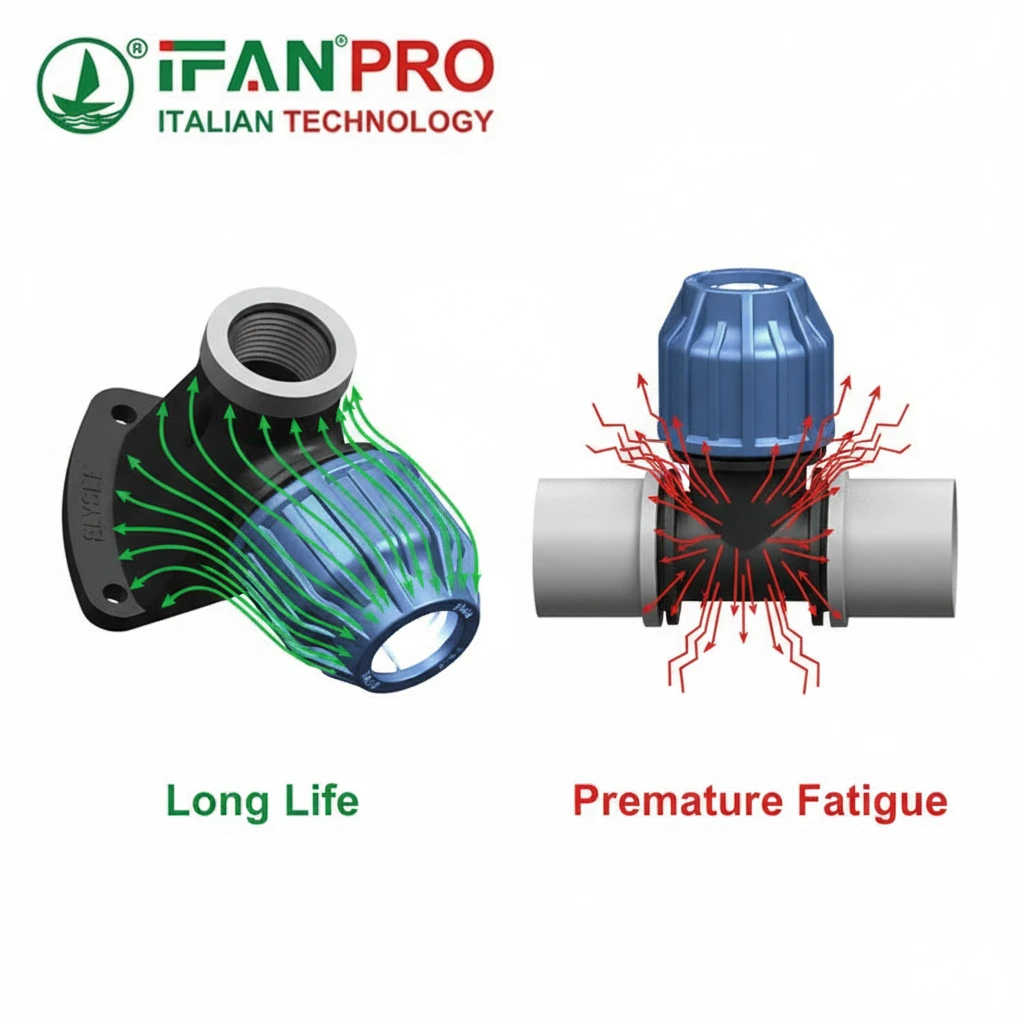
Understanding the Source of Stress
In a piping system, stress is an internal force that resists change. When you have to push, pull, or bend pipes to make them connect to a misaligned fitting, you “lock in” stress during the fusion process. This is called residual stress.
HDPE is a flexible material, but its fused joints are the strongest when they are in a state of zero stress during bonding. The seat guarantees this zero-stress starting point.
The Chain Reaction of Misalignment
Let’s trace the problem a seat prevents:
- A standard elbow is slightly off-angle.
- To connect it, the installer must bend the incoming pipe.
- This bent pipe is then fused to the fitting, “freezing” the bend stress into the joint.
- When the system is pressurized or heats up, it wants to move (expand).
- The locked-in stress from the bend concentrates at the joint, becoming a focal point for failure.
The integrated seat breaks this chain at step one. By guaranteeing perfect alignment before heat is applied, the pipe and fitting mate in their relaxed, natural state. The resulting joint is homogenous and stress-free.
Types of Stress Prevented by Proper Seating
| Type of Stress | Caused By (Without Seat) | How the Seat Prevents It |
|---|---|---|
| Bending Stress | Forcing a pipe to line up with a misaligned fitting socket. | The seat aligns the parts axially, so no bending force is needed before fusion. |
| Torsional Stress | Twisting the pipe to get it to seat properly in the fitting. | Concentric alignment via the seat removes any need for rotation or twist during setup. |
| Axial Stress | Pushing the pipe too far into or not far enough into the socket. | The seat acts as a positive stop, giving the exact, correct depth every time. |
Long-Term System Benefits
A stress-free joint has major long-term advantages:
- Improved Fatigue Resistance: Systems experience pressure cycles. A stress-riser at a bad joint will fail from fatigue much sooner than a neutral joint.
- Better Response to Thermal Movement: HDPE expands and contracts with temperature. A system built in alignment moves smoothly as a whole. A misaligned, stressed joint fights this movement, leading to potential pull-out or buckling.
- Reduced Risk of Brittle Fracture: While rare in HDPE, excessive point stress can contribute to crack initiation over very long periods, especially in cold environments.
Think of the seat as ensuring the pipeline system is “at rest” when installed. This peaceful starting condition allows it to better handle the dynamic forces it will encounter during its 50+ year lifespan.
Why is Precise Alignment Critical for the Longevity of HDPE Pipeline Systems?
We don’t install pipes for today; we install them for decades. I view precise alignment as the most important factor for a system’s long-term health.
Precise alignment is critical for longevity because it distributes mechanical and thermal stresses evenly across the entire pipeline system. Misalignment creates concentrated stress points at joints, leading to premature fatigue, reduced pressure capacity, accelerated abrasion from turbulent flow, and a significantly higher risk of joint failure over time.
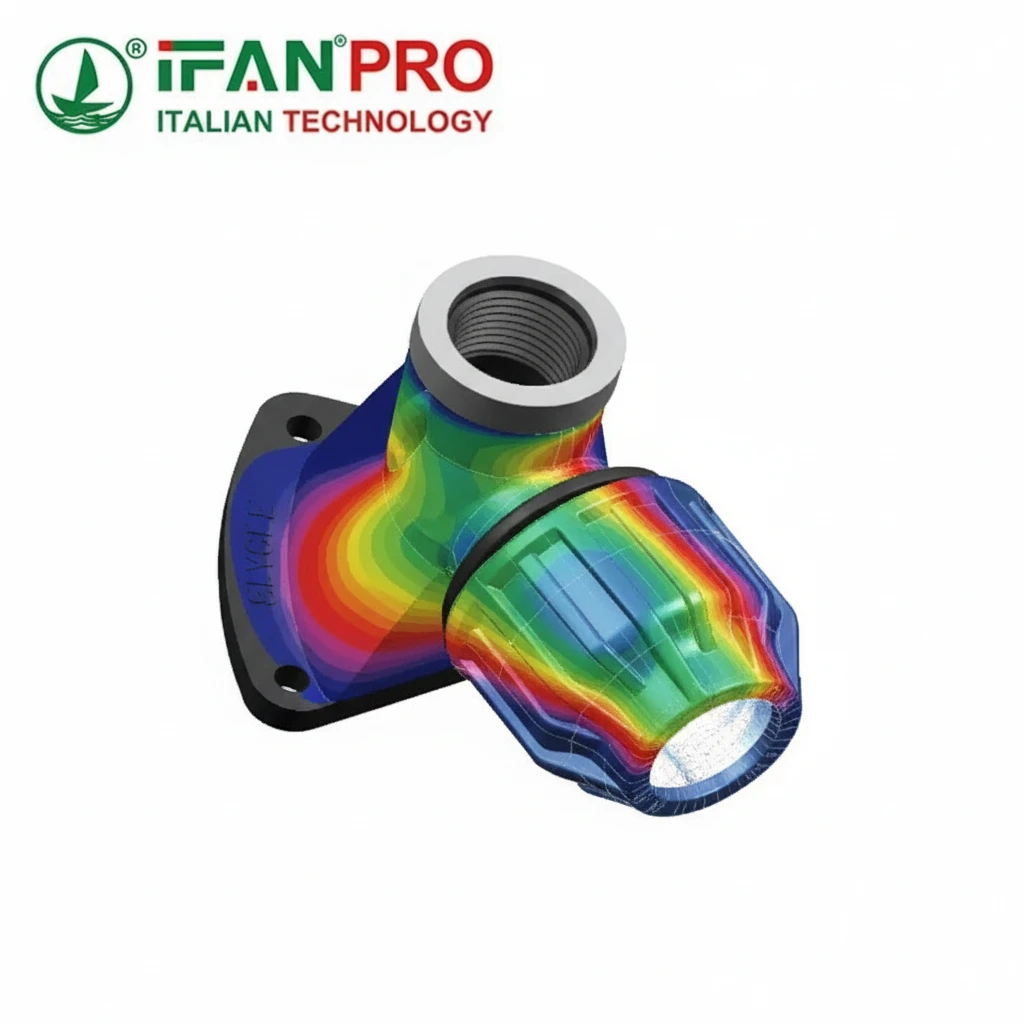
The High Cost of Small Misalignments
HDPE systems are designed to last 50 to 100 years. This lifespan is based on the material’s performance under ideal, evenly distributed stress conditions. Misalignment sabotages this design premise.
Let’s break down the specific threats misalignment poses to a system’s lifespan.
1. Stress Concentration and Fatigue Failure
A pipeline is under constant stress from internal pressure. This stress wants to pull the pipe apart. In a perfectly straight, aligned system, this tensile stress is spread evenly through the pipe wall.
When there is a misaligned joint, the stress cannot flow smoothly through the change in direction. It concentrates at the point of misalignment, often right at the edge of the fusion bead. This localized area is now under much higher stress than the rest of the system. Over thousands of daily pressure cycles, this concentrated stress leads to fatigue failure—a crack that starts small and grows until the pipe leaks or ruptures.
2. Flow Efficiency and Abrasion
HDPE has a smooth interior for a reason: to promote laminar (smooth) flow. A misaligned elbow creates a sudden, uneven change in flow direction.
This causes turbulence. Turbulent flow isn’t just inefficient; it’s abrasive. It can cause:
- Erosion: In systems carrying water with fine particles, the turbulent jet can erode the pipe wall downstream of the bad elbow.
- Increased Head Loss: The system requires more pumping energy to push water through the disturbed flow path.
- Water Hammer: Poor flow dynamics can exacerbate pressure surge issues.
3. Compromised Joint Integrity
The butt fusion process creates a joint that should be as strong as the pipe itself—but only if it’s made perfectly. A misaligned fusion results in:
- Cold Welds: Areas where the melted material did not properly intermix, creating a weak line.
- Uneven Bead: A bead that is larger on one side than the other, indicating uneven pressure during fusion and a weak spot.
- Root Damage: The pipe or fitting may have been dragged or scuffed during the misaligned setup, damaging the material before it was even fused.
Consequences of Misalignment Over Time
| Time Period | Consequence of Misaligned Joints | Impact on System Longevity |
|---|---|---|
| Immediate | Visual imperfection, possible slight ovality. | None, but indicates poor installation quality. |
| 1-5 Years | Increased localized stress may show as whitening (crazing) near the joint. | Early signs of material fatigue begin. |
| 5-15 Years | Higher risk of small leaks or joint failure under pressure surges or ground movement. | Likely need for premature repair or replacement. |
| 15+ Years | Significant risk of catastrophic fatigue failure or severe erosion damage. | Total system lifespan may be cut by 50% or more. |
In conclusion, precise alignment isn’t about making a pipeline look neat; it’s about fulfilling the engineering promise of HDPE. It ensures stress is distributed, flow is smooth, and joints are perfect. This is the foundation for a system that truly lasts a lifetime.
Заключение
Precise alignment, enabled by features like an integrated seat, is the cornerstone of a durable, low-stress HDPE system. For custom HDPE elbows and fittings machined to exacting tolerances, contact IFAN to ensure your project’s long-term performance.








 Русский
  English
  Français
  Español
Последние комментарии