
HDPE pipe sizes trip up more orders than any other detail on a polyethylene pipe purchase, because the number stamped on the pipe usually describes the outside diameter, not the bore you actually flow through. A 4″ HDPE pipe and a 4″ PVC pipe do not share the same wall, the same ID, or the same pressure rating, and the difference comes down to two numbers: the outside diameter (OD) and the standard dimension ratio (SDR). Get those two right and the wall thickness, pressure class, and fitting compatibility all fall into place.
This reference lays out HDPE pipe dimensions in both the IPS (inch-based) and metric (ISO) sizing systems, with wall thickness and pressure charts you can order from directly. If you are still deciding whether polyethylene is even the right material, our note on how HDPE compares to PEX, copper and PPR covers the trade-offs. If you have already committed to HDPE, keep reading — the ordering trap is the SDR and the sizing system, and both are below.
Key Takeaways
- HDPE is OD-controlled: the size number is the outside diameter, and the wall grows inward as you go to a heavier pressure class, shrinking the bore.
- SDR = OD ÷ minimum wall thickness. A 110 mm OD pipe with a 10 mm wall is SDR 11. Lower SDR means a thicker wall and higher pressure.
- The ANSI-preferred SDR series is 7.3, 9, 11, 13.5, 17, 21, 26, 32.5 — SDR 11 and SDR 17 cover most water and municipal work.
- At SDR 11, PE4710 rates about 200 psi and PE100 rates roughly PN16 (16 bar) for water at 20°C — the same ratio, two rating languages.
- IPS and metric HDPE do not cross over: 110 mm metric is not 4″ IPS (which is ~114.3 mm OD). Fusion joints and fittings must match the OD system.
- A complete HDPE order names four things: OD system (IPS or metric), size, SDR or PN, and material grade (PE4710 or PE100).
How HDPE Pipe Is Sized: OD, SDR, and Wall
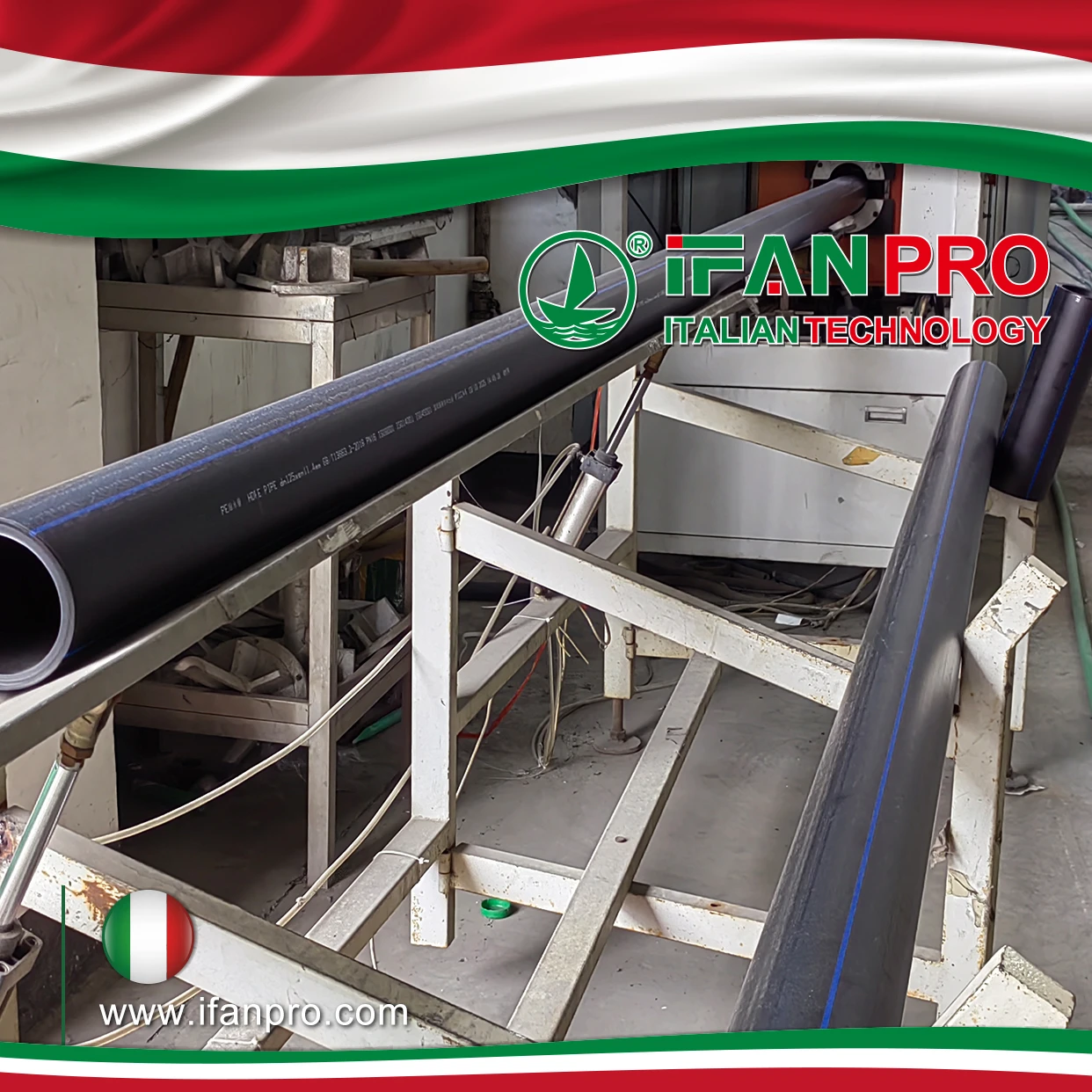
HDPE pipe sizing starts from the outside. The outside diameter stays fixed for a given nominal size, and the manufacturer adds or removes wall thickness to hit a pressure class. That is the opposite of how many people picture pipe — with HDPE, a heavier-duty pipe of the “same size” has a smaller internal bore, not a bigger outside. Fusion equipment, saddle fittings, and butt-weld faces all reference the OD, which is why the OD is the number that never moves.
The wall is expressed as a ratio rather than an absolute number so that one pressure rating applies across every size. That ratio is the standard dimension ratio: SDR = outside diameter ÷ minimum wall thickness. Work the arithmetic on a real pipe — a 110 mm OD pipe with a 10 mm minimum wall divides out to SDR 11. A 250 mm OD pipe at SDR 11 needs a wall near 22.7 mm to hold the same ratio. Because the ratio drives the hoop stress, a given SDR carries the same pressure rating whether the pipe is 20 mm or 630 mm.
The ANSI-preferred SDR series is a fixed ladder: 7.3, 9, 11, 13.5, 17, 21, 26, and 32.5. These are not random — each step is chosen so the wall thickness increments are practical to extrude and inspect. Manufacturers can and do produce off-series ratios, but if a spec calls for a value outside this list, treat it as a flag to confirm before you cut a PO. The Plastics Pipe Institute publishes the governing handbook data most North American specifications trace back to.
SDR vs DR — and Why Lower Means Stronger
You will see both “SDR” and “DR” on drawings, and the distinction is narrow but worth knowing. DR (dimension ratio) is the general OD-to-wall ratio for any value. SDR (standard dimension ratio) is the ANSI-preferred subset of those values — the 7.3, 9, 11, 13.5, 17, 21 ladder above. In practice most people use the terms interchangeably, and a pipe marked “DR 17” and one marked “SDR 17” mean the same wall proportion. When a spec lists a non-standard number like DR 15, it simply sits between two preferred steps.
Here is the counterintuitive part that causes ordering mistakes: a lower SDR is a stronger pipe. Because SDR is OD divided by wall, a smaller ratio means the wall is a larger fraction of the diameter — a thicker wall. SDR 7 is heavier and higher-pressure than SDR 17. If a contractor mentally files “17 is bigger than 11, so SDR 17 must be tougher,” they will under-order wall thickness for the pressure class. Read the direction the right way: lower SDR, thicker wall, higher pressure rating.
A concrete example. Take two 160 mm OD pipes. At SDR 11 the minimum wall is roughly 14.6 mm; at SDR 17 it drops to about 9.5 mm. Same outside diameter, same fusion equipment, but the SDR 11 pipe carries roughly 60% more working pressure and gives up internal bore to do it. That bore reduction matters for flow — do not assume the “same size” pipe delivers the same flow rate across SDRs.
HDPE Pipe Size & Dimension Chart (IPS)
The IPS (Iron Pipe Size) system dominates the North American market. The OD matches old iron-pipe outside diameters, which is why 4″ IPS HDPE has an OD of 4.500″ (114.3 mm), not a clean 100 mm. The table below covers common sizes from 1/2″ to 12″ at SDR 11 — the workhorse ratio for pressurized water. Wall and ID shift with SDR; the values here are nominal and should always be checked against the current dimensional standard, typically ASTM F714 or AWWA C906 for larger pressure pipe.
| Nominal (IPS) | OD (in / mm) | Common SDR | Wall @ SDR 11 (in) | Avg ID @ SDR 11 (in) |
|---|---|---|---|---|
| 1/2″ | 0.840 / 21.3 | 11 | 0.076 | 0.671 |
| 3/4″ | 1.050 / 26.7 | 11 | 0.095 | 0.839 |
| 1″ | 1.315 / 33.4 | 11 | 0.120 | 1.050 |
| 2″ | 2.375 / 60.3 | 11 | 0.216 | 1.898 |
| 3″ | 3.500 / 88.9 | 11 | 0.318 | 2.797 |
| 4″ | 4.500 / 114.3 | 11 | 0.409 | 3.596 |
| 6″ | 6.625 / 168.3 | 11 | 0.602 | 5.293 |
| 8″ | 8.625 / 219.1 | 11 | 0.784 | 6.892 |
| 10″ | 10.750 / 273.1 | 11 | 0.977 | 8.590 |
| 12″ | 12.750 / 323.9 | 11 | 1.159 | 10.189 |
Notice the ID is always meaningfully smaller than the OD — at 6″ IPS SDR 11 you flow through about 5.3″, not 6″. Size your hydraulics to the ID, not the nominal label, or your pump head calculations will run optimistic. The same logic scales up: a 12″ IPS SDR 11 pipe loses more than 2.5″ of bore to wall, so a “12-inch line” delivers closer to 10.2″ of flow. On long runs at high velocity, that difference shows up as real friction loss and pump energy, which is why designers who work in SDR 17 for lower-pressure gravity mains gain both wall economy and a larger bore.
Metric (ISO) HDPE Sizes
Outside North America, most HDPE follows the metric ISO system, where the size is the actual OD in millimeters and pressure is stated as a PN (nominal pressure) class in bar rather than an SDR. A PN class already bakes in the material grade and safety factor, so PN10, PN16, and PN25 are common shorthand on European, Middle Eastern, and Asian projects. The governing dimensional standard for water pipe is ISO 4427. The table below maps the common metric sizes we extrude.
| DN / Metric OD (mm) | Typical PN (PE100) | Wall band @ PN16 (mm) | Typical Use |
|---|---|---|---|
| 20 | PN10–PN25 | 1.9 | Service lines, drip |
| 32 | PN10–PN25 | 3.0 | Property connections |
| 63 | PN10–PN20 | 5.8 | Rural water mains |
| 110 | PN10–PN16 | 10.0 | Distribution mains |
| 160 | PN10–PN16 | 14.6 | Trunk mains, irrigation |
| 250 | PN10–PN16 | 22.7 | Municipal supply |
| 400 | PN8–PN16 | 36.3 | Transmission, outfall |
| 630 | PN6–PN16 | 57.2 | Large transmission |
Do not translate metric to IPS by rounding. A 110 mm metric pipe is not a 4″ IPS pipe (114.3 mm OD). The 4 mm gap is enough to make butt-fusion faces mismatch and electrofusion couplers refuse to seat. Confirm the OD system before ordering fittings, not after.
Pressure Rating by SDR (PE4710 / PE100)
Pressure follows directly from the SDR and the resin grade. Two grades dominate: PE4710 is the North American high-performance material, and PE100 is the ISO-world equivalent. Both are high-density polyethylene, but their rating math and design factors differ, so a psi figure and a PN figure at the same SDR are close cousins, not identical twins. The values below are for water at 23°C (73°F) and drop as temperature climbs.
| SDR | PE4710 (psi, US) | PE100 (PN bar, ISO) | Typical Use |
|---|---|---|---|
| 7.3 | ~333 | PN25 | High-pressure mains, gas |
| 9 | ~267 | PN20 | Industrial, pumped lines |
| 11 | ~200 | PN16 | Water mains, most projects |
| 13.5 | ~160 | PN12.5 | Distribution, irrigation |
| 17 | ~125 | PN10 | Gravity/low-pressure supply |
| 21 | ~100 | PN8 | Low-pressure, sewer force |
| 26 | ~80 | PN6 | Drainage, non-pressure |
| 32.5 | ~63 | PN5 | Conduit, gravity flow |
Read these as design guides, not contract values — the exact rating depends on the resin cell classification, service temperature, and the design factor your standard applies, so verify against the manufacturer’s certificate for the specific pipe. One warning that costs real money: these ratings assume water near ambient. Push HDPE to 40°C or 60°C and the working pressure derates sharply, sometimes to half or less. State your service temperature when you spec, or you may be running a PN16 pipe at a de-facto PN8 duty.
IPS vs Metric vs PVC Schedule — Don’t Mix Systems
Three sizing systems collide on real projects, and mixing them is where orders go wrong. IPS HDPE uses iron-pipe outside diameters and rates wall by SDR. Metric HDPE uses actual-millimeter outside diameters and rates by PN. PVC pressure pipe, by contrast, is often specified by Schedule (Sch 40, Sch 80) — a system HDPE does not use at all. “Schedule” describes a PVC or steel wall table; applying it to HDPE is a category error that will confuse a supplier.
The insider trap: a 4″ nominal size means three different outside diameters depending on the system. IPS 4″ HDPE is 114.3 mm OD. Metric DN110 is 110 mm OD. PVC Sch 40 4″ is also around 114.3 mm OD but with a completely different wall and no fusion capability. If a spec just says “4-inch HDPE” without naming the system, stop and ask. That one clarification prevents the most expensive HDPE mistake there is — pipe and fittings that will not fuse together on site. When you are joining across materials or systems, our guide on joining pipes of different materials walks through transition options.
How to Order the Right HDPE Size and SDR
A clean HDPE order removes all ambiguity by stating four attributes on the purchase order. Skip any one and the supplier has to guess, which is how the wrong wall ships. Name each of these explicitly:
- OD system and size — state “IPS 6-inch” or “metric DN160,” never just “6-inch.” This is the single most common source of mismatched fittings.
- SDR or PN — give the ratio (SDR 11) or the pressure class (PN16). If you know the working pressure and temperature, state those too and let the manufacturer confirm the class.
- Material grade — PE4710 for North American specs, PE100 for ISO markets. The grade affects both pressure rating and standards compliance.
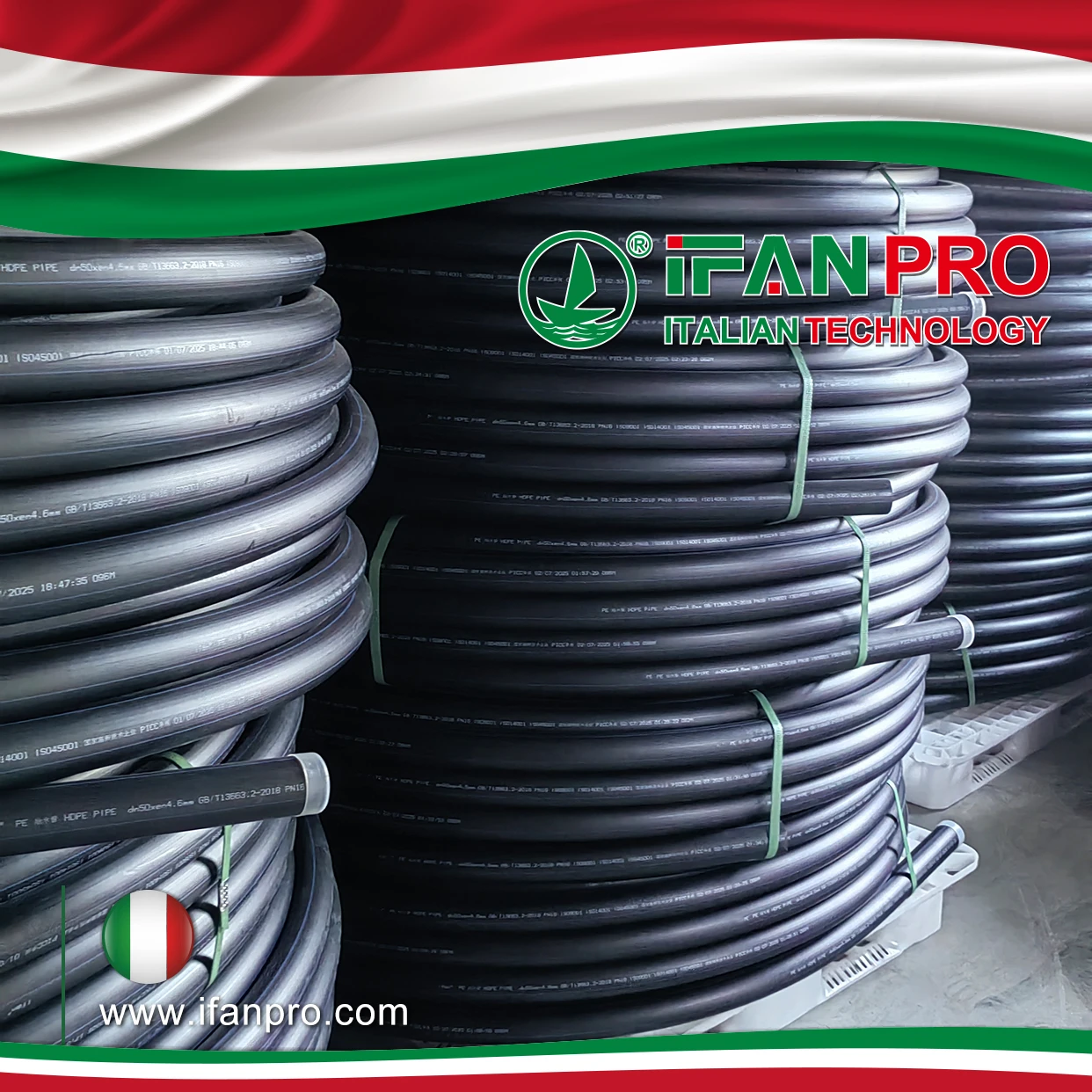
- Length and form — coils for smaller sizes (typically up to 63 mm / 2″), straight lengths for larger. Confirm coil length or stick length so freight and fusion planning line up.
A complete line item reads like this: “HDPE pipe, IPS 4″, SDR 11, PE4710, black with blue stripe, 40-ft straight lengths, per ASTM F714.” That single sentence removes every guess. For fusion planning once the pipe arrives, our note on HDPE pipe fusion covers butt and electrofusion joint prep. And if you are also spec’ing PEX for interior runs, the PEX pipe size chart uses a different sizing logic worth reviewing.
What We Verify on Every HDPE Size Before Shipping
We treat the dimensional spec as a pass/fail gate, not a target we aim near. Every HDPE production run at our facility goes through the same checks before it earns a shipping label, because an out-of-tolerance wall or an oval pipe undermines both the pressure rating and the fusion joint. Here is what we confirm on our HDPE, size by size.
- Outside diameter — measured at multiple points against the IPS or ISO table for the ordered size, since the OD drives every fitting and fusion face.
- Wall thickness per SDR — caliper checks around the circumference to confirm the minimum wall meets the ordered SDR or PN, not just the average.
- Ovality — we gauge out-of-roundness because an oval pipe fights the fusion clamp and can mask a thin wall on one side.
- Pressure / hydrostatic test — sample testing against the rated pressure class to validate the SDR-to-pressure relationship in practice.
- Material certificate — resin grade documented as PE4710 or PE100 so the pressure rating on paper matches the resin in the pipe.
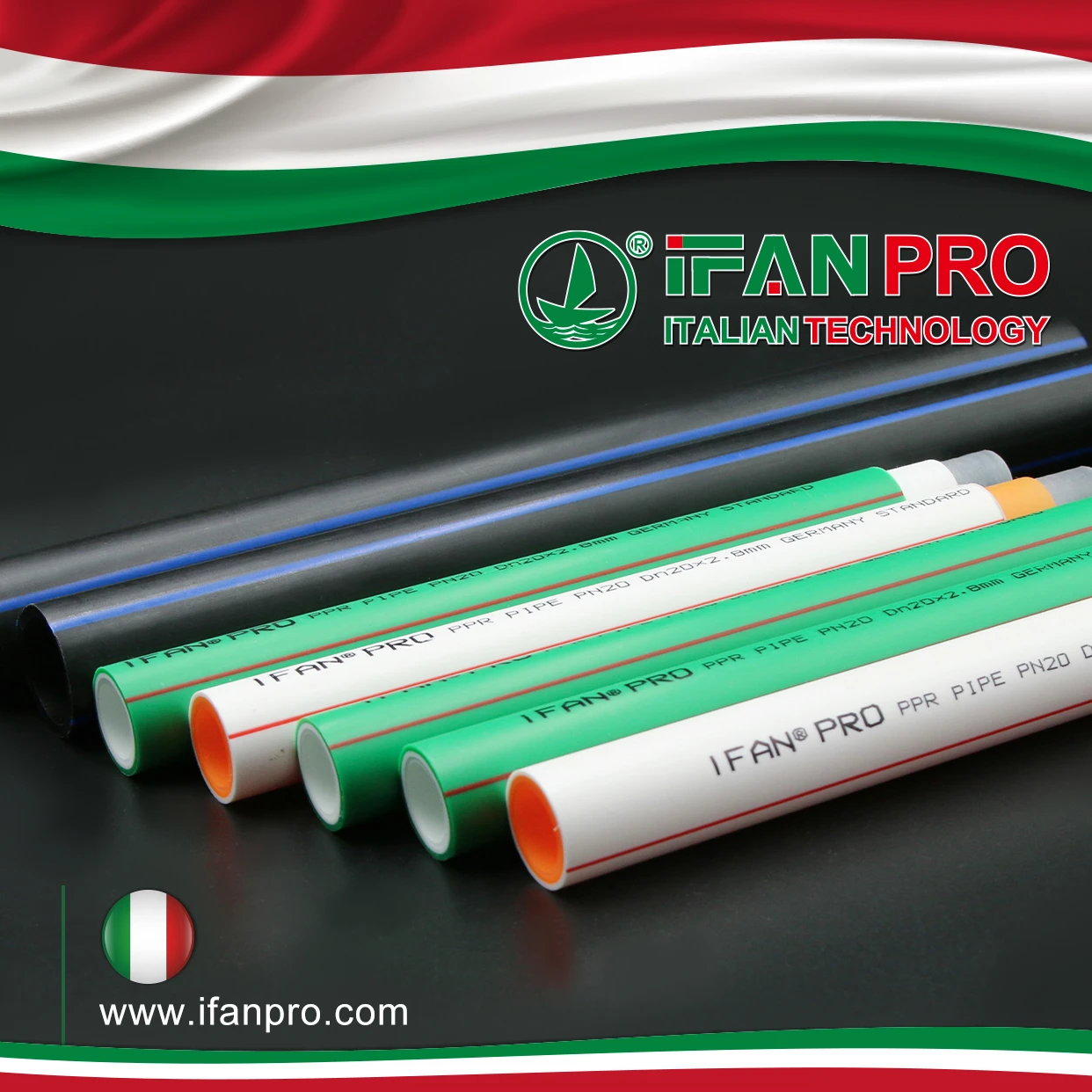
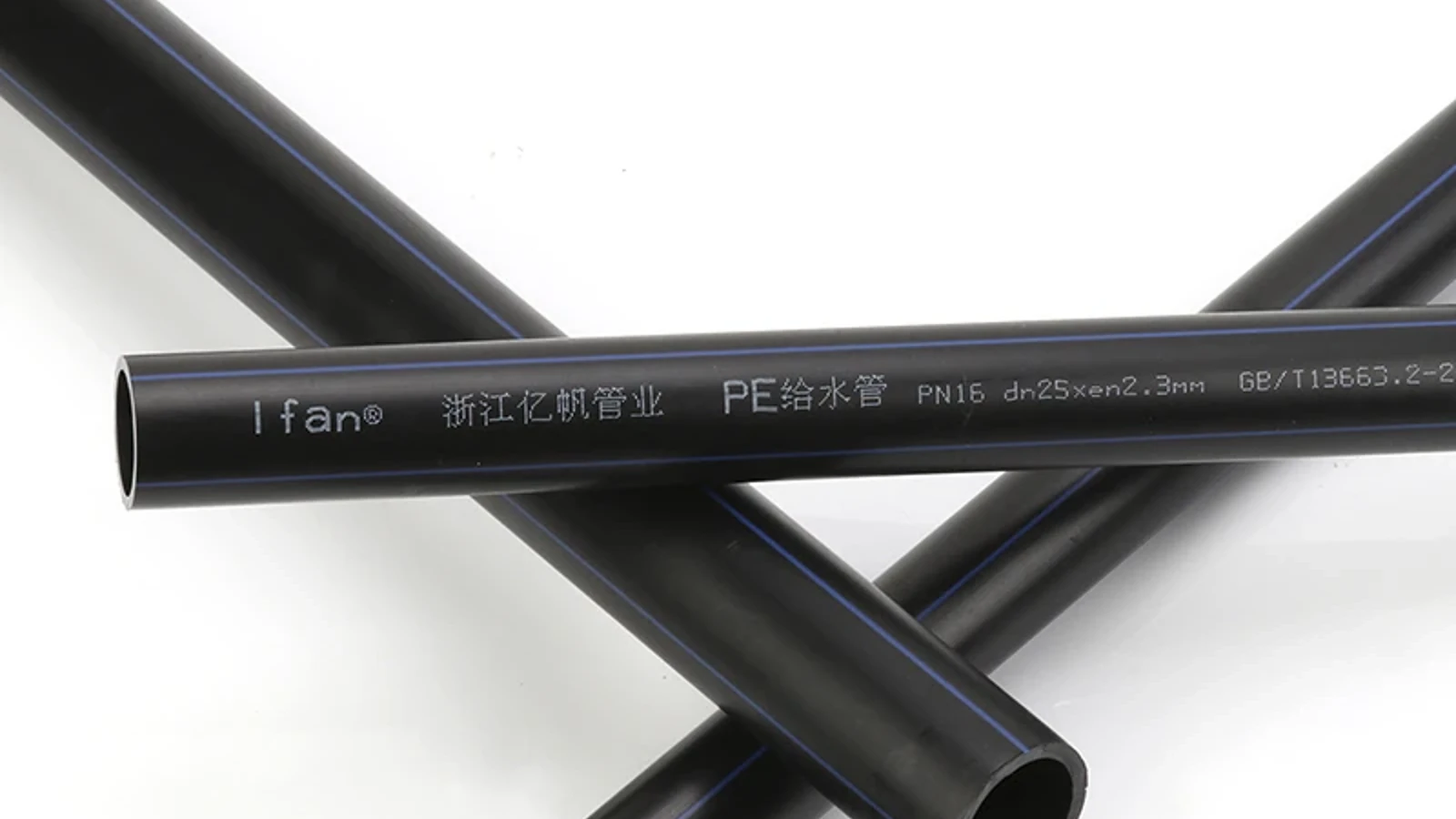
That process is backed by ISO 9001 and ISO 14001 systems, plus WRAS and NSF/IAPMO potable-water certifications where the application requires them. The point is simple: the size you order is the size you receive, documented on a certificate you can hand to an inspector. One detail we flag on every order is the marking print line — the OD, SDR or PN, resin grade, and applicable standard are printed along the pipe, so a crew on site can confirm the size and class against the drawing before they cut or fuse anything. That last check has caught more than one specification error before it reached the trench.
Frequently Asked Questions
Is HDPE pipe measured by inside or outside diameter?
Outside diameter. HDPE is OD-controlled, so the nominal size is the outside dimension. The wall thickens inward as the SDR drops, which shrinks the inside diameter — always size flow to the actual ID.
What does SDR 11 mean on HDPE pipe?
SDR 11 means the outside diameter is 11 times the minimum wall thickness. It is the common water-main ratio, rating roughly 200 psi (PE4710) or PN16 (PE100) for water near ambient temperature.
Does a lower SDR mean a stronger pipe?
Yes. A lower SDR means a thicker wall relative to the diameter, which raises the pressure rating. SDR 7 is heavier and higher-pressure than SDR 17 at the same outside diameter.
Is 110 mm HDPE the same as 4-inch HDPE?
No. Metric 110 mm has a 110 mm OD, while IPS 4″ HDPE is 114.3 mm OD. The 4 mm difference prevents fusion faces and fittings from matching, so confirm the sizing system before ordering.
What is the difference between PE4710 and PE100?
Both are high-density polyethylene resins. PE4710 is the North American designation rated in psi; PE100 is the ISO designation rated in PN bar. They perform similarly but use different rating standards and design factors.
Заключение
HDPE pipe sizes come down to three numbers you must state together: the outside diameter, the SDR (or PN) that sets the wall, and the material grade that fixes the pressure rating. Get the OD system right first — IPS and metric do not cross over — then match the SDR to your working pressure and temperature. When your spec is ready, send us the OD system, size, SDR or PN, and grade, and we will return a dimensional and pressure certificate you can build to.










 Русский
  English
  Français
  Español
Последние комментарии