
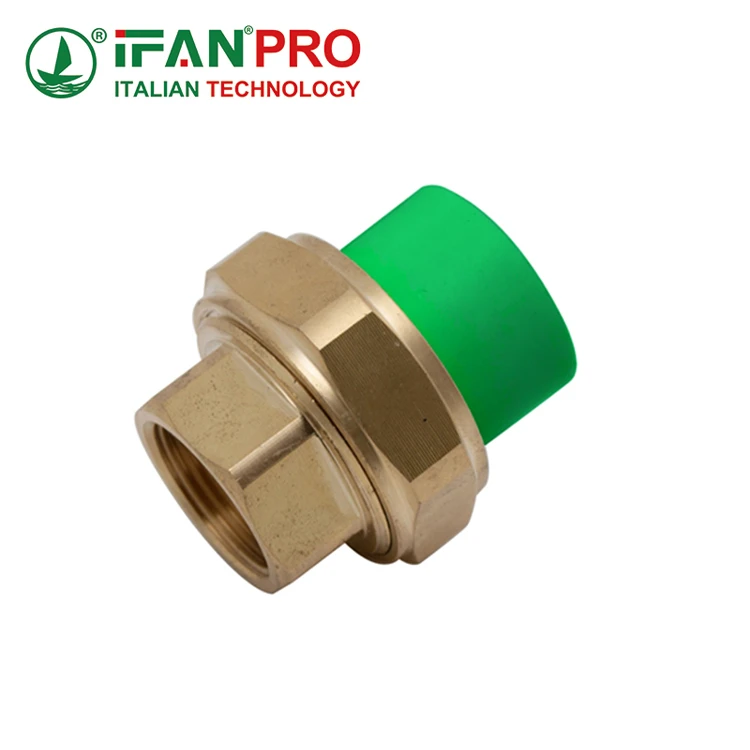
PPR brass female unions represent critical connection components in modern plumbing and industrial piping systems. These specialized fittings combine polypropylene random copolymer (PPR) with brass elements to create durable, leak-proof connections.
What Makes PPR Brass Female Unions Essential?
Factory customized PPR brass female unions offer superior performance compared to standard alternatives. The brass female threading provides exceptional grip strength while maintaining compatibility with various pipe sizes. This combination ensures long-lasting connections that withstand high pressure and temperature variations.
Industrial applications demand reliable components. PPR material resists chemical corrosion, making these unions ideal for water supply systems, heating installations, and chemical processing plants. The brass female end allows easy connection to existing metal piping infrastructure.
Key Benefits of Factory Customization
Custom manufacturing addresses specific project requirements that standard fittings cannot meet. Engineers can specify exact dimensions, threading specifications, and pressure ratings. This precision eliminates compatibility issues and reduces installation time.
Quality control during factory customization ensures consistent performance across large orders. Manufacturers can adjust wall thickness, implement special coatings, or modify connection angles based on client specifications. These modifications optimize system efficiency and extend service life.
Technical Specifications and Standards
PPR brass female unions must meet international quality standards including ISO 15874 and DIN 8077. Factory customization allows compliance with regional specifications while maintaining global quality benchmarks.
Thread specifications typically include NPT, BSP, or metric standards. Female threading diameter ranges from 1/2 inch to 4 inches depending on application requirements. Working pressure capabilities extend up to 25 bar at 20°C for standard configurations.
Temperature resistance varies based on PPR grade selection. Type 1 PPR handles temperatures up to 60°C, while Type 2 variants withstand 70°C continuous operation. Custom formulations can achieve higher temperature ratings for specialized applications.
Installation Considerations
Proper installation requires attention to threading engagement and sealant selection. Female brass threads should engage male connections by at least 3-4 full turns. Thread sealant compatibility with both PPR and brass materials prevents future leakage.
Thermal expansion considerations become crucial in long pipe runs. PPR material expands approximately 0.15mm per meter per 10°C temperature increase. Factory customized unions can incorporate expansion joints or flexible elements to accommodate movement.
Applications Across Industries
Commercial buildings utilize PPR brass female unions in potable water systems due to their non-toxic properties. The brass female connection facilitates integration with existing copper or steel infrastructure without compatibility concerns.
Industrial processing facilities benefit from chemical resistance properties. Custom formulations resist specific chemicals encountered in manufacturing processes. This resistance extends system life and reduces maintenance requirements.
HVAC systems employ these unions in hydronic heating and cooling circuits. Factory customization allows optimization for specific fluid types and operating pressures. Custom threading ensures compatibility with various equipment manufacturers.
Quality Assurance in Factory Production
Manufacturing quality begins with raw material selection. High-grade PPR resins ensure consistent molecular structure and performance characteristics. Brass components undergo composition verification to guarantee corrosion resistance and mechanical strength.
Production testing includes pressure testing, dimensional verification, and thread gauge inspection. Each batch undergoes quality sampling to verify compliance with specifications. Custom orders receive additional verification against client requirements.
Cost-Effectiveness of Custom Solutions
Factory customization often reduces total project costs despite higher unit prices. Eliminated field modifications save labor time and reduce installation errors. Perfect fit components minimize system pressure losses and optimize efficiency.
Bulk ordering of custom specifications provides economies of scale. Manufacturers like Yifan Pipeline offer competitive pricing for volume orders while maintaining quality standards. This approach benefits large construction projects and industrial installations.
Future Trends in PPR Brass Union Technology
Advanced manufacturing techniques enable more precise customization options. 3D printing of prototype fittings allows design verification before full production. This technology reduces development time for specialized applications.
Smart manufacturing integration provides real-time quality monitoring. Automated testing systems ensure consistent product quality across production runs. These improvements benefit clients requiring high-reliability components.
Selecting the Right Manufacturer
Experienced manufacturers understand the nuances of PPR brass female union production. Look for suppliers with ISO certification, extensive customization capabilities, and proven track records in similar applications.
Technical support throughout the design process ensures optimal component selection. Manufacturers should provide engineering assistance, material recommendations, and installation guidance. This support minimizes project risks and ensures successful implementation.
Factory customized PPR brass female unions represent essential components for modern piping systems. Their combination of durability, customization flexibility, and cost-effectiveness makes them ideal for diverse industrial applications. Proper selection and installation ensure reliable service across demanding operating conditions.










 Русский
  English
  Français
  Español
Последние комментарии