
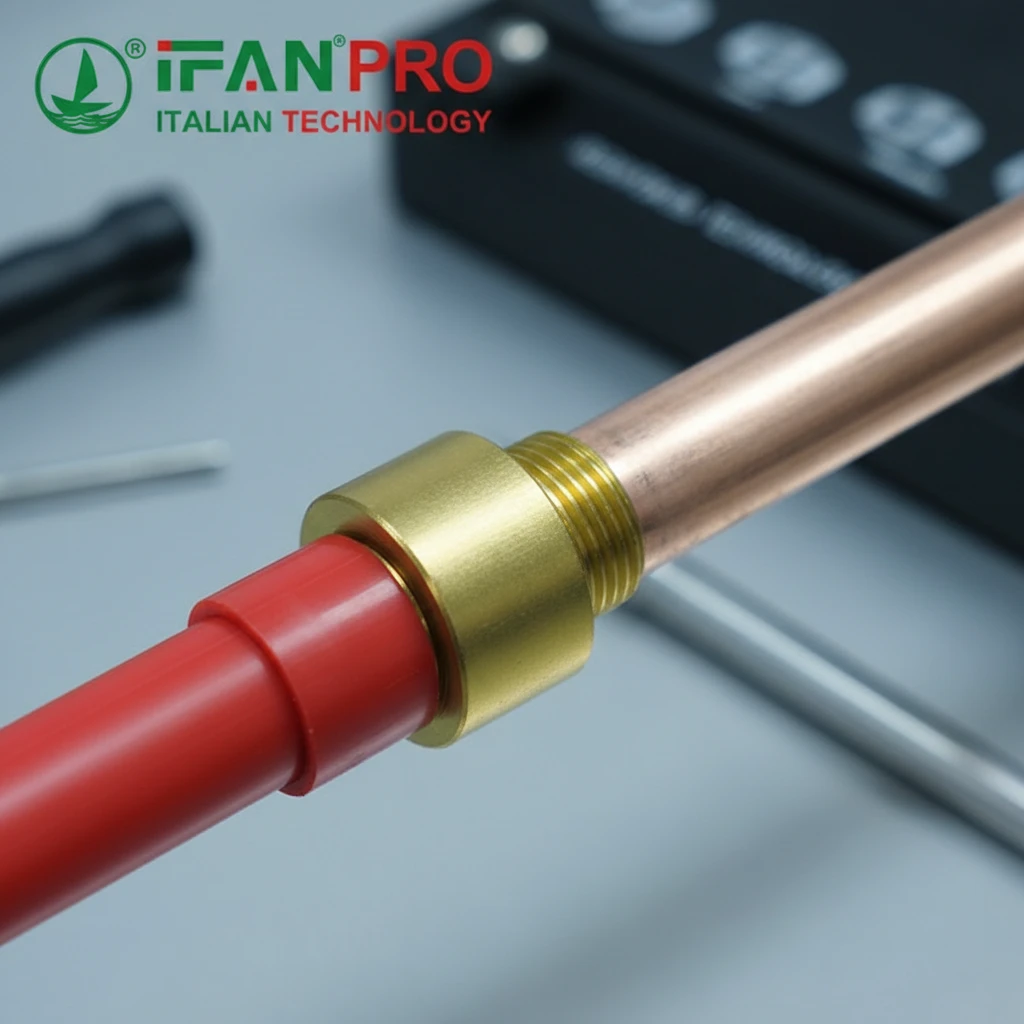
I once helped a homeowner who was stuck. He had a new PEX line for his bathroom, but it needed to connect to the old copper main. The solution was simpler than he thought.
Yes, a brass conversion fitting is specifically designed to connect PEX and copper systems reliably. One end is made for PEX (using a crimp or clamp ring), and the other end is made for copper (for soldering or threading). It creates a permanent, leak-free transition between the two different piping materials.
This type of fitting solves a very common problem in renovations and repairs. Let’s look at how it works and why it’s so dependable.
Does One End Connect to PEX Using Crimp or Clamp Rings?
Imagine trying to solder PEX or glue copper—it doesn’t work. The PEX side of a conversion fitting is designed for the right method.
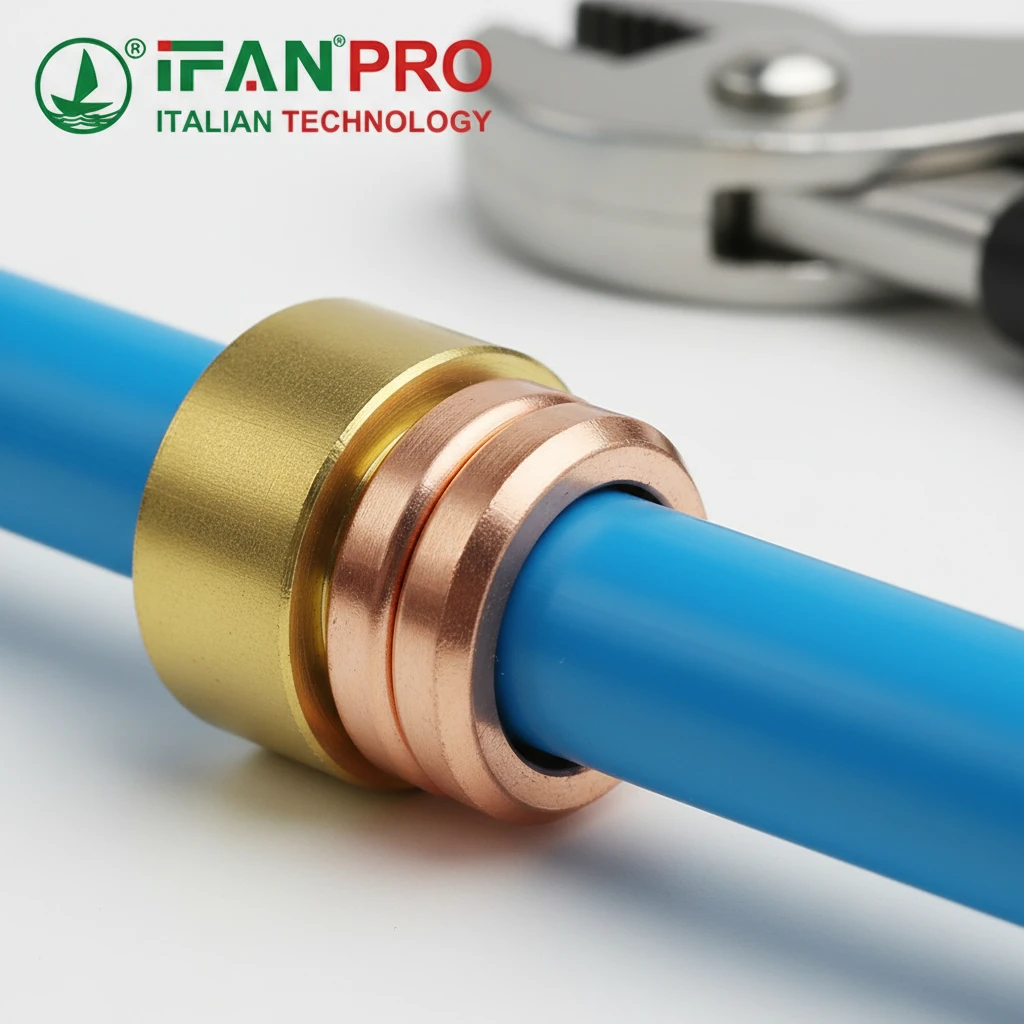
Yes, the PEX end of a brass conversion fitting is specifically shaped to connect with PEX tubing using either a crimp ring or a clamp ring (stainless steel cinch clamp). This end has barbed ridges that grip the inside of the PEX tube, and the ring compresses over the tube to form a strong, permanent seal.
How the PEX Connection Works
A brass conversion fitting is the essential bridge between two different worlds of plumbing. For the connection to be strong, the PEX side must use the correct joining technique. Brass is the chosen material because it is strong, durable, and compatible with both PEX and copper.
The end meant for PEX looks like a series of rounded ridges or barbs. You slide the PEX tube onto this barbed end. The barbs help hold the tube in place before you secure it. Then, you use a special tool to place a metal ring over the spot where the tube and fitting meet.
Two Main Methods: Crimp vs. Clamp
There are two common systems for making this connection, and both work very well. The fitting must match the system you are using.
- Crimp Ring System: This uses a solid copper ring. You slide the ring onto the PEX tube first, then push the tube onto the fitting. You use a crimp tool to squeeze the ring around the tube and the fitting’s barbs. This creates a uniform compression that locks everything together.
- Clamp Ring System (Cinch Clamp): This uses a stainless steel ring with a special buckle. You place the ring around the PEX tube after it is on the fitting. Then, you use a clamping tool (often simpler than a crimp tool) to tighten the ring until it locks. This also creates a full-circle compression.
Both methods create a seal that is as strong as the pipe itself. The brass fitting will not crack or warp, and the metal ring provides lasting holding power.
Choosing the Right Ring and Tool
| System | Ring Material | Tool Required | Key Advantage |
|---|---|---|---|
| Crimp | Copper | Crimping Tool | Very common, widely available, and reliable. |
| Clamp | Stainless Steel | Clamping Tool | Often easier to use in tight spaces; the tool can be smaller. |
In short, the PEX end of a brass conversion fitting is perfectly designed for a secure, mechanical connection. You don’t need glue, heat, or special chemicals. You just need the correct ring and the right tool. This makes the connection process clean, quick, and very reliable for a DIYer or a professional.
Does the Other End Solder or Thread onto Copper Pipe?
The other side of the fitting must match the existing copper system. Brass gives you the right options.
Yes, the copper end of a brass conversion fitting is designed either to be soldered (sweated) onto a copper pipe or to accept a threaded connection. The solder end is smooth and allows for a traditional solder joint, while the threaded end is either male (external threads) or female (internal threads) to connect with threaded copper components.
Understanding the Copper Connection Options
While the PEX side uses a mechanical connection, the copper side often uses a more traditional method. Brass is an ideal material here because it can be easily soldered, just like copper itself. This creates a true, permanent metal-to-metal bond.
The design of this end depends on what you need to connect to. You must check your existing copper pipe to choose the correct fitting.
Option 1: The Solder (Sweat) End
This is the most common type for connecting to plain, unthreaded copper pipe.
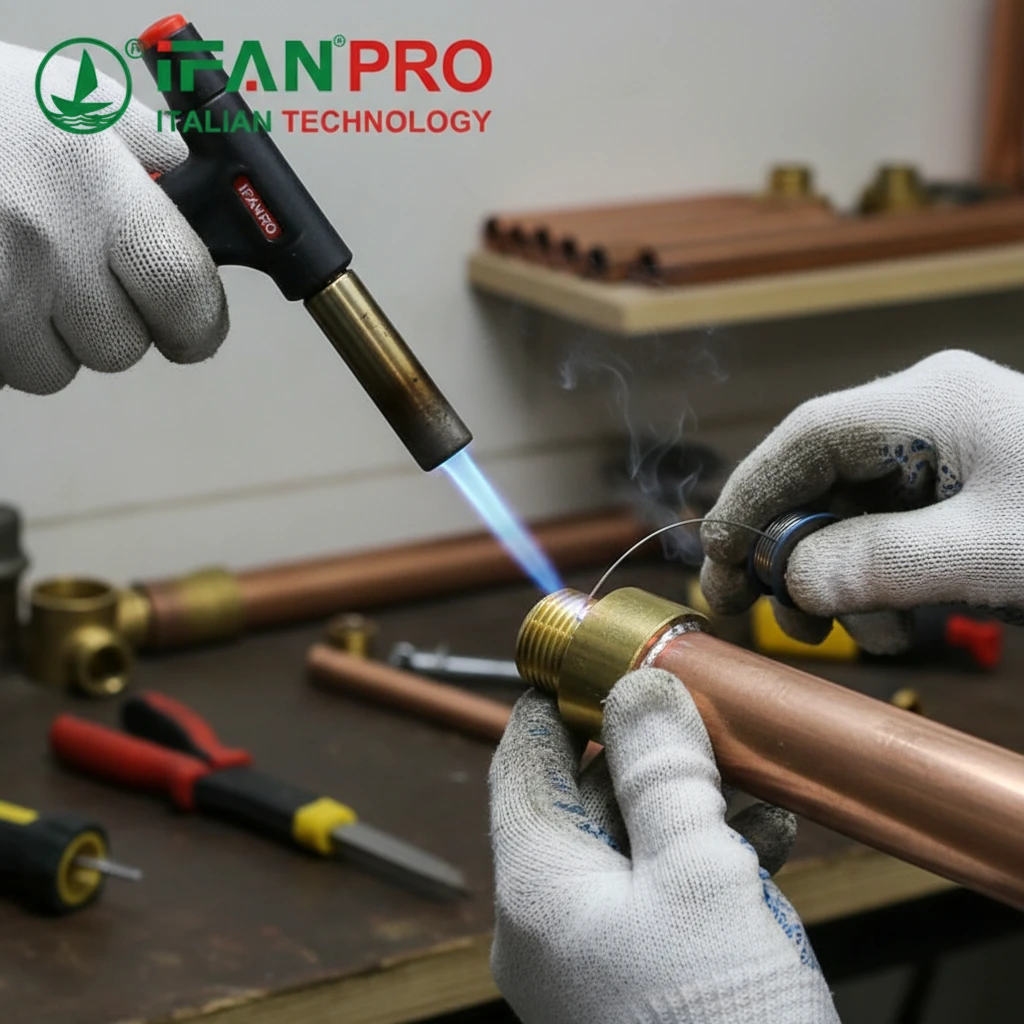
- How it Works: The end of the fitting is a smooth socket, just like a regular copper fitting. You clean the end of the copper pipe and the inside of the fitting socket. Then, you apply flux and heat the joint with a torch. Finally, you touch the solder wire to the joint, and the melted solder is drawn into the gap by capillary action, creating a seamless seal.
- Why It’s Good: This creates the strongest possible joint. It becomes a single, continuous piece of metal. It is perfect for permanent installations behind walls or under floors. The brass fitting conducts heat well, making the soldering process just like working with a copper fitting.
Option 2: The Threaded End
This type is used when connecting to existing threaded copper fittings, valves, or appliances.
- How it Works: The fitting will have either male threads (on the outside) or female threads (on the inside). You wrap plumbing thread seal tape or pipe dope (thread sealant) around the male threads. Then, you screw it into the corresponding female port tightly by hand, finishing with a wrench.
- Why It’s Good: This allows for a connection that can be disconnected later if needed. It is essential for connecting to shut-off valves, water heater connections, or other threaded fixtures.
Choosing the Right Type for Your Job
| Copper Connection Type | Fitting End Look | Best Used For | Tip |
|---|---|---|---|
| Solder | Smooth, cup-shaped socket | Permanent connections inside walls, floors, or ceilings. | Use lead-free solder for drinking water lines. |
| Male Threads | External screw threads | Connecting to a female-threaded valve or adapter. | Always use thread seal tape for a watertight seal. |
| Female Threads | Internal screw threads | Connecting to a male-threaded copper pipe end. | Don’t overtighten, or you could crack the fitting. |
So, when you buy a brass conversion fitting, you must know two things: what PEX system you are using (for one end) and what type of copper connection you need (for the other end). This ensures you get the perfect bridge for your specific project.
Are There Specific Models for Transitioning Between PEX and Copper?
A single “conversion fitting” comes in many forms. Choosing the right model is key to an easy installation.
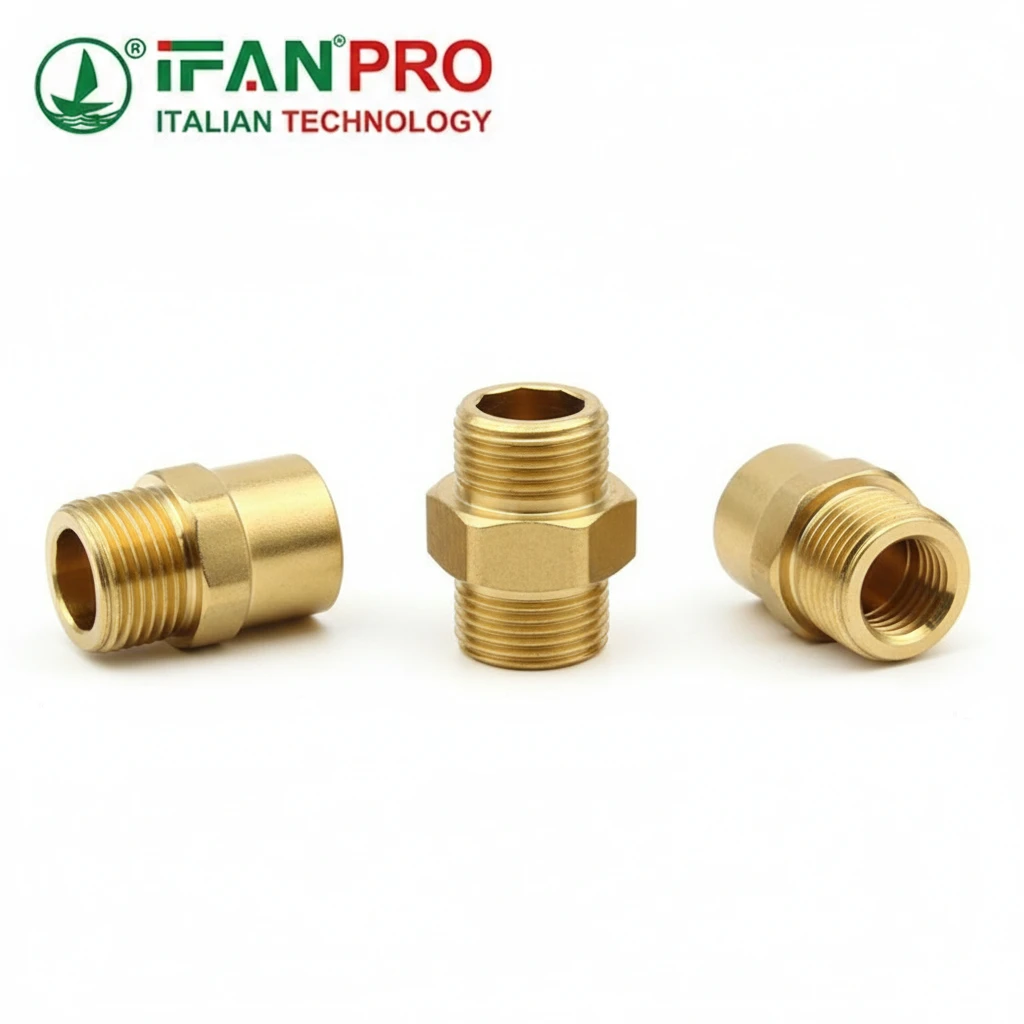
Yes, there are specific models designed for every possible transition scenario. The main types are: PEX-to-Solder Copper, PEX-to-Threaded Copper (Male or Female), and PEX-to-Compression (for connecting directly to a copper pipe without soldering). Each model is clearly labeled for its intended use.
The Different Types of Transition Fittings
You cannot use just any brass fitting. Manufacturers make precise models to solve specific connection problems. Using the wrong type will lead to leaks or a failed installation. The model name usually tells you exactly what it does.
Here is a breakdown of the most common and useful types you will find:
1. PEX x Solder Copper
This is the standard fitting for most in-wall transitions.
- Description: One end has barbs for PEX. The other end is a smooth, cup-shaped socket for soldering to a copper pipe.
- Typical Use: You are running new PEX lines and need to connect them to the existing copper pipes inside your walls or ceiling. This creates a permanent, solid connection.
- Example:
1/2" PEX Barb x 1/2" Copper Sweat Adapter.
2. PEX x Male Threaded (MIPT)
This fitting connects PEX to a female-threaded port.
- Description: One end has barbs for PEX. The other end has external (male) threads, often called MIPT (Male Iron Pipe Thread).
- Typical Use: Connecting a PEX line to a threaded shut-off valve, a water heater outlet, or a female-threaded copper adapter.
- Example:
3/4" PEX Barb x 1/2" MIPT Adapter.
3. PEX x Female Threaded (FIPT)
This fitting connects PEX to a male-threaded pipe end.
- Description: One end has barbs for PEX. The other end has internal (female) threads, or FIPT.
- Typical Use: Connecting a PEX line directly to the threaded end of an old copper pipe or a male-threaded fixture.
- Example:
1/2" PEX Barb x 3/4" FIPT Adapter.
4. PEX x Compression (for Copper Tube)
This is a special no-solder option.
- Description: One end has barbs for PEX. The other end is a compression-style end designed to seal onto the outside of a smooth copper pipe using a compression nut and ferrule (a small brass ring).
- Typical Use: Making a transition without using a torch, which is ideal for tight spaces or when soldering is unsafe or difficult. It is also serviceable (can be disconnected).
- Example:
1/2" PEX Barb x 1/2" Compression Adapter.
Model Selection Guide
| Fitting Model | PEX End | Copper End | Ideal Application |
|---|---|---|---|
| PEX x Sweat | Barbed for Crimp/Clamp | Smooth Solder Socket | Most common permanent in-wall connection. |
| PEX x MIPT | Barbed for Crimp/Clamp | Male Threads | Connecting to female valves or tank fittings. |
| PEX x FIPT | Barbed for Crimp/Clamp | Female Threads | Connecting to existing male-threaded pipe ends. |
| PEX x Compression | Barbed for Crimp/Clamp | Compression Nut & Ferrule | No-solder repairs or connections in confined areas. |
Knowing these models helps you plan your project and buy the correct parts the first time. Always double-check the sizes (both PEX and copper/thread sizes) before you purchase.
How Does It Ensure a Reliable Joint in Mixed-Material Systems?
A leak at the transition point would defeat the whole purpose. The reliability comes from smart design and proper installation.
Brass conversion fittings ensure reliable joints by using a material compatible with both metals and plastics, preventing galvanic corrosion. Their design separates the two connection methods (mechanical for PEX, soldered for copper), allowing each to be done correctly. Proper installation following codes seals the joint permanently.
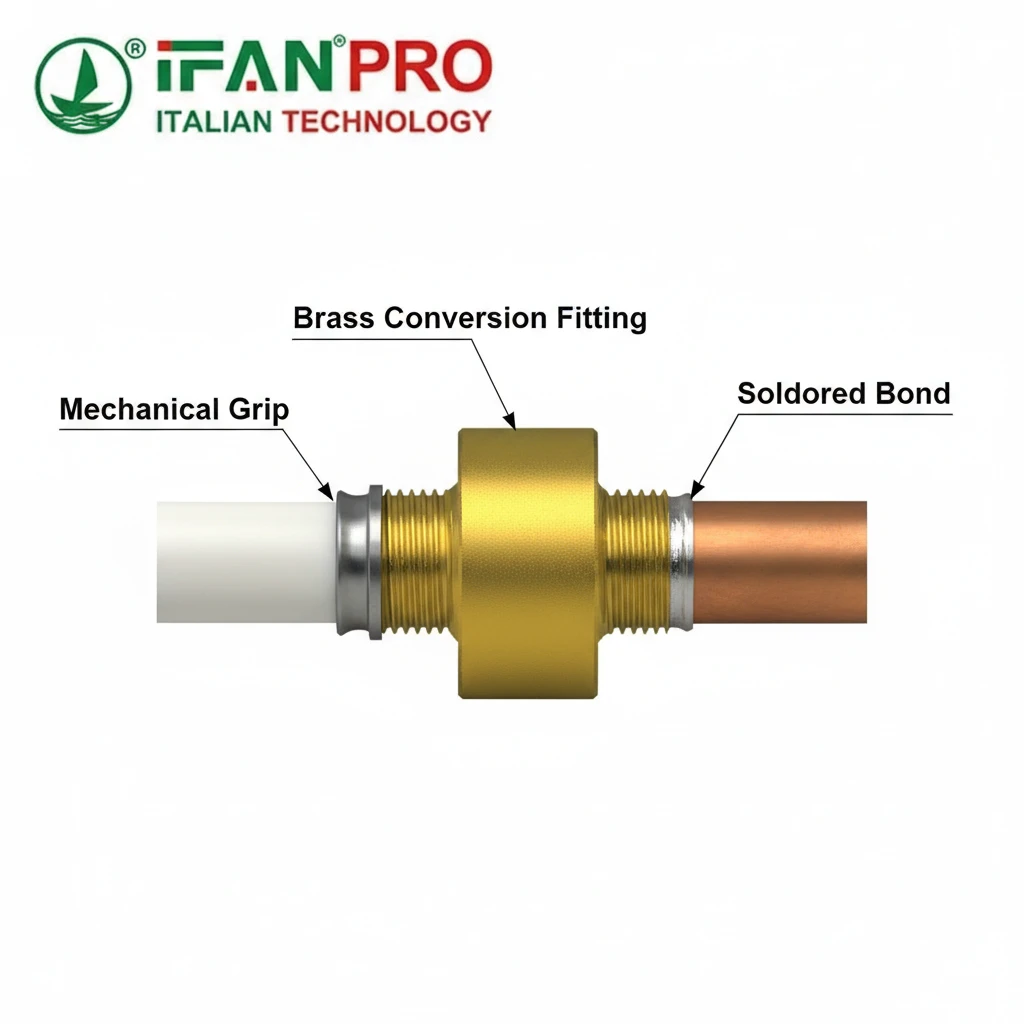
The Role of Brass as the Perfect Bridge
Reliability in a mixed system is not automatic. It is the result of using the right material and the right techniques. Brass is the key.
First, brass is a non-ferrous metal, meaning it contains no iron and will not rust. More importantly, it sits very close to copper on the galvanic series. This is a scientific ranking of metals. When two different metals are in contact with water (an electrolyte), they can create a small electrical current that causes the weaker metal to corrode rapidly—this is galvanic corrosion.
Because brass and copper are very close on this scale, the galvanic reaction between them is extremely slow and minimal. This means a brass fitting soldered to copper will not corrode at the joint. Using a steel or even a lower-quality metal fitting could cause a serious corrosion problem inside your wall.
Separate and Correct Connection Methods
A single fitting doesn’t force one bad method onto two different materials. Instead, it provides the ideal interface for each.
- On the PEX side: The mechanical (crimp/clamp) connection is the only correct way to join PEX. It does not require heat that could damage the plastic, and it creates a powerful, 360-degree grip.
- On the Copper side: The soldered joint is the traditional, time-tested, and strongest method for joining copper. The threaded or compression options are also standard, reliable methods for copper systems.
By keeping these methods separate but united in one fitting, each material is connected in the best way possible. This eliminates the common DIY mistake of trying to force an incompatible method, like using PVC glue on a copper pipe.
Ensuring a Leak-Free Transition: Installation is Key
The fitting itself is reliable, but the final outcome depends on the installation.
For the PEX Side:
- You must cut the PEX tube square with a proper cutter.
- You must fully insert the tube onto the barbs until it bottoms out.
- The crimp or clamp ring must be placed in the correct groove and compressed evenly.
For the Soldered Copper Side:
- You must clean both the pipe and fitting socket until shiny.
- You must apply flux to both parts.
- You must heat the fitting, not just the solder, to ensure the solder flows into the joint properly.
For the Threaded Copper Side:
- You must use thread seal tape or paste to fill any gaps in the threads and prevent water from seeping through.
Preventing Common Problems
| Potential Problem | Cause | How the Brass Fitting & Good Practice Prevent It |
|---|---|---|
| Leak at PEX joint | Tube not fully inserted; ring not crimped correctly. | Barbed design stops at a shoulder, showing full insertion. Proper tools ensure correct crimp. |
| Leak at solder joint | Poor cleaning, insufficient heat, no flux. | Brass heats evenly for good solder flow. Proper technique creates a capillary seal. |
| Corrosion over time | Dissimilar metals causing galvanic corrosion. | Brass and copper are electrochemically similar, minimizing corrosion. |
| Joint failure under stress | Low-quality metal or poor design. | DZR (Dezincification Resistant) brass is strong and withstands water pressure and temperature swings. |
In summary, the reliability comes from a three-part formula: the correct material (high-quality DZR brass), a smart design that accommodates two different joining methods, and careful installation following standard plumbing practices. When all three are in place, the transition joint will be as reliable as any other part of your plumbing system.
Заключение
Brass conversion fittings provide a simple, reliable, and code-approved way to connect PEX and copper systems. For your next plumbing update or repair, ensure a perfect transition with high-quality ИФАН brass fittings, designed for durability and leak-free performance.







 Русский
  English
  Français
  Español
Последние комментарии