
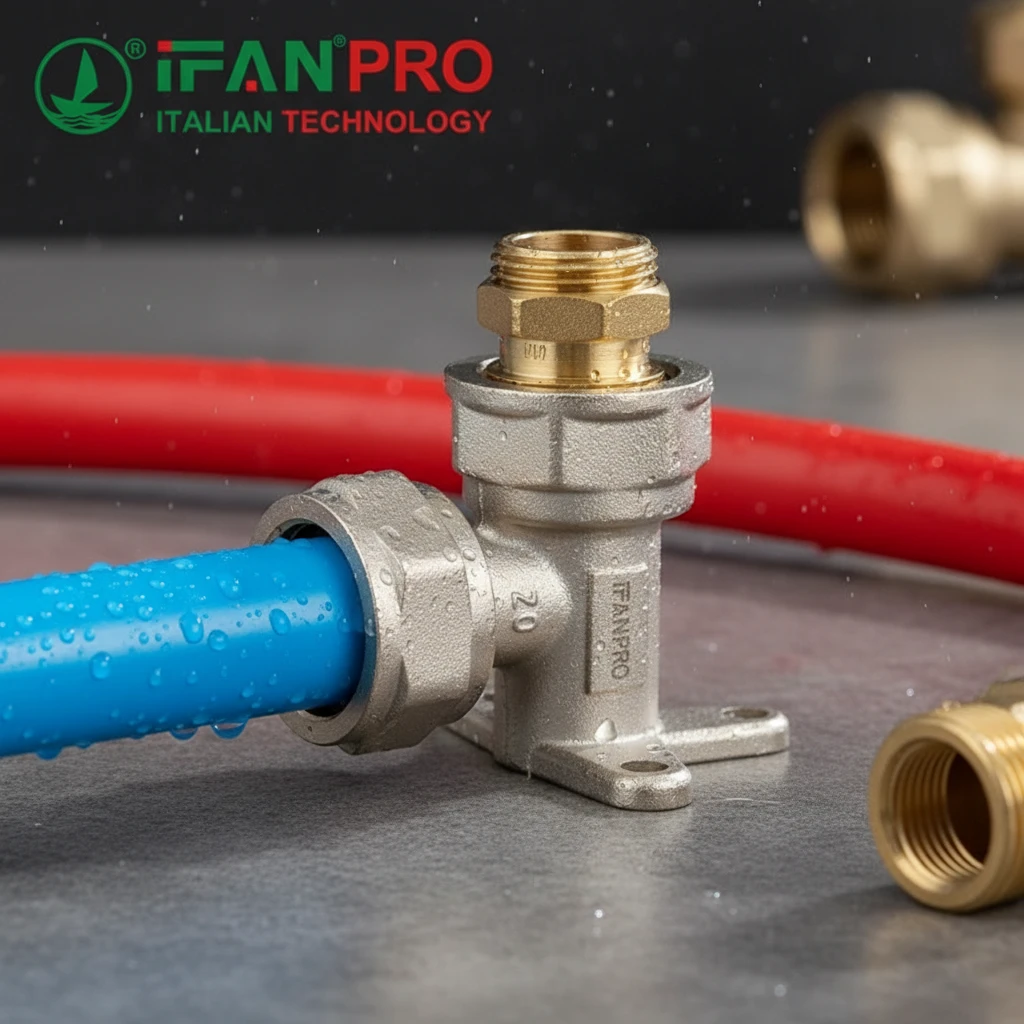
I’ve seen too many callbacks for leaks where a hot water line meets a rigid fitting. This common failure is exactly why the right connection matters so much.
Yes, a fitting designed for PEX hot water lines can absolutely withstand thermal cycling. It achieves this by using materials with similar expansion rates to PEX, incorporating a seated sealing design that allows for slight movement, and being rigorously tested under repeated hot/cold pressure cycles to ensure long-term reliability and prevent loosening.
However, the keyword is “designed for.” Not all fittings are equal. Let’s examine how a quality fitting manages the constant push and pull of hot water systems.
How Do the Materials Handle Repeated Expansion and Contraction of PEX?
When hot water flows, PEX pipes expand; when it cools, they contract. A rigid, mismatched fitting will fight this movement until something fails.
The materials handle repeated expansion and contraction by using engineered polymers or composite metals that have a thermal expansion coefficient closely matched to PEX tubing. This compatibility minimizes differential stress at the critical connection point. Additionally, seals made from high-temperature EPDM or silicone maintain elasticity across the entire temperature range, flexing with the movement instead of cracking.
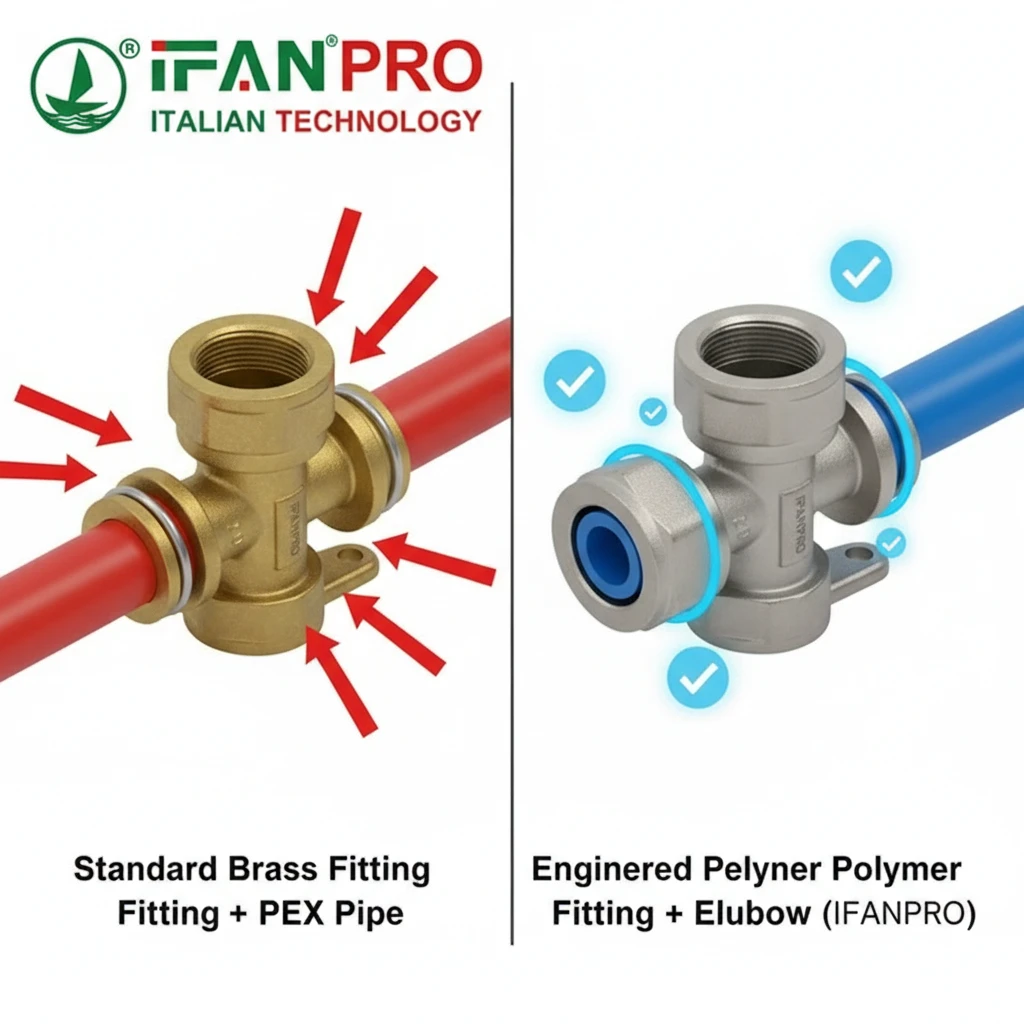
The Science of Thermal Expansion Compatibility
Every material expands when heated and contracts when cooled, but at different rates. This rate is called the coefficient of thermal expansion. When two joined materials have very different coefficients, one tries to move more than the other, creating tremendous shear stress at their interface.
For example, a traditional brass fitting expands much less than the PEX pipe attached to it. Over hundreds of heating cycles, this constant stress can:
- Fatigue the PEX material right at the fitting’s grip.
- Over-compress and permanently deform a standard gasket.
- Lead to a slow, creeping failure at the joint.
How Quality Fittings Solve the Problem
Modern PEX fittings solve this material conflict in two primary ways:
1. Polymer Fittings: Many professional-grade PEX fittings are made from a high-temperature, glass-fiber reinforced polymer. Engineers specifically formulate this material to have a thermal expansion profile very similar to PEX tubing. When the system heats up, the pipe and fitting expand together almost as a single unit. This dramatically reduces the shear stress on the seal and the connection mechanism.
2. Composite/Metal Fittings with Compensating Designs: Even metal fittings, like those made from brass, can be designed for compatibility. They often achieve this through their mechanical design (which we’ll cover next) rather than material match. However, the sealing element remains critical. These fittings use advanced, heat-resistant elastomers like EPDM that stay soft and resilient from near-freezing temperatures up to the maximum operating temperature of the PEX system (typically around 200°F/93°C).
The result is a system that moves in harmony. The table below illustrates the concept of stress based on material pairing:
| Fitting Material (with PEX Pipe) | Thermal Expansion Mismatch | Resultant Stress on Connection | Typical Seal Used |
|---|---|---|---|
| Standard Brass | High | High shear stress at the pipe/fitting interface. | Standard Buna-N or rubber O-ring. |
| Engineered Polymer | Very Low | Low stress; pipe and fitting expand as a near-unified piece. | High-temp EPDM or Silicone. |
| Brass with Stress-Relief Design | High, but managed | Stress is directed into the fitting’s flexible sealing chamber, not the pipe. | High-temp EPDM. |
In short, the right materials don’t fight physics—they work with it.
Does the Seated Design Allow for Any Controlled Pipe Movement?
A completely rigid connection is the enemy of a flexible pipe system. The best fittings are designed to accommodate, not resist, movement.
Yes, a high-quality seated design, like those in expansion-style PEX fittings or certain press-fit systems, actively allows for controlled pipe movement. Instead of gripping the pipe’s outer diameter rigidly, these fittings secure the pipe within a chamber that lets the PEX expand and contract longitudinally (in and out) without pulling away from the primary seal, which is isolated from this movement.
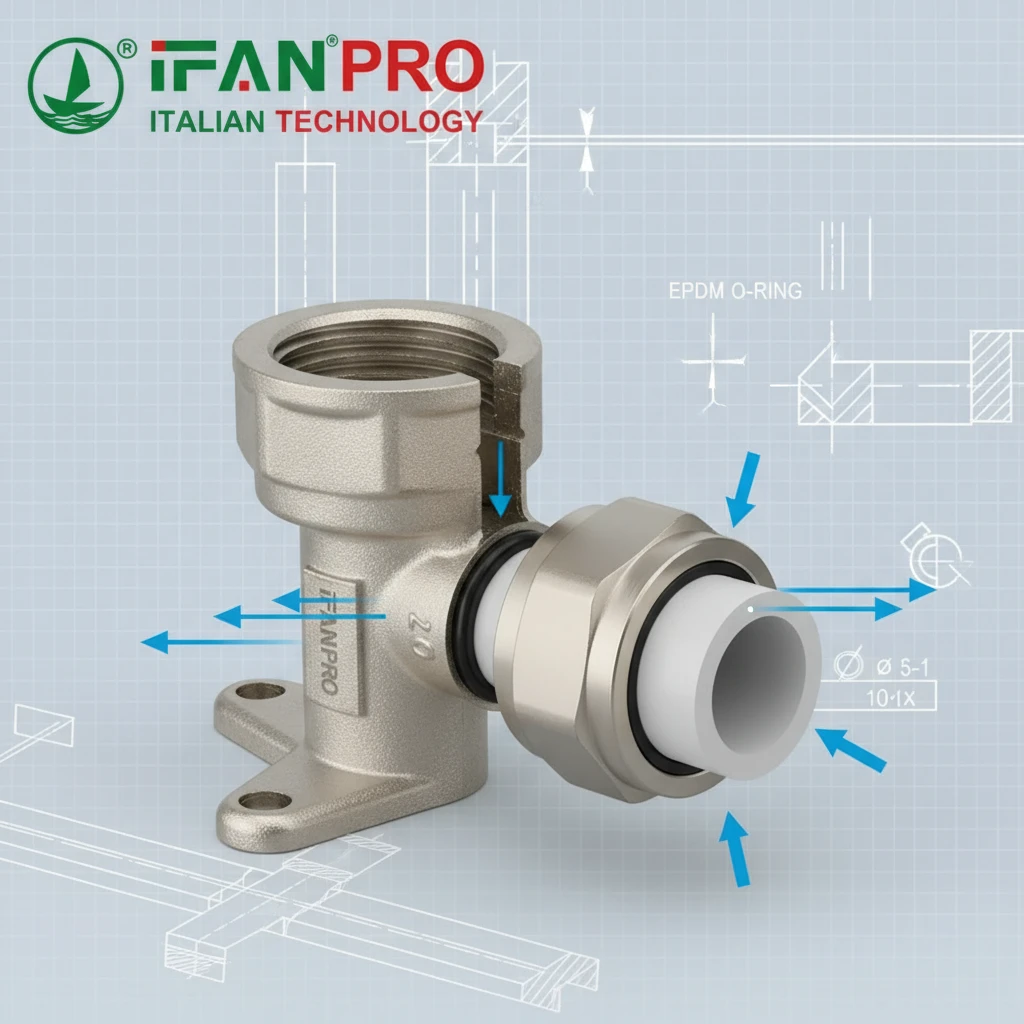
Two Philosophies of Connection
There are two main ways to connect PEX to a fitting, and they handle movement very differently:
1. The Crimp/Clamp Method (Restrictive): This traditional method uses a metal ring crimped over the PEX where it sits on a barbed fitting. It creates a very strong mechanical grip. However, it essentially pins the pipe in place. All thermal expansion force is transferred as stress directly to the gripped area of the PEX and the fitting body. This can lead to fatigue over time.
2. The Expansion/Seated Method (Compensating): This is the modern solution for stress management. Here’s how it works step-by-step:
- Step 1: The pipe end is expanded using a special tool.
- Step 2: The fitting, which has a smooth sleeve and a separate internal rubber seal ring, is inserted into the expanded pipe.
- Step 3: The PEX contracts back down over the sleeve, but it grips the sleeve, not a barb.
- Step 4: The critical seal is provided by the internal O-ring, which sits in a protected chamber.
The Key Advantage of the Seated Design
In the expansion/seated system, the seal and the grip are separated. The PEX is free to expand and contract along the length of the smooth sleeve. This longitudinal movement happens without disturbing the O-ring seal, which is compressed in its own dedicated seat. The force of expansion is absorbed as the pipe slides minutely along the sleeve, not as a fight against a barbed grip.
Think of it like a piston in a cylinder. The piston (the PEX pipe) can move in and out, but the O-ring on the piston head maintains a perfect seal against the cylinder wall the entire time. This design is fundamentally more forgiving of thermal cycling.
What Long-Term Tests Verify Its Performance in Hot Water Cycling?
Anyone can claim their fitting lasts. Reputable manufacturers prove it with data from brutal, accelerated aging tests.
Independent certification labs verify long-term performance through standardized accelerated life tests. The most important is the ASTM F2023 “Cyclic Pressure Test,” which subjects fittings to thousands of rapid hot/cold water pressure cycles, simulating decades of use in a matter of weeks. Passing this test is a minimum requirement for credible PEX system components.
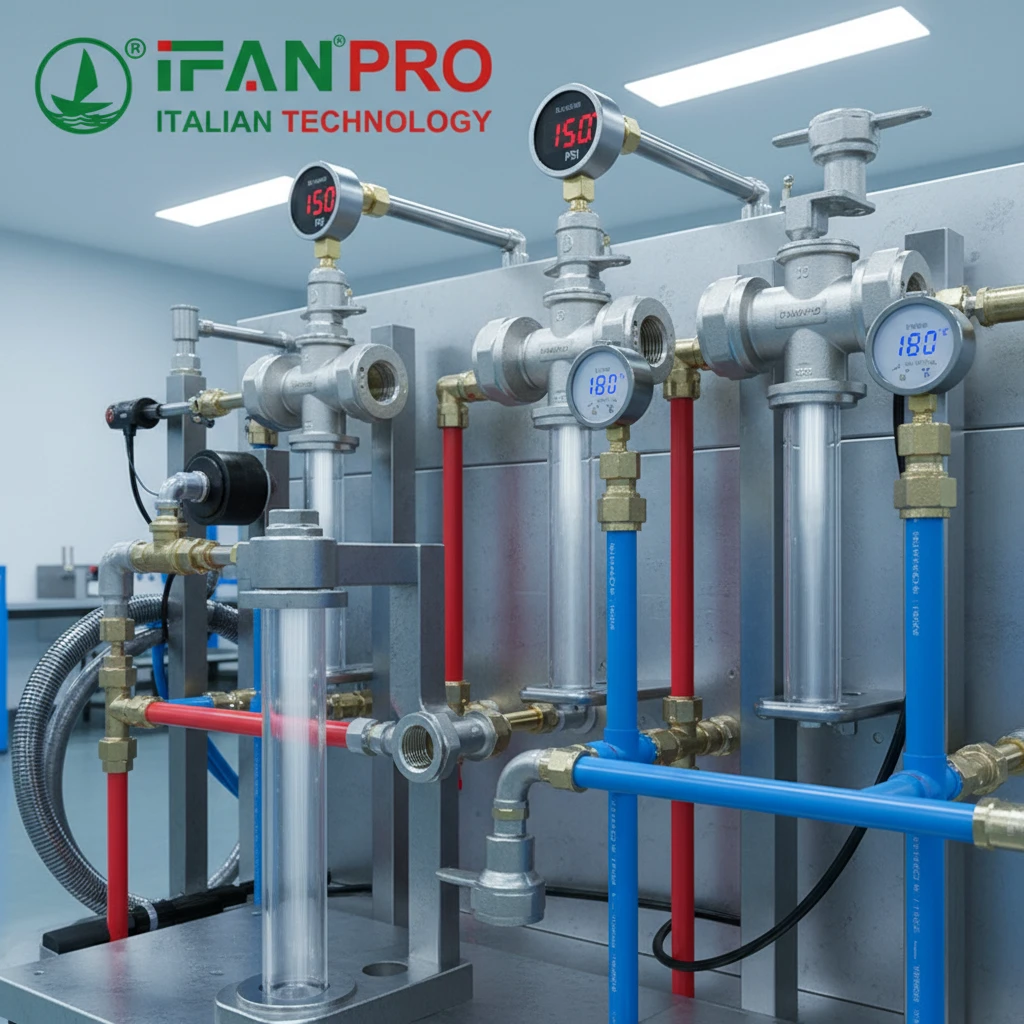
Simulating a Lifetime of Use in Weeks
It’s not practical to test a fitting for 50 years in real time. Instead, laboratories use accelerated protocols that create extreme, repetitive stress. A fitting that survives these tests has a very high probability of lasting for decades in your home.
The gold standard test is ASTM F2023 – Standard Test Method for Evaluating the Cyclic Fatigue Strength of PEX Tubing and Fittings. Here’s what it involves:
- Setup: Testers install fittings and PEX tubing in a controlled test rack.
- Cycling: They subject the assembly to repeated cycles of:
- High-Pressure Hot Water: Typically 150 PSI at 180°F (82°C).
- Low-Pressure Cold Water: Typically 30 PSI at 73°F (23°C).
- Duration: The test runs for 5,000 cycles. One cycle every 30 seconds completes in just over 4 days of continuous operation.
- Pass/Fail Criteria: The assembly must show zero leaks throughout all 5,000 cycles.
This test is brutally effective. It combines thermal stress (hot to cold) with pressure stress (high to low). It challenges the material’s fatigue resistance, the seal’s elasticity, and the integrity of the connection itself.
Beyond Cyclic Testing: Other Critical Verifications
Reputable manufacturers and certifications like IAPMO, NSF, and CSA require a battery of tests. These often include:
- Sustained Pressure Tests: Holding the fitting at very high constant pressure and temperature for 1,000 hours.
- Burst Pressure Tests: Increasing pressure until failure to determine the ultimate safety margin.
- Thermal Degradation Tests: Exposing the fitting to high temperatures for extended periods to ensure the polymer does not become brittle.
When you choose a fitting, you are not just choosing a piece of plastic or metal. You are choosing the validation behind it. A fitting from a trusted source like IFAN comes with the assurance that it has survived this simulated lifetime of abuse before it ever reaches your job site.
Could Thermal Stress Cause the Seat to Loosen or the Threads to Leak?
This is the installer’s nightmare: a fitting that seems tight on day one but slowly seeps after months of use. Proper design directly addresses this fear.
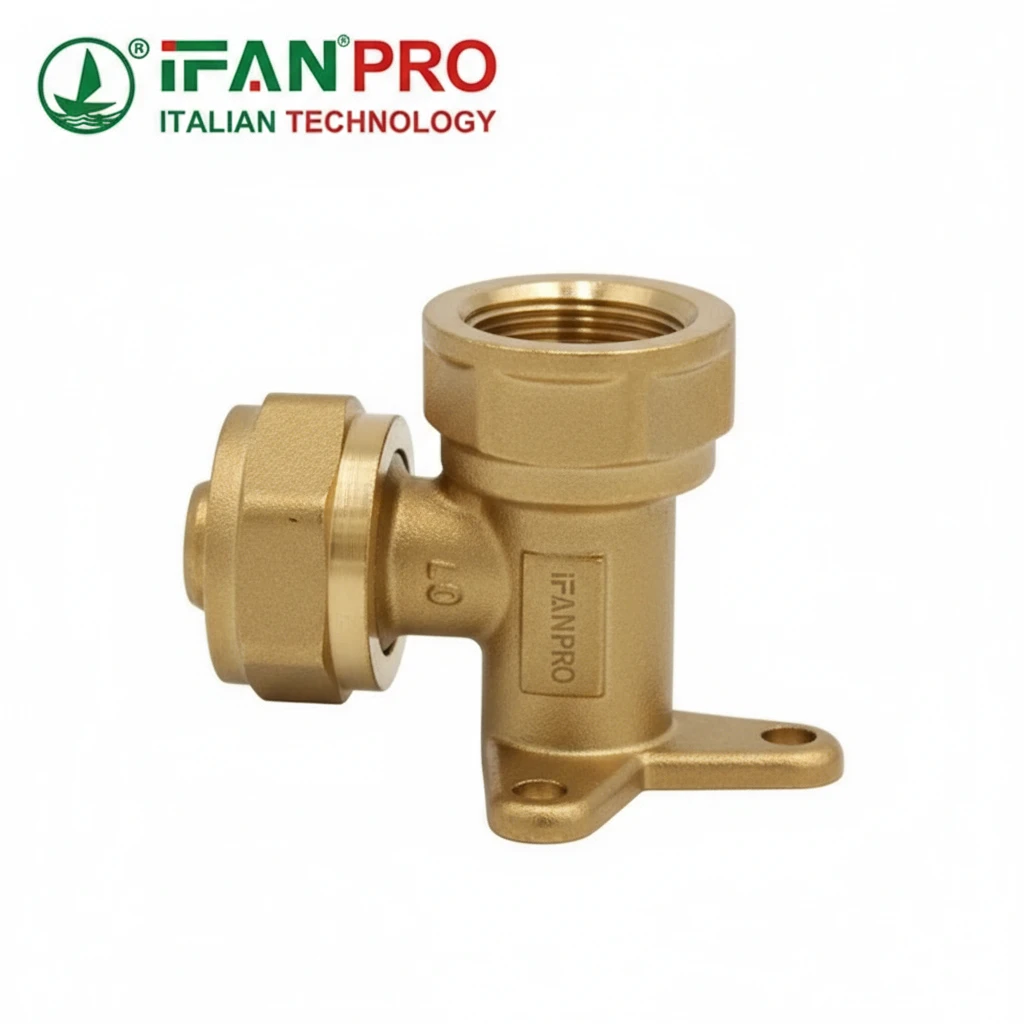
No, thermal stress should not cause a properly designed and installed seated fitting to loosen or leak. The seated O-ring seal is compression-based and not torque-dependent, so thermal movement does not unwind it. For threaded ports, robust designs use a separate, reinforced shoulder for wrench tightening, isolating the threads from the primary seal and preventing distortion that leads to leaks.
Why a True Seated Seal Doesn’t “Loosen”
First, it’s crucial to understand the difference between a thread seal and a seated seal.
- A Thread Seal (like Teflon tape on pipe threads) relies on the tightness of the threads themselves. Vibration and thermal cycling can cause these to micro-adjust and potentially weep.
- A Seated Seal (like an O-ring pressed into a gland) relies on constant compression of an elastic element. The threads (or a clamp) are only the mechanism to create this compression. Once compressed, the O-ring wants to spring back, maintaining constant pressure on the sealing surfaces.
In a quality PEX fitting with a seated seal, the thermal cycling causes the components to move. However, because the seal is elastic and under compression, it simply flexes slightly. It does not unscrew. The torque on the nut or ring does not change significantly because the seal, not the threads, is absorbing the movement.
Protecting Threaded Connections from Stress
Many PEX fittings have threaded ports (e.g., NPT) to connect to valves or water heaters. Here, thermal stress is a real concern if the fitting is poorly made.
A cheap fitting might have threads that are part of the same molding as the PEX connection. When you wrench on the threads, you can distort the entire fitting body, compromising the internal PEX seal.
A well-engineered fitting solves this by isolating the stresses. It features:
- A Heavy, Reinforced Shoulder: This is a thick, hexagonal area behind the threads designed specifically for wrench engagement.
- Isolated Thread Chamber: The threads are cut into this reinforced shoulder, not into the body containing the PEX seal.
- Stable Seal Pocket: The O-ring seal for the PEX tube sits in a separate, rigid pocket that is not affected when you tighten the metal threads.
This design ensures that the force of installation stays where it belongs. You can tighten the fitting into a valve without stressing the seal that holds the PEX pipe. Therefore, thermal cycles cannot exploit a pre-stressed, weakened area.
Заключение
A fitting can absolutely withstand PEX hot water cycling if it’s designed with material compatibility, seated movement, and proven testing. For guaranteed reliability, choose system-engineered solutions like IFAN’s PEX fittings and connectors.









 Русский
  English
  Français
  Español
Последние комментарии