
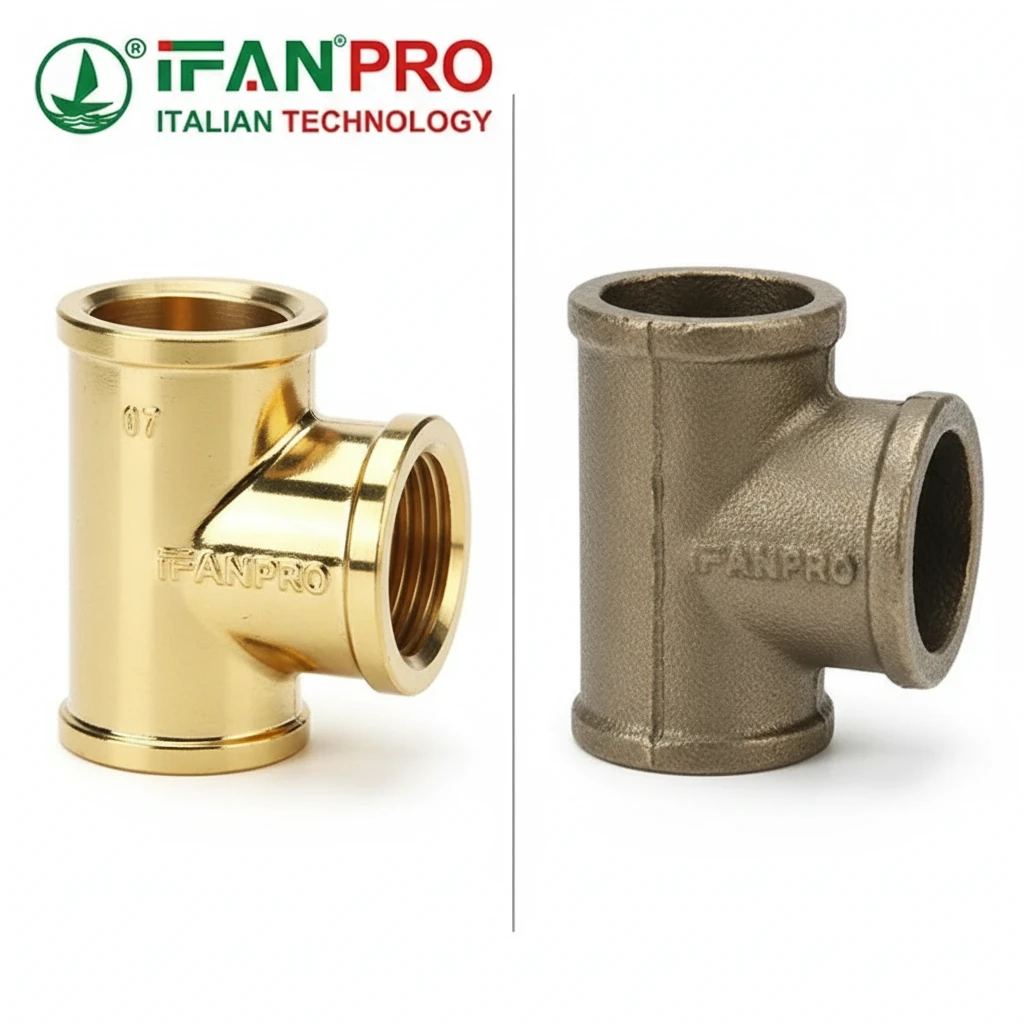
In a high-pressure steam line project, we once saw a cast fitting fail catastrophically where a forged one held. That moment proved the difference isn’t just theoretical—it’s critical for safety.
Forged brass elbows are stronger than cast ones because the forging process compresses and aligns the metal’s internal grain structure, creating a continuous, unbroken flow. This eliminates the voids, porosity, and random grain boundaries common in casting, resulting in a denser, more homogeneous, and mechanically superior part that withstands higher pressure, impact, and fatigue.
While both types serve in plumbing, their performance under stress differs vastly. Let’s examine the specific reasons why forging creates a fundamentally stronger component.
How Does the Forging Process Align the Brass Grain Structure for Strength?
Imagine bending a bundle of straight straws versus a bundle of randomly scattered ones. The aligned bundle is far stronger. Forging does exactly this to metal.
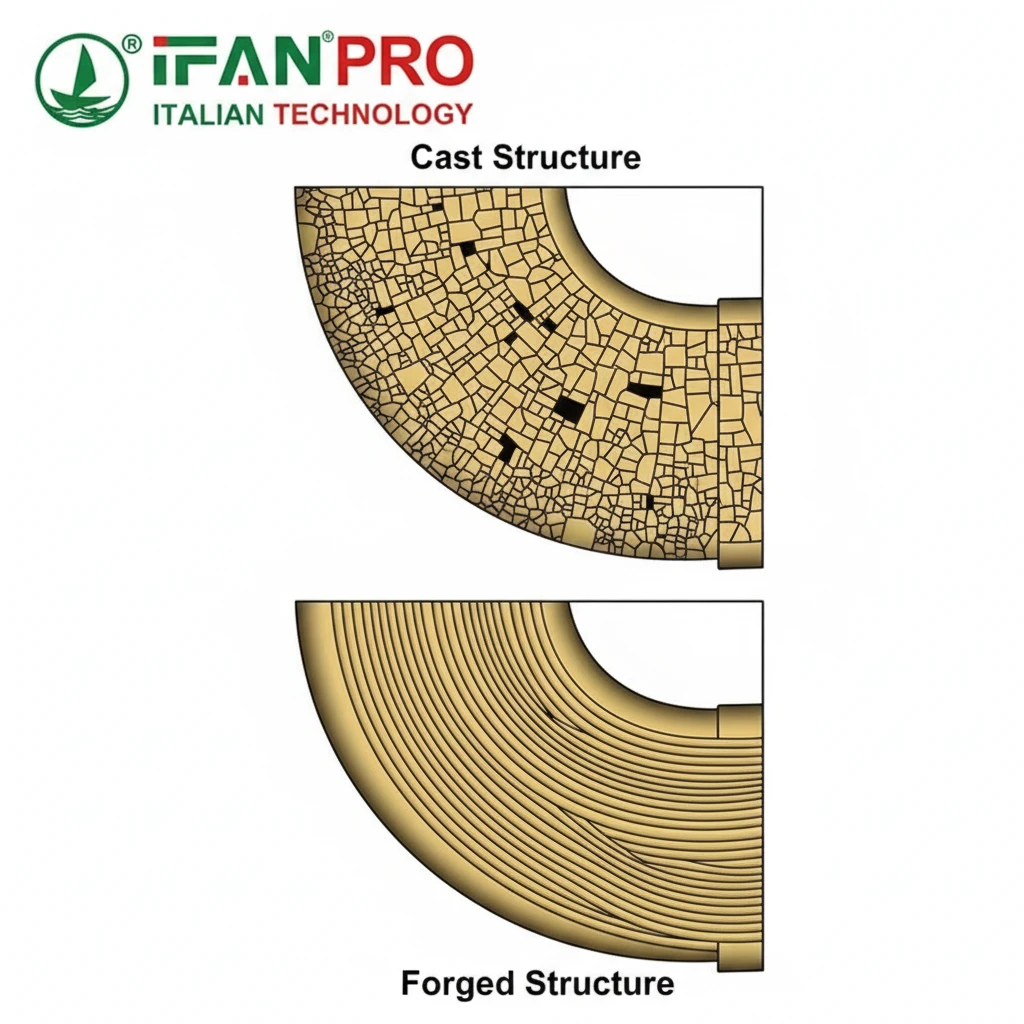
The forging process aligns the brass grain structure by applying immense compressive force at high temperature. This force physically deforms the brass billet, causing its internal crystalline grains to stretch and flow in the direction of the shape, much like kneading dough. This creates a continuous, streamlined grain pattern that follows the contour of the elbow, providing superior resistance to stress and cracking.
Understanding Metal “Grain”
To grasp why alignment matters, think of brass at a microscopic level. It’s not a uniform solid; it’s made of countless tiny crystals called “grains.” How these grains are arranged determines the metal’s strength.
In a cast fitting, molten brass pours into a mold and cools randomly. The grains grow in various directions and sizes, forming weak boundaries where they meet. It’s like a jigsaw puzzle with poorly fitting pieces—stress concentrates at these junctions.
The Forging Transformation
The forging process radically changes this structure. Here’s how it works step-by-step:
- Heating: A solid cylindrical brass billet heats until it’s malleable but not molten.
- Compression & Shaping: A powerful hammer or press applies tremendous force, hammering or squeezing the billet into a die shaped like an elbow.
- Grain Flow: This force doesn’t just change the shape. It physically elongates and reorients the internal grains, making them flow around the bend of the elbow. The grains become finer and longer, following the geometry of the part.
The result is a unidirectional grain flow. In an elbow, the grains smoothly curve around the bend, creating a natural path for stress to travel without encountering a weak, random boundary. This is similar to the strength of wood, which is much harder to split along the grain (aligned fibers) than across it (cutting through fibers).
Visualizing the Difference
The table below contrasts the core structural outcomes:
| Feature | Cast Brass Elbow | Forged Brass Elbow |
|---|---|---|
| Grain Structure | Random, coarse, and discontinuous. | Aligned, fine, and continuous, following the part’s shape. |
| Analogy | A lump of sugar with random crystals. | Pulled taffy with fibers all running in one direction. |
| Impact on Strength | Stress gets trapped at random grain boundaries, initiating cracks. | Stress distributes evenly along the aligned grain flow. |
This fundamental reorganization at the molecular level is the primary reason forged components offer higher tensile strength, better impact toughness, and greater fatigue life.
Why Are Forged Elbows Less Porous and More Reliable Under High Pressure?
Porosity is the hidden enemy in pressure systems. We’ve rejected countless cast fittings during audits due to visible porosity that guarantees future failure.
Forged elbows are less porous because the intense forging pressure collapses and eliminates gas pockets and micro-voids inherent in the casting process. This creates a fully dense metal matrix with no internal pathways for leaks or pressure failure, making them definitively more reliable for sustained high-pressure and high-vibration applications.
The Porosity Problem in Casting
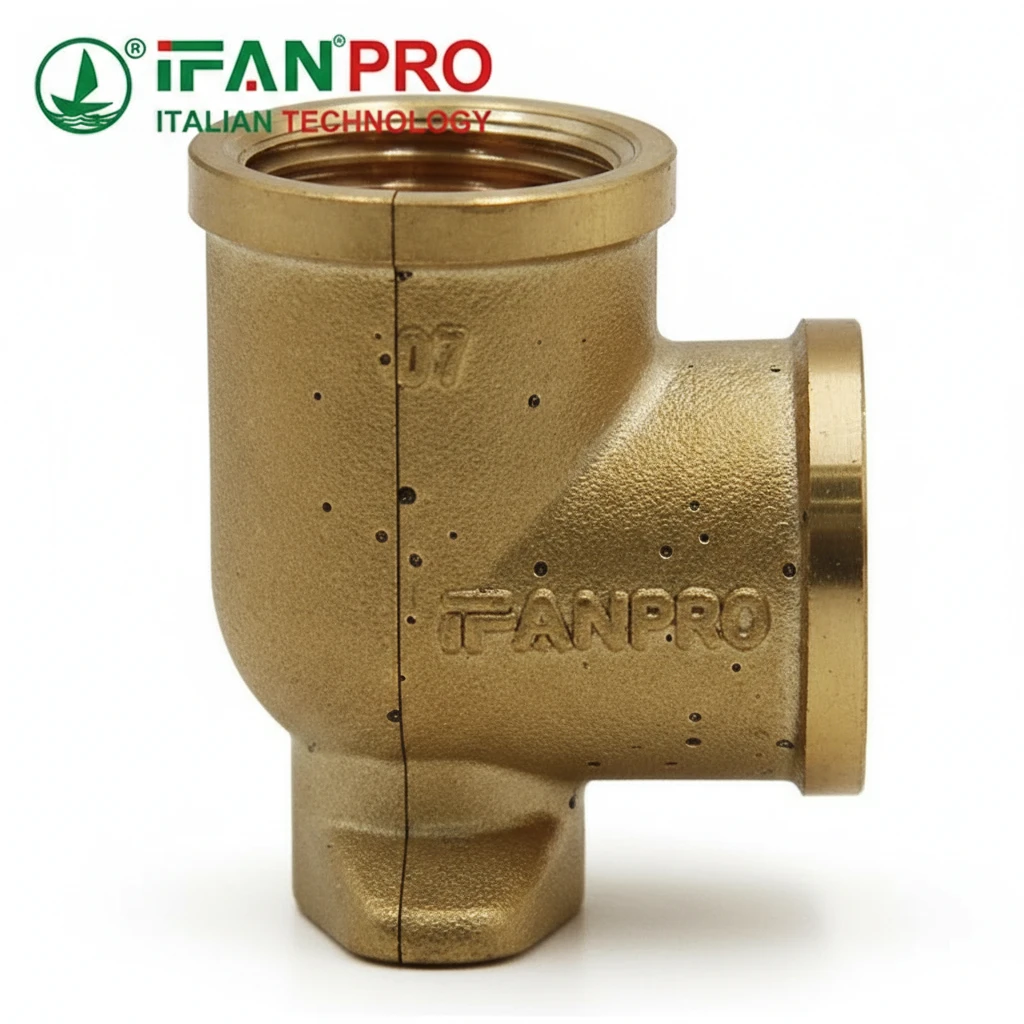
During casting, as molten metal cools and solidifies in the mold, it inevitably traps tiny gas bubbles and forms shrinkage cavities. These defects are internal voids—essentially microscopic holes inside the metal.
- Why it happens: Gases dissolve in molten metal. When the metal cools, these gases come out of solution, forming bubbles. Also, metal shrinks as it solidifies; if feed metal doesn’t compensate perfectly, it leaves small cavities.
- The consequence: These voids create points of extreme weakness. Under high or cyclic pressure, cracks can initiate from these pores and propagate, leading to sudden failure.
How Forging Eliminates Voids
Forging starts with a solid, already-cast billet (which may have some porosity). The magic happens during deformation.
The tremendous compressive force—often thousands of tons per square inch—physically crushes these internal voids. It welds them shut through mechanical work and heat. The metal flows plastically, filling every space and creating a virtually 100% dense material. Think of it like applying extreme pressure to a sponge; you compress and eliminate all the air pockets.
Reliability in Critical Service
This density translates directly to reliability in demanding conditions:
- High Pressure: With no pores to act as failure points, forged elbows can handle much higher burst pressures. They are less likely to leak or rupture.
- Vibration and Fatigue: In systems with pumps or pressure surges (water hammer), components undergo cyclic stress. Porosity creates stress concentrators that drastically reduce fatigue life. A dense forged part withstands these cycles far longer.
- Temperature Extremes: Density ensures better thermal conductivity and structural integrity during thermal cycling (repeated heating and cooling).
For engineers, specifying forged fittings is a risk-mitigation strategy. It removes the variable of internal defects from the reliability equation.
In Which Demanding Applications Are Forged Brass Elbows Specified?
You wouldn’t use a plastic chair in a heavy machinery workshop. Similarly, specific applications demand the inherent strength of forged brass.
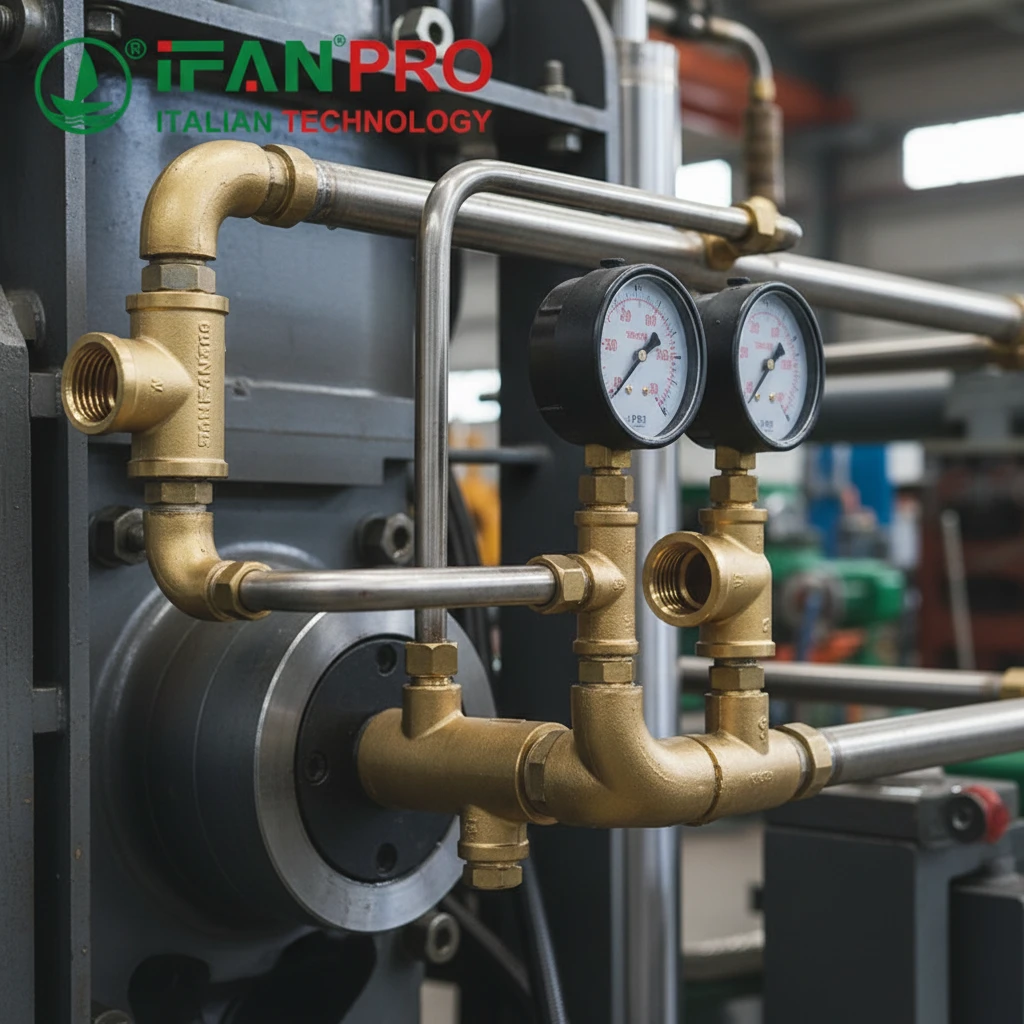
Forged brass elbows are specified in demanding applications where failure is not an option. This includes high-pressure steam and compressed air lines, hydraulic systems, marine and offshore installations, industrial process piping, fire suppression sprinkler systems, and critical HVAC/R components. These environments require the superior mechanical strength, leak integrity, and fatigue resistance that forging provides.
Application Breakdown: Where Forging is Non-Negotiable
Let’s explore specific sectors where the cost of failure justifies specifying forged fittings.
1. Industrial & Process Piping:
This is the primary domain for forged brass fittings. Systems carrying steam, compressed air, chemicals, or hydraulic fluids operate at high pressures (often 150+ PSI and much higher). A burst fitting can cause downtime, injury, or environmental damage. Forged elbows are standard here for their guaranteed pressure rating and reliability.
2. Marine and Offshore:
In ships and offshore platforms, systems are subject to constant vibration, saltwater corrosion, and dynamic loads. The combination of forged strength and brass’s corrosion resistance is crucial for fuel, lubrication, and seawater lines. Failure at sea can be catastrophic.
3. Fire Sprinkler Systems:
Life safety systems cannot compromise. Sprinkler systems must hold pressure for decades and perform instantly in an emergency. Building codes often mandate forged or wrought fittings in these systems to ensure they won’t fail under water hammer or during a fire.
4. High-Performance HVAC/R:
Commercial refrigeration and air conditioning systems operate with high-pressure refrigerants. Vibration from compressors is constant. Forged brass elbows in the refrigerant circuit prevent leaks of expensive and environmentally regulated gases.
5. Transportation:
In locomotives, aircraft ground support, and heavy vehicles, forged fittings are used in critical air brake and hydraulic systems where failure would directly impact safety.
Decision Guide: When to Specify Forged
Use this table to guide material selection:
| Application Context | Recommended Fitting Type | Key Reason |
|---|---|---|
| Residential potable water (low pressure) | Cast Brass | Cost-effective and perfectly adequate for static, low-pressure cold/hot water. |
| Commercial building water mains | Forged Brass | Higher system pressure, larger scale, and greater consequence of failure. |
| Industrial compressed air lines (100+ PSI) | Forged Brass | Mandatory for safety and reliability under high cyclic pressure. |
| Hydraulic oil lines | Forged Brass or Steel | Extremely high pressure demands the density and strength of forging. |
| Marine engine cooling | Forged Naval Brass | Resistance to saltwater corrosion and vibration-induced fatigue. |
The rule is simple: if the system is dynamic (has vibration/pulsation), operates under high pressure, or its failure poses a safety or major financial risk, the specification must lean towards forged components.
Can You Visually Distinguish a Forged Elbow from a Cast One?
Yes, often you can. While not always foolproof, several telltale signs can help you identify a forged fitting before it’s installed.
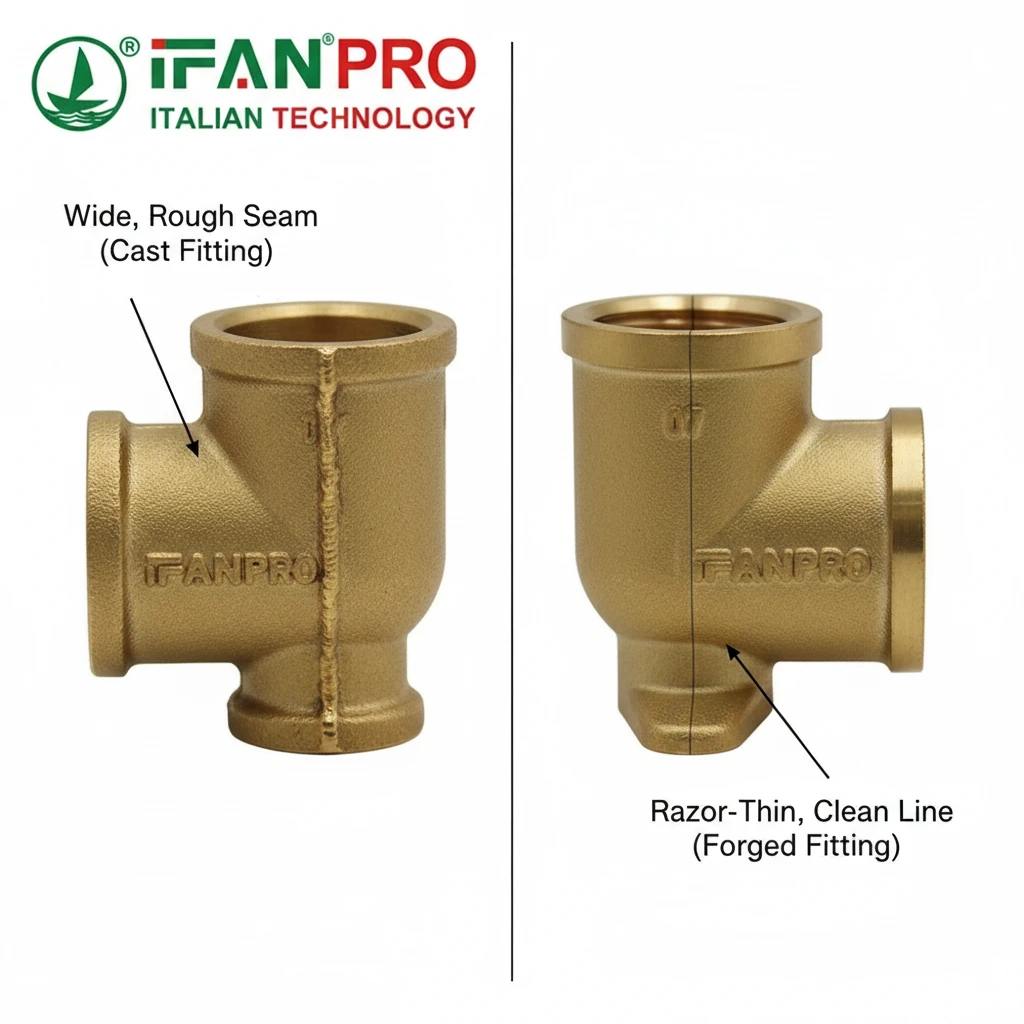
You can often visually distinguish a forged brass elbow from a cast one by looking for a parting line, surface finish, and sharpness. A cast fitting typically shows a prominent, wide parting line from the mold seam and may have a slightly rough, sandy texture. A forged fitting usually has a very faint, narrow parting line (or flash) from the die and exhibits a smoother, shinier surface with sharper, more defined edges.
Key Visual Identification Marks
Here are the most reliable clues to look for, moving from easiest to more subtle:
1. The Parting Line (The Most Obvious Sign):
This is the line left where the two halves of the mold or die met.
- On a Cast Fitting: The parting line is usually wide, raised, and prominent. It may look like a thick seam running around the fitting. Sometimes, it’s not fully cleaned, leaving excess material (flash) that feels rough.
- On a Forged Fitting: The parting line is very fine, thin, and often flush with the surface. It looks like a sharp, hairline seam. This is because the dies are machined with high precision and fit together tightly under immense pressure.
2. Surface Finish and Texture:
- Cast Surface: Often has a slightly rough, granular, or “orange peel” texture. It may feel gritty like fine sandpaper. The surface can be dull or have a matte appearance.
- Forged Surface: Appears much smoother and denser. It often has a brighter, more polished metallic luster because the grain is compressed. You might see fine machining marks or a uniform, smooth finish.
3. Sharpness of Corners and Details:
- Cast Fitting: Edges, lettering, and design details tend to be more rounded and softer. This is because liquid metal doesn’t fill the finest details of a mold as sharply.
- Forged Fitting: Corners, ridges, and stamped markings (like size and pressure rating) are crisp, sharp, and well-defined. The high pressure forces metal into every detail of the die.
A Practical Comparison Table
Keep this checklist handy during inspections:
| Characteristic | Cast Brass Elbow | Forged Brass Elbow |
|---|---|---|
| Parting Line | Wide, raised, obvious seam. | Very fine, thin, often barely noticeable. |
| Surface Texture | Slightly rough, matte, may feel sandy. | Smooth, dense, often shinier. |
| Edges & Details | Rounded, soft features. | Sharp, crisp corners and markings. |
| Weight (for same size) | Can feel slightly lighter due to potential porosity. | Feels solid and dense in the hand. |
Important Note: High-quality castings can be cleaned (tumbled, shot-blasted) to improve finish, and poor forgings can have flaws. For absolute certainty, especially for critical applications, rely on the manufacturer’s certification (MTC) and trusted suppliers like IFAN, who clearly label and specify their forged product lines.
Заключение
Forged brass elbows provide superior strength and reliability for high-pressure systems. For your most demanding projects, choose IFAN’s forged brass fittings for guaranteed performance and safety.








 Русский
  English
  Français
  Español
Последние комментарии