
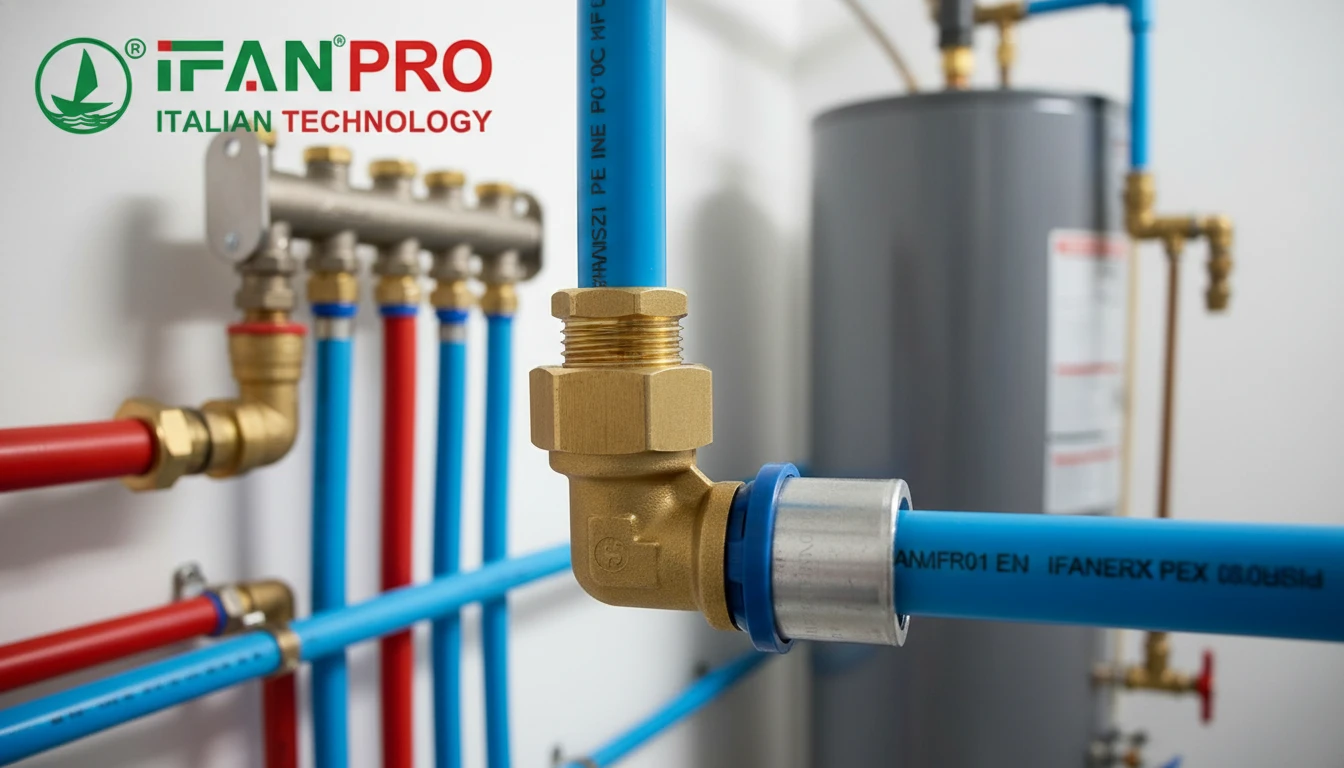
I once watched a plumber struggle to replace a single valve, forced to cut out a whole section of rigid pipe. In fact, that moment perfectly highlighted the problem a union elbow solves.
An elbow with a union simplifies PEX system disassembly by creating a planned, reusable break point at a corner. Instead of cutting the PEX pipe, you simply loosen the union nut to separate the fitting. This action lets you remove, repair, or replace any connected component downstream without damaging the permanent piping.
This simple fitting transforms maintenance from a destructive chore into a straightforward task. Now, let’s break down exactly how it works and why it’s a game-changer.
How Can You Disconnect a Section Without Cutting the PEX Pipe?
The fear of making permanent, destructive cuts holds many DIYers and pros back. Therefore, I’ve advised countless clients on how to build serviceability into their systems from the start.
You can disconnect a section without cutting the PEX pipe by using an elbow with a union. This fitting has a threaded union nut in the middle. When you loosen this nut, you break the seal at the elbow’s corner. Consequently, this allows you to separate the two pipe runs connected to it without any cutting tools, so you preserve the full length of the PEX tubing.
The Design of a Serviceable Point
The core innovation is in the fitting’s design. Specifically, a standard elbow is a single, solid piece of brass or plastic. Once installed, it is permanent. However, a union elbow is made in two parts that join together at the corner.
Manufacturers make these two parts as follows:
- The Male Threaded End: A plumber typically sweats or presses this part onto one pipe run.
- The Female Threaded Socket with Union Nut: They attach this part to the other pipe run. A large hexagonal nut (the union nut) spins onto the male threads.
Inside, sealing surfaces—usually a rubber O-ring or a flat plastic gasket—create a watertight seal when you tighten the nut. This is the key. The seal is mechanical and pressure-based, not a chemical bond or a welded joint.
Step-by-Step Non-Destructive Disconnection
Here is the simple process for disassembly:
- Shut Off Water: First, always turn off the water supply to the relevant section.
- Drain Pressure: Next, open a downstream faucet to drain water from the lines you’re working on.
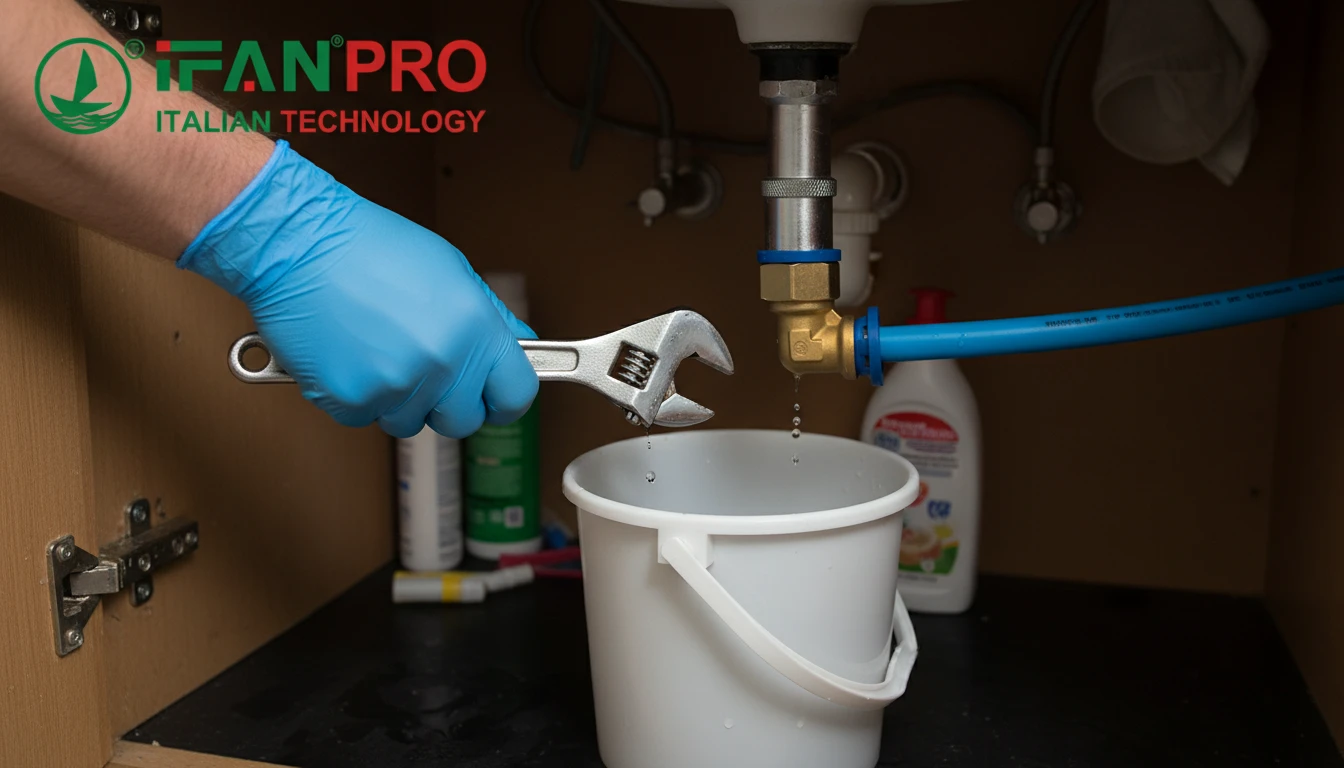
- Loosen the Nut: Then, use the correct size wrench (see next section) to turn the union nut counter-clockwise. Importantly, you don’t need to remove it completely; just loosen it enough to separate the joint.
- Separate the Lines: Once the nut is loose, you can gently pull the two halves of the fitting apart. As a result, the two pipe runs are now disconnected at that elbow.
- Perform Your Work: Finally, you can now remove, replace, or service any valve, fixture, or branch line that was connected downstream from that point.
Comparison of Connection Methods
This table shows why the union elbow is the only non-destructive choice for disassembly.
| Connection Method | Can You Disconnect? | Is it Reusable? | Tools Needed for Disassembly | Outcome for the PEX Pipe |
|---|---|---|---|---|
| Crimp or Clamp Ring | No | No | Pipe Cutter | You must cut it; the pipe shortens. |
| Expansion (Uponor) | No | No | Pipe Cutter | You must cut it; the pipe shortens. |
| Push-to-Connect | Yes, with a disconnect tool | Sometimes | Special disconnect tool | The pipe stays intact, but the fitting may not be fully reusable. |
| Union Elbow | Yes | Yes | Wrench | The pipe stays intact; the fitting is fully reusable. |
The union elbow turns a permanent plumbing connection into a semi-permanent one. Essentially, it acknowledges that systems need to change and provides a clean, professional way to make those changes without waste or compromise.
What Tools Are Needed to Loosen the Union Nut for Quick Access?
Using the wrong tool can damage the nut and frustrate your repair. For this reason, I always stress that having the right tool on hand makes this method “quick.”
You typically need only one or two common wrenches to loosen the union nut. For example, you can use an adjustable wrench or a fixed-size open-end wrench that matches the nut’s size. For tight spaces, you may need a basin wrench. Importantly, you do not need any specialty PEX crimping, expansion, or cutting tools for the disconnection itself.
The Primary Tool: The Wrench
The beauty of this system is its reliance on standard mechanical tools, not proprietary plumbing tools. Specifically, the union nut has a standard hexagonal (six-sided) shape.
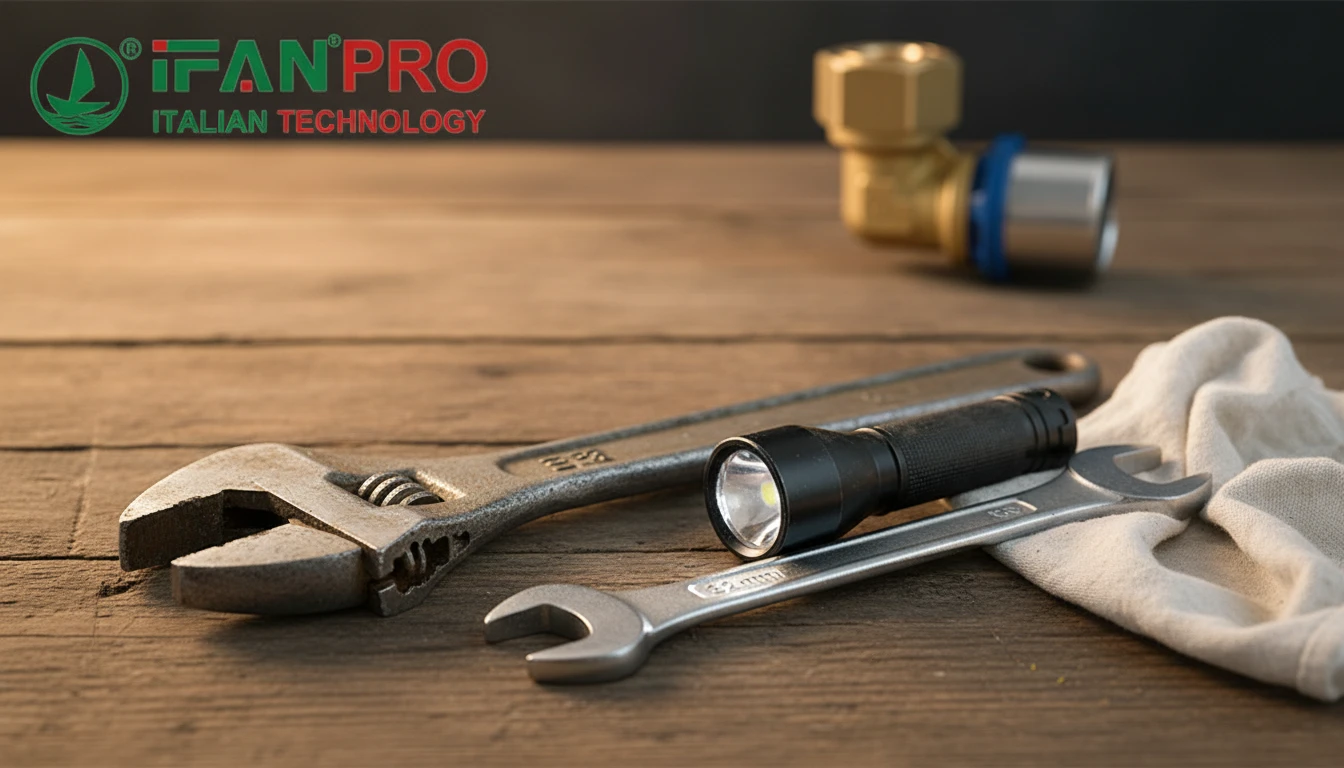
- Adjustable Wrench (Crescent Wrench): This is the most versatile and common tool for the job. It can fit a range of nut sizes, making it perfect for homeowners or technicians who don’t want to carry multiple wrenches.
- Fixed Open-End or Box-End Wrench: This provides a more secure fit and is less likely to slip and round off the corners of the nut, especially if it’s tight. Often, a 24mm or 1-inch wrench fits, but you must check this against your specific fitting.
Pro Tip from IFAN: Always use a second wrench to hold the body of the fitting stable (“backing up” the fitting) while you turn the union nut. This action prevents torque from twisting and stressing the connected PEX pipes, which could lead to leaks.
Tools for Challenging Locations
Sometimes, the union elbow is installed in a cramped spot, like behind a sink or near a wall. For these situations:
- Basin Wrench: This long-handled wrench with a pivoting jaw is designed specifically to reach nuts in deep, confined spaces. It’s the ideal tool for union elbows installed behind fixtures.
- Strap Wrench: For fittings with a polished finish that you don’t want to mar with metal jaws, a nylon-strap wrench provides grip without scratches.
What You Don’t Need
This is the most significant advantage. To disconnect, you do NOT need:
- A PEX Tube Cutter
- A Crimping Tool or Rings
- An Expansion Tool
- A Heat Gun
- A Soldering Torch
This fact eliminates hundreds of dollars in tool costs for a one-time repair. Furthermore, it saves the time you would need to set up those specialized tools. Your basic toolbox already contains what you need.
Basic Tool Kit for Disassembly
This simple kit handles 95% of union elbow disassembly jobs.
| Tool | Purpose | Essential? |
|---|---|---|
| Adjustable Wrench | To loosen/tighten the union nut. | Yes |
| Second Adjustable Wrench | To hold the fitting body stable (backup wrench). | Highly Recommended |
| Bucket & Towels | To catch residual water drips. | Yes |
| Flashlight | To improve visibility in cabinets or tight spaces. | Recommended |
Having these simple tools ready turns a potential plumbing emergency into a manageable, quick repair job.
Why Does This Save Time and Materials During Repairs or Modifications?
Time and material waste are the hidden costs of traditional repairs. In fact, I’ve calculated the savings for clients, and the numbers are convincing.
It saves time because you skip the steps of cutting, measuring, and installing new pipe sections and couplings. Additionally, it saves materials because you don’t waste PEX pipe, new rings, or additional fittings. Ultimately, you preserve and reuse the original pipe and the union elbow itself, which eliminates purchase and disposal costs.
The Time Savings Breakdown
Let’s compare a common repair: replacing a faulty shower valve.
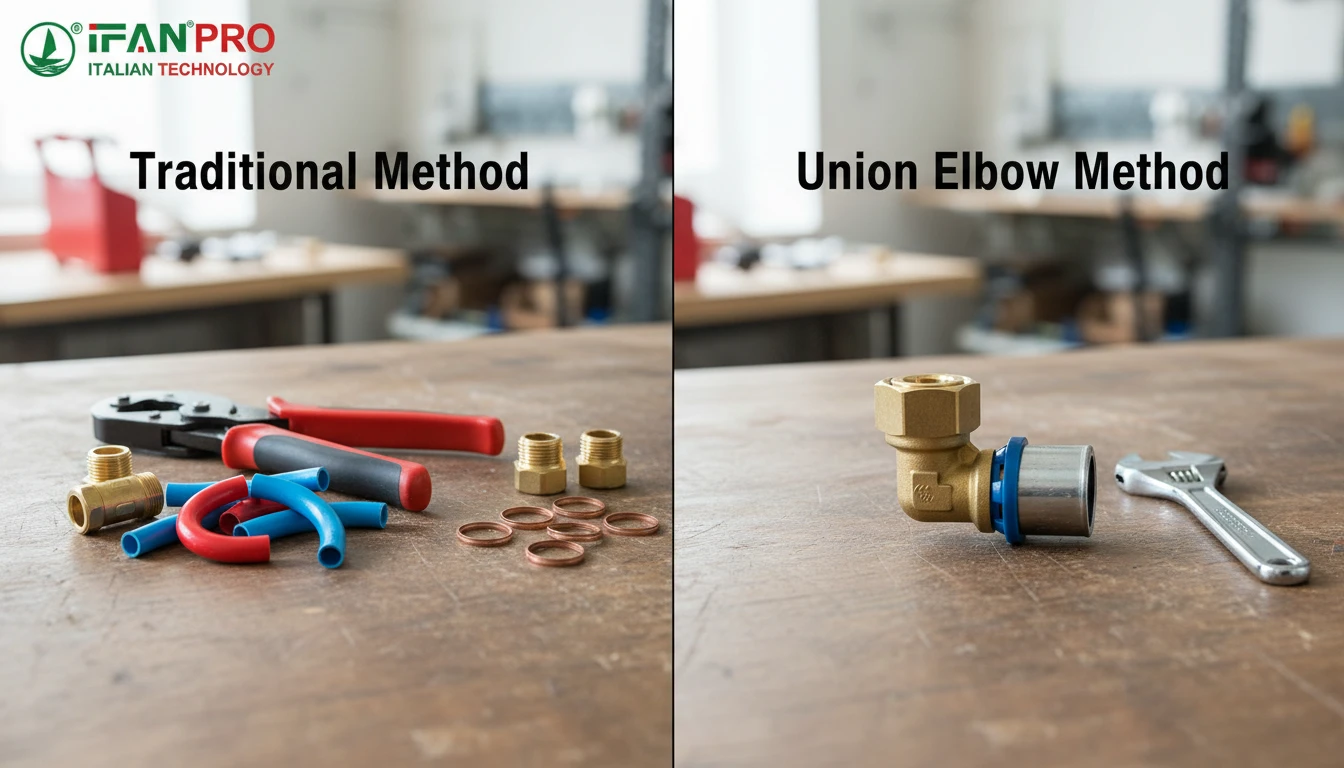
- Traditional (Cutting) Method: First, drain the system. Second, cut the PEX pipe on both sides of the valve. Third, remove the valve. Fourth, measure and cut new pipe sections. Fifth, install two new couplings and the new valve (this requires crimping/expansion for each connection). Finally, pressure test. This process can take 60-90 minutes.
- Union Elbow Method: First, drain the system. Second, loosen two union nuts at the elbows leading to the valve (if plumbed correctly). Third, remove the old valve. Fourth, install the new valve. Fifth, tighten the union nuts. Finally, pressure test. This often takes only 20-30 minutes.
The savings come from eliminating measuring, multiple cuts, and multiple new connections. Each crimp or expansion takes time and must be done perfectly. However, turning a wrench is faster and more forgiving.
The Material Savings Breakdown
Now, let’s look at the waste. The traditional cut-and-couple method consumes:
- PEX Tubing: You lose at least a few inches from each cut, and you must buy new lengths.
- New Fittings: You need at least two new couplings (sometimes more).
- New Rings or Sleeves: Each new connection requires a crimp ring or expansion sleeve.
With the union elbow method, the material cost for the repair is zero. You only buy the new component (the shower valve). Meanwhile, the existing PEX tubing stays at its full length. Also, you simply loosen and re-tighten the union elbows.
Cost Comparison Table: Repairing a Faulty Valve
The financial difference is clear.
| Cost Factor | Traditional Cut & Couple Method | Union Elbow Method |
|---|---|---|
| New PEX Tubing | $10 – $15 | $0 |
| 2x Coupling Fittings | $4 – $8 | $0 |
| 4x Crimp Rings | $2 – $4 | $0 |
| Labor Time (Estimated) | 90 mins | 30 mins |
| Total Material Cost | $16 – $27 | $0 |
| Total Project Waste | Pipe cuttings, old couplings | None |
Furthermore, there is no wasted time running to the store for parts you forgot. If you build the system with union elbows at key points, you complete the repair with what’s already on-site. This reliability is priceless for property managers and homeowners alike.
How Does It Allow for Non-Destructive System Reconfiguration?
Homes and needs change. Therefore, a system that can change with them adds long-term value, a point I always make to clients planning renovations.
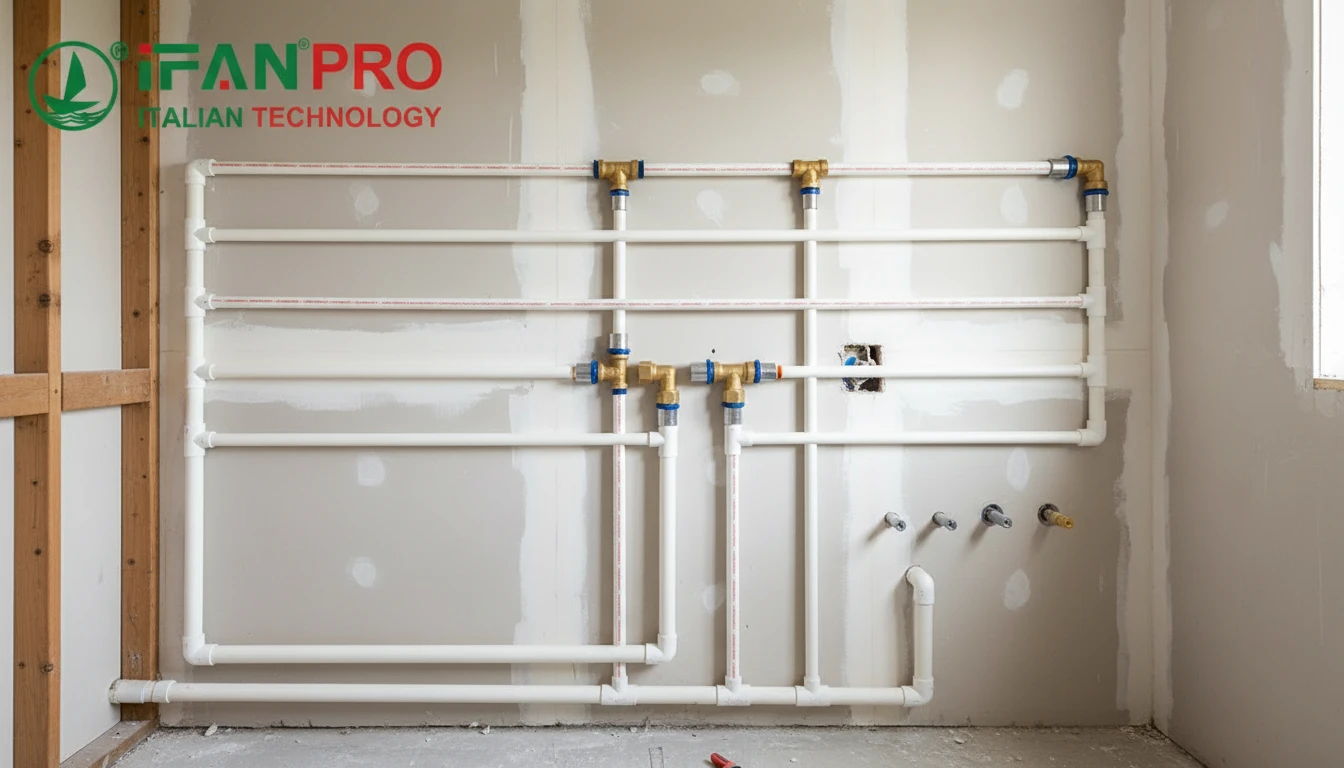
It allows for non-destructive reconfiguration because the union elbows act as modular disconnect points. You can repeatedly disconnect and reconnect runs at these corners. As a result, you can reroute pipes, add new branches, or relocate fixtures without ever shortening the original PEX lines. This process keeps the entire system intact and adaptable for the future.
Building a Modular Plumbing Framework
Think of a PEX system built with strategic union elbows as having built-in “service ports” or “modules.” For instance, this is common in industrial hydraulics for good reason—it supports future change.
For example, imagine you plumb a bathroom with union elbows at the inlet to the shower valve and at the connections to the sink faucet. Later, you might want to:
- Add a Bidet: You can disconnect the hot and cold lines at the sink union elbows, tee off to supply the bidet, and reconnect. Importantly, no pipe is destroyed.
- Relocate a Washing Machine: You can disconnect the supply box, extend the lines through the wall to a new location using longer PEX runs and new union elbows, and reconnect. Meanwhile, the original stubbed-out lines remain full-length and usable elsewhere.
The Process of Reconfiguration
The steps mirror simple disassembly but with a creative goal:
- Plan the Change: First, identify which union elbows you will use as your disconnect points.
- Disconnect: Next, loosen the union nuts at those points to free the section you want to modify.
- Modify the Middle: Then, this is where you work. You can insert a new tee fitting, add a new branch line, or replace a section with a longer one. For these new modifications, you use standard PEX connection methods (crimp, expansion).
- Reconnect at the Unions: Finally, re-tighten the original union elbows to integrate the modified section back into the main system. Their sealing surfaces are designed for many reuse cycles.
Advantages Over a “Fixed” System
This approach has several long-term benefits:
1. Home Renovation Friendly: It makes kitchen and bathroom remodels less invasive. Specifically, you can disconnect fixtures without destroying the in-wall plumbing. Consequently, this allows for faster, cleaner demolition and rebuild.
2. Future-Proofing: As technology evolves—think smart water filters, manifolds, or emergency shut-off systems—you can easily insert them into your existing lines.
3. Troubleshooting: If you have a leak or blockage, you can systematically disconnect sections at union points to isolate the problem. This method is faster than guesswork and cutting.
4. Sustainability: This is a “green” plumbing approach. Essentially, it maximizes the lifespan of all components by designing them for reuse. Therefore, it significantly reduces plastic and metal waste over the life of a building.
In essence, using union elbows changes the philosophy of the plumbing system from a static, buried infrastructure to a dynamic, accessible, and serviceable network. Ultimately, it puts control back in the hands of the homeowner or technician.
Заключение
A union elbow turns rigid PEX systems into serviceable, adaptable networks. Therefore, it saves significant time, money, and materials over the life of a home. For reliable, easy-to-install union elbows and fittings, choose ИФАН for your next PEX plumbing project.







 Русский
  English
  Français
  Español
Последние комментарии