
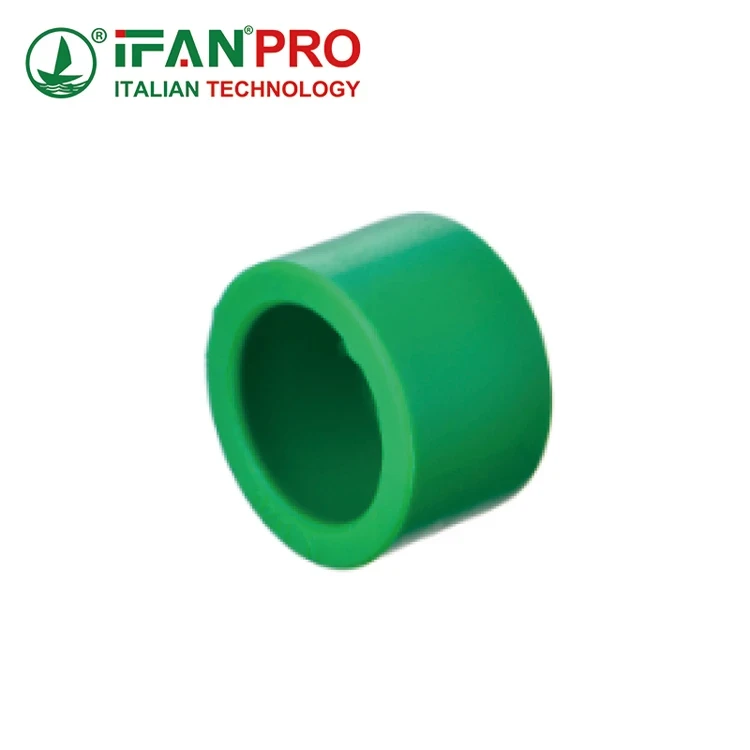
I once had a client call me in a panic because a pipe left open during a renovation flooded a wall. This simple oversight showed me how a small, inexpensive part like a PPR end cap can prevent major problems.
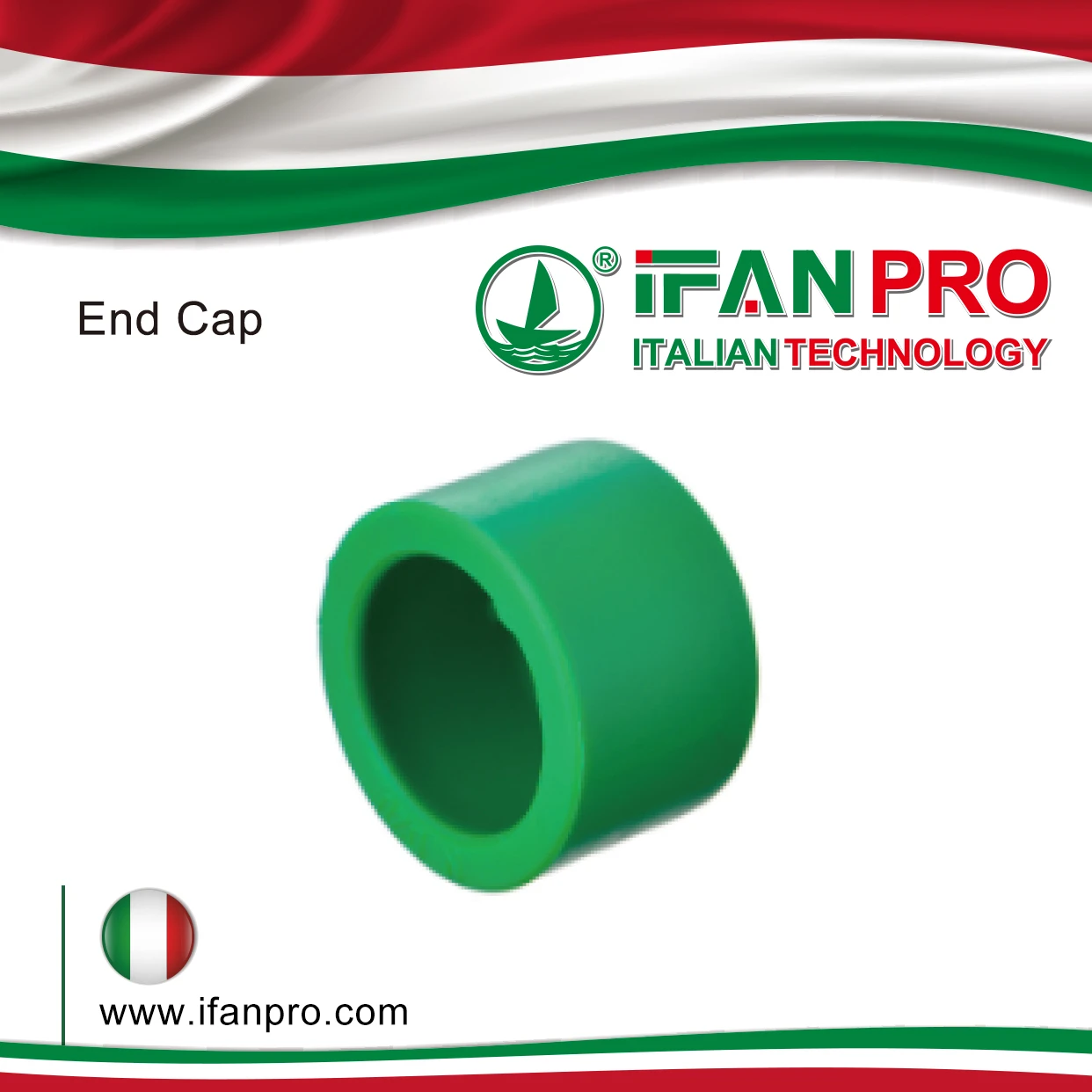
PPR end caps are essential fittings used to permanently or temporarily seal the end of a PPR pipe, stopping water flow and protecting the system. Their primary purposes are to close off unused lines, terminate pipe runs safely, and protect pipe threads from damage and contamination during installation or storage.
While they seem simple, choosing and installing the right end cap is crucial for a reliable plumbing system. Let’s explore everything you need to know.
What are the primary purposes of using PPR end caps in piping systems?
Many people see end caps as just basic plugs. However, from my experience at IFAN, their role is vital for system integrity and safety.
The primary purposes of PPR end caps are to safely and securely seal the terminal point of a pipeline, prevent the escape of water or gas, protect pipe ends from physical damage and dirt ingress, and provide a pressure-tight closure for testing or future system extensions.
Ensuring System Safety and Integrity
First and foremost, an end cap’s main job is to create a safe and reliable seal. An open pipe end is a serious hazard. It can lead to water leakage, which causes property damage and mold growth. In pressurized systems, an open end means the pressure cannot be maintained, and water will spray out uncontrollably when the system is turned on. The end cap provides the final, secure closure that contains the medium inside the pipes.
Think of it like putting a cap on a soda bottle. Without it, the contents spill and go flat. Similarly, an end cap keeps the plumbing system sealed and functional.
Protection and Future-Proofing
Second, end caps serve a critical protective function. During construction or before a system is activated, pipes are vulnerable. Dirt, debris, insects, or even small animals can enter open pipes. This contamination can clog valves, damage fixtures like faucets, or corrode the system from the inside. A simple end cap acts as a barrier, keeping the internal pipeline clean.
Also, pipes often have threaded ends for connecting other fixtures. These threads are delicate and can be easily dented or stripped. A damaged thread makes a proper, leak-free connection impossible later. A threaded end cap (often with a rubber seal) screws onto these ends, shielding the threads from impacts and corrosion during handling and storage.
Functional Applications in Practice
Third, end caps have specific functional uses in system management. Plumbers use them during the pressure testing phase. After installing a section of pipe, they seal all ends with caps and pressurize the system to check for leaks. The cap must withstand this test pressure without failing.
Furthermore, good system design often includes provisions for future expansion. A pipe run might be extended later to add another bathroom. Instead of cutting the pipe when you need the extension, a professional installer will terminate the line with an end cap at a logical point. This creates a clean, prepared end that can easily be opened and extended in the future by simply removing the cap.
Summary of Key Purposes
The table below summarizes the core reasons to use PPR end caps:
| Primary Purpose | What It Prevents | Why It Matters |
|---|---|---|
| Final Sealing | Water leakage, pressure loss, and gas escape. | Protects property, ensures system works correctly, and maintains safety. |
| End Protection | Physical damage to pipe ends, thread stripping, and internal contamination. | Saves money on repairs, keeps water clean, and ensures future connections are leak-free. |
| System Testing | Inability to pressurize the system for leak checks. | Allows for quality assurance before walls are closed up, preventing costly hidden leaks. |
| Future Expansion | Difficult and messy cutting of pipes later on. | Makes renovations and additions simpler, faster, and more reliable. |
Where should you apply PPR end caps in hot and cold water systems?
Location matters just as much as the part itself. I’ve seen caps placed incorrectly lead to confusion and leaks during maintenance.
You should apply PPR end caps at any terminal point of a pipe run in both hot and cold systems, including the ends of supply lines to unused fixtures, closed-off branches for future use, the outlet of isolation valves, and the ends of pipes during pressure testing. They are essential for capping stub-outs behind walls and protecting exposed threads.
Common Locations in Residential Plumbing
In a typical home, PPR end caps are used in several key places. First, consider a bathroom where you plan to install a shower but not a bathtub. The hot and cold water supply pipes will be run to the shower valve, but what about the separate tub spout connection? If the valve has an outlet for a tub, it must be capped. This is a classic application for a small end cap inside the valve body itself.
Another common spot is at the end of a pipe “stub-out.” This is a short piece of pipe that comes out of the wall to which a sink faucet or toilet valve will later be connected. During construction, these stub-outs are exposed and their ends are threaded. Installing a threaded end cap on them is mandatory. It protects the threads from damage and prevents anything from falling into the pipes while the walls are still open.
System Management and Dead Legs
End caps are also used to permanently seal off old lines. For example, if you remove a laundry sink and relocate the washing machine, the old hot and cold water lines need to be properly terminated. You cannot just leave them inside the wall. A plumber will trace them back to a logical point, cut them, and install a permanent end cap. This prevents old, stagnant water from sitting in a “dead leg,” which can breed bacteria.
However, it’s important to note a key point about hot water systems. While the end caps themselves are used in the same way, the material must be suitable for high temperatures. Standard PPR end caps are rated for the high temperatures of domestic hot water (usually up to 70°C or 95°C intermittently). Always verify the temperature rating of the cap matches the system it’s being used in.
Application Guide for Different Scenarios
The following table provides a clear guide on where to apply end caps:
| System Location | Type of Cap | Reason for Application |
|---|---|---|
| Fixture Stub-Outs (e.g., for sink, toilet) | Threaded End Cap | Protects threads from damage and keeps pipe clean before fixture installation. |
| Closed Branch Lines (e.g., for future sink) | Socket Fusion End Cap | Permanently seals a pipe end that may be used later for system extension. |
| Test Ports on Manifolds | Threaded/Socket Cap | Seals unused ports on a distribution manifold. |
| End of a Riser Pipe | Socket Fusion End Cap | Terminates the main vertical supply pipe at the top floor. |
| Isolation Valve Outlet (when valve is closed long-term) | Socket Fusion End Cap | Provides a double seal for safety if the valve is left in the closed position. |
A Note on Accessibility
A crucial practical tip from our service team: always install end caps in accessible locations if possible. A cap sealing a future expansion point should be placed where it can be easily found and removed later, not buried deep inside a finished wall. This foresight saves tremendous time and money during renovations.
How do you select the correct PPR end cap size and pressure rating?
Choosing the wrong cap is a frequent pain point. I recall a project where mismatched sizes caused a failed pressure test, delaying the entire installation.
You select the correct PPR end cap by matching two key specifications: the pipe’s outer diameter (OD) and the system’s maximum operating pressure (PN rating). Always use a cap with the same nominal size and PN rating (e.g., PN20 or PN25) as the PPR pipe you are sealing to ensure a perfect fit and guaranteed pressure resistance.
Understanding Size: It’s All About the Diameter
The most common mistake is confusing pipe sizes. PPR pipes are sized by their outer diameter (OD). A common size for home water lines is 20mm, 25mm, or 32mm. This number refers to the outside measurement of the pipe. Therefore, you must buy an end cap labeled for that specific OD. A 25mm end cap is designed to fit perfectly onto a 25mm OD pipe.
There are two main types of end caps based on connection:
- Socket Fusion Caps: These have a female socket. You heat the pipe end and the inside of the cap, then fuse them together. The cap’s socket is designed for a specific OD pipe.
- Threaded End Caps: These screw onto male threads. Here, you need to know the thread size (e.g., 1/2″, 3/4″), which is different from the pipe’s OD. Adapters are often used to connect PPR pipe to threaded ends.
Matching the Pressure Rating (PN)
Pressure rating is equally important. PPR pipes and fittings have a Pressure Nominal (PN) rating, like PN20 or PN25. This number indicates the maximum continuous water pressure the component can handle at 20°C. PN20 is rated for 20 bar, PN25 for 25 bar.
- For cold water systems, PN20 is usually sufficient.
- For hot water systems or mains lines with higher pressure, PN25 is the safer and more durable choice.
Golden Rule: Never mix PN ratings. If your pipe is PN25, use a PN25 end cap. Using a lower-rated cap (like PN20 on a PN25 line) creates the weakest point in your system, risking a burst under pressure.
Material and Certification Checks
Beyond size and pressure, ensure the cap is made from the same high-quality, standard-compliant PPR material as your pipes. Look for certifications like NSF/ANSI 61 for drinking water safety. A cheap, uncertified cap might use recycled material that degrades quickly or leaches chemicals into your water.
Selection Checklist Table
Use this checklist to ensure you pick the right part:
| Selection Factor | What to Check | Why It’s Important |
|---|---|---|
| Pipe Outer Diameter (OD) | Measure the pipe’s outside diameter or check the printing on the pipe wall (e.g., “PPR 25mm”). | Ensures a perfect physical fit. A wrong size will not seal or fuse properly. |
| Pressure Rating (PN) | Check the PN rating printed on your pipe (e.g., PN25). Select a cap with the identical rating. | Guarantees the cap can withstand the system pressure without failing. |
| Connection Type | Decide: Do you need to fuse it (socket) or screw it on (threaded)? Choose the correct type for your application. | Determines the installation method and required tools. |
| Material & Certification | Buy from a reputable brand (like IFAN) and look for drinking water certifications on the product or datasheet. | Ensures long-term safety, durability, and compliance with health standards. |
| Temperature Range | Confirm the cap’s maximum temperature rating covers your system’s hot water temperature. | Prevents deformation or failure in hot water lines. |
When in doubt, provide your pipe sample or specifications to your supplier. A professional supplier will help you confirm the correct match.
What installation steps ensure a secure and leak-free PPR end cap seal?
A perfect part can fail with poor installation. Our QC audits often find leaks traced back to rushed or incorrect fitting of end caps.
To ensure a secure seal, first clean and prepare the pipe end, then use the correct heat fusion tool to uniformly heat both the pipe and cap socket. Join them smoothly without twisting, hold them steady during cooling, and finally, conduct a visual inspection and pressure test to verify the integrity of the joint.
Step-by-Step Installation Guide
For socket fusion end caps (the most common permanent type), follow this precise process. Skipping steps is the main cause of leaks.
Step 1: Preparation and Cutting
First, ensure the pipe end is clean, dry, and square. Use a dedicated PPR pipe cutter. A clean, 90-degree cut is essential for the cap to sit evenly and fuse properly. After cutting, remove any burrs or plastic fragments from the inside and outside of the pipe end using a deburring tool or fine sandpaper. Wipe the pipe end and the inside of the end cap socket with a clean, dry cloth to remove any dust or grease.
Step 2: Marking the Insertion Depth
This is a critical step many beginners miss. Use the depth gauge on your fusion tool or a marker to draw a line on the pipe. This line shows how deep the pipe should go into the cap’s socket. Heating past this mark can cause an internal plastic bead that restricts water flow.
Step 3: Heating and Fusion
Set your welding machine to the correct temperature for PPR material (typically 260°C – 270°C). Attach the appropriate heating jaws for your pipe and cap size. Once the tool is hot, simultaneously insert the pipe end and the cap socket onto the heating elements. Do not rotate them. Heat for the exact time recommended by the tool manufacturer for your pipe size (e.g., 5 seconds for 20mm pipe). Underheating causes a weak joint; overheating weakens the material.
Step 4: Joining and Holding
Quickly remove the pipe and cap from the heater. Immediately push the pipe straight into the cap socket in one smooth motion up to the depth mark. Do not twist them. A slight bead of melted plastic should form evenly around the joint. Hold the pieces firmly together without any movement for the specified cooling time (usually at least 10-15 seconds). This cooling period is when the molecular bond forms. Moving the joint during this time will ruin it.
Installation Do’s and Don’ts
The table below contrasts correct and incorrect practices:
| Do’s | Don’ts |
|---|---|
| DO use a dedicated PPR cutter and deburring tool. | DON’T use a hacksaw, which creates uneven, burred ends. |
| DO clean pipe and fitting before heating. | DON’T fuse wet or dirty components. |
| DO heat both parts simultaneously for the recommended time. | DON’T overheat or underheat the parts. |
| DO join in one straight push without twisting. | DON’T twist or adjust the joint during or after joining. |
| DO hold the joint perfectly still during cooling. | DON’T stress the joint before it is completely cool (2-3 minutes). |
Step 5: Inspection and Testing
After cooling, inspect the joint. The fused bead should be uniform all around. Conduct a pressure test on the entire system. For threaded end caps, ensure you use a suitable sealant like Teflon tape or thread sealant paste, and tighten firmly but do not overtighten, which can crack the plastic.
Following these steps meticulously transforms a simple end cap into a guaranteed, permanent seal, ensuring the reliability of your entire piping system.
Conclusion
PPR end caps are small but vital for safe, sealed, and expandable plumbing systems. For perfectly sized, pressure-rated, and certified PPR end caps and fittings, trust the quality and expertise of IFAN.










 English
  Français
  Русский
  Español
Recent Comments