
I once watched a client’s project budget spiral out of control because of a sudden steel price hike they didn’t foresee. That moment taught me that understanding cost drivers is the first step to mastering import procurement.
The cost of international pipe fitting imports is driven by four interconnected factors: fluctuating raw material prices and exchange rates, complex shipping logistics and tariffs, the necessity of quality certifications, and the chosen sourcing strategy. Managing these elements effectively is key to controlling your total landed cost.
Gaining control over your spending means looking beyond the unit price. Let’s break down each major cost driver so you can plan with confidence.
How Do Raw Material Price Volatility and Currency Exchange Rates Affect Cost?
A quote is only good until the raw material market moves. I’ve seen stable budgets break when these two invisible forces shift together.
Raw material volatility and exchange rates directly and unpredictably affect the final import cost. A sudden increase in polypropylene or metal alloy prices raises the product’s base cost. Simultaneously, a weakening of your currency against the Chinese Yuan (CNY) makes that now-more-expensive product even costlier to purchase, squeezing your margin from two sides.
The Double Pressure on Your Bottom Line
These two factors often work together to create financial uncertainty. You are not just buying a product; you are exposed to the global commodities market and the forex market.
1. The Raw Material Rollercoaster: Pipe fittings are made from polymers like PP-R, PVC, or metals like stainless steel and brass. The prices for these commodities change daily based on:
- Oil prices (for plastics)
- Mining output and geopolitical events (for metals)
- Global supply and demand
When a supplier gives you a quote, it is based on the material cost that day. If there is a delay between quoting and production, and material prices rise, the supplier will often ask for a price adjustment or absorb the cost at a thin margin, which risks quality cuts.
2. The Hidden Fee of Exchange Rates: You pay your Chinese supplier in US Dollars (USD) or Euros (EUR), but they pay their bills and workers in Chinese Yuan (CNY). If your currency weakens, you need more of it to buy the same amount of Yuan. For example, if the USD/CNY rate moves unfavorably by just 5%, your entire purchase becomes 5% more expensive overnight, wiping out your planned profit.
Practical Impact and a Real-World Example
Consider this scenario for a container of brass fittings:
| Cost Factor | Stable Market Scenario | Scenario with Volatility |
|---|---|---|
| Raw Material (Brass) Price | $3,500 per ton | $4,200 per ton (+20%) |
| Exchange Rate (USD/CNY) | 7.00 | 6.80 (USD weaker) |
| Supplier’s Material Cost in CNY | 24,500 CNY | 28,560 CNY |
| Your Cost in USD | $3,500 | $4,200 |
Result: The combined effect increases your cost by $700 or 20%, despite no change in order quantity or supplier. This shows why a good price today doesn’t guarantee a good price at shipment.
What Impact Do International Shipping Logistics and Tariffs Have on Pricing?
The product price is just the beginning. I remind clients that “FOB” does not mean “delivered to your door.” The journey adds major costs.
International shipping logistics and tariffs significantly increase the final landed cost, often by 15%-40% over the factory price. Shipping costs vary by mode (sea vs. air), fuel prices, and route congestion. Tariffs are a fixed percentage tax levied by your government upon import, directly adding to your product’s cost base.
Breaking Down the “Gotcha” Costs After FOB
Many buyers focus on the FOB (Free On Board) price, thinking their major cost is set. However, the journey from the Chinese factory to your warehouse involves multiple layers of expense.
The Logistics Cost Stack: Here is a typical breakdown from factory gate to your port:
- Origin Charges: Local trucking to the Chinese port, documentation, and port fees.
- Ocean/Air Freight: The main carriage. Sea freight is cheaper but slower; air freight is fast but can triple the cost.
- Fuel Surcharges: These change monthly and are tied to global oil prices.
- Destination Charges: Port unloading fees, customs clearance, and trucking from your arrival port to your warehouse.
- Insurance: Essential for protecting your cargo against loss or damage during transit.
The Tariff Factor: This is a political and trade policy cost. Your government charges a duty on the imported goods’ declared value. The rate depends on the product’s harmonized system (HS) code and the trade relationship between countries. For example, fittings imported into the USA from China may have a certain tariff percentage added, which directly increases your cost.
You cannot avoid these costs, but you can manage them:
- Plan for All Incoterms: Understand the difference between FOB, CIF, and DDP. FOB means you control and pay for the main shipping and insurance. CIF means the supplier arranges it to your port. DDP means they deliver it to your door with all costs paid.
- Factor in Tariffs Early: Always research the correct HS code and applicable duty rate for your country before finalizing costs. A 10% tariff on a $50,000 shipment is a $5,000 surprise.
- Build a Buffer: Always add a 20-30% buffer on top of the FOB price for logistics and duties in your initial budgeting.
Why Do Quality Certifications and Compliance Add Value and Influence Cost?
Buying uncertified fittings is a massive financial risk. I’ve seen shipments rejected at the border, turning “savings” into total losses.
Quality certifications and compliance add value and increase cost because they require rigorous, repeatable manufacturing processes, higher-grade materials, and independent audits. This investment ensures the product is safe, reliable, and legally admissible in your market, preventing costly rejects, returns, and liability issues.
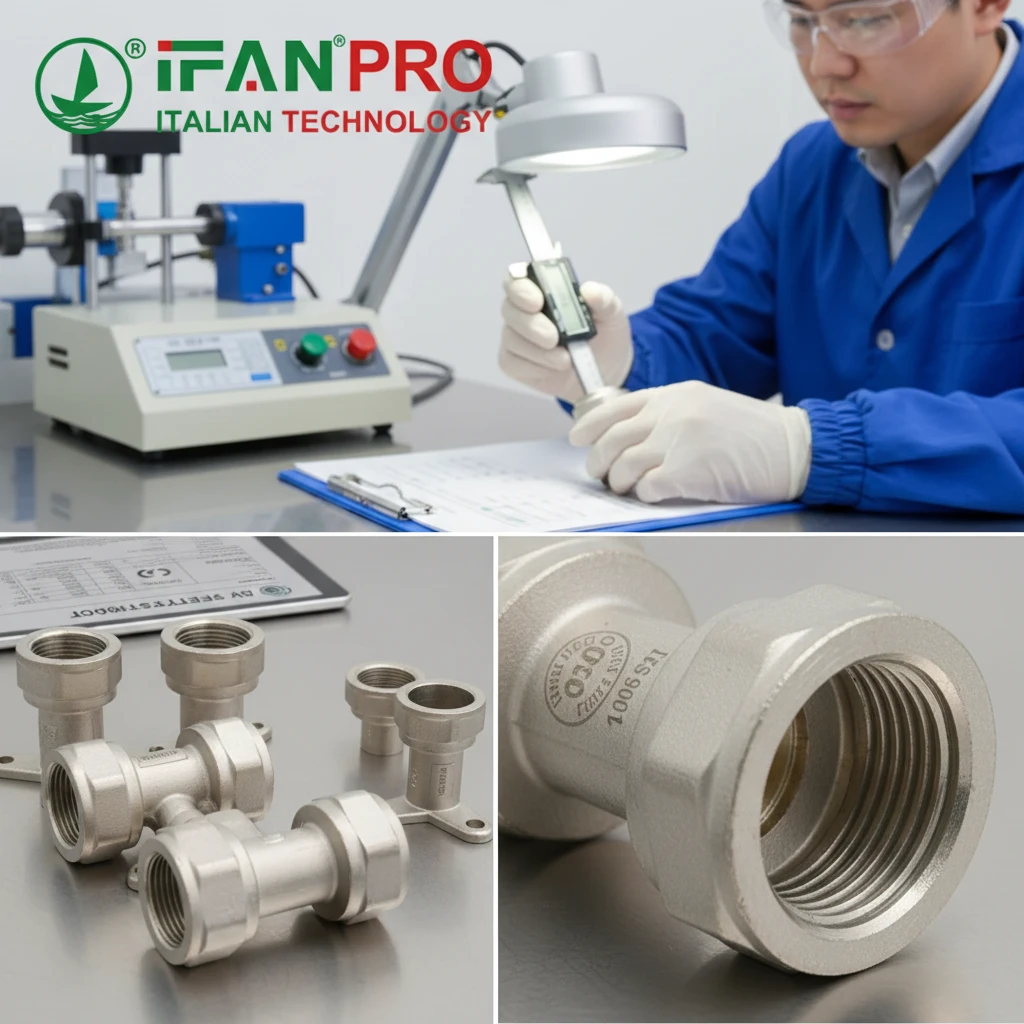
The Cost of Trust and Market Access
A certified product costs more for a reason. You are paying for verifiable trust and reduced risk.
What You Pay For: The higher cost covers:
- Premium Materials: Certified products (e.g., with NSF/ANSI 61 for potable water) must use certified, traceable virgin materials, not cheaper recycled compounds.
- Process Control: Factories need quality management systems (like ISO 9001), which involve documented procedures, trained staff, and calibrated equipment.
- Third-Party Testing: Bodies like UL, NSF, or TÜV conduct regular factory audits and product tests. The factory pays for these services.
- Documentation: Providing full test reports, material certificates, and traceability documents requires administrative work.
The Value They Deliver: This investment protects you by:
- Ensuring Safety: Preventing product failure that could cause property damage or harm.
- Guaranteeing Market Access: Without the right marks (CE for EU, GOST for Russia), customs will reject your shipment.
- Reducing Long-Term Cost: Avoiding project delays, replacement costs, and legal liability from non-compliant products.
Certification Cost vs. Risk Analysis
The table below illustrates the trade-off:
| Scenario | Product Cost | Certification Status | Potential Hidden Cost & Risk |
|---|---|---|---|
| Option A | $ Low | None or Fake Certificates | $$$$ High. Risk of customs seizure, job site rejection, product failure, and liability lawsuits. |
| Option B | $$$ Higher | Genuine, Full Certifications | $ Low. Smooth customs clearance, client trust, long-term reliability, and warranty validity. |
Choosing a supplier like IFAN, which maintains genuine certifications across its product lines, means you are buying this insurance policy upfront. It transforms a commodity into a guaranteed, specification-grade product.
How Can Strategic Sourcing Smooth Out Cost Fluctuations and Provide Predictability?
Reactive buying maximizes cost exposure. My most successful clients treat sourcing as a strategic partnership, not a transaction.
Strategic sourcing smooths out cost fluctuations by moving from one-off purchases to a planned partnership. It uses tools like bulk forecasting for better pricing, mixed container loads (LCL/FCL) to optimize shipping, and long-term agreements with price adjustment clauses to share risk, creating predictable costs and a reliable supply chain.
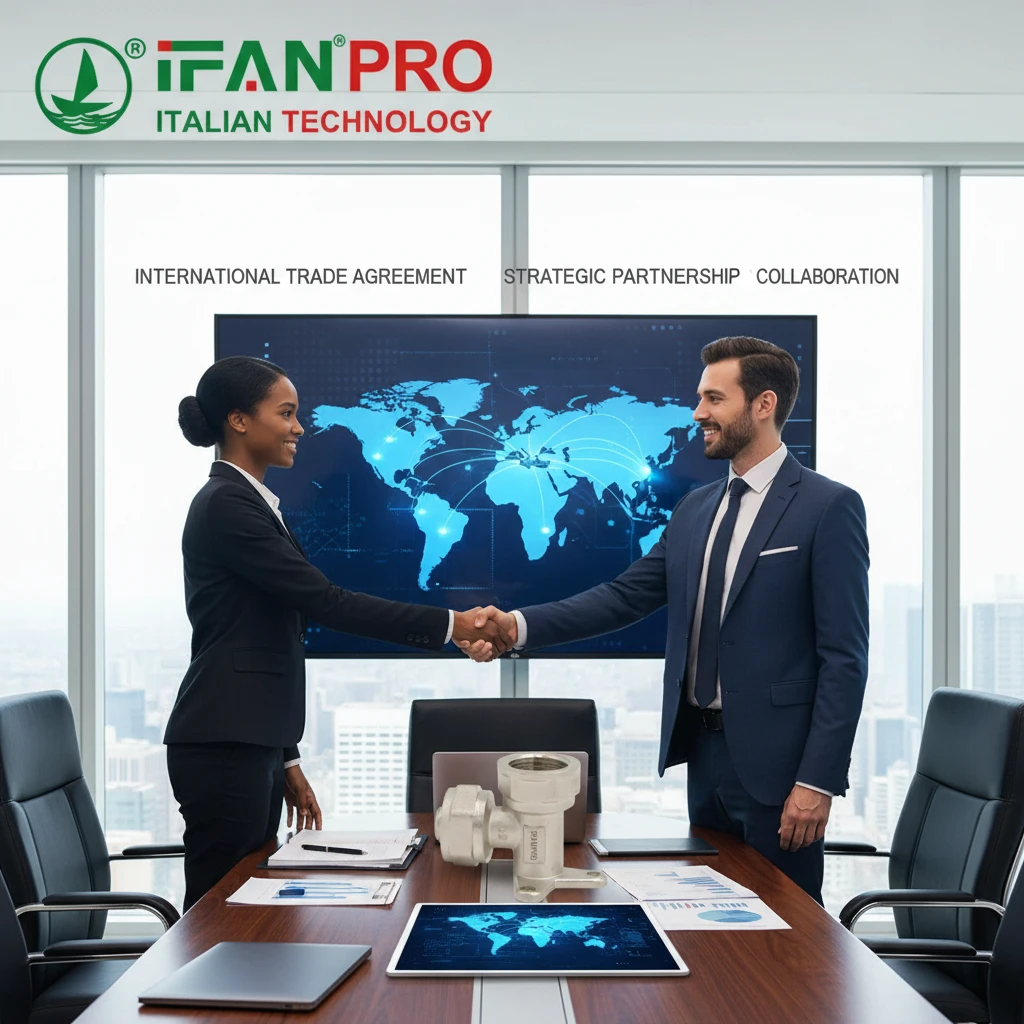
Moving from Transactional to Relational Buying
The core idea is to work with your supplier to manage volatility, not just accept it.
Key Tactics for Predictability:
1. Forecast and Commit: Share your annual or quarterly purchase forecast with your supplier. Even if you order monthly, the forecast allows them to plan raw material purchases in advance, sometimes at better prices, and reserve production capacity for you. In return, you can negotiate a more stable price.
2. Optimize Logistics Strategy: Work with your supplier to plan shipments.
- Consolidate Orders: Combine different product types into Full Container Loads (FCL) instead of multiple expensive Less-than-Container Loads (LCL).
- Plan Shipping Routes: Book freight space in advance to avoid peak-season surcharges.
3. Implement Smart Contract Terms: Instead of fixed prices that break when markets move, use long-term agreements with price adjustment formulas. For example, a clause could state: “The price is based on [PP-R grade] at [$X/ton] and USD/CNY at [rate]. The final price will adjust if either factor moves by more than 5%.” This is fair and transparent for both sides.
The Role of a Sourcing Partner
Managing all this alone is complex. This is where a service model like IFAN’s adds immense value. As your sourcing partner, we:
- Aggregate Demand: We combine orders from multiple clients, giving us greater buying power with factories for better material pricing.
- Manage Logistics: We professionally handle consolidation, booking, and documentation, optimizing the entire shipping process.
- Provide Market Intelligence: We alert you to upcoming raw material trends or policy changes, helping you make informed buying decisions.
This strategic approach turns cost management from a guessing game into a disciplined, predictable part of your business.
Conclusion
Understanding the drivers—materials, logistics, compliance, and strategy—is the key to controlling import costs. For predictable sourcing of certified pipe fittings, partner with IFAN. Let us simplify your supply chain.




 Français
  English
  Русский
  Español
Commentaires récents