
I once saw a $50,000 pipe shipment stuck at customs for two weeks over one missing stamp. That day taught me that international logistics is the backbone of a successful order.
Logistics for international pipe orders is the complete process of planning, executing, and controlling the efficient flow of pipes from your supplier’s factory to your destination port or warehouse. It involves key steps like shipping documentation, freight selection, pre-shipment quality control, and customs clearance to ensure your goods arrive on time, intact, and in compliance with regulations.
Managing this complex chain effectively is what separates a smooth project from a costly nightmare. Let’s break down the essential parts you need to master.
What Key Shipping Documents are Needed for International Pipe Logistics?
Mistakes in paperwork cause more delays than bad weather. A client’s invoice with the wrong HS code once caused a massive customs fine.
The key shipping documents needed are the Commercial Invoice, Packing List, Bill of Lading, and Certificate of Origin. These papers describe the goods, their value, origin, and ownership for customs, shipping lines, and banks. Having them accurate and consistent is critical to prevent delays, extra fees, or seizure of your shipment.
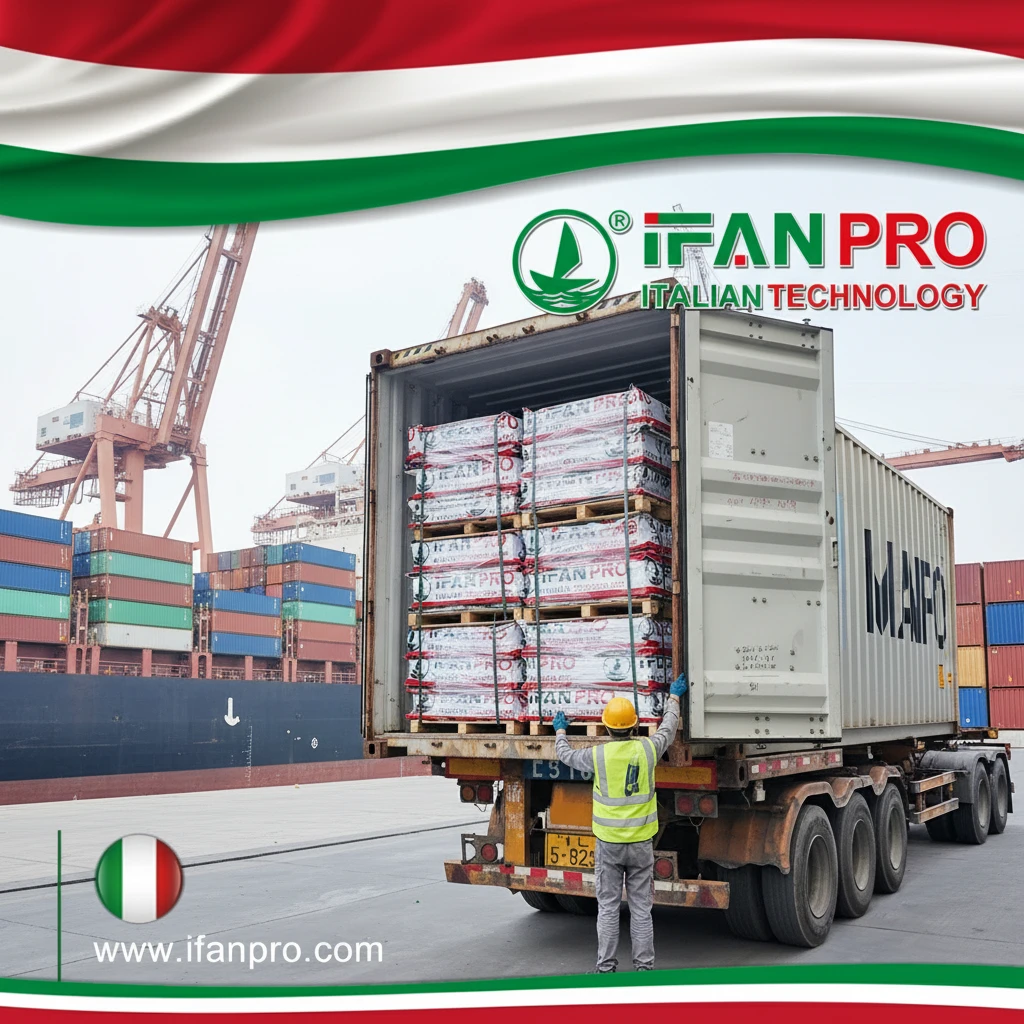
The Essential Document Checklist
Think of shipping documents as the passport and ID for your cargo. Each one serves a specific purpose for a different party in the supply chain. Missing or incorrect information on any of them stops the entire process.
Here is a list of the most important documents and why you need them:
- Commercial Invoice: This is the most important document. It is the official bill from the seller to the buyer. Customs uses it to calculate duties and taxes. It must include:
- Seller and buyer details.
- A clear description of the pipes (material, dimensions, standards like ASTM or EN).
- The total value (price per unit and total order value).
- The correct Harmonized System (HS) Code. This code classifies your product for customs and is a major source of errors.
- Packing List: This document details how the goods are packed. It is crucial for the freight forwarder, warehouse, and customs inspection. It lists:
- Number of cartons, crates, or pallets.
- Weight and dimensions of each package.
- A breakdown of what is inside each package (e.g., “Crate #1: 100 units of 20mm PPR elbows”).
- Bill of Lading (B/L): This is the contract between the shipper and the carrier (shipping line). It acts as a title of ownership for the goods. There are two main types:
- Sea Waybill (Express Release): Faster, electronic release. Good for trusted partners.
- Original Bill of Lading: A negotiable paper document. The holder of the original B/L can claim the goods. It’s safer but slower.
- Certificate of Origin (CoO): This document certifies where the goods were manufactured. It is required by the customs of many countries to determine eligibility for trade agreements or to apply special tariffs. For example, pipes made in China may need a CoO to prove their origin.
Common Document Pitfalls and How to Avoid Them
Based on our experience at IFAN, here are the most frequent problems and our practical advice:
| Document | Common Error | Consequence | IFAN’s Practical Advice |
|---|---|---|---|
| Commercial Invoice | Wrong HS Code, mismatch between described goods and value. | Customs delays, incorrect duty calculation, potential fines. | We provide a draft invoice for client review before shipping. We double-check HS codes with our logistics partners. |
| Packing List | Not matching the actual cargo. If the list says 10 boxes, but 11 arrive, it causes confusion and inspection. | Quarantine at port, extra fees for recounting. | We take photos during loading and ensure the packing list is updated in real-time with the actual loaded quantity. |
| Bill of Lading | Errors in consignee name or address. | The rightful buyer cannot claim the goods. Legal issues arise. | We send a draft B/L for final confirmation from the client before it is issued by the shipping line. |
| Certificate of Origin | Not obtained when required, or stamped by the wrong chamber of commerce. | Shipment cannot clear customs, faces higher tariffs. | We inform clients early if a CoO is needed for their country and handle the application with the correct authorities. |
The key is consistency. All documents must tell the same story about the product, quantity, value, and parties involved. One small typo can cost thousands.
How Does Sea Freight Optimize Cost for Bulk International Pipe Orders?
Air freight for pipes is like sending a brick by courier. For bulk orders, sea freight is the only economically sensible choice.
Sea freight optimizes cost for bulk pipe orders because it offers the lowest price per unit of volume. Pipes are heavy and bulky, and ships are designed to carry massive quantities at a fraction of the cost of air or land transport. You pay for a container share, not per kilo, making large shipments extremely cost-effective.
Understanding Freight Cost Structures
To see why sea freight wins, you need to understand how costs are calculated. Air freight charges by chargeable weight, which is either the actual weight or the volumetric weight, whichever is higher. Pipes take up a lot of space (high volume) but may not be extremely heavy. This makes them very expensive to fly.
Sea freight, however, charges mainly by container usage. You are essentially renting space on a ship. The most common options are:
- Full Container Load (FCL): You rent an entire 20-foot or 40-foot container. You pay one fixed rate for the box, regardless of how much you pack inside (up to its weight limit). This is perfect for large, bulk orders.
- Less than Container Load (LCL): You share a container with other shippers. You pay for the volume (in cubic meters) your cargo occupies. This is good for smaller orders that don’t fill a full container.
For bulk pipe orders, FCL is almost always the best choice. Once you pay for the container, you can fill it with as many pipes as it can safely hold. The cost per pipe drops dramatically.
A Practical Cost Comparison
Let’s look at a real example. Imagine you need to ship 20,000 kilograms of PVC pipes from China to Germany.
| Factor | Sea Freight (FCL) | Air Freight |
|---|---|---|
| Transit Time | 35-40 days | 5-7 days |
| Cost Basis | Fixed rate for one 40ft container (~$4,000 – $6,000) | Per chargeable kilogram (~$4 – $8 per kg) |
| Total Estimated Freight Cost | ~$5,000 | ~$80,000 – $160,000 (for 20,000 kg) |
| Cost Optimization | Excellent. Cost is fixed; more goods lower cost per unit. | Very Poor. Cost rises directly with weight/volume. |
As the table shows, the cost difference is enormous. The money saved by using sea freight can be tens of thousands of dollars, which directly improves your profit margin.
Additional Cost-Saving Tips in Sea Freight
Besides choosing FCL, here are other ways to optimize:
- Plan Ahead: Book your container space early, especially during peak shipping seasons. Last-minute bookings cost more.
- Efficient Packing: Work with your supplier to pack pipes in the most space-efficient way. Proper palletization and stacking can let you fit more into one container, reducing your need for a second one.
- Incoterms: Choose the right Incoterm. For example, FOB (Free On Board) means you pay the freight and control the shipping line choice from the port of origin. This often gives you more flexibility to find competitive freight rates compared to CIF (Cost, Insurance, and Freight), where the supplier arranges shipping.
In short, for bulk pipes, sea freight isn’t just an option; it’s a fundamental part of maintaining a profitable business model. The long transit time is a trade-off for massive cost savings.
What Quality Control Steps are Crucial Before International Pipe Shipment?
Finding a defect at your warehouse is 10 times more expensive than finding it at the factory. We once caught a batch of pipes with inconsistent wall thickness before loading, saving a client a huge return cost.
Crucial pre-shipment quality control steps include: checking material certificates, conducting visual and dimensional inspections, performing pressure tests (for pressure pipes), and a final random sampling audit during loading. This ensures the pipes meet the agreed specifications before they leave the factory, preventing costly rejections upon arrival.
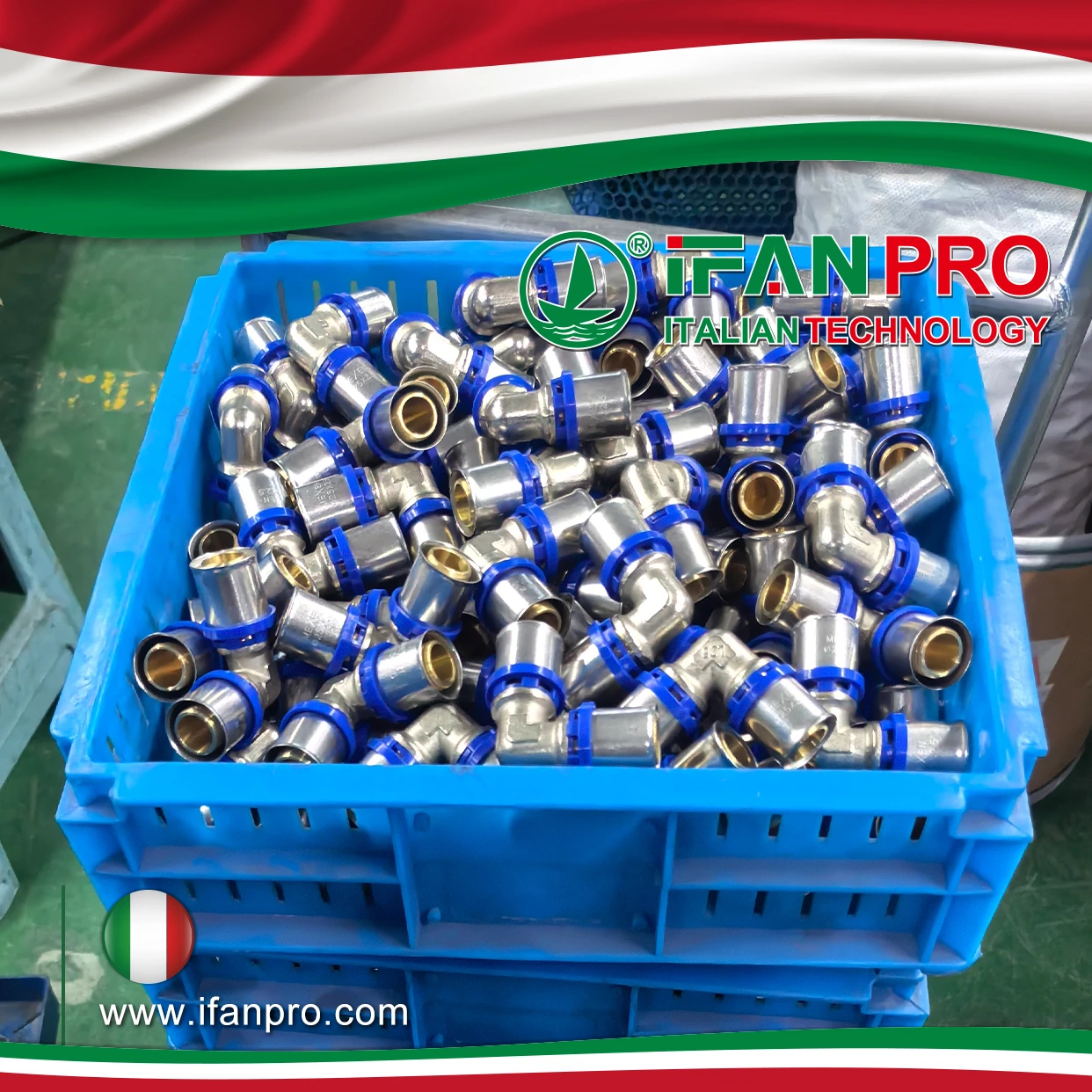
The Stages of Effective Pre-Shipment QC
Quality control for an international order is not a single event. It’s a process that happens in stages. Relying only on a final check is risky. At IFAN, we follow a multi-stage process to catch issues early.
Stage 1: Documentation Check (Before Production Starts)
Before any pipe is made, we verify the raw materials. We ask the factory for the Mill Test Certificate (MTC) for the resin or raw material. This cert proves the material grade (e.g., PPR Type 3) meets the required standard. This is the foundation of quality.
Stage 2: During Production Inspection (DPI)
Once production is running, our inspector visits the factory floor. They check:
- Machine settings: Are temperature and pressure correct for the material?
- Visual quality: Looking for surface defects like bubbles, discoloration, or contamination.
- Initial dimensions: Randomly measuring outer diameter and wall thickness from the production line.
Catching a problem here allows the factory to adjust the machine immediately, minimizing waste.
Stage 3: Pre-Shipment Inspection (PSI)
This is the most comprehensive check, done when 80-100% of the order is packed and ready. It follows international standards (often AQL – Acceptable Quality Level). Key activities include:
- Quantity & Packaging Check: Verify total cartons, pallets, and shipping marks against the packing list.
- Random Sampling: Boxes are selected at random from the entire batch.
- Dimensional Verification: Using calipers to measure critical dimensions (diameter, wall thickness, socket depth). This is where tolerance issues are caught.
- Visual Inspection: Checking for cracks, warping, or improper fittings.
- Performance Test: For pressure pipes, samples are taken to a lab for a short-term hydrostatic pressure test to verify strength.
A Standard PSI Checklist for Pipes
Here is what a typical inspection report covers:
| Inspection Area | What We Check | Tools Used | Acceptable Standard |
|---|---|---|---|
| Visual | Color, surface smoothness, presence of bubbles/contaminants. | Eyes, touch. | As per approved sample. Uniform color, smooth surface. |
| Dimensions | Outer Diameter (OD), Wall Thickness (WT), Length. | Caliper, Tape Measure, Micrometer. | Must be within tolerance per product standard (e.g., ISO 15874 for PPR). |
| Material/Printing | Correct material marking on pipe (e.g., “PP-R”, size, standard). | Eyes. | Legible, permanent, and accurate markings. |
| Packaging | Strength of carton/box, correct shipping marks (destination, product code). | Eyes. | Packaging must survive transport. Marks must be clear. |
| Performance | Pressure rating verification (if required). | Pressure testing machine. | Must hold specified pressure without leaking or bursting. |
The outcome is a detailed report with photos, measurements, and a clear PASS/FAIL recommendation. This report is your proof of quality before payment and shipment. It shifts the responsibility for quality verification to the point of origin, where problems are easier and cheaper to fix.
How Can Customs Clearance Support Ensure Smooth Pipe Delivery Internationally?
Clearing customs is not your forwarder’s job alone. As the importer, you own the responsibility. Good support means they guide you through it.
Customs clearance support ensures smooth delivery by having your agent prepare and submit accurate documents, use the correct HS codes and product descriptions, pay duties on time, and communicate with local customs officials to resolve any issues quickly. This proactive management prevents your shipment from being held, inspected, or denied entry.
The Role of Your Customs Broker
Your freight forwarder usually works with a licensed customs broker in the destination country. This broker is your representative to the customs authority. Smooth clearance depends on this team’s expertise. Here’s what they do and what you must provide:
- Document Preparation and Submission: The broker compiles the customs declaration using your Commercial Invoice, Packing List, Bill of Lading, and Certificate of Origin. Any mistake in these documents, even a small one, will cause a problem.
- Correct Classification and Valuation: The broker must classify your pipes with the correct HS Code for your country. This code determines the duty rate. They also ensure the declared value is correct. Under-declaring to save duty is illegal and will lead to severe penalties.
- Duty and Tax Payment: The broker calculates the exact amount of import duty, VAT (or GST), and any other fees. They arrange payment, which you must fund promptly.
- Communication and Problem-Solving: If customs has questions or requests an inspection, the broker acts as the intermediary. A good broker can often resolve minor issues before they become major delays.
Common Customs Clearance Hurdles for Pipes
From our experience, these are the most frequent issues that delay pipe shipments:
- Wrong or Missing Certificates: Some countries require specific tests. For example, pipes for drinking water might need an NSF or WRAS certificate. Not having this documentation ready can stop clearance.
- Insufficient Product Description: A description like “plastic pipes” is too vague. Customs needs details: “Polypropylene Random Copolymer (PP-R) pipes for hot and cold water, size 20mm, complying with ISO 15874.”
- Labeling Non-Compliance: The pipes or their packaging might need specific labels in the local language, showing size, material, and standards.
- Sudden Regulatory Changes: Tariffs or rules can change. A good broker stays updated on these changes.
How to Ensure Smooth Clearance: A Practical Guide
As the buyer, you are not powerless. You can take these steps to help the process:
| Step | Action Item | Why It’s Important |
|---|---|---|
| 1. Early Research | Ask your supplier (or IFAN) about common certificates (CoO, test reports) needed for your country. | Prevents last-minute scrambling for documents. |
| 2. Detailed Information | Provide your forwarder/broker with extremely detailed product information and intended use. | Allows them to choose the most accurate and favorable HS code. |
| 3. Document Review | Carefully review all shipping documents (Invoice, Packing List) for consistency before they are issued. | You are the final check for errors in your own name, address, and product details. |
| 4. Choose Partners Wisely | Work with a freight forwarder who has a strong partner network in your specific country. | Local expertise is invaluable for navigating unique customs rules. |
| 5. Plan for Duties | Budget for import duties and taxes in advance and ensure funds are available. | Prevents clearance delays due to non-payment. |
In essence, smooth customs clearance is about preparation, accurate information, and choosing knowledgeable partners. It’s a collaborative effort between you, your supplier, and your logistics team.
Conclusion
Mastering international pipe logistics—from documents and freight to inspection and customs—protects your investment and ensures project success. For pipes backed by this full-scope logistics expertise, partner with IFAN.






 Français
  English
  Русский
  Español
Commentaires récents