
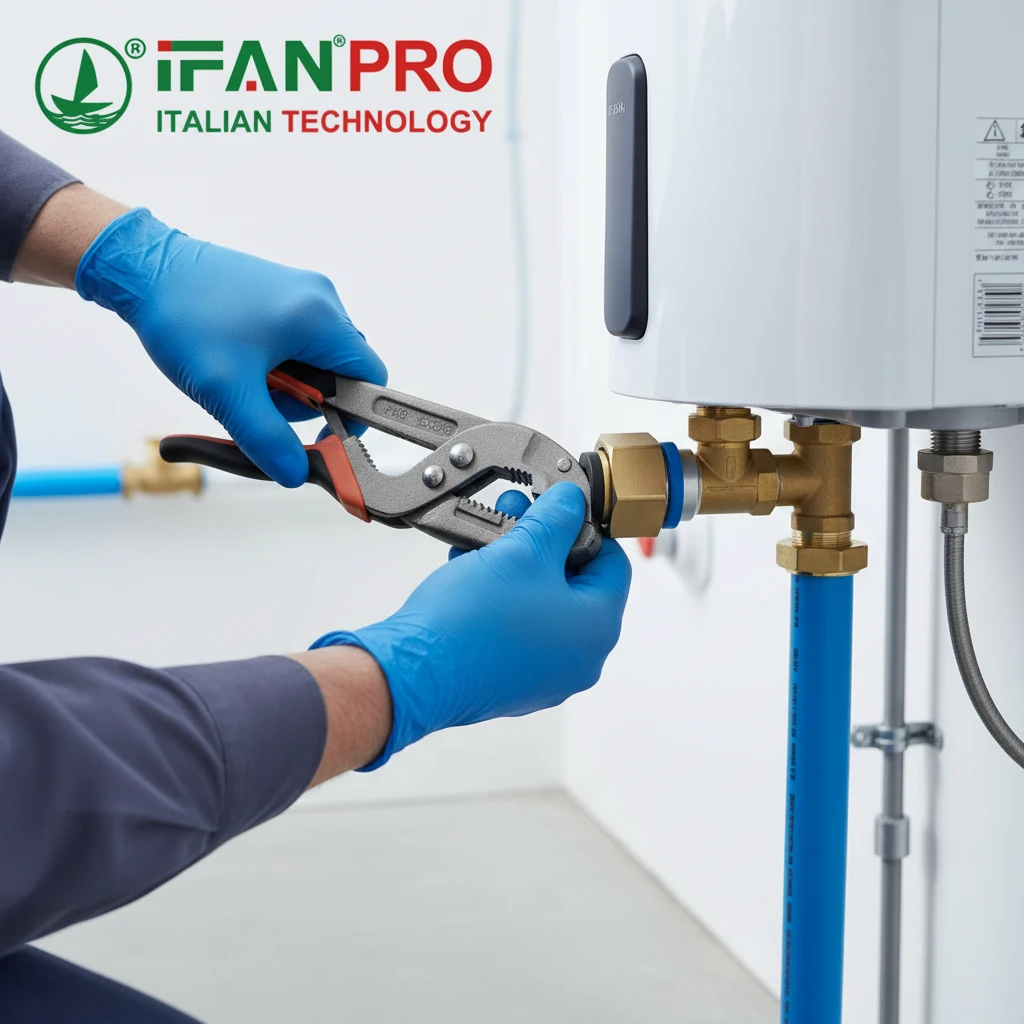
I once watched a homeowner struggle for hours trying to connect a new water heater to existing pipes that were slightly misaligned. That simple upgrade turned into a nightmare because he lacked the right fitting.
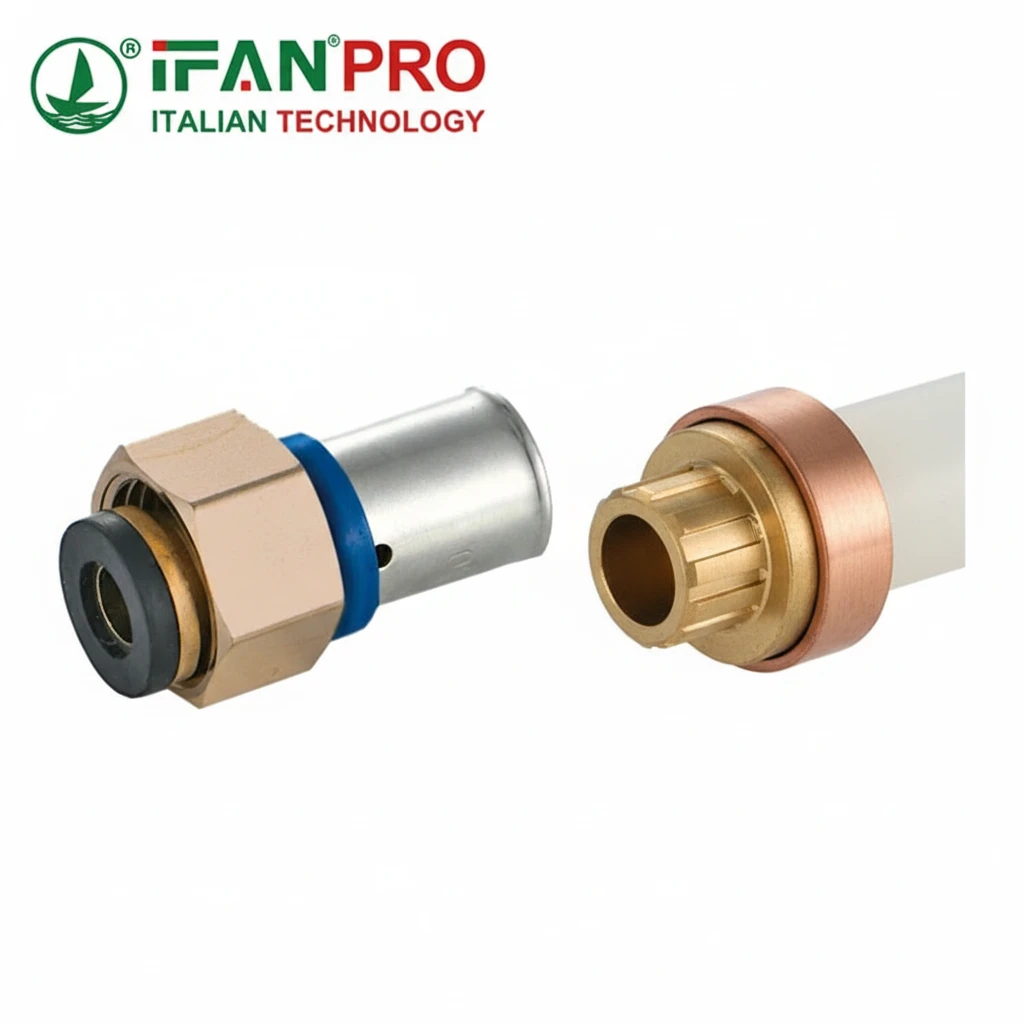
The 121UC female union fitting simplifies home plumbing upgrades by combining a swivel feature with a secure compression seal in one compact unit. This design allows you to connect pipes even when they don’t line up perfectly, without needing extra adapters or special tools. It makes water heater replacements and fixture upgrades faster, easier, and more reliable.
Let’s explore how this versatile fitting solves common installation headaches and why it deserves a place in every plumber’s toolbox.
The Perfect Solution for Water Heater Connections
Water heater replacements should be simple. Yet I’ve seen too many jobs where misaligned pipes turn a one-hour job into an all-day struggle.
The 121UC female union fitting is perfect for water heater connections because it allows you to attach the supply line to the heater’s threaded nipple even if the pipe comes in at a slightly off angle. The swivel action compensates for minor misalignments, while the female thread connects directly to standard water heater outlets without requiring additional adapters.
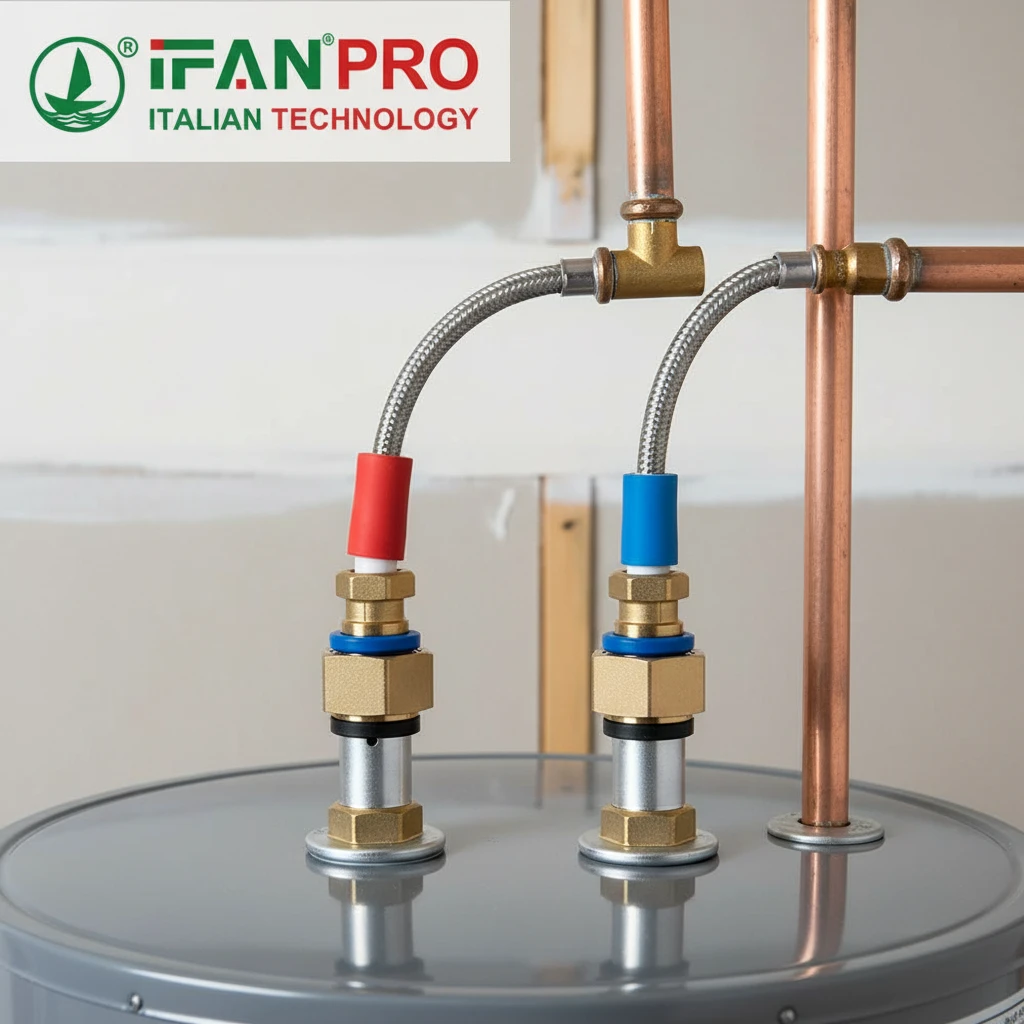
Why Water Heater Connections Are Tricky
When you install a new water heater, several factors can cause alignment problems:
First, the floor might not be perfectly level. A sloped floor tilts the water heater slightly, making the top connections sit at an angle.
Second, the existing pipes in your wall may not line up exactly with the new heater’s ports. Older homes often have pipes that shift over time. Even a small difference of a quarter-inch can make connecting rigid pipes difficult.
Third, the threaded nipples on water heaters vary slightly between brands. Sometimes the threads sit a bit deeper or shallower, affecting how fittings seat against them.
How the 121UC Solves These Problems
The 121UC female union fitting addresses these challenges through its smart design:
1. The Swivel Feature: The fitting has a rotating section that turns independently. This means you can align the female thread perfectly with the water heater’s nipple, even if the supply pipe approaches from a slightly different angle. You don’t need to bend the pipe or force the connection.
2. Direct Connection: The female thread screws directly onto standard water heater nipples. Most water heaters use either 3/4-inch or 1/2-inch NPT threads. The 121UC comes in matching sizes, so you don’t need bushing adapters.
3. Secure Compression Seal: Once you tighten the fitting, an internal O-ring compresses against the pipe to create a watertight seal. This seal remains secure despite minor vibrations from the water heater’s operation.
The table below compares connection methods for water heaters:
| Connection Method | Alignment Flexibility | Installation Time | Leak Risk |
|---|---|---|---|
| 121UC Female Union | High – swivel adjusts to angles | Fast – single fitting does it all | Low – compressed O-ring seal |
| Rigid Copper with Adapters | Low – must bend pipe precisely | Slow – multiple soldered joints | Medium – many potential leak points |
| Flexible Supply Lines | Medium – bends but limited length | Fast – simple screw connections | Medium – gaskets can fail |
| Standard Threaded Pipe | None – must align perfectly | Slow – requires precise cutting | High – stressed threads may leak |
For professional plumbers and DIY homeowners alike, the 121UC removes the frustration from water heater hookups. You simply screw the fitting onto the heater, then connect your supply pipe using the compression end. The swivel does the rest.
Upgrading Kitchen and Bathroom Water Lines
Kitchen and bathroom upgrades often involve replacing sinks, faucets, or fixtures. These projects frequently hit the same wall: misaligned supply lines.
The 121UC female union fitting simplifies fixture upgrades by connecting new faucets to existing shut-off valves, even when the rough-in measurements don’t match perfectly. Its swivel action compensates for differences in pipe spacing and angle, allowing you to complete the installation without modifying the wall or replacing supply lines.
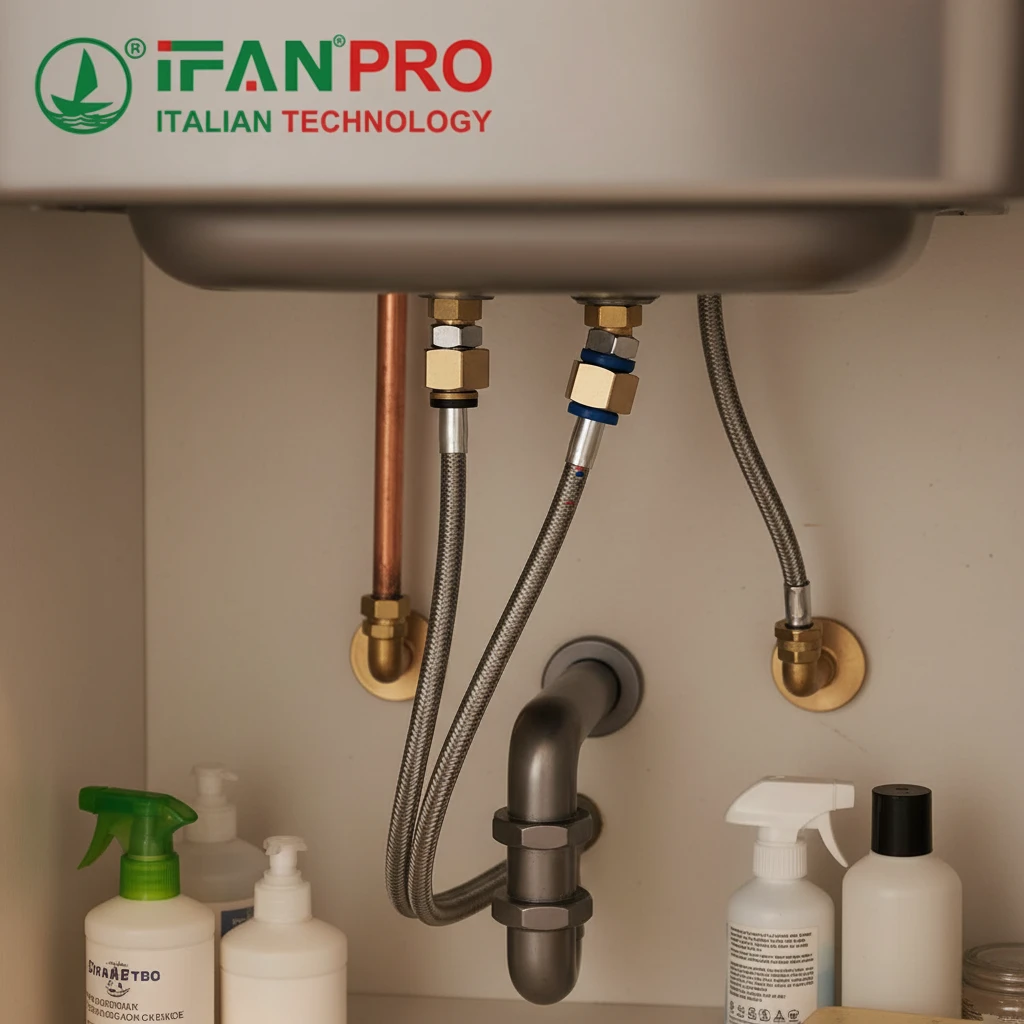
Common Fixture Installation Challenges
When you replace a sink or faucet, you typically encounter one of three problems:
Problem 1: Spacing Mismatch
New faucets often have different supply line spacing than old ones. A faucet that worked with 8-inch centers might require 6-inch centers. This forces you to bend supply tubes or install new ones.
Problem 2: Angle Differences
Supply pipes come out of the wall at various angles. Some stick straight out, while others point slightly up or down. Connecting rigid supply lines to these uneven pipes creates stress on the fittings.
Problem 3: Limited Access
Working under a sink means cramped spaces with poor visibility. Making precise connections in tight quarters frustrates even experienced plumbers.
How the 121UC Makes Upgrades Easier
The 121UC addresses each problem directly:
For Spacing Issues: The fitting connects to your existing shut-off valve on one end and to the new faucet’s supply line on the other. Because the union swivels, it handles minor spacing differences without binding.
For Angle Problems: The rotating design lets you align the fitting perfectly with both the shut-off valve and the faucet tailpiece. The seal remains tight regardless of the approach angle.
For Tight Spaces: You can attach the fitting to the faucet supply line outside the cabinet, then bring the whole assembly into position. This beats trying to thread fittings in a dark, cramped space.
Step-by-Step: Installing a New Faucet with 121UC
Here’s how professionals use this fitting for fixture upgrades:
Step 1: Prepare the Existing Supply
Close the shut-off valve and disconnect the old supply line. Clean the threads on the valve to ensure a good seal.
Step 2: Attach 121UC to the Valve
Screw the 121UC’s female thread onto the shut-off valve. Hand-tighten, then give it a quarter-turn with a wrench. Don’t overtighten.
Step 3: Connect to the Faucet Supply
Attach the other end of the 121UC to your new faucet’s supply line. This could be a braided hose or a rigid tube, depending on your faucet.
Step 4: Position and Tighten
Swivel the fitting as needed to align everything without stress. Then fully tighten both connections.
Step 5: Test for Leaks
Turn on the water slowly and check all connections. The O-ring seal should hold without dripping.
The table below shows typical applications for the 121UC in residential settings:
| Application | Common Issue | How 121UC Helps |
|---|---|---|
| Kitchen Sink Replacement | Supply lines don’t line up with new faucet | Swivel compensates for spacing differences |
| Bathroom Vanity Upgrade | Tight space under sink makes connections difficult | Pre-assemble outside cabinet, then swivel into place |
| Washing Machine Hookup | Supply valves at odd angles | Rotating fitting aligns perfectly with hoses |
| Dishwasher Installation | Limited access behind appliance | Connect easily before sliding dishwasher into place |
By using the 121UC, you eliminate the guesswork from fixture installations. The fitting adapts to your situation rather than forcing you to adapt to the fitting.
How “Bubble-Tight” Sealing Protects Your Home from Leaks
A leaky connection under a sink or behind a water heater can cause thousands in water damage. This is why seal quality matters more than any other feature.
“Bubble-tight” sealing means the fitting creates a seal so complete that no water molecules can escape, even under pressure. The 121UC achieves this through a precision-engineered O-ring that compresses evenly against a smooth sealing surface, creating a barrier that outperforms thread seal tape or pipe dope alone.
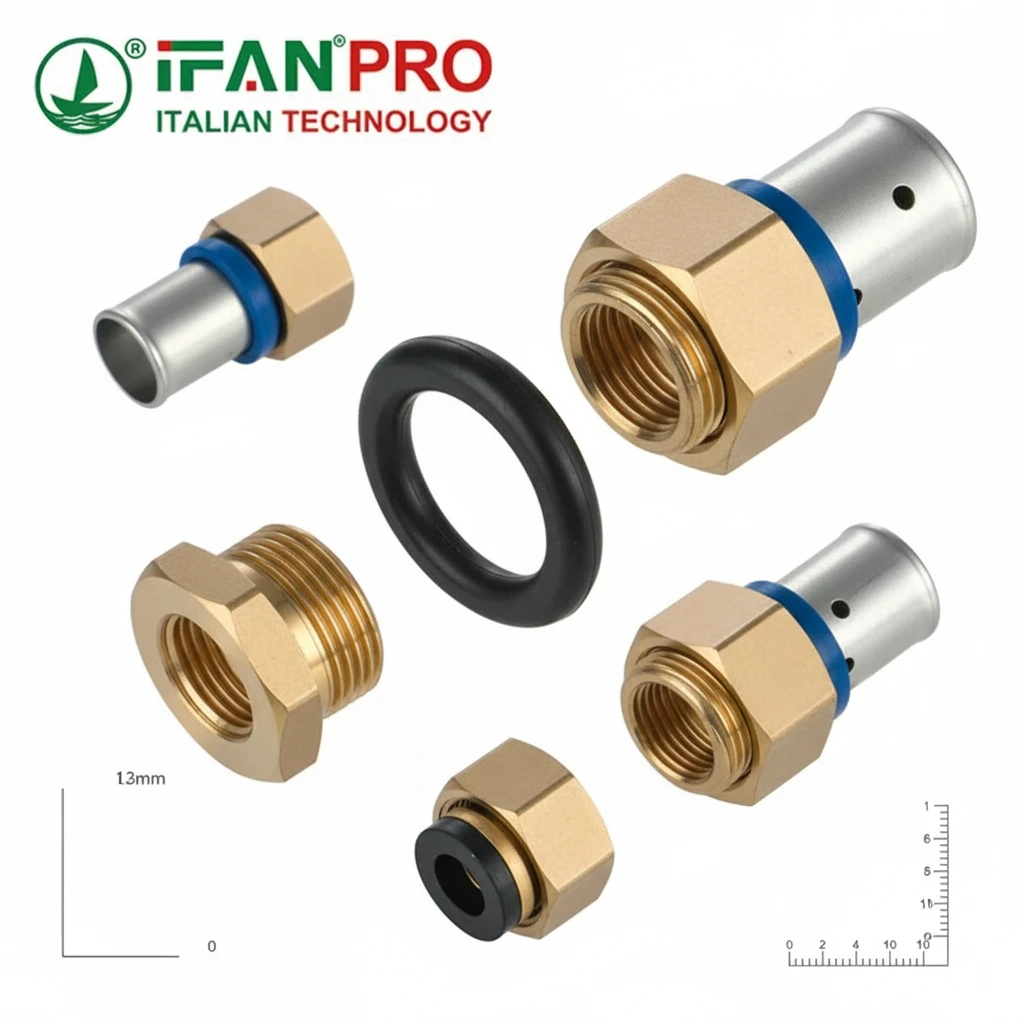
Understanding Seal Technology
Different sealing methods offer varying levels of protection:
Thread Seal Tape (PTFE): This common method wraps tape around male threads before connection. The tape fills tiny gaps between threads to block water flow. However, tape can shred, bunch up, or fail if threads are damaged. It also requires careful application—too little tape leaks, too much tape can crack fittings.
Pipe Dope (Thread Sealant): This paste-like compound applies to threads and hardens slightly to fill gaps. It works better than tape on irregular threads but can still fail if pipes shift or vibrate over time.
Compression O-Ring: This method uses a soft rubber ring that squeezes between two rigid surfaces. The rubber deforms to fill every microscopic gap, creating a custom-fit seal. Unlike tape or dope, the O-ring maintains constant pressure against the sealing surfaces.
Why the 121UC’s O-Ring Design Excels
The 121UC uses a captured O-ring design with several advantages:
1. Consistent Compression: The O-ring sits in a precisely machined groove. When you tighten the fitting, the groove forces the O-ring to compress in a controlled way. This ensures the seal compresses evenly all around, without thin spots.
2. Material Quality: IFAN uses virgin EPDM rubber for the O-ring. EPDM resists degradation from hot water, chlorine, and minerals. It stays flexible for decades, unlike cheap rubber that hardens and cracks.
3. Smooth Sealing Surface: The fitting body has a mirror-finish surface where the O-ring contacts. This smoothness allows the rubber to slide slightly during adjustment without tearing, then seal perfectly when compressed.
Comparing Seal Reliability
The table below compares different sealing methods for threaded connections:
| Seal Type | Initial Reliability | Long-Term Durability | Vibration Resistance | Ease of Installation |
|---|---|---|---|---|
| 121UC O-Ring | Excellent – precision compression | Excellent – material lasts decades | High – O-ring absorbs movement | Easy – just tighten |
| PTFE Tape | Variable – depends on wrapping skill | Medium – tape can degrade | Low – tape can shred with movement | Tricky – requires technique |
| Pipe Dope | Good – fills thread gaps | Medium – can dry out over time | Medium – rigid when cured | Moderate – messy application |
| Compression Ferrule | Good – metal ring bites pipe | Medium – ferrule can loosen | Medium – less flexible than O-ring | Moderate – requires proper torque |
For homeowners, “bubble-tight” sealing means peace of mind. You don’t have to check under the sink every week for drips. You don’t worry about hidden leaks behind the water heater. The fitting does its job silently and reliably.
Testing Confirms the Seal
We test every batch of 121UC fittings at IFAN using rigorous methods:
First, we assemble each fitting with a standard pipe. Then we pressurize the assembly to 1.5 times the rated working pressure. We hold this pressure for 60 minutes while checking for any drop.
Next, we perform a vacuum test to ensure the seal holds in both directions. Finally, we cycle the temperature from cold to hot repeatedly to simulate years of use.
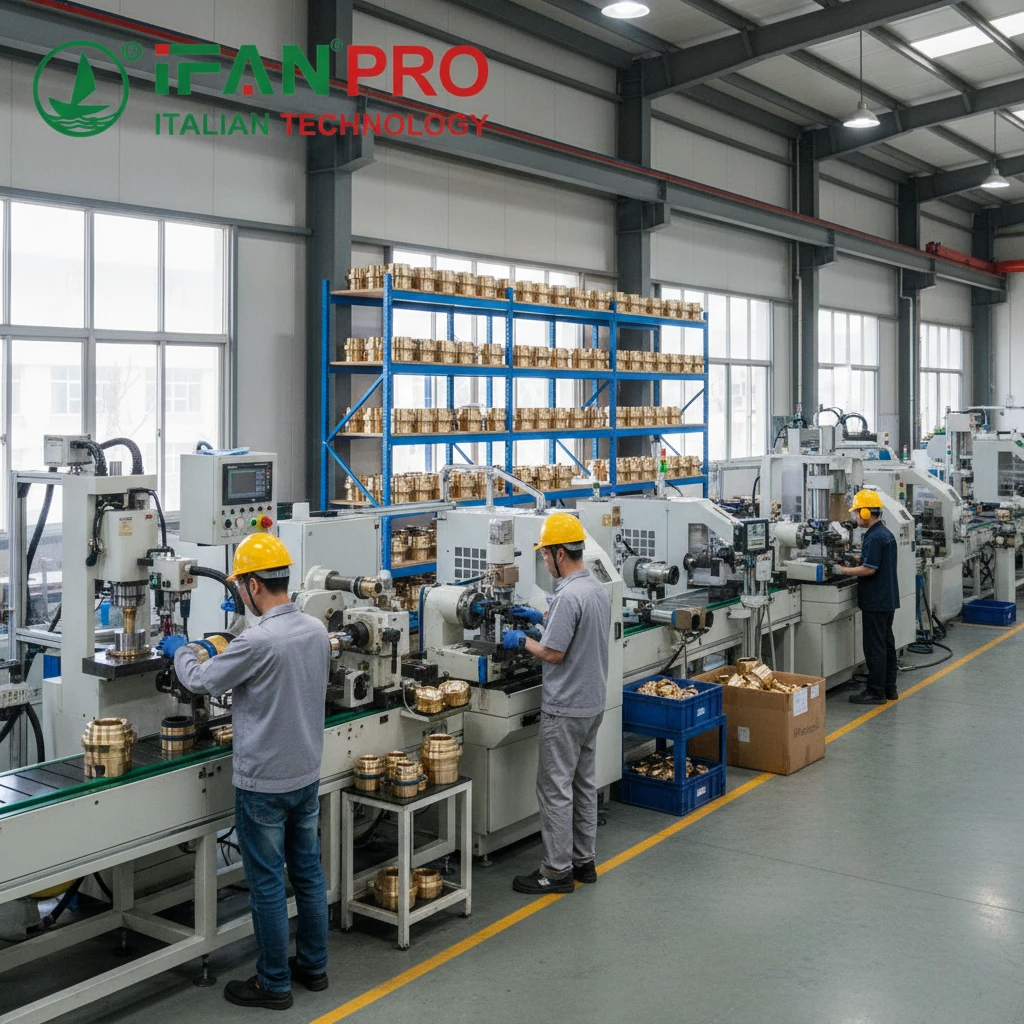
Only fittings that pass all tests receive the IFAN brand. This commitment to quality ensures you get a fitting that truly provides bubble-tight performance.
Why Professional Plumbers Recommend Union Designs for Residential Use
Professional plumbers see every type of fitting failure imaginable. Their recommendations come from hard-won experience, not marketing claims.
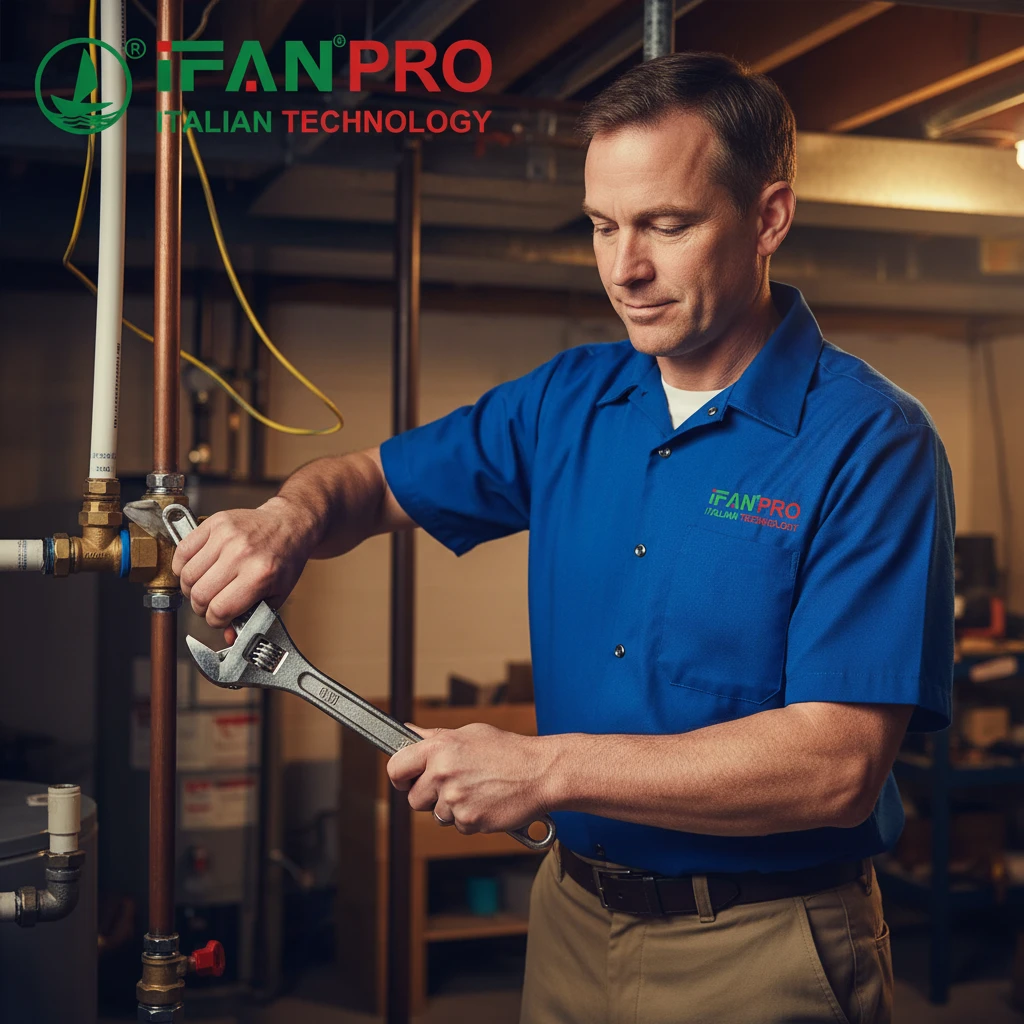
Professional plumbers recommend union designs like the 121UC because they combine easy installation with future serviceability. The union allows pipes to be disconnected without cutting, making repairs and replacements much simpler. Plumbers also value the reliable sealing and vibration resistance that quality unions provide, which reduces callbacks and warranty claims.
The Serviceability Advantage
Think about what happens when a standard fitting fails. To replace a soldered copper elbow, you must:
- Cut out the damaged section
- Clean both pipe ends
- Apply flux
- Heat and solder new fittings
- Hope you don’t start a fire in the wall
This process takes time and creates mess. It also requires open flames and toxic flux.
Now consider replacing a 121UC union:
- Unscrew the union nut
- Remove the old fitting
- Slide a new fitting into place
- Tighten the nut
The whole job takes minutes instead of hours. You don’t need a torch or special tools. You don’t risk burning your house down.
Why Professionals Value This
Plumbers charge by the hour. Time spent on difficult repairs is time they can’t spend on new installations. Union fittings make them more efficient, which benefits both the plumber and the customer.
Additionally, plumbers hate callbacks. A callback means returning to a job for free to fix a problem. It costs money and damages reputation. The reliable seal of a quality union minimizes callback risk.
Installation Tips from Professional Plumbers
Based on decades of field experience, here’s what professionals recommend when using union fittings:
Tip 1: Support the Pipes
Never let the weight of pipes hang on the union. Use pipe supports or hangers to take the load. This prevents stress on the fitting and extends its life.
Tip 2: Don’t Overtighten
Union seals work by compression, not by brute force. Tighten until snug, then give a quarter turn. Overtightening can damage the O-ring or crack the fitting body.
Tip 3: Check Alignment Before Tightening
Swivel the union to its final position before fully tightening. This ensures the pipe runs straight and the seal seats evenly.
Tip 4: Use Backup Wrenches
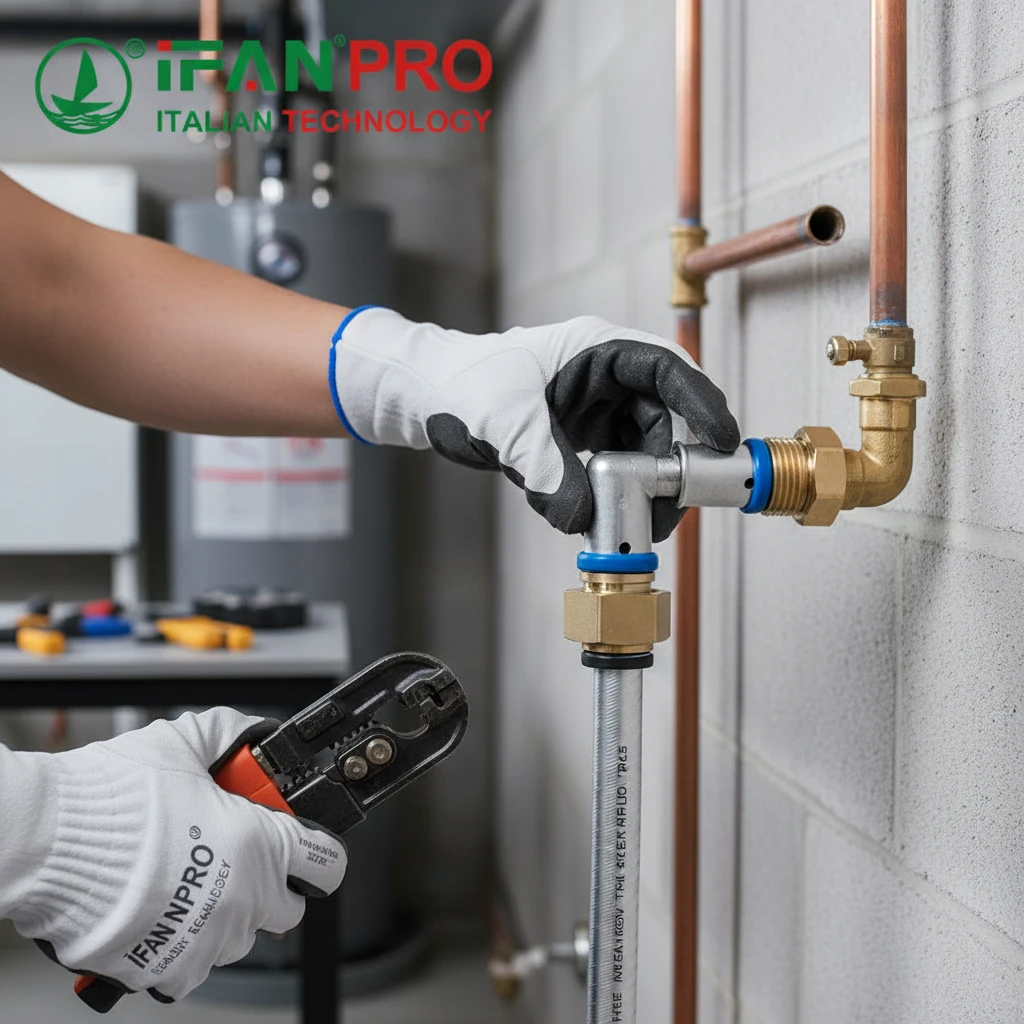
When tightening a union, hold the fitting body steady with one wrench while turning the nut with another. This prevents twisting the pipe or loosening other connections.
Tip 5: Label for Future Access
If the union will be behind a wall or under a floor, mark its location on a diagram or take photos. Future plumbers will thank you when they need to access it.
Professional Preference Survey
We asked professional plumbers about their fitting preferences. The results show why unions dominate for serviceable connections:
| Fitting Type | Preferred For | Main Reason | Professional Rating (1-10) |
|---|---|---|---|
| Union (121UC style) | Water heaters, fixture connections | Easy to disconnect later | 9.2 |
| Compression | Shut-off valves, supply lines | Reliable without soldering | 8.1 |
| Soldered Copper | Main lines, hidden locations | Permanent when done right | 7.5 |
| Push-Fit | Quick repairs, temporary fixes | Fastest installation | 7.8 |
| Threaded (tape/dope) | Equipment connections | Works with existing threads | 6.9 |
As the table shows, union designs rank highest for applications where future access matters. Water heaters, fixtures, and appliances all eventually need replacement. Unions make that replacement painless.
Conclusion
The 121UC female union fitting solves real problems in home plumbing with its swivel action, bubble-tight seal, and easy installation. For water heater connections, fixture upgrades, and general plumbing repairs, choose IFAN’s 121UC to save time and prevent leaks.










 Français
  English
  Русский
  Español
Commentaires récents