
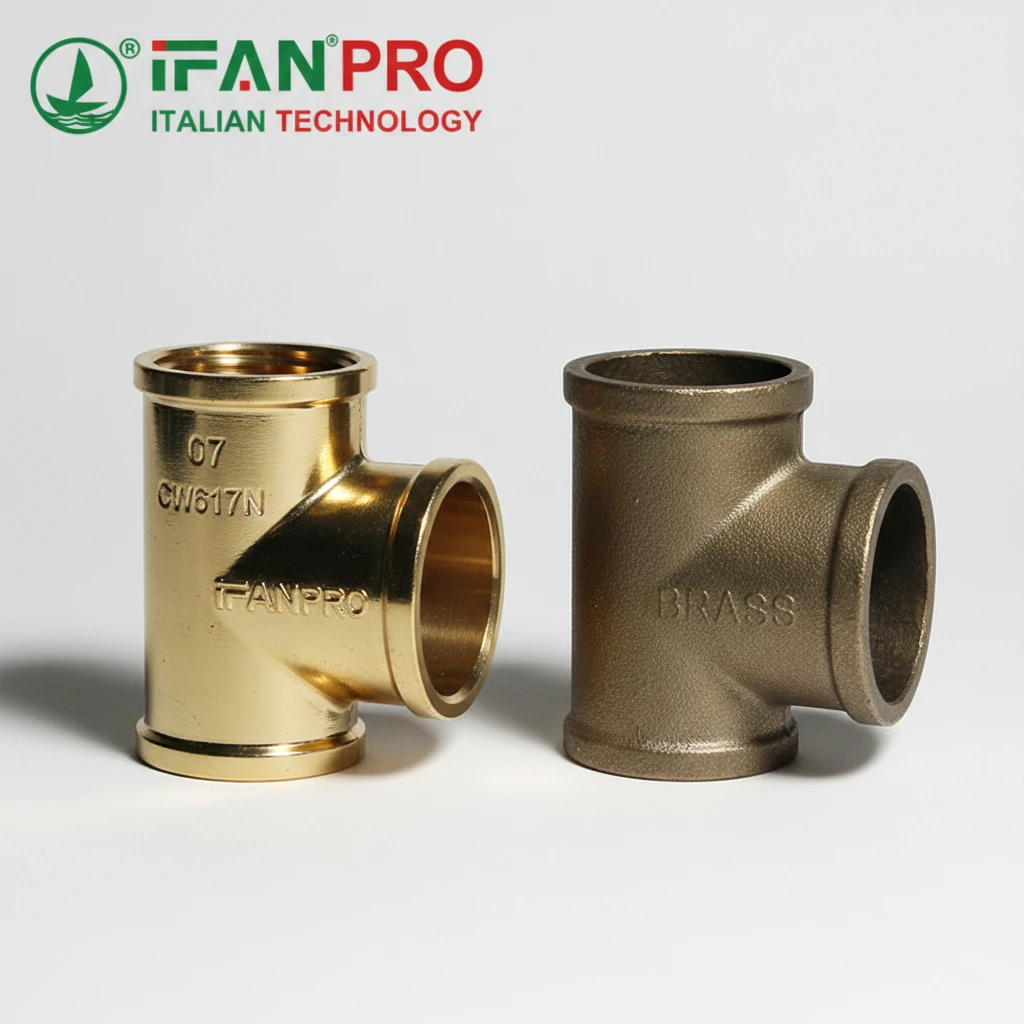
I once received a batch of brass fittings that left a gray residue on my hands. That moment of doubt taught me that identifying true quality requires more than just a glance.
You can identify a high-quality, lead-free brass elbow by checking for three things: clear “LF” or “Lead-Free” stamps and certifications like NSF/ANSI 61, a substantial weight and smooth, uniform finish with no porosity, and the correct “CW511L” or “CZ132” alloy designation stamped on the fitting itself. These are the baseline marks of a safe, durable product.
Knowing what separates a reliable fitting from a substandard one can save you from project failures and liability. Let’s break down each identifier.
What Markings or Certifications Indicate Lead-Free Compliant Brass?
In the workshop, we trust stamps and certificates, not just supplier promises. Missing markings are the first red flag.
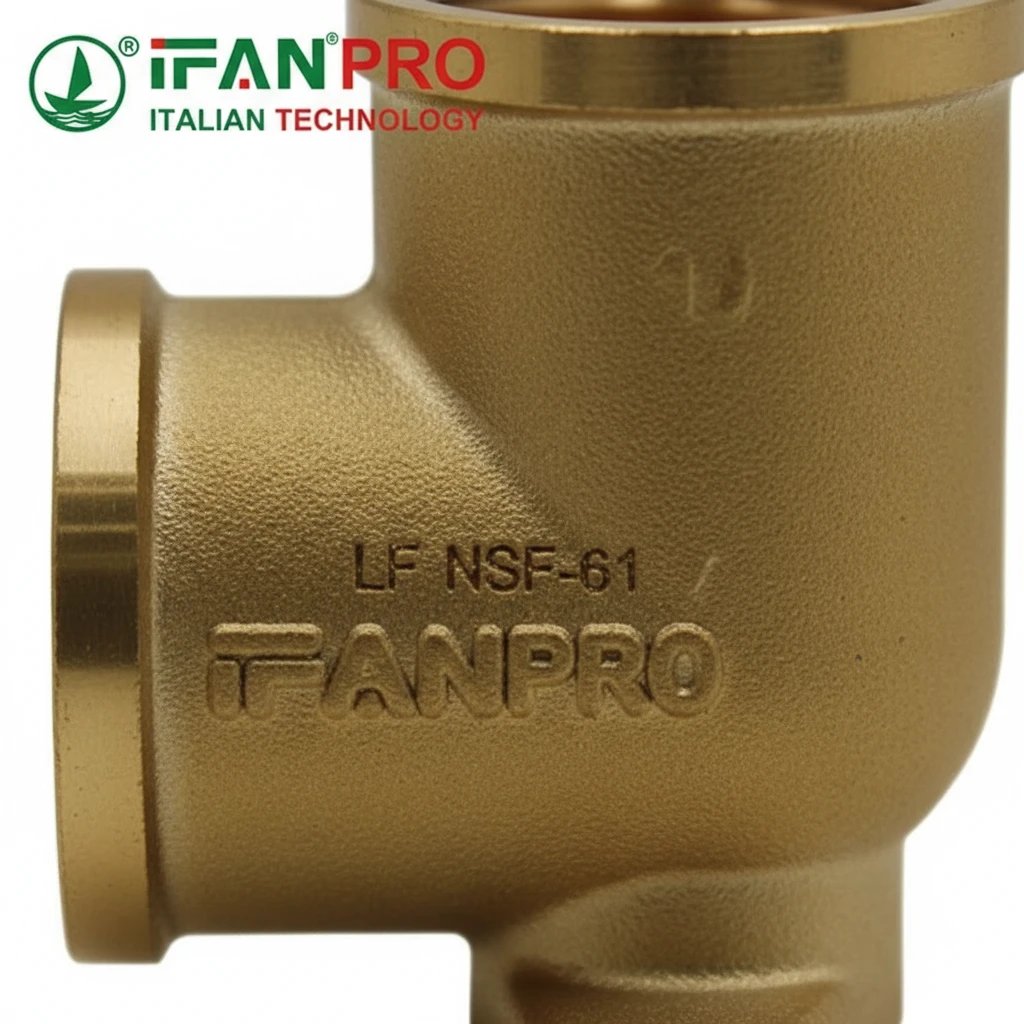
Look for the engraved or stamped marks “LF” (Lead-Free), “NSF/ANSI 61”, “NSF/ANSI 372”, or “UPC”. In the US and Canada, the “LF” stamp is legally required. The NSF/ANSI 61 certification is the most recognized proof that the fitting meets strict leaching standards for safe drinking water.
Understanding the Required Stamps
The markings on a fitting are its legal and technical ID card. You must physically see them on the product.
First, find the “LF” mark. In many countries, this is not optional. It stands for “Lead-Free” and indicates the fitting contains less than 0.25% lead by weight. This is the absolute minimum requirement. However, a stamp can be faked. So, you need supporting proof.
Next, look for a third-party certification mark. The most important one is NSF/ANSI 61. This means an independent organization (NSF International) has tested the fitting to ensure it doesn’t leach harmful levels of contaminants (including lead, but also other metals) into drinking water. It’s the gold standard.
Another common mark is the UPC (Uniform Plumbing Code) symbol, which often accompanies NSF certification.
How to Verify and Why It Matters
Do not just take a catalog’s word for it. Here’s a practical verification process:
- Check the Fitting Itself: The “LF” and often the alloy number should be cast or stamped directly onto the body of the elbow.
- Ask for the Certificate: Request the official NSF/ANSI 61 Certificate of Compliance from your supplier. Reputable manufacturers like IFAN can provide this for their product lines.
- Check the Packaging: Genuine certified fittings usually come in packaging that also bears the NSF mark.
Why is this so critical? Substandard or fake “lead-free” fittings may use cheaper, non-compliant brass that contains higher levels of lead. This lead can slowly leach into your water over time, posing a serious health risk. The markings and certifications are your first-line defense against this.
Summary of Key Marks
| Marking/Certification | What It Means | Where to Find It |
|---|---|---|
| “LF” Stamp | Indicates less than 0.25% lead content. | Cast/stamped on the fitting body. |
| NSF/ANSI 61 | Certified for safe drinking water contact (low leaching). | On fitting, packaging, and supplier’s certificate. |
| Alloy Number (e.g., CW511L) | Specifies the exact lead-free brass composition. | Cast/stamped on the fitting body. |
How Does the Weight and Finish of a Quality Brass Elbow Feel?
The feel of a fitting tells a story about its manufacturing. A light, rough elbow is a story of shortcuts.
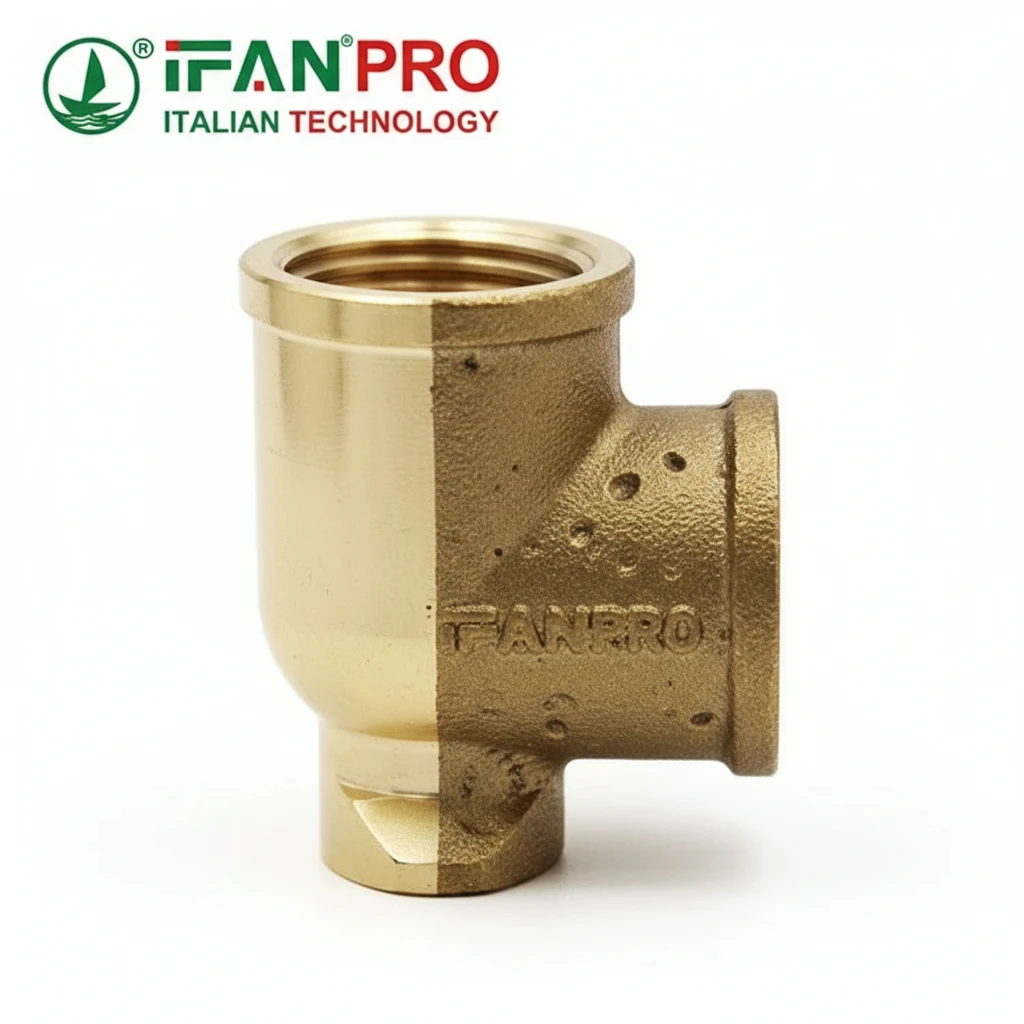
A high-quality brass elbow feels noticeably heavy and dense for its size due to the use of thick, solid brass, not thin walls or hollow sections. The finish should be smooth, uniform, and free of rough spots, casting seams, porosity (tiny holes), or discoloration. A good chrome plating (if applied) is mirror-like and even.
The Heft Test: Why Weight Matters
Pick up a high-quality brass elbow and a cheap imitation. The difference is immediately obvious. Quality brass is dense. Manufacturers achieve this by using adequate material to meet pressure ratings, resulting in thicker walls and a solid feel.
Cheap fittings save money by using less brass. They have thinner walls, which can compromise pressure integrity. Sometimes, they may even have internal cavities or use inferior, less dense alloys mixed with other metals. A light fitting is a weak fitting. It’s more prone to cracking under stress or during installation when tightened.
Evaluating the Surface Finish
Run your fingers over the surface. Look closely. A quality fitting undergoes several finishing steps after casting, including tumbling, machining, and polishing.
Here’s what to check for:
- Smoothness: There should be no rough grinding marks or sharp edges, especially on the threads and inside the bore.
- Uniformity: The color and texture should be consistent. You shouldn’t see patches of different shades or textures, which can indicate poor alloy mixing or contamination.
- Absence of Defects:
- Porosity: These are small pinprick holes on the surface. They are casting defects that weaken the structure and can become leak paths.
- Flash Lines: These are thin lines of excess material along the seam where the mold met. Low-quality fittings have prominent, sharp flash lines that are not properly cleaned up.
- Pitting or Scratches: These suggest poor handling or storage.
Chrome-Plated Fittings
If the fitting is chrome-plated, the plating should be bright, reflective, and completely even. You should not see any:
- Cloudiness or “Blue” spots: Indicates poor plating chemistry.
- Flaking or peeling: Means the plating did not properly adhere to the brass base.
- Exposed brass (yellow spots): Shows the plating is too thin or missed spots entirely.
A perfect finish isn’t just about looks. It indicates controlled, high-standard manufacturing, which directly relates to the fitting’s performance and longevity. A rough interior can disrupt water flow and encourage scaling; poor plating leads to rapid corrosion.
Are There Specific Alloy Designations for Plumbing-Safe Brass?
Yes, and knowing them is your technical safeguard. We specify these codes in every order to avoid ambiguity.
The key lead-free, plumbing-safe brass alloy designations are “CW511L” (European Standard EN 12165) and “CZ132” (also known as “Low-Lead DZR Brass” or “Alloy C89833”). In the U.S., “Alloy C85700” (Leaded Brass) is common but NOT lead-free. Always look for CW511L or CZ132 to ensure safe drinking water compliance.
Decoding the Alloy Numbers
Not all brass is the same. Brass is an alloy of copper and zinc, but other elements are added for properties like machinability. Historically, lead was added to make cutting threads easier. Lead-free brass replaces lead with other elements like bismuth or silicon.
Here are the main alloys you need to know:
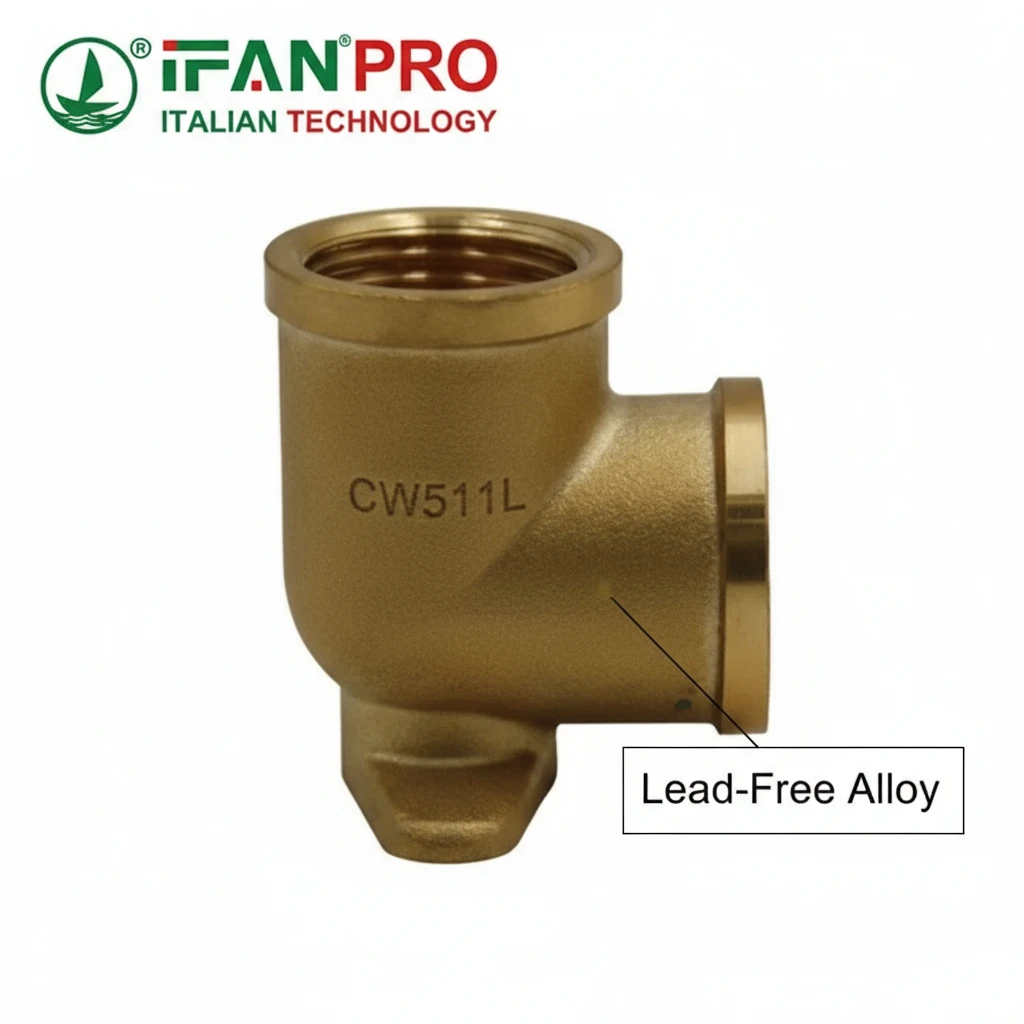
- CW511L (EN Standard): This is the most common and globally recognized lead-free brass alloy for plumbing. The “L” stands for “Low Lead” (≤0.25%). It offers excellent corrosion resistance and mechanical strength.
- CZ132 / C89833 (DZR Brass): “DZR” stands for “Dezincification Resistant.” This is a special type of brass treated to resist a corrosion process called dezincification, where zinc leaches out, leaving a weak, porous copper structure. It’s ideal for areas with aggressive (soft) water.
- C85700 (Leaded Brass): This is a standard leaded brass (contains ~1.5-2.5% lead). It is not safe for potable water in most modern jurisdictions but may still be used for other applications.
Why the Alloy Designation is Non-Negotiable
The alloy stamp (e.g., “CW511L”) is a precise recipe. It tells you exactly what the fitting is made of. When a manufacturer stamps this number, they are taking responsibility for the material composition.
If this stamp is missing, you have no guarantee of what you’re holding. A supplier might verbally say “it’s lead-free,” but without the alloy stamp and supporting certification, you cannot verify it.
Comparison of Common Brass Alloys for Plumbing
| Alloy Designation | Lead Content | Key Property | Primary Use |
|---|---|---|---|
| CW511L | ≤ 0.25% (Lead-Free) | General purpose, good machinability and strength. | Standard lead-free fittings for potable water. |
| CZ132 / C89833 | ≤ 0.25% (Lead-Free) | Excellent dezincification resistance. | Potable water in soft/aggressive water areas. |
| C85700 | ~1.5-2.5% (Leaded) | Easy to machine, low cost. | NOT for drinking water. Drainage, gas, non-potable. |
Always insist on seeing the alloy stamp on the fitting. It is the single most reliable technical indicator of the material’s safety and suitability for your drinking water system.
Why Is Purchasing from Reputable Suppliers Critical for Ensuring Quality?
The cheapest fitting can become the most expensive problem. We’ve learned that a trustworthy supplier is part of the product’s quality.
Purchasing from a reputable supplier is critical because they provide verifiable documentation (certificates), ensure traceability back to certified mills, maintain consistent quality across batches, and offer technical support. A disreputable source may provide fake certifications, use inconsistent or substandard materials, and offer zero accountability if the fittings fail.
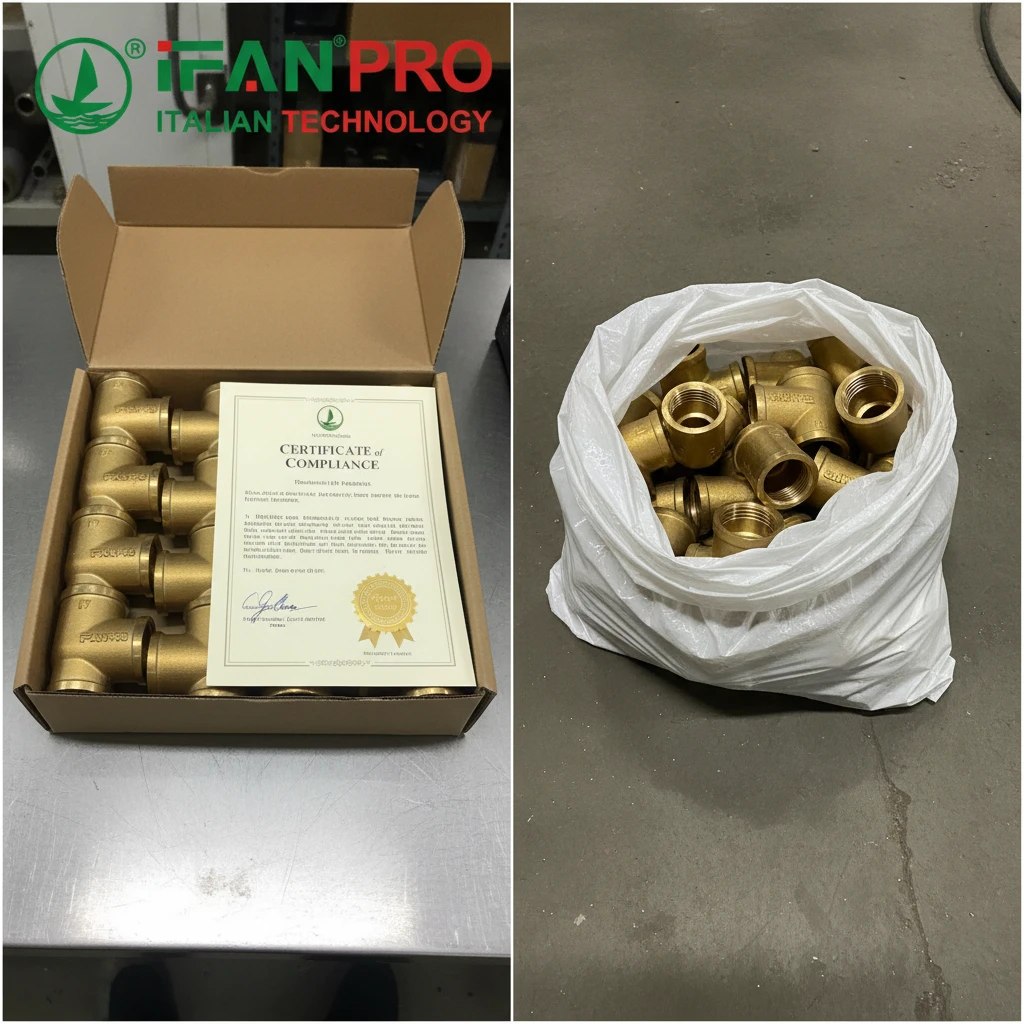
The Risks of the “Too-Good-To-Be-True” Price
The market is flooded with cheap brass fittings. The price difference often comes from cutting these corners:
- Fake or Forged Certifications: They may show you a generic certificate that doesn’t match the batch.
- Material Substitution: Using cheaper, non-compliant brass or even brass-plated other metals.
- Poor Manufacturing: Skipping quality control steps, leading to defects like porosity or weak threads.
- No Batch Traceability: If a problem is found later, you cannot identify or recall the faulty products.
When you buy from such a source, you assume all the risk—the risk of project delays, leak repairs, water contamination, and potential legal liability.
The Value a Reputable Supplier Adds
A supplier like IFAN operates differently. Here’s what you’re really paying for:
- Guaranteed Documentation: You receive genuine, batch-specific NSF/ANSI 61 certificates and material test reports.
- Supply Chain Control: They source raw materials (copper, zinc, bismuth) from certified smelters and mills, ensuring the alloy is correct from the start.
- In-House Quality Control: They perform checks throughout production, from incoming material to final product, not just a random sample.
- Technical Expertise: They can advise on the correct alloy (e.g., CW511L vs. CZ132) for your specific water conditions and application.
- Consistency and Reliability: Every batch meets the same high standard, so your installations are predictable and safe.
- Accountability: They stand behind their products. If an issue arises, they will work with you to resolve it.
In essence, a reputable supplier is your partner in risk management. They invest in processes that guarantee the product is what it claims to be, protecting your project, your client, and your reputation.
Conclusion
Identifying a quality lead-free brass elbow requires checking stamps, feeling the heft, verifying the alloy, and buying from trusted sources. For guaranteed, certified lead-free brass fittings, rely on IFAN for consistent quality and full documentation.





 Français
  English
  Русский
  Español
Commentaires récents