
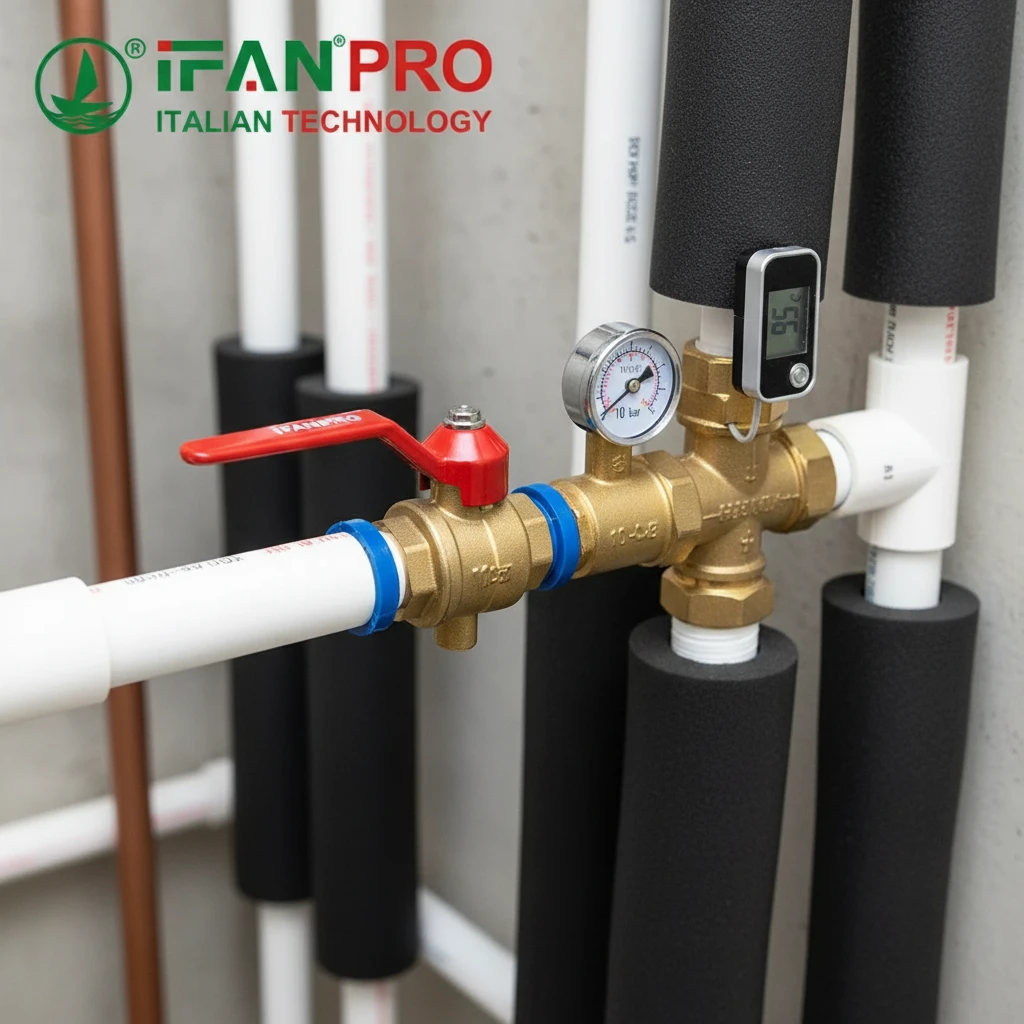
I recently dealt with a system failure where a standard valve cracked under thermal cycling. That costly repair highlighted why specs like “121UC” matter for critical applications.
The PEX-AL-PEX 121UC valve is engineered to handle high temperature and pressure through its reinforced composite structure. The aluminum core provides strength to contain pressure, while the PEX layers and high-temperature seals resist heat. This design allows it to reliably control 95°C water at 10 bar continuously, outperforming standard plastic valves and matching brass in many demanding conditions.
This performance doesn’t happen by accident. Let’s break down the ratings and construction that make this valve a robust choice for challenging systems.
What Do the “121” and “UC” Ratings Signify for Temperature and Pressure?
Clients often see these codes but don’t know their meaning. Understanding them is key to selecting the right valve and avoiding system failures.
The “121” rating signifies that the valve is approved for continuous operation with water at 95°C (203°F) and 10 bar (145 psi) pressure. The “UC” stands for “Universal Continuous,” indicating its certification for long-term, constant use under these high-stress conditions in hot water supply systems.
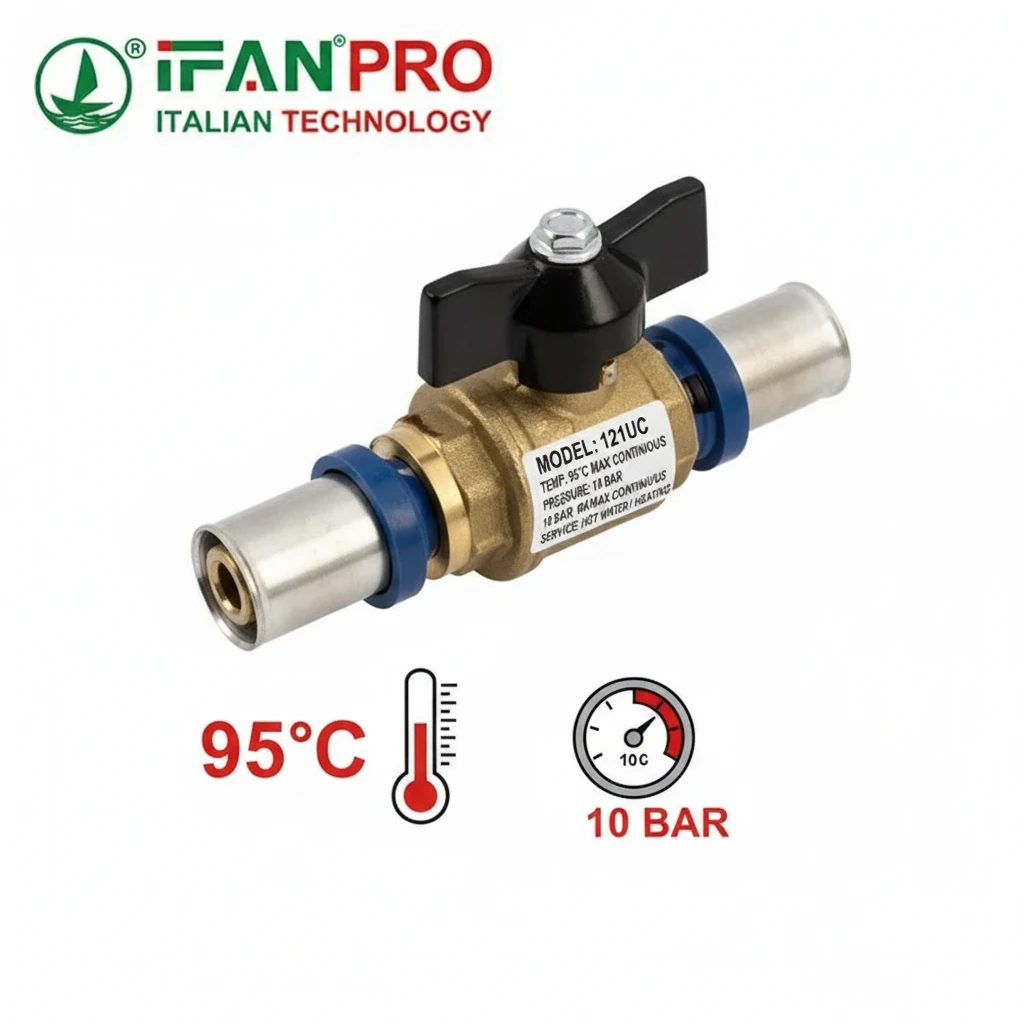
Decoding the “121” Number
The “121” is not a random model number. It comes from international plumbing standards that classify components based on their temperature and pressure capabilities. This code gives you an instant, reliable guide to the valve’s limits.
Think of it as a performance passport. A valve with a 121 rating has passed rigorous laboratory tests. It proves the valve can operate safely and reliably 24/7 at the defined high temperature and pressure. This is crucial for systems like central heating, solar thermal circuits, or industrial process lines where conditions are constantly severe.
For comparison, many standard PEX or PP-R fittings carry lower ratings, like “110” or “080,” for lower temperature and pressure. Choosing a “121”-rated component means you are building in a significant safety margin and longevity for hot, pressurized applications.
Understanding the “UC” (Universal Continuous) Designation
The “UC” part of the rating adds another critical layer of information. It tells you about the mode of operation the valve is designed for.
- Universal: It is suitable for a wide range of applications within its temperature/pressure envelope.
- Continuous: It is certified for constant exposure to the rated conditions, not just occasional or intermittent use.
This is a key difference. Some valves might handle 95°C water for short bursts but would degrade quickly if left under those conditions permanently. The UC rating assures you that the valve’s materials and design are stable for long-term, unbroken service. This directly addresses a common pain point: valves that slowly deform or leak after months of continuous high-heat operation.
Summary of Key Ratings
The table below clarifies what these ratings mean in practical terms:
| Rating Code | Max Continuous Temperature | Max Continuous Pressure | Primary Use Case |
|---|---|---|---|
| 121UC | 95°C (203°F) | 10 bar (145 psi) | Central heating, solar thermal, commercial DHW. |
| 110 | 80°C (176°F) | 10 bar (145 psi) | Domestic hot water (legionella prevention cycles). |
| 080 | 65°C (149°F) | 8 bar (116 psi) | Standard residential cold & warm water. |
In short, specifying a 121UC valve means you are selecting a component built for the most strenuous daily duty a residential or commercial water system can provide.
How Does the Valve’s Construction Withstand 95°C Water at 10 Bar Pressure?
A label is just a promise; the construction is the proof. The valve’s multi-layer design is what turns the 121UC rating into reality.
The valve withstands 95°C and 10 bar through a synergistic construction: The PEX-AL-PEX composite body provides a rigid, pressure-resistant structure that prevents expansion, while high-temperature seals (like EPDM or FKM) maintain elasticity to seal reliably against the heat, preventing leaks and failure.
The Role of the PEX-AL-PEX Composite Structure
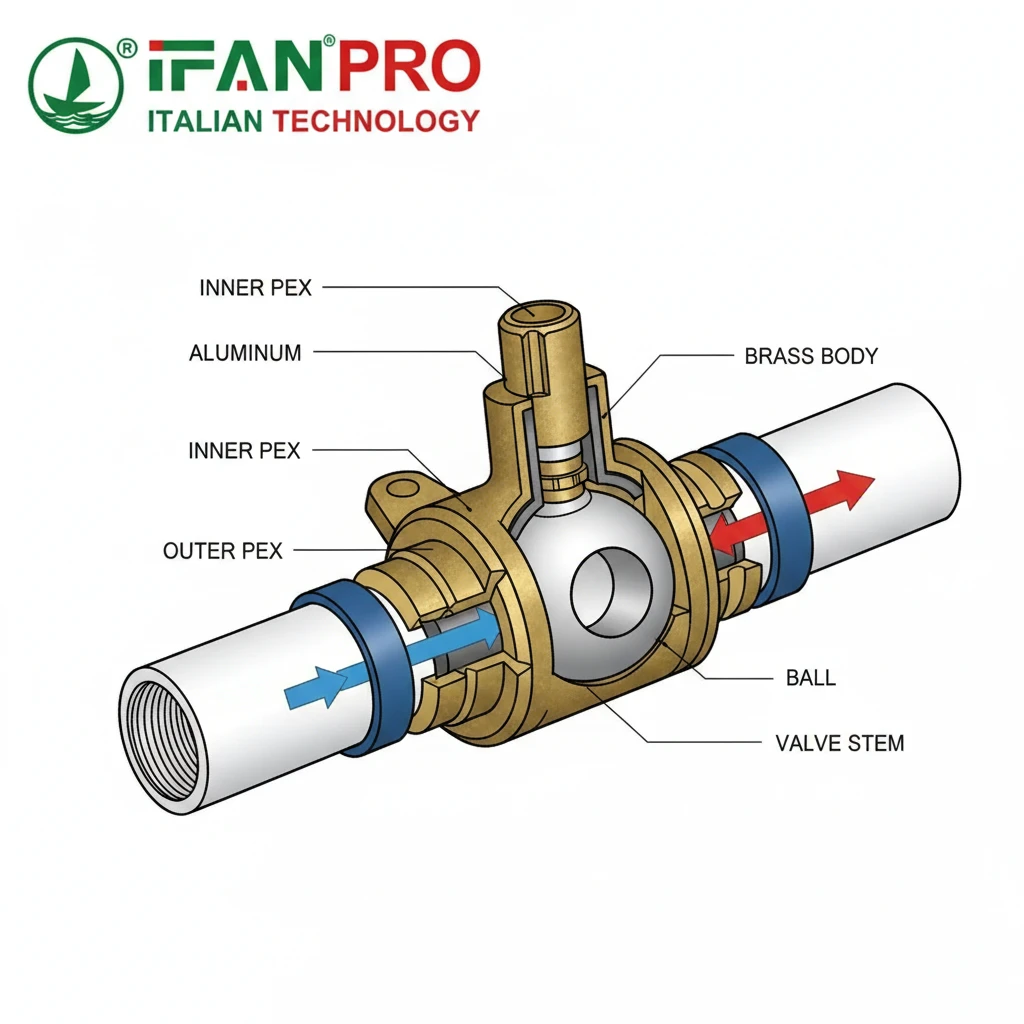
The secret lies in the “sandwich” structure of the pipe and valve body material: a layer of aluminum fused between two layers of cross-linked polyethylene (PEX).
This composite design tackles both pressure and temperature challenges simultaneously:
- Containing Pressure (The Aluminum Layer’s Job): Pressure wants to expand a pipe or valve outward. The solid, continuous aluminum core acts like a rigid cage. It gives the valve tremendous hoop strength, preventing it from ballooning or bursting under high pressure (10 bar). A pure plastic valve would be much thicker and less reliable at this pressure.
- Resisting Heat (The PEX Layers’ Job): The inner and outer PEX layers are cross-linked to improve their thermal stability. They handle direct contact with the 95°C water without softening or degrading. The outer layer also protects the aluminum from external corrosion.
How the Design Manages Thermal Stress
Constant high heat is a different kind of enemy. It causes materials to expand and, over time, can make them brittle. The PEX-AL-PEX construction manages this brilliantly.
- Low Thermal Expansion: The aluminum core drastically reduces the valve’s linear thermal expansion compared to all-plastic valves. This means the valve does not grow and shrink as much when the water temperature cycles between hot and cold. This stability prevents stress on connections and stops the valve from pulling away from seals.
- Integrated Structure: In a quality 121UC valve, the body is not just a sleeve of composite material. The key internal parts—like the valve seat and stem guide—are often integrated into or firmly bonded with this composite structure. This creates a single, robust unit that resists the distorting forces of heat and pressure.
Therefore, the valve doesn’t just “survive” the conditions; its construction is actively designed to nullify the forces that would destroy a less capable component.
Which Materials Are Used in the Valve Body and Seals for High-Performance?
Choosing the right base material is only half the battle. The internal sealing materials determine if the valve will leak in a week or last for decades.
The valve body uses PEX-AL-PEX composite for strength and thermal stability. The critical seals, especially the O-rings and stem seals, are made from high-grade synthetic rubbers like EPDM or, for even better performance, FKM (Viton®). These materials retain their elasticity and sealing force at high temperatures where standard rubbers fail.
Breaking Down the Material Choices
Every material in a 121UC valve has a specific, high-performance job.
1. Valve Body: PEX-AL-PEX Composite
We’ve covered its structural role. From a material perspective, the PEX used is a high-density, fully cross-linked grade. The aluminum is a specific alloy chosen for its bondability with plastic and corrosion resistance. This isn’t standard plumbing material; it’s aerospace-grade composite technology adapted for plumbing.
2. The Critical Seal Materials
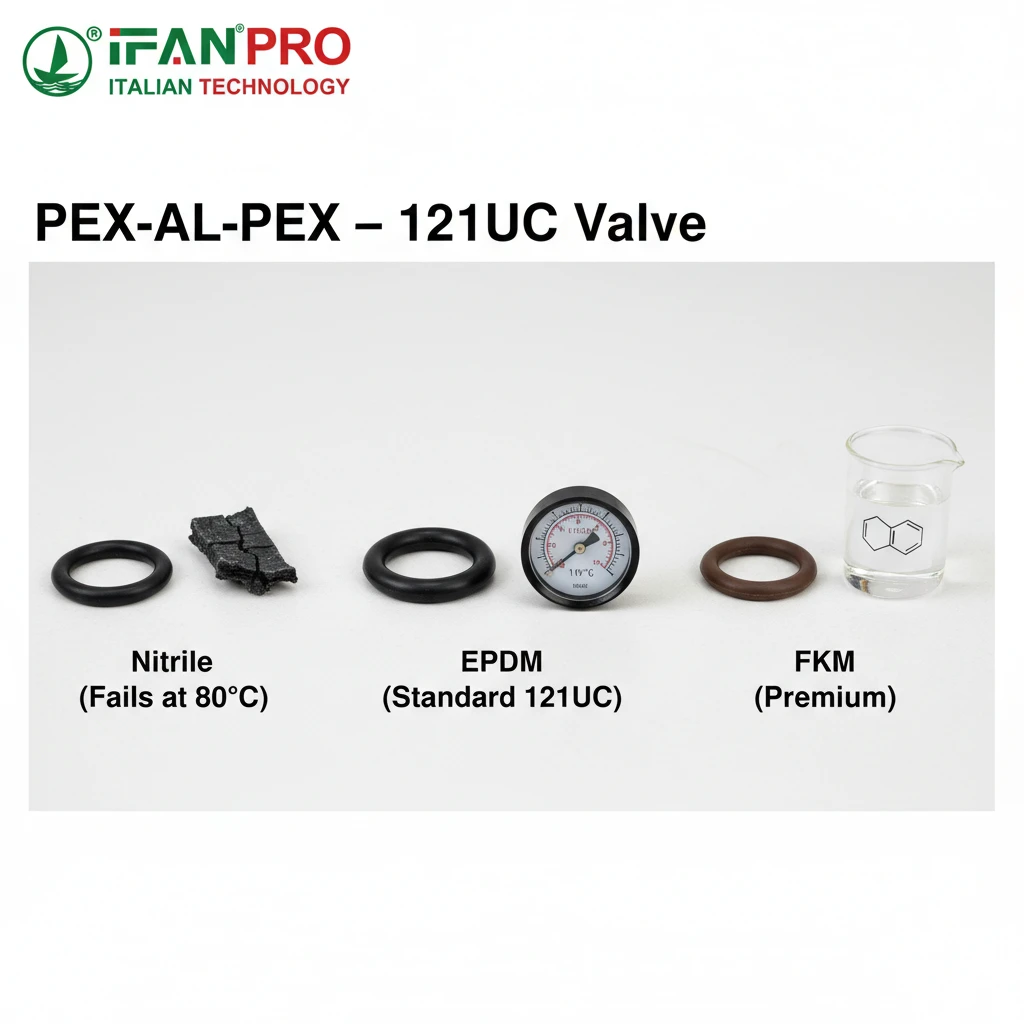
This is where failure most often occurs. Standard nitrile (Buna-N) rubber seals harden and crack at temperatures above 80°C. For 121UC service, manufacturers must use superior elastomers.
- EPDM (Ethylene Propylene Diene Monomer): This is the standard for high-temperature hot water. It performs excellently up to 95-110°C, resists scaling, and handles chlorinated water well. Most reputable 121UC valves use EPDM seals.
- FKM/FPM (Fluoroelastomer, e.g., Viton®): This is the premium choice. It offers even higher temperature resistance (up to 150-200°C short-term) and superior chemical resistance. Valves with FKM seals provide an extra safety margin and are often used in commercial or extreme applications.
3. Other Internal Components
- Valve Stem: Often made from brass or stainless steel for corrosion-free operation.
- Springs & Internal Parts: Made from stainless steel to prevent rusting, which could jam the valve or contaminate the water.
Material Comparison for Valve Seals
The table below shows why material choice is non-negotiable for a 121UC rating:
| Seal Material | Max Continuous Temp | Performance at 95°C | Cost & Typical Use |
|---|---|---|---|
| Nitrile (Buna-N) | 80°C (176°F) | Fails. Hardens, cracks, and leaks quickly. | Low. For cold water only. |
| EPDM | 110°C (230°F) | Excellent. Maintains elasticity and seal long-term. | Medium. Standard for 121UC valves. |
| FKM (Viton®) | 150°C+ (302°F+) | Superior. Exceptional aging and chemical resistance. | High. Premium/industrial 121UC valves. |
When you select a valve like IFAN’s PEX-AL-PEX 121UC series, you are getting a package where every material, from the composite body to the EPDM/FKM seals, is specified to work in harmony under extreme conditions.
How Does It Compare to Standard PEX or Brass Valves in Extreme Conditions?
The real test is in a side-by-side comparison. The 121UC valve occupies a unique middle ground, combining the best features of both worlds.
Compared to standard PEX valves, the 121UC valve is far stronger and more heat-resistant, eliminating the risk of rupture or softening. Compared to full brass valves, it offers comparable pressure handling with better corrosion resistance, lighter weight, and no risk of dezincification, often at a lower cost.
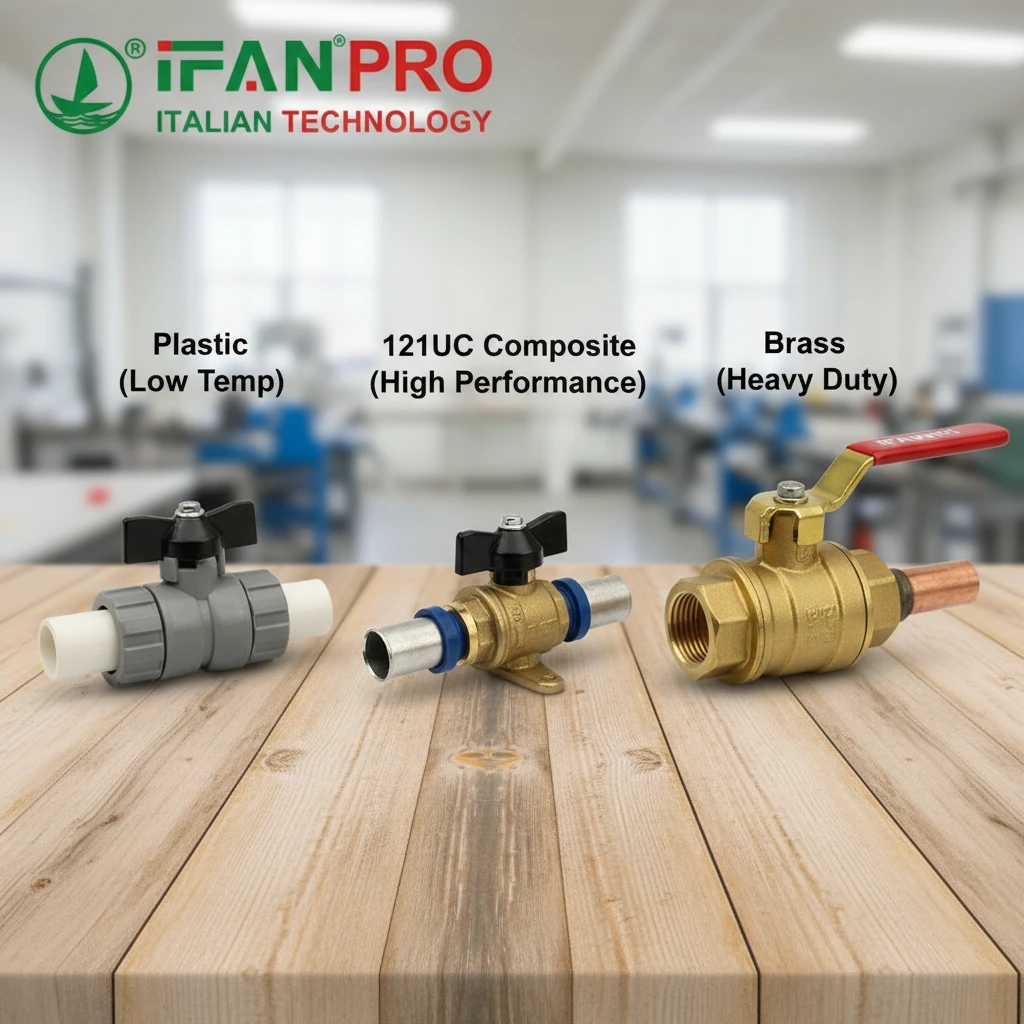
Direct Comparison: 121UC vs. Standard PEX Valves
Standard all-PEX or PP-R plastic valves are cost-effective for cold and warm water. However, under “121” conditions, they have major weaknesses:
- Pressure (10 bar): The plastic body can creep and deform over time, potentially leading to failure. Its pressure rating at high temperature is often much lower.
- Temperature (95°C): The plastic can soften, reducing its strength. The valve may become difficult to operate or the seat may deform, causing leaks.
- Thermal Expansion: Plastic expands significantly when heated. This can stress connections and cause leaks at the fittings.
- Oxygen Diffusion: Standard PEX allows some oxygen to permeate through, which can corrode ferrous components (like radiators or boilers) in a closed heating system.
The 121UC valve solves all these issues. Its aluminum core blocks oxygen diffusion, prevents deformation under pressure and heat, and minimizes thermal expansion.
Direct Comparison: 121UC vs. Brass Valves
Brass has been the traditional go-to for high-pressure and temperature. The 121UC valve challenges this with several advantages:
- Corrosion & Dezincification: Brass, especially low-quality brass, can corrode and suffer from dezincification in certain water conditions, weakening the valve. PEX-AL-PEX and its polymer/aluminum construction are completely immune to this.
- Weight & Installation: 121UC valves are significantly lighter than solid brass, making handling and installation easier.
- Heat Loss: The plastic layers provide better thermal insulation than brass, reducing unwanted heat loss from pipes.
- Cost: High-quality, dezincification-resistant brass (DZR or CR brass) is expensive. A 121UC valve often provides similar performance for less cost.
Brass still has advantages in extreme mechanical abuse scenarios or very high-temperature steam applications beyond 95°C. But for standard high-temperature water systems, the 121UC is a superior, modern alternative.
Performance Summary Table
The table below provides a clear overview of their capabilities in extreme conditions (95°C, 10 bar):
| Valve Type | Pressure Resistance | Heat Resistance | Corrosion Resistance | Oxygen Barrier | Best For |
|---|---|---|---|---|---|
| PEX-AL-PEX 121UC | Excellent | Excellent | Excellent | Yes (Full Barrier) | Modern heating, solar, commercial DHW. |
| Standard PEX/Plastic | Poor/Fair | Poor (Softens) | Excellent | No | Cold & low-temp residential water only. |
| Standard Brass | Excellent | Excellent | Fair (Risk of dezincification) | N/A | Traditional systems, high mechanical stress. |
| Premium DZR Brass | Excellent | Excellent | Good | N/A | Critical applications where cost is secondary. |
Conclusion
For systems demanding reliable control of hot, pressurized water, the PEX-AL-PEX 121UC valve is an engineered solution. For assured quality, specify IFAN’s 121UC Valve Series, built with certified materials for long-term performance.






 Français
  English
  Русский
  Español
Commentaires récents