
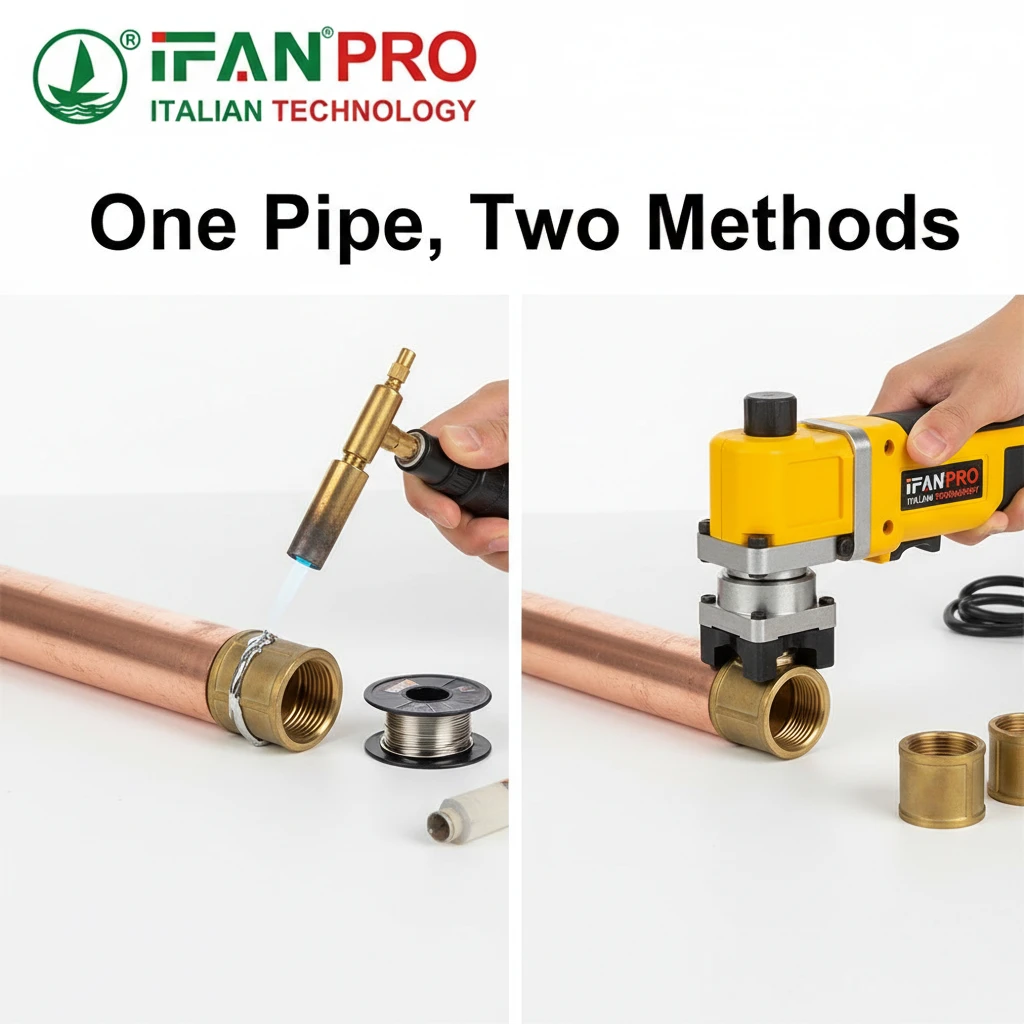
A client once faced a costly repair because a pipe couldn’t adapt to available fittings on-site. This experience taught me the real value of connection flexibility.
Yes, certain types of pipes are specifically designed for dual compatibility with both solder (braze) and press-connect fittings. For reliable performance, the pipe must have a precisely controlled outer diameter, a clean and smooth surface, and be made from a compatible alloy like CCA407 to withstand the forces of pressing without compromising its structural integrity.
This dual compatibility solves major headaches in system design and maintenance. Let’s break down exactly what makes this possible and how to do it right.
Does the Pipe’s Outer Diameter Tolerance Meet Press-Fitting System Requirements?
A mismatch in diameter is the fastest way to a failed press connection. I have seen projects delayed for weeks because of this simple, yet critical, oversight.
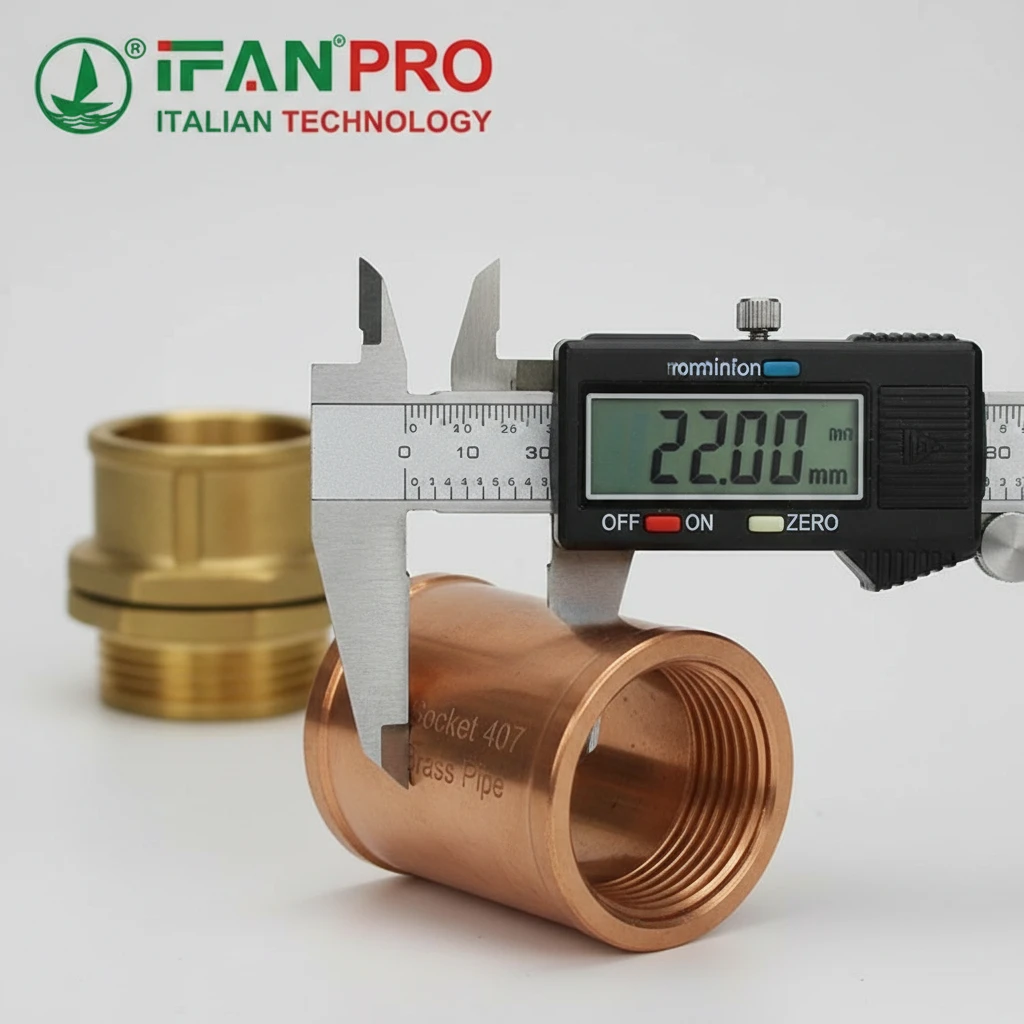
The pipe’s outer diameter (OD) tolerance is absolutely critical for press systems. It must be exceptionally tight and consistently round to ensure the O-ring inside the press fitting seals perfectly all around the pipe. Standard pipe for soldering often has a looser tolerance, which can lead to leaks when pressed.
Understanding the Key Requirement
Press-fit technology works by using a specialized tool to compress a metal fitting onto a pipe. Inside the fitting, a rubber O-ring creates the seal, and a metal grip ring holds the pipe in place. For this to work every single time, the pipe must be a perfect “guest” for the fitting’s “host.”
The most important factor is the outer diameter. If the pipe is even slightly too small, the O-ring will not compress enough to form a watertight seal. If the pipe is too large, it can damage the O-ring during insertion or prevent the fitting from fully seating. In both cases, the result is a leak.
Tolerance Comparison: Press vs. Standard
Not all pipes are made the same. Pipes manufactured primarily for soldered connections often have a wider acceptable range for their outer diameter. This is because the solder will fill minor gaps. However, this same variability is unacceptable for a press system.
Manufacturers who produce pipes for dual compatibility follow a much stricter standard. Here is a simplified comparison:
| Pipe Type | Typical Outer Diameter Tolerance | Primary Connection Method | Risk in Press Systems |
|---|---|---|---|
| Standard Copper Pipe | +/- 0.004 inches | Soldering | High risk of leaks due to size variation. |
| Dual-Compatible Pipe (e.g., to EN 1057 R250) | +/- 0.001 inches | Solder and Press | Very low risk; designed for precision. |
How to Ensure Compliance
First, always check the pipe certification. Look for standards like EN 1057 R250 for copper, which specifies the tight dimensional tolerance required for press fittings. The “R250” denotes its suitability for both methods.
Second, communicate clearly with your supplier. When you are sourcing pipe for a project that may use press fittings, you must specify this requirement. A professional supplier like IFAN will provide pipes certified to the correct standards. Using the wrong pipe can void the warranty of the press fitting system and lead to system failure.
What Surface Preparation Is Needed When Switching Between Connection Methods?
Surface condition is the difference between a 50-year joint and a failed one. Improper prep is the most common installer error I encounter.
Switching methods requires specific surface preparation. For soldering, the pipe end must be cleaned bright with abrasive cloth and coated with flux. For press fittings, the pipe must be clean, smooth, and free of all debris, scratches, and flux residue. Crucially, you cannot press a fitting onto a pipe that has been fluxed, as the residue will damage the O-ring.
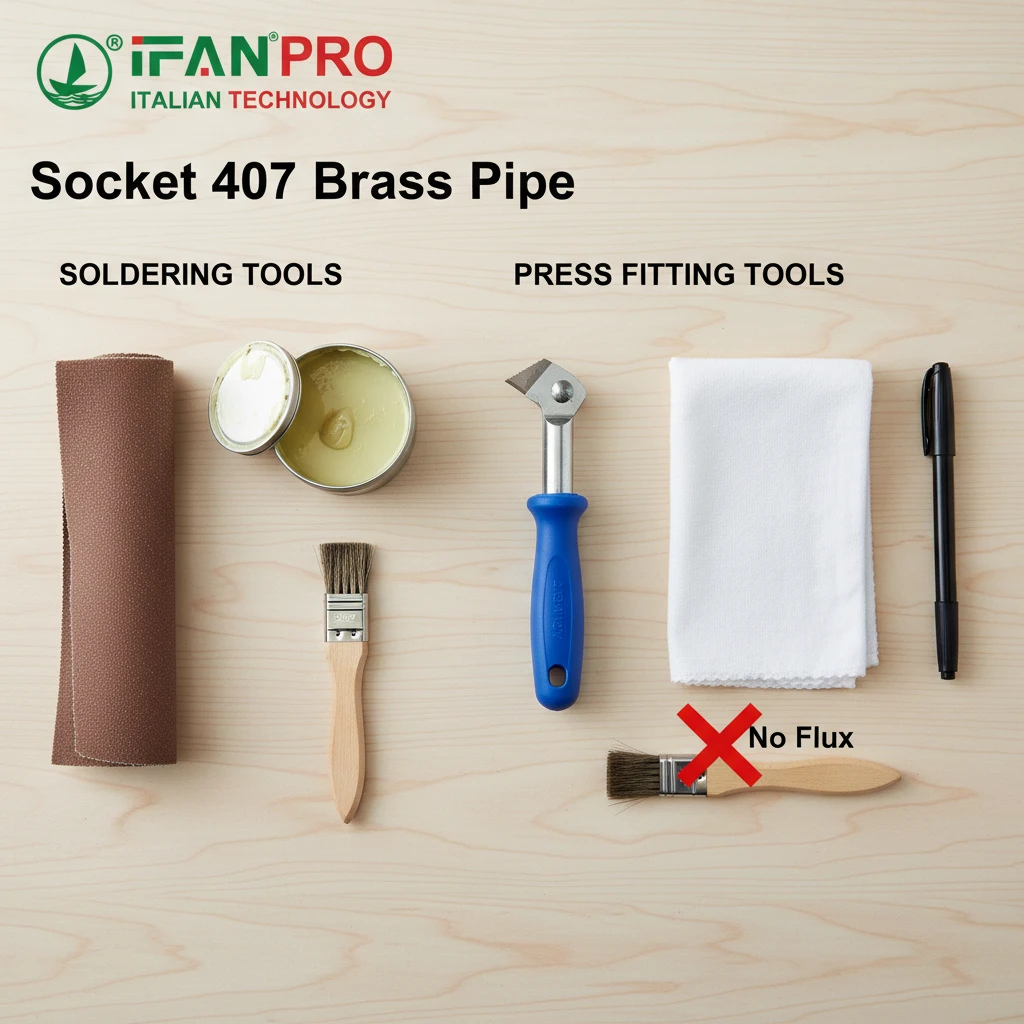
The Two Different Rules for Cleanliness
Many people think “clean is clean,” but for plumbing connections, there are two different definitions. Getting this wrong is a major pitfall.
1. Preparation for Soldering (Brazing):
The goal here is to create a chemically clean surface that allows the solder to flow and bond with the base metal.
- Step 1: Cut the pipe squarely using a tube cutter.
- Step 2: Ream the inside to remove the internal burr.
- Step 3: Use abrasive cloth or a brush to shine the outside of the pipe end (about 1 inch back). This removes oxidation.
- Step 4: Immediately apply a thin, even layer of flux to the bright area. The flux cleans the metal during heating and prevents new oxidation.
2. Preparation for Press Fitting:
The goal here is to create a perfectly smooth, contaminant-free surface for the O-ring to seal against.
- Step 1: Cut the pipe squarely using a tube cutter.
- Step 2: Ream the inside to remove the internal burr.
- Step 3: Use a dedicated deburring and finishing tool for press systems. This tool will gently remove the external burr and smooth the outer edge without scratching or gouging the pipe.
- Step 4: Wipe the prepared pipe end with a clean, dry cloth. Check for any scratches, dents, or marks. The surface must be flawless.
- CRITICAL RULE: No flux, oil, or lubricant of any kind can be present.
The Golden Rule: No Mixing of Processes
You cannot use a pipe end prepared for soldering in a press fitting. The flux will contaminate and degrade the EPDM O-ring, causing it to swell and fail over time, leading to a slow leak. If you flux a pipe, you must solder it. You cannot later decide to press it.
If you need to switch methods on the same pipeline, you must cut off the fluxed section of the pipe and prepare a new, clean end for the press fitting. This simple discipline prevents the most common cause of premature press-fitting failure.
Are There Any Limitations on Using Press Fittings with CCA407 Alloy?
Alloy choice affects the system’s strength. I advise clients on this specifically to avoid future liability.
Yes, there are important limitations. CCA407 (a copper-chromium-arsenic alloy) is softer and has a lower yield strength than the more common CCA122 (phosphorus-deoxidized copper). Not all press-fitting systems are approved for use with CCA407. You must always check the fitting manufacturer’s explicit instructions, as using an unapproved alloy can lead to joint failure under stress or during the pressing process itself.
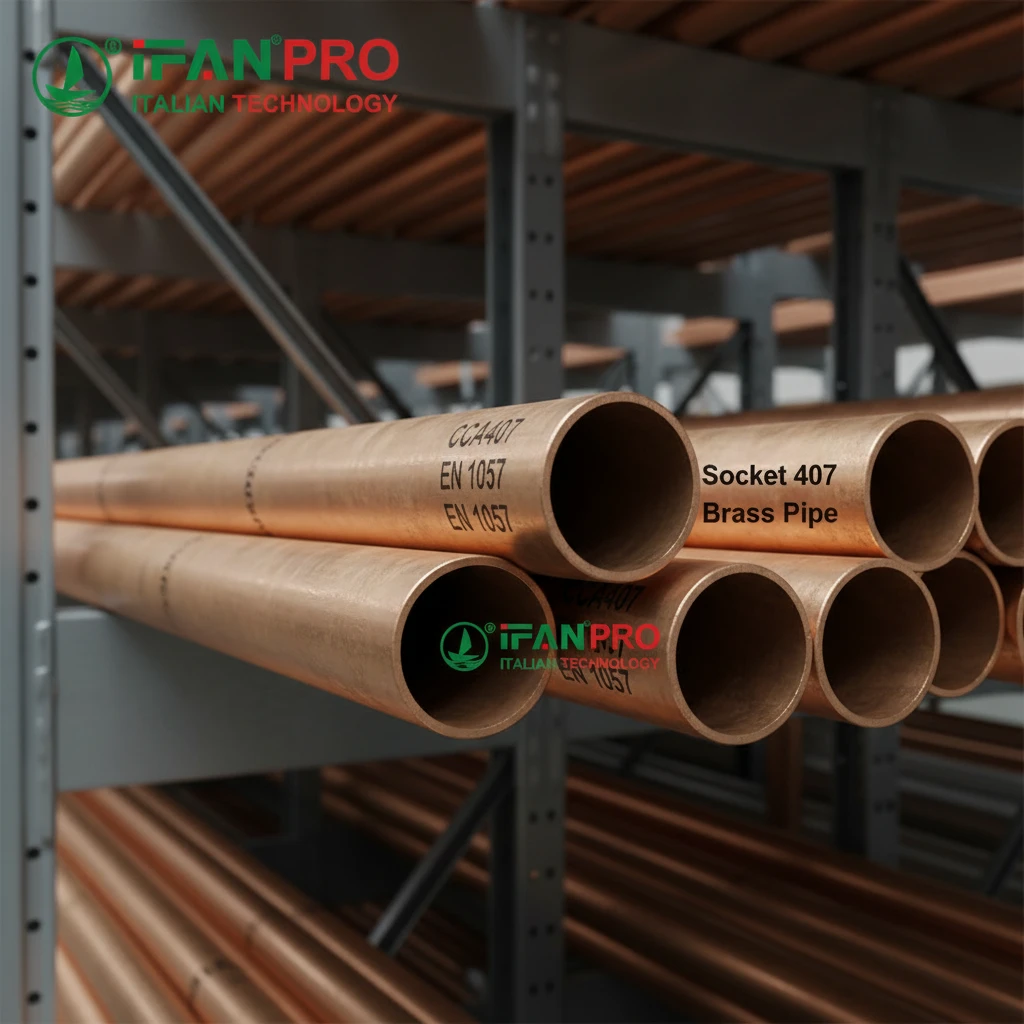
Understanding the Material Difference
Not all copper is the same. The small amounts of other elements (alloying agents) change its physical properties. This is crucial for press technology, which relies on deforming the fitting onto the pipe with immense force.
- CCA122 (Cu-DHP): This is the most common alloy for plumbing tubes. It has higher strength and rigidity. Most press-fitting systems were originally designed and tested with this alloy.
- CCA407 (Cu-Cr-As): This alloy is also used for plumbing. Its key characteristics are excellent corrosion resistance and higher thermal conductivity. However, it is softer.
Why Softness Matters for Press Fittings
The pressing action involves the stainless-steel grip ring in the fitting biting into the pipe’s outer surface to provide mechanical pull-out resistance. If the pipe is too soft:
- The grip ring may bite in too deeply during installation, potentially weakening the pipe wall.
- The softer pipe may not provide enough “backbone” for the fitting, potentially affecting the long-term holding strength of the joint under vibration or water hammer conditions.
Manufacturer Approval is Mandatory
Because of these material science considerations, this is not a matter of opinion. It is a matter of following engineered system specifications.
| Alloy | Common Name | Key Property | Press-Fit Compatibility |
|---|---|---|---|
| CCA122 (Cu-DHP) | Phosphorus-deoxidized Copper | Higher Strength, Rigid | Widely approved by all major press system brands. |
| CCA407 (Cu-Cr-As) | Copper-Chromium-Arsenic | Softer, Excellent Corrosion Resistance | Check manufacturer’s guide! Some approve it, some restrict it, some require a specific tool setting. |
Actionable Advice: Before using any pipe with press fittings, you must do two things:
- Identify your pipe alloy (it should be stamped on the tube or on the certification).
- Cross-reference this alloy with the technical approval list published by the manufacturer of the press fittings you are using. When in doubt, consult your supplier or a technical expert from IFAN. Using an unapproved material voids all system warranties and compromises safety.
How Does Flexibility in Connection Method Simplify System Design and Repairs?
Flexibility on-site is a superpower. It turns problems into simple choices, saving time and money on every job.
Flexibility in connection method simplifies work by allowing installers to choose the best tool for each situation. It enables easy repairs without needing to drain entire systems, supports mixed-material connections, and allows for prefabrication in the shop with final adjustments using press fittings on-site. This adaptability speeds up work and reduces downtime.
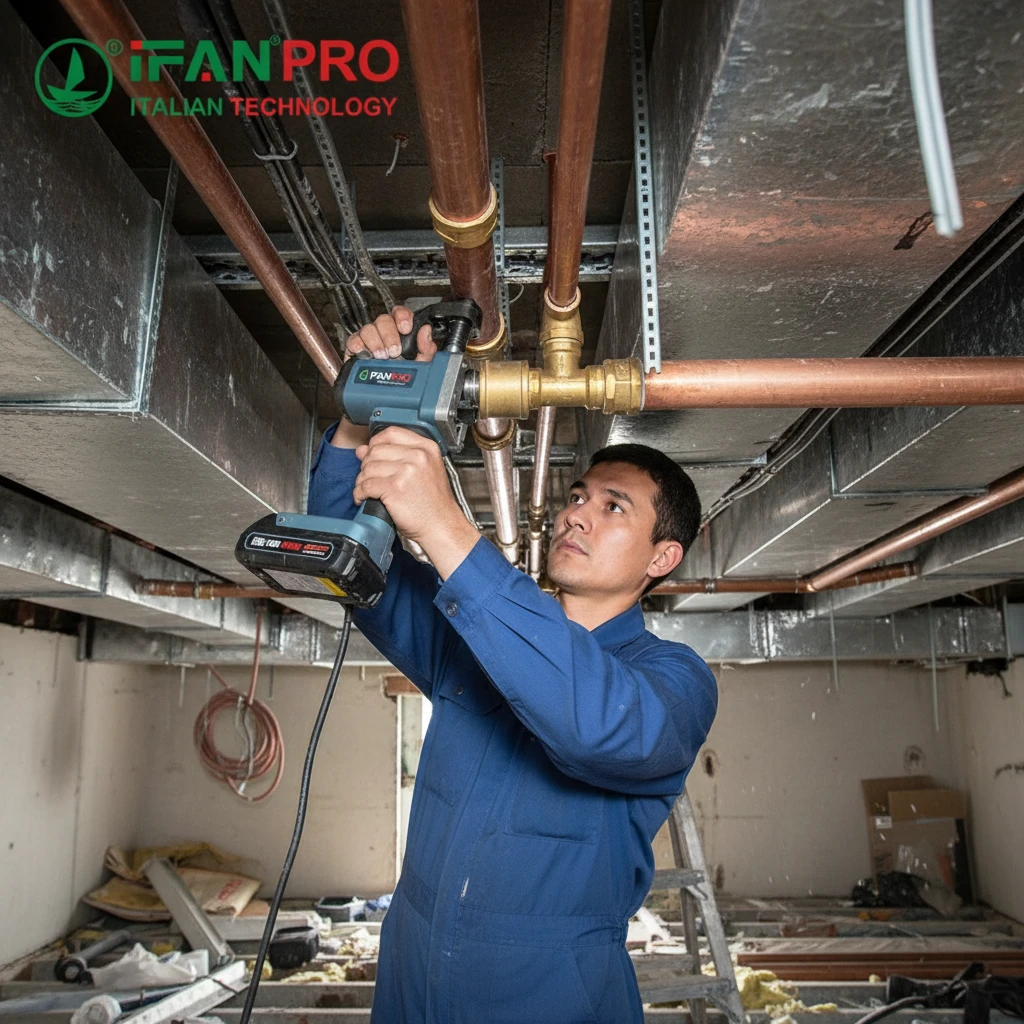
Simplifying System Design and Installation
When a pipe is only for solder, every connection requires an open flame, hot work permits, and fire watch in many buildings. When a pipe is only for press, you are reliant on having the specific brand’s tool and jaws on-site.
A dual-compatible pipe gives the project manager and installer options. This is powerful during both planning and execution.
For Designers: It removes constraints. You can specify a single, reliable pipe material knowing that the contractor can use the most efficient connection method for different parts of the job. For example, they can solder main lines in open, accessible areas and use press fittings in tight, finished spaces or near flammable materials.
For Installers: It solves daily problems. If the soldering torch is unavailable or if you’re working in a sensitive area like a hospital or data center where hot work is forbidden, you can immediately switch to the press method. You are never stuck waiting for one specific tool.
Revolutionizing Repairs and Modifications
This is where the flexibility truly shines. Imagine needing to repair a line or add a tee to an existing system.
- Scenario with Soldered-Only Pipe: You must completely drain the system. You must heat the existing joint to melt the solder, which can be risky and damage nearby materials. It’s messy and time-consuming.
- Scenario with Dual-Compatible Pipe: You can use a press-fitting repair coupling. Simply cut out the damaged section, prepare the ends of the existing pipe (clean, deburr, ensure it’s to the right OD tolerance), and press on the new coupling. The system often does not need to be fully drained, as water can be locally isolated or even minimally seeped during the quick cut-press process. This can turn a 4-hour repair into a 30-minute fix, minimizing disruption.
Enabling Hybrid and Prefab Strategies
This flexibility also supports modern construction techniques:
- Hybrid Systems: You can connect copper pipe (using solder or press) to other materials like PEX or stainless steel using the appropriate press adapter fitting. The dual-compatible copper pipe is the perfect “hub” for complex systems.
- Prefabrication: Sections of the plumbing system can be pre-soldered in the controlled environment of a workshop for high-quality, inspected joints. These large modules are then brought to the site and connected to each other or to other components using quick press fittings. This drastically reduces on-site labor time and improves overall quality control.
Conclusion
Choosing a dual-compatible pipe provides invaluable flexibility for installation and repair. For reliable, certified pipes that work perfectly with both solder and press systems, specify IFAN’s precision-tolerance copper tubing for your next project.






 Français
  English
  Русский
  Español
Commentaires récents