
I once saw a frustrated installer try to use a dull, cheap cutter on three different pipe types. The result was a mess of ragged edges and wasted time. This experience taught me that the right tool makes all the difference.
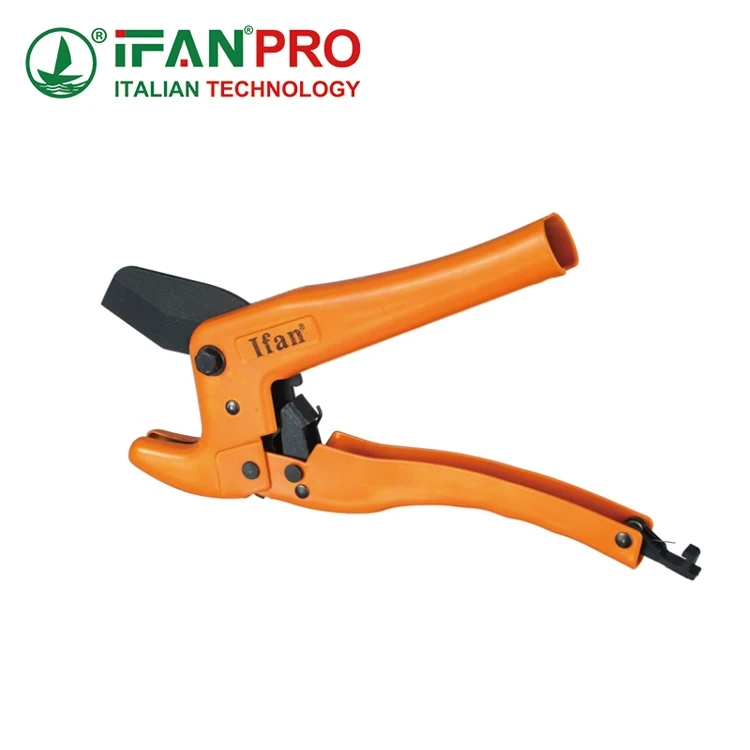
Yes, a high-quality universal pipe cutter can handle PPR, PVC, and PE pipes efficiently, but its success depends entirely on its design, a sharp and suitable blade, and the correct adjustment technique by the user. Understanding the subtle differences in material hardness and flexibility is key to achieving clean, burr-free cuts every time.
However, it’s not always that simple. Let’s cut through the confusion and see how to make a multi-material cutter work for you, and when you might need a different tool.
How is a Universal Pipe Cutter Designed for Different Plastic Materials?
Many professionals grab the first cutter they see. I’ve learned that the design tells you if it’s built for the job or will cause problems later.
A universal pipe cutter is designed for different plastics by featuring an adjustable clamping mechanism to securely hold pipes of various diameters without crushing them, and it uses a razor-sharp rotary blade made of hardened steel or carbide that can cleanly slice through materials of differing hardness and ductility, from brittle PVC to softer PE.
The Core Components of a Versatile Cutter
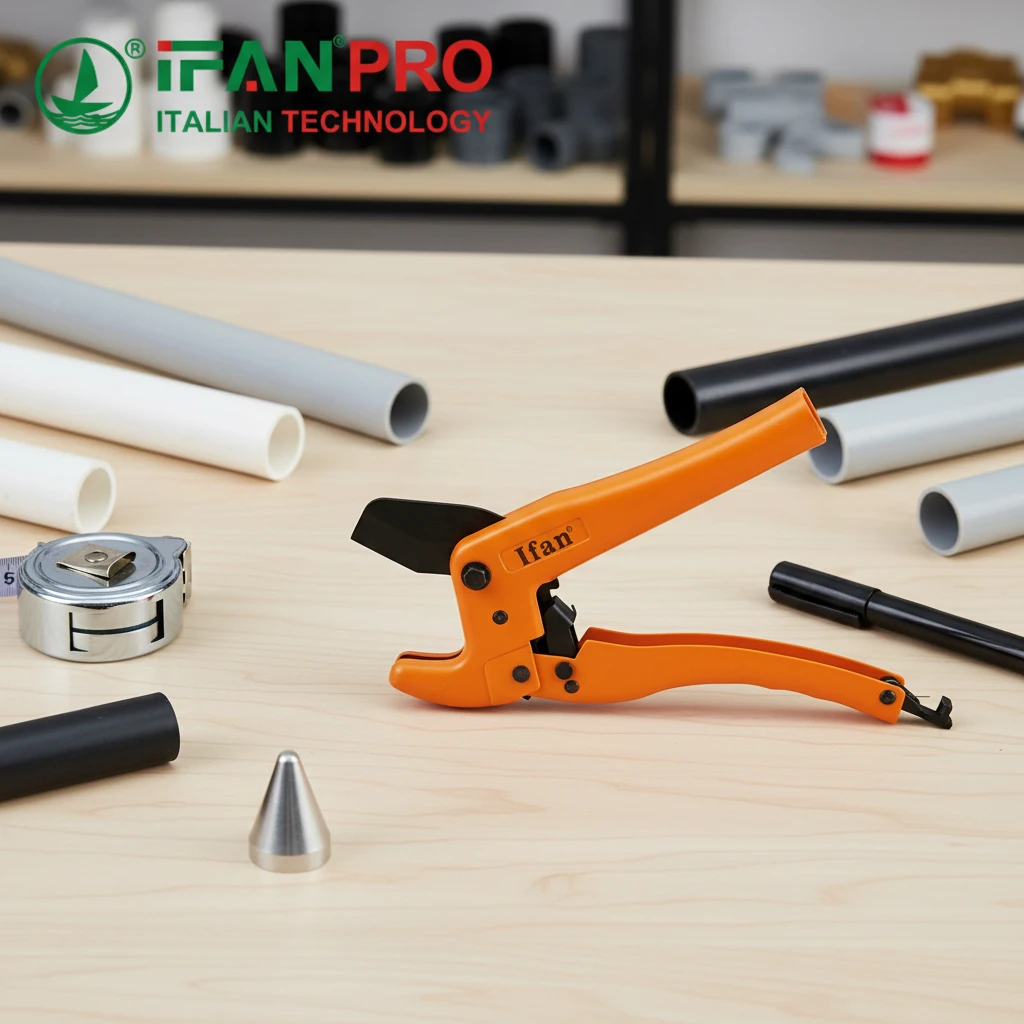
The ability to work across multiple materials doesn’t come from magic. It comes from specific design features in a good universal cutter. First, let’s look at the clamping system. PPR, PVC, and PE pipes come in many sizes. A universal cutter has a wide, adjustable jaw or a ratcheting mechanism. This allows it to firmly grip a 20mm PPR pipe and a 32mm PE pipe with equal security. The grip must be firm but not deform the pipe. Soft PE can easily be dented by excessive force, while rigid PVC needs a strong hold to prevent spinning.
Next is the cutting wheel, or blade. This is the heart of the tool. For multi-material use, the blade needs to be extremely sharp and made from high-quality material. Hardened steel is common, but carbide-tipped blades are superior for longevity. They stay sharp longer when cutting abrasive materials or harder plastics. The blade is mounted on a pivot, allowing it to roll smoothly around the pipe’s circumference with consistent pressure.
Design Differences from Material-Specific Cutters
A dedicated PVC scissor-cutter, for example, uses a shearing action. It’s perfect for brittle PVC but would crack or deform softer PPR. A dedicated tubing cutter for soft PE often has a very sharp, thin blade that pushes through rather than rolls. The universal cutter’s rolling blade design is a compromise that works well across the board. It applies continuous, even pressure to fracture the material cleanly, whether it’s the more crystalline structure of PVC or the tougher, semi-crystalline form of PPR.
Finally, the body and handle provide leverage. Cutting harder PPR or larger diameters requires more force. A well-designed universal cutter will have comfortable, ergonomic handles and a gear ratio that gives you mechanical advantage, reducing user fatigue and ensuring a smooth, controlled cut every time, regardless of the material.
Universal Cutter Design Features Table
| Design Feature | Purpose for Multi-Material Use | Problem if Missing |
|---|---|---|
| Adjustable Clamping Jaw | Secures pipes from 1/2″ to 2″+ without crushing soft PE or slipping on hard PVC. | Pipe spins or deforms, leading to an angled or ragged cut. |
| High-Hardness Rotary Blade | Stays sharp to cleanly slice hard PPR and brittle PVC without chipping. | Dulls quickly, tears soft PE, and chips PVC edges. |
| Smooth Pivot Mechanism | Allows the blade to rotate evenly around the pipe for a square cut. | Creates a staggered or incomplete cut, leaving burrs. |
| Ergonomic Leverage | Provides the force needed for harder/larger pipes without straining the user. | Makes cutting difficult, leading to user error and unsafe force. |
What Adjustment Techniques Ensure Clean Cuts on PPR, PVC, and PE Pipes?
Simply clamping and cranking isn’t enough. I’ve trained teams on the small adjustments that separate a professional job from an amateur one.
To ensure clean cuts, always tighten the cutter’s adjustment knob snugly so the pipe cannot rotate or slip, but for soft PE, use slightly less pressure to avoid deforming the pipe wall. Make a firm, continuous rotation with even pressure, and for larger diameters, advance the blade a little after each full turn to maintain a clean cutting track.
Step-by-Step Adjustment for Perfect Cuts
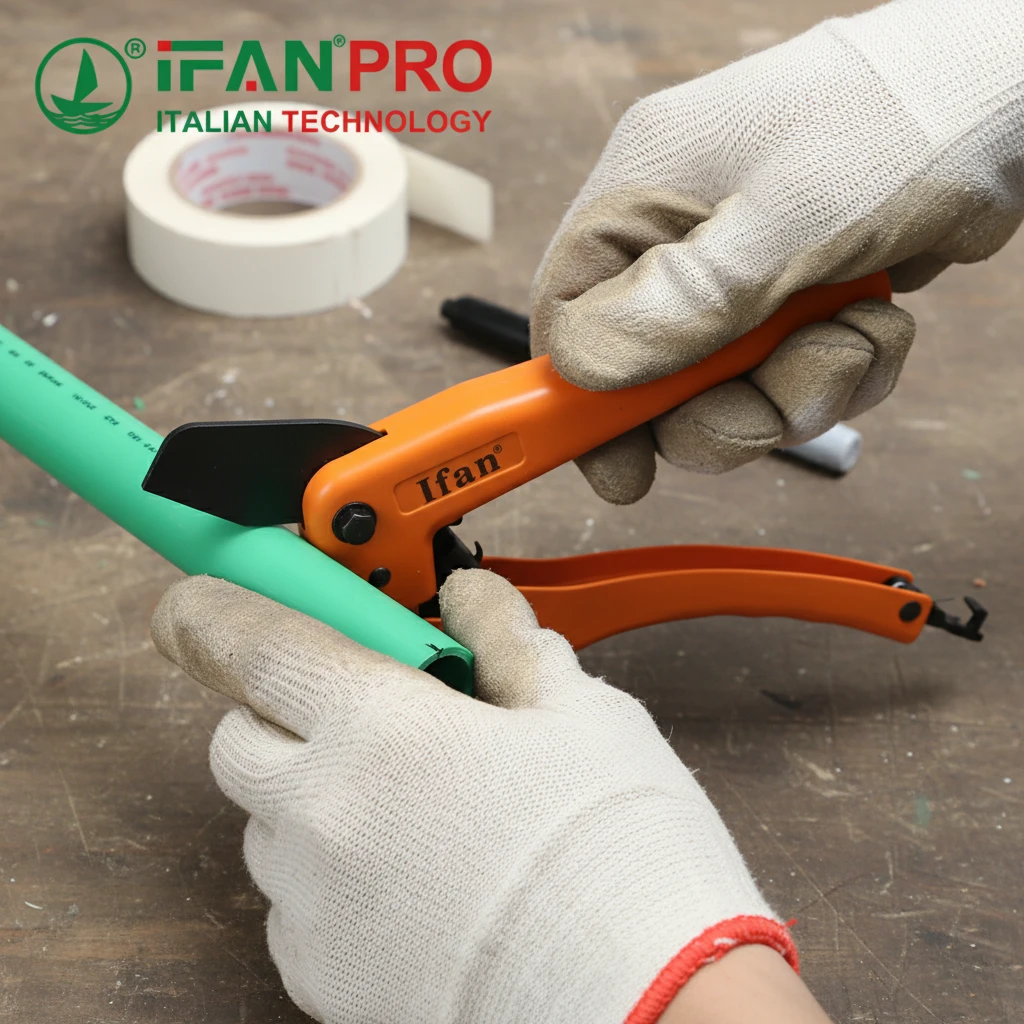
The technique varies slightly for each material, but the principles are the same. First, measure and mark your cut line clearly around the entire pipe. This is your guide for a square cut. Then, place the cutter on the pipe, aligning the blade directly on your mark.
Now, adjust the clamping pressure. This is the most critical step.
- For PVC (rigid/brittle): Tighten the knob firmly. PVC needs a strong grip to prevent it from cracking unevenly or spinning.
- For PPR (tough/semi-flexible): Tighten the knob very firmly. PPR is tougher and requires solid resistance for the blade to penetrate cleanly.
- For PE (soft/ductile): Tighten the knob until it is snug and secure, but be careful not to overtighten. Look for a slight indentation—that’s okay—but a major flattening of the pipe will cause problems.
The Cutting Motion Matters
Begin rotating the cutter around the pipe. Apply steady, even pressure. Do not jerk or rush. For PPR and PVC, you will hear and feel a consistent crackling sound. For PE, it will be a smoother, quieter slicing sound.
Here is a key tip: On larger diameter pipes (over 1 inch), do not try to cut through in one rotation. After each full turn, tighten the adjustment knob a quarter to half turn to advance the blade deeper into the cut. This maintains control and ensures the blade follows the same track, preventing a stepped or ragged edge. Continue this process—rotate, tighten slightly, rotate again—until the pipe separates cleanly.
Post-Cut Finishing
After the cut, inspect the inside edge. You will almost always have a slight inner burr. For all materials, you must remove this burr. Use a deburring tool or a sharp utility knife. For PPR and PE, also chamfer (bevel) the outer edge slightly. This helps the pipe glide smoothly into the fitting socket during fusion or connection, preventing the rolled material from scraping and creating a leak path. Skipping deburring is a common mistake that leads to installation issues and flow restrictions.
How Does Blade Quality Affect Cutting Efficiency Across Various Pipe Types?
A worn-out blade is the main reason people think universal cutters don’t work. I keep a log to track blade changes because it impacts project timelines.
Blade quality directly controls cutting efficiency and finish. A sharp, high-hardness blade makes clean, square cuts with minimal effort on all materials. A dull blade will crush and tear soft PE, crack and chip brittle PVC, and require excessive force on tough PPR, leading to uneven cuts, burrs, and user fatigue.
The Impact of a Sharp vs. Dull Blade
Think of the blade as the heart of the cutter. Its condition determines everything. A sharp blade has a precise, fine edge that initiates a clean fracture in the plastic with minimal downward pressure. It slices through the material. A dull blade has a rounded edge. It doesn’t slice; it presses and tears its way through, deforming the pipe before finally breaking it.
The consequences of a dull blade differ by material:
- On PVC: Dull blades cause excessive stress on the brittle material. Instead of a clean break, the PVC will often crack and splinter ahead of the cut line, leaving a jagged, chipped edge that is difficult to join properly.
- On PPR: A dull blade requires you to apply tremendous force. This can distort the pipe’s round shape (ovaling) during cutting. It also creates a large, rolled burr on the inside that is difficult to remove and can obstruct flow or interfere with socket welding.
- On PE: The soft material will deform and tear under a dull blade. Instead of a clean circle, you get a pinched, irregular end that may not seal correctly in a compression or clamp fitting.
Choosing the Right Blade Material
Not all blades are created equal. Most standard cutters come with hardened steel blades. These are good but will wear relatively quickly, especially with frequent use on abrasive or hard plastics.
For professional, multi-material use, upgrading to a carbide-tipped blade is a game-changer. Carbide is much harder than steel. It stays sharp significantly longer, resisting wear from all three plastic types. While more expensive upfront, it reduces downtime for blade changes and guarantees consistent cut quality over hundreds of cuts. It’s the single best upgrade you can make to a universal cutter.
Blade Performance and Maintenance Table
| Blade Condition | Effect on PVC | Effect on PPR | Effect on PE | User Experience |
|---|---|---|---|---|
| Sharp (New/Hardened) | Clean, square cut with minimal chips. | Smooth cut with a small, even burr. | Clean slice without deformation. | Easy, smooth rotation with low effort. |
| Slightly Dull | Minor chipping on the inner edge. | Larger burr; requires more force. | Slight pinching/tearing visible. | Noticeably harder to turn. |
| Very Dull | Major cracking and splintering. | Severe ovalling of pipe; large, tough burr. | Major deformation; pinched end. | Very difficult, requires unsafe force. |
| Recommended Action | Replace or sharpen immediately. | Replace blade. Do not continue. | Replace blade to avoid wasted material. | Pro Tip: Keep a spare blade on hand. |
When Should You Use Dedicated Cutters Instead of a Multi-Purpose Tool?
A universal cutter is a great generalist, but even the best have limits. Knowing when to switch tools saves time and money.
You should use dedicated cutters instead of a universal tool in three main situations: 1) for very high-volume cutting of a single material, 2) when cutting pipes at extreme ends of the size range (very small or very large), or 3) when you require an absolutely perfect, factory-like finish with zero burr for critical joints.
Situation 1: High-Volume Repetitive Work
If you are installing a whole house with PPR or running hundreds of feet of PVC conduit, a dedicated cutter is faster and less tiring. A PVC scissor cutter makes a cut in one simple squeeze. A dedicated PPR cutter is optimized for that material’s toughness, often with a ratcheting mechanism that does the work for you. The universal cutter, while capable, involves more steps (clamp, rotate, tighten, repeat). For bulk work, those extra seconds add up to significant labor time.
Situation 2: Extreme Pipe Sizes
Universal cutters have a diameter range, typically from about ½ inch to 2 inches. For tubing smaller than ½ inch (like ¼” or ⅜” PE lines), a small, precise tubing cutter or a sharp knife is better. For large-diameter pipes (over 2″), a universal cutter becomes physically awkward and may not have the jaw capacity. Here, you would use a large ratcheting plastic pipe cutter or even a saw with a guide.
Situation 3: Mission-Critical Connections
Some connections demand perfection. For example, the spigot end of a PPR pipe that will be socket-fused has no margin for error. A minuscule burr or an angle off 90 degrees can create a weak spot. While a sharp universal cutter can do well, a top-tier dedicated PPR cutter is engineered to deliver that flawless, ready-to-weld end every single time with no secondary deburring needed. The same goes for critical PVC pressure fittings.
Cutter Selection Guide: Which Tool to Use?
| Job Scenario | Best Tool Choice | Reason |
|---|---|---|
| Service Van / General Maintenance | High-Quality Universal Cutter | Handles unexpected jobs on various materials and sizes without carrying multiple tools. |
| Installing a Home PPR Plumbing System | Dedicated Ratcheting PPR Cutter | Faster, less effort, and provides the optimal end-prep for fusion welding on high-volume work. |
| Running PVC Electrical Conduit | PVC Scissor Cutter | Extremely fast one-handed operation, perfect for the brittle material. |
| Connecting Small 3/8″ PE Tubing | Small Tubing Cutter | More precise and less likely to crush the small, soft tubing than a universal jaw. |
| Cutting 4″ PVC Sewer Pipe | Large Ratcheting Pipe Cutter or Saw | Exceeds the capacity of standard universal cutters. |
Conclusion
A good universal pipe cutter can efficiently handle PPR, PVC, and PE, but success depends on proper technique and blade care. For the best results with your PPR projects, use a sharp cutter alongside premium IFAN PPR pipes and fittings for a perfect, leak-free system.










 Français
  English
  Русский
  Español
Commentaires récents