
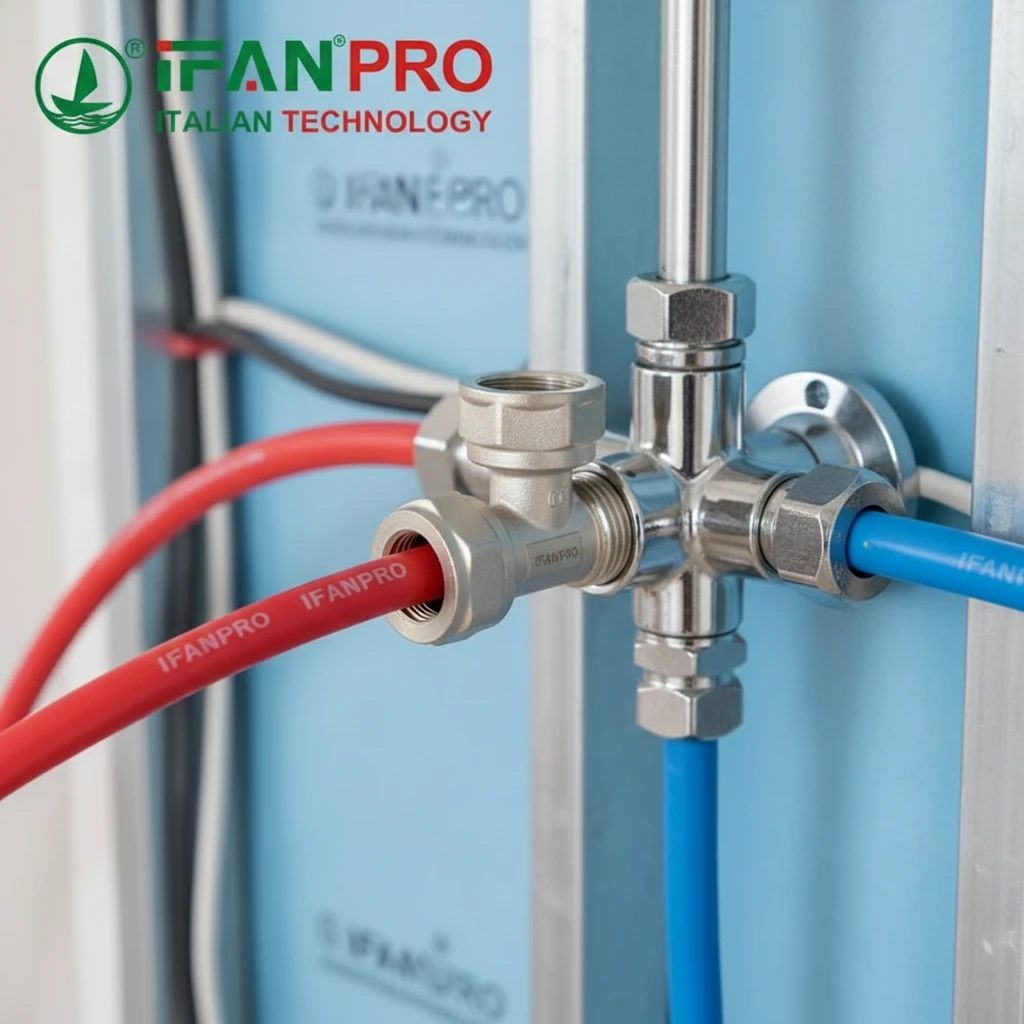
After years of seeing plumbers struggle with awkward shower valve connections, I can confidently say the right fitting changes everything. The female seated elbow is one of those game-changers.
Yes, female seated elbows are an ideal and professional solution for connecting PEX to shower valves. They provide a direct, stable, and leak-proof mechanical connection that aligns perfectly with standard valve outlets, handles thermal stress, and significantly speeds up the rough-in process for a more reliable installation.
Let’s break down exactly why this specific fitting has become a best practice for professional plumbers and savvy homeowners alike.
How Does the Seat Align Perfectly with Standard Shower Valve Outlets?
Misaligned pipes cause leaks and frustration. I’ve seen too many makeshift solutions fail because the connection wasn’t true.
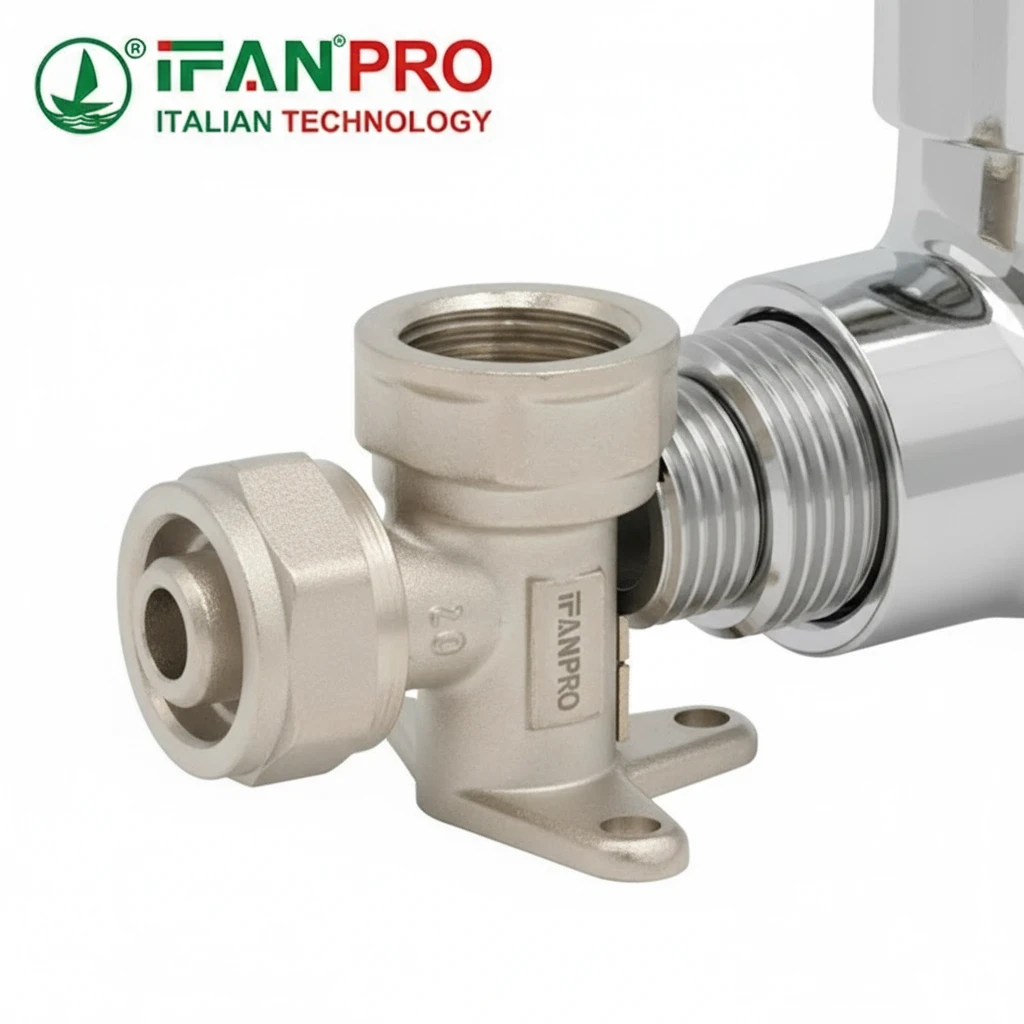
The female threaded seat (IPS or NPT) inside the elbow is engineered to match the standardized male threads on virtually all shower valve outlets. This creates a direct, metal-to-plastic mechanical connection that screws on perfectly straight, ensuring the PEX pipe aligns correctly without putting stress on the valve body.
The Importance of a Standardized Interface
Shower valve manufacturers design their products to connect to a common standard. In North America and many other markets, this standard is often a 1/2″ or 3/4″ NPT (National Pipe Taper) or IPS (Iron Pipe Size) male thread outlet. A female seated elbow is literally built for this purpose.
Think of it like a nut and bolt. The valve provides the bolt (male thread), and the elbow provides the nut (female thread). When you screw them together, they guide each other into perfect alignment. This is far superior to trying to solder a copper adapter or glue a PVC fitting onto a valve, where alignment is manual and prone to error.
How Perfect Alignment Prevents Problems
A perfectly aligned connection does more than just look good; it ensures system integrity.
First, it prevents cross-threading. The clean, accurate threads on a quality elbow engage smoothly with the valve’s threads. This protects the valve’s integral ports from damage, which can be a costly mistake.
Second, it eliminates off-angle stress. If a pipe is glued or soldered at even a slight angle, it creates constant leverage or “side load” on the valve. Over years, this stress can crack the valve body or weaken soldered joints elsewhere. A threaded connection, when hand-tightened plus a quarter to a half turn with a wrench, seats squarely and transfers no bending stress.
The table below compares connection methods:
| Connection Method | Alignment Process | Risk of Valve Stress |
|---|---|---|
| Female Seated Elbow (PEX) | Automatic via threads | Very Low |
| Sweat Adapter (Copper) | Manual soldering alignment | High if not perfect |
| Glue Adapter (PVC/CPVC) | Manual gluing alignment | High if not perfect |
In short, the elbow’s built-in seat acts as a perfect alignment guide, turning a critical step into a simple, foolproof task.
Why is Its Stability Critical for Heavy-Duty Shower Valve Installations?
A wobbly shower valve feels cheap and can fail. Stability is not a luxury; it’s a requirement for quality.
The stability is critical because a shower valve is a high-use fixture that endures significant physical force from users adjusting temperature and turning water on/off. A rigid, seated elbow anchors the PEX supply lines firmly, preventing movement that could loosen connections, cause leaks, or damage the valve cartridge over time.
The Forces at Play in Your Wall
A shower valve isn’t just sitting there. Every time someone turns the handle, they apply torque. In a traditional setup with flexible supply lines or poorly secured pipes, this torque can make the entire valve body twist slightly in the wall. This constant micro-movement has two major consequences:
- Connection Fatigue: Any threaded or soldered joint hates movement. Over time, this twisting can loosen the connections at the valve outlets, leading to slow leaks inside the wall—a homeowner’s worst nightmare.
- Cartridge Wear: Many modern shower valves use precise ceramic discs or thermostatic cartridges. Excessive movement in the valve body can misalign these delicate internal parts, leading to premature wear, drips, or control problems.
How the Female Seated Elbow Creates a “Structural Anchor”
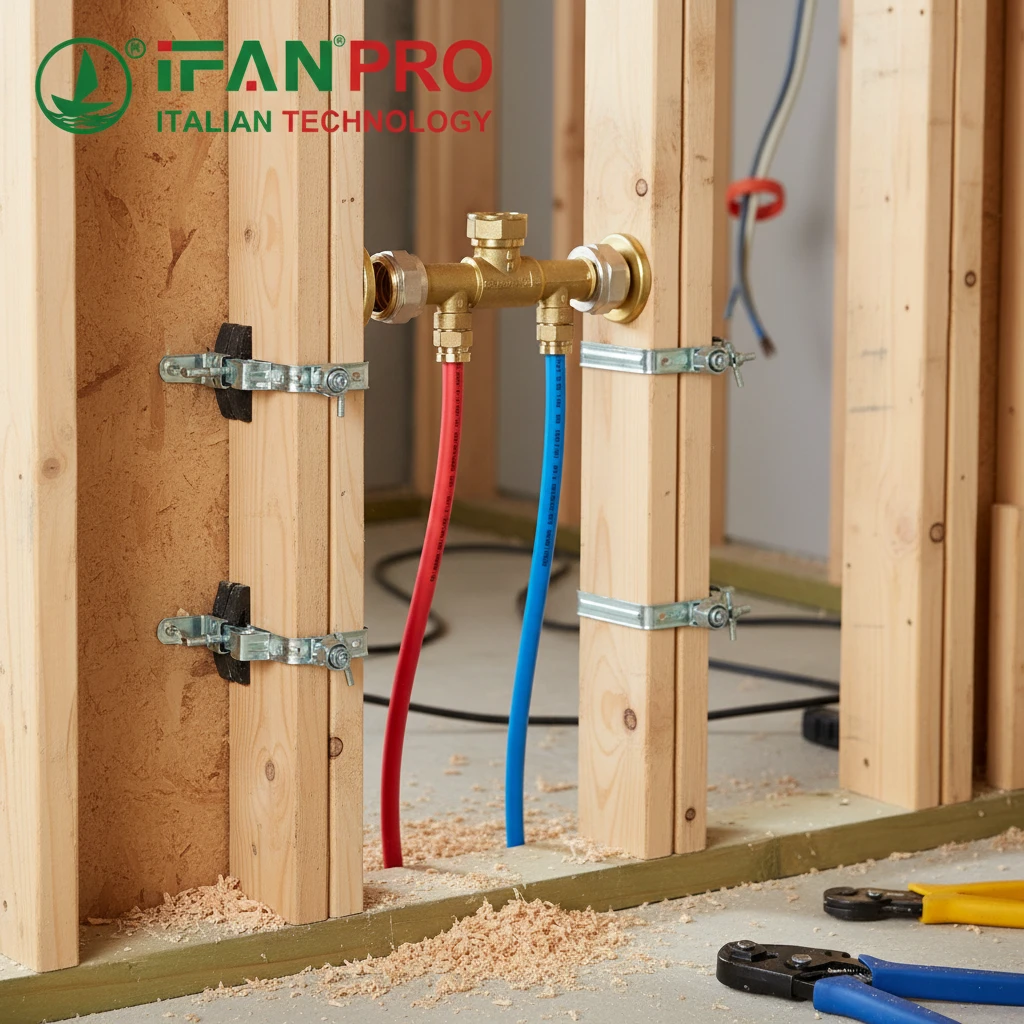
A female seated elbow, when properly installed, solves this. Once the elbow is threaded onto the valve and the PEX pipe is crimped or expanded into the other end, it creates a solid, L-shaped anchor point.
The PEX pipe, while flexible in long runs, is very strong in compression and tension. When secured with pipe clamps a few feet away from the elbow, it forms a rigid support system. This system absorbs the operational forces from the handle and transfers them into the wall framing, not into the plumbing joints.
Comparing Support Methods
Consider the stability difference:
- With Flexible Connectors: The valve can pivot and sway. It relies solely on the mounting bracket, which is often designed to hold weight, not resist rotational torque.
- With Seated Elbows & Secured PEX: The valve is locked in place by a triangulated support from the rigid PEX lines. The mounting bracket simply holds it flush to the wall, while the plumbing absorbs the operational forces.
This stability is why building codes and professional plumbers prefer this method for heavy-duty or commercial installations. It ensures the fixture will last for decades without callbacks for leaks.
Can It Accommodate the Thermal Cycling Common in Shower Systems?
From icy cold to hot showers, the pipes in your wall expand and contract daily. Not all connections handle this well.
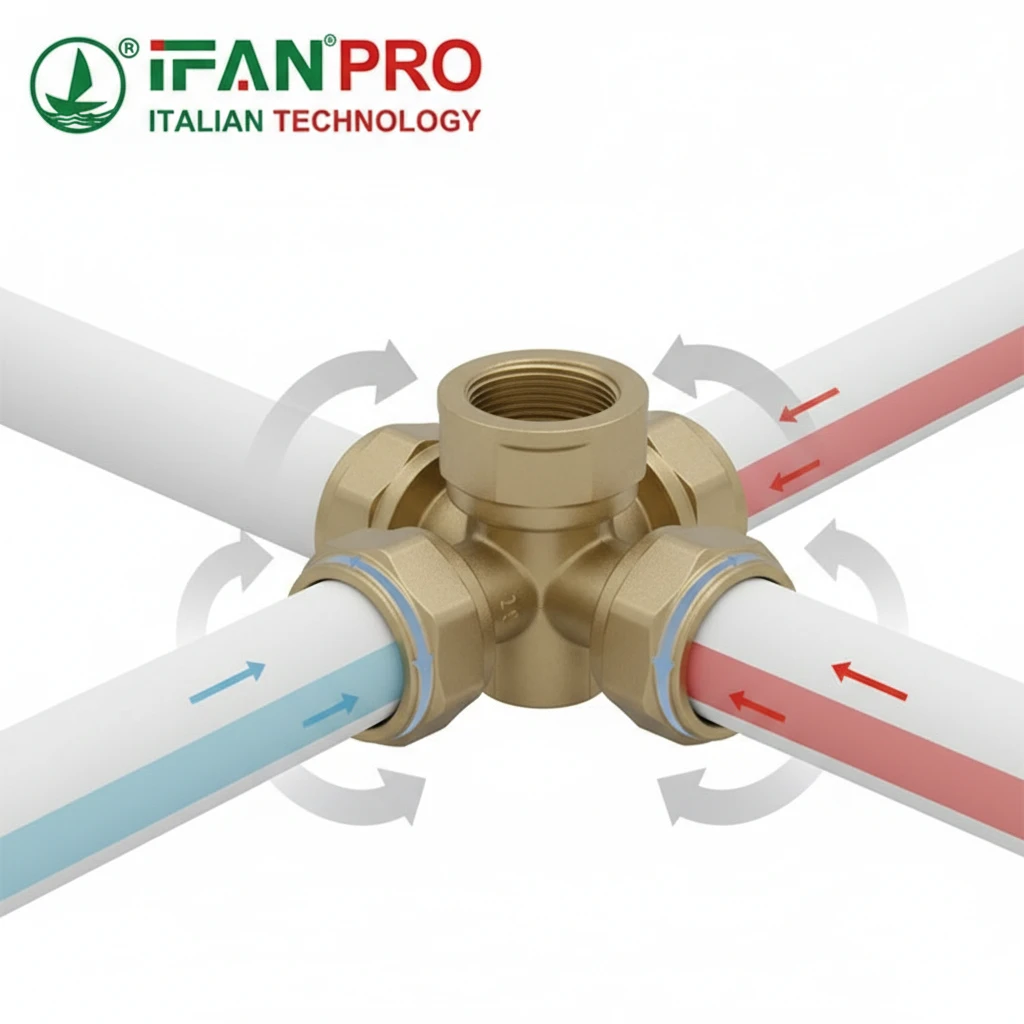
Yes, the combination of a female seated elbow and PEX pipe is exceptionally good at accommodating thermal cycling. The threaded connection allows for slight, safe movement, while the inherent flexibility and expansion properties of PEX absorb stress, preventing the failures common in rigid systems like copper or CPVC.
Understanding Thermal Stress in Showers
A shower system experiences the most extreme and frequent temperature changes in a home. Water can go from 50°F (10°C) to 120°F (49°C) in seconds, causing pipes to expand. When the shower turns off, they contract. Rigid materials fight this natural movement, creating stress.
In all-copper systems, this stress can eventually fatigue soldered joints, leading to pinhole leaks. CPVC becomes brittle and can crack. A PEX system with threaded elbows, however, is designed to manage this stress intelligently.
The Role of the Threaded Connection
The threaded connection between the elbow and the valve is key. Unlike a soldered joint which is fused solid, a properly made threaded joint has a slight, inherent ability to flex. The threads themselves, combined with the sealant (like Teflon tape or pipe dope), create a seal that can handle microscopic movement without leaking.
This means that as the PEX pipe expands and contracts longitudinally (in length), it can pull or push slightly on the elbow without transferring destructive force to the valve’s threaded ports. The connection “gives” just enough.
The Superhero: PEX Material
PEX tubing is the perfect partner for this. It has a high coefficient of thermal expansion, meaning it expands more than copper when heated. However, because it is flexible, it simply bends slightly to accommodate this change instead of building up tremendous pressure. This flexibility absorbs the expansion force, so minimal stress reaches the threaded connections.
System Design for Longevity
Here is how the entire assembly manages thermal cycles:
| System Component | Response to Heat | Result for the Overall System |
|---|---|---|
| PEX Tubing | Expands freely, can bend and flex. | Absorbs the majority of the stress. |
| Female Seated Elbow | Transmits reduced stress as slight pull/push on threads. | Allows movement without seal failure. |
| Shower Valve Body | Experiences minimal thermal stress. | Protected from strain that could cause cracks. |
This harmonious design makes PEX with seated elbows the most forgiving and durable system for the demanding environment of a shower.
How Does It Simplify the Rough-In Process for Plumbers?
Time is money on a job site. The easier the install, the happier the plumber and the client.
It simplifies the rough-in process drastically by eliminating the need for separate adapters, solder, or glue. Plumbers can directly thread the elbow onto the shower valve before mounting it, then quickly run and connect the PEX lines. This cuts down on steps, tools, and potential error points, making the install faster, cleaner, and more reliable.
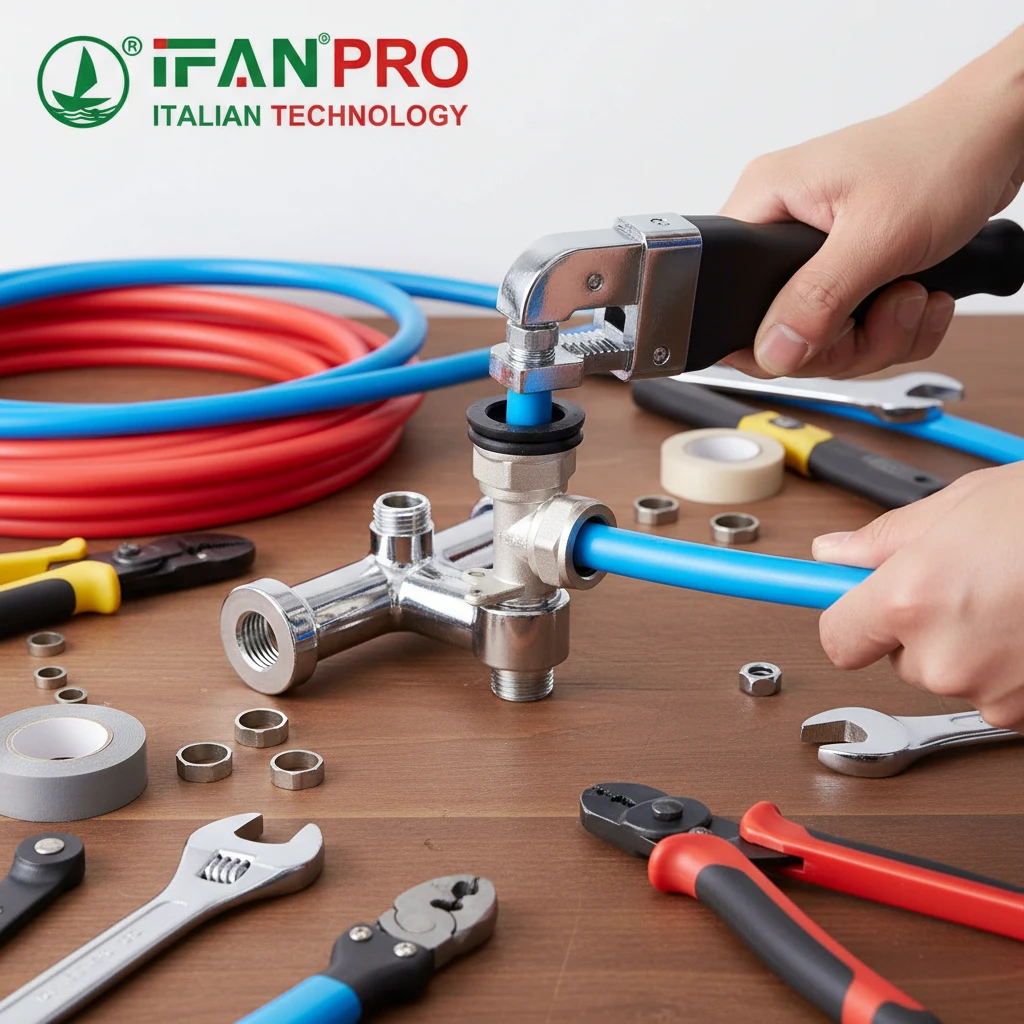
A Step-by-Step Comparison
Let’s walk through the traditional method versus the modern PEX-with-elbow method.
The Old Way (with Copper or CPVC):
- Mount the shower valve to the backing board.
- Measure and cut a short piece of copper or CPVC pipe.
- Solder a male-threaded adapter onto the pipe (requiring a torch, flux, solder) or glue a CPVC adapter (requiring primer and cement).
- Carefully thread the adapter into the valve, trying not to move the valve or over-tighten.
- Hope the alignment is perfect to connect the rest of the piping.
This process is messy, requires multiple materials, and involves heat or chemicals near the finished valve.
The Modern Way (with PEX & Female Seated Elbow):
- Take the shower valve out of the box.
- Wrap Teflon tape on the valve’s male threads.
- Hand-tighten the female seated elbows onto the valve outlets.
- Mount the now-equipped valve assembly to the backing board.
- Run PEX tubing and connect it to the elbows using a crimp or expansion tool.
The Clear Advantages
The benefits for the plumber are immediate:
- Bench Assembly: They can assemble the valve on a workbench, which is easier and more precise than working inside a wall cavity.
- Fewer Components: No separate adapters, no solder, no glue. Just the valve, elbow, PEX, and a few fittings.
- Forgiving Alignment: After the valve is mounted, the PEX can be routed with flexibility. A slight mis-measurement is not a crisis because PEX can bend and curve.
- Cleaner & Safer: No open flames, toxic fumes, or wet glue. This is especially valuable in finished homes or tight spaces.
Tool and Time Savings
The table below highlights the efficiency gain:
| Task | Traditional Copper/CPVC Method | PEX with Female Seated Elbow Method |
|---|---|---|
| Fittings Required | Valve, Pipe, Male Adapter, Solder/Glue | Valve, Female Seated Elbow |
| Special Tools Needed | Torch & Solder OR Primer & Cement | PEX Crimp/Expansion Tool Only |
| Critical Skill Needed | Precise soldering or gluing alignment | Basic threading and crimping |
| Typical Time per Valve | 15-25 minutes | 5-10 minutes |
This simplification reduces labor costs, minimizes errors, and leads to a more predictable, high-quality result every single time.
Conclusion
For a stable, reliable, and easy-to-install connection between PEX and shower valves, female seated elbows are the ideal choice. For a full range of high-quality, compatible PP-R and PEX fittings designed for professional results, specify IFAN.









 Français
  English
  Русский
  Español
Commentaires récents