
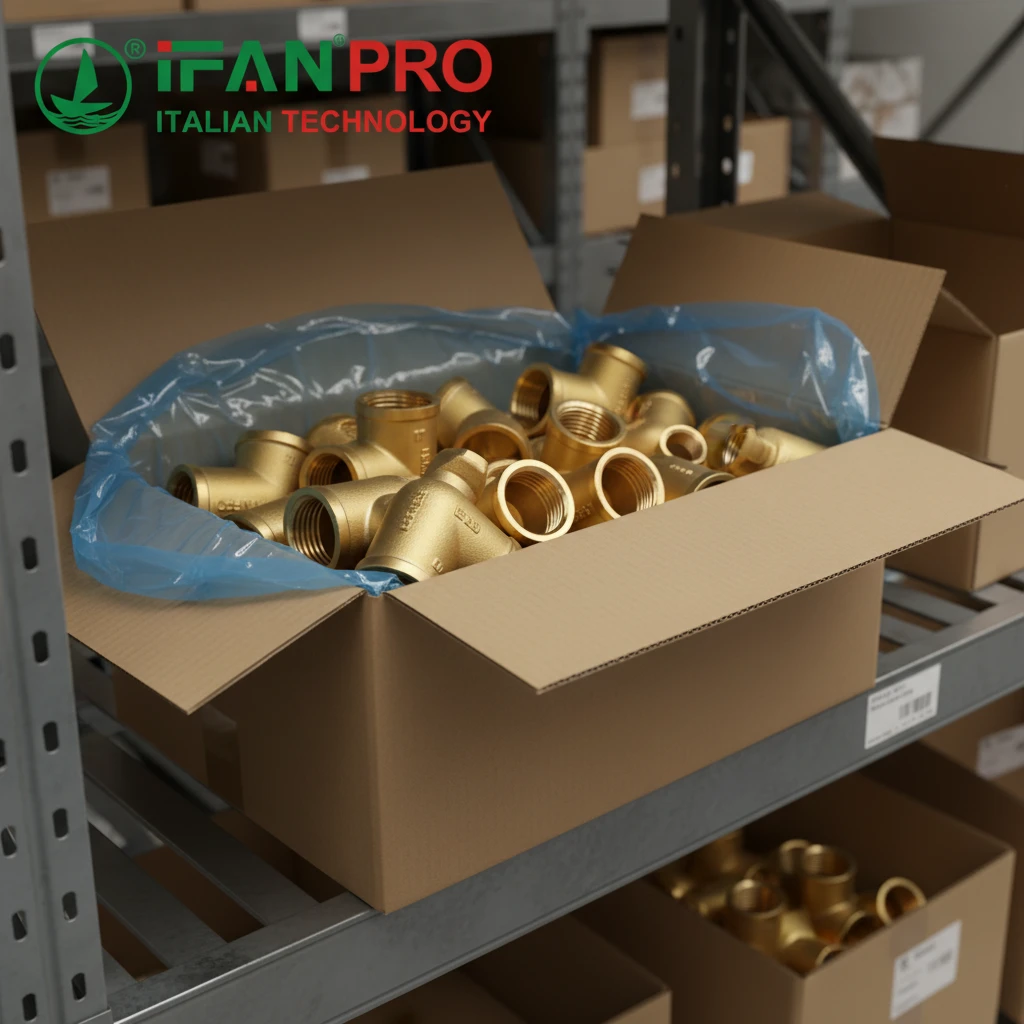
I once opened a shipment of brass fittings that had turned dull and patchy from poor storage. This taught me that how you store brass is just as important as how you make it.
To properly store brass elbows and prevent oxidation, keep them in their original, sealed vapor-corrosion inhibitor (VCI) packaging until ready for use. Store the packages in a cool, dry, climate-controlled environment with stable temperature and low humidity. Never open packages in advance or store fittings loose in humid areas.
Keeping brass shiny and corrosion-free before installation is a common challenge. Let’s explore the best practices that protect your investment and ensure perfect fittings every time.
What Packaging or Coatings Do Manufacturers Use to Prevent Tarnishing?
Opening a box to find bright, pristine brass fittings is a sign of a quality supplier. The right packaging does most of the protective work before the fittings even reach your warehouse.
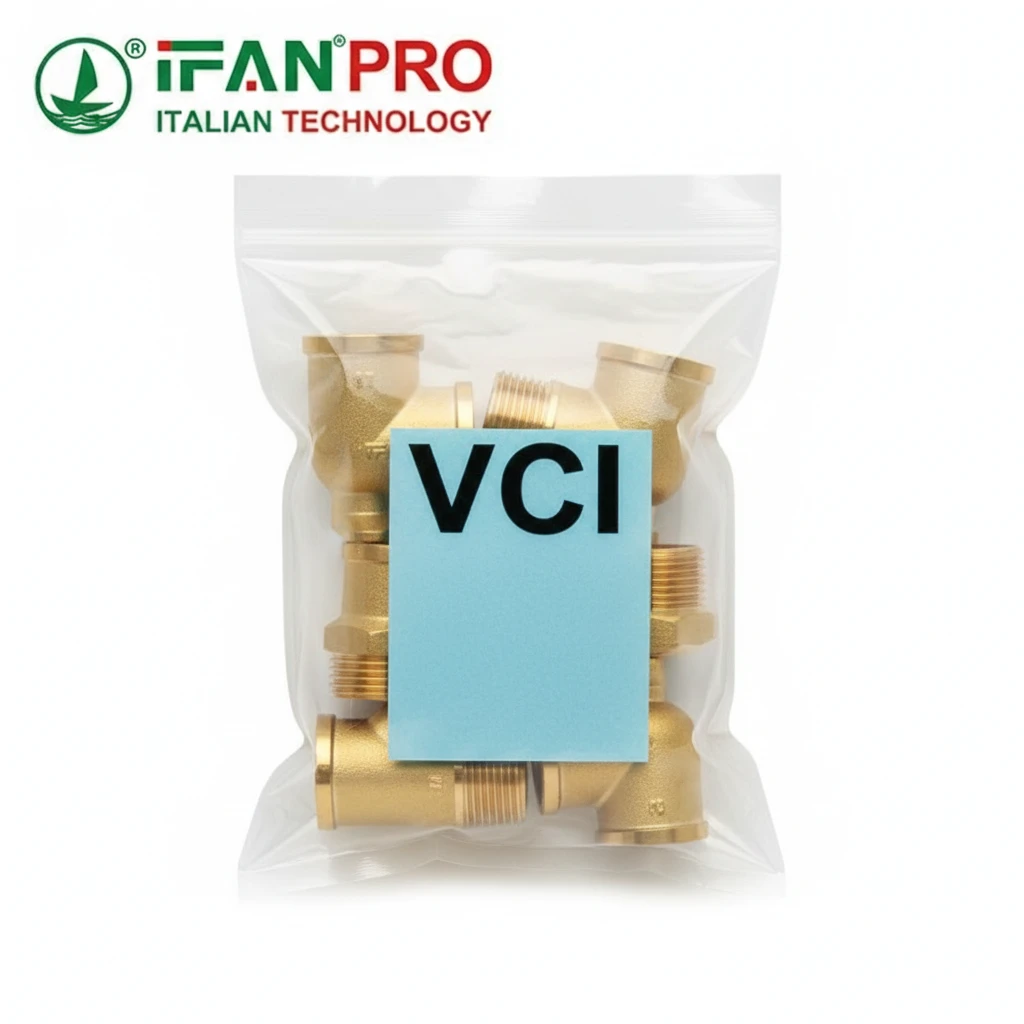
Manufacturers primarily use two methods: 1) Sealing fittings in plastic bags with Vapor Corrosion Inhibitor (VCI) paper or chips, which release a protective gas, and 2) Applying a thin, clear lacquer or oil coating to the brass surface that acts as a physical barrier against air and moisture. The best practice often combines both for maximum, long-lasting protection.
Understanding VCI (Vapor Corrosion Inhibitor) Technology
VCI is the industry standard for protecting metal parts during storage and shipping. It is a simple yet brilliant technology. The special paper or plastic contains chemicals that slowly vaporize at room temperature. These vapors fill the sealed air space inside the bag, forming an invisible protective layer on the surface of the brass.
This layer actively prevents the chemical reaction between the brass (copper and zinc) and oxygen or moisture that causes tarnishing and oxidation. The major advantage is that the protection is total—it reaches every surface, even complex threads and inner walls that a spray coating might miss. The protection lasts as long as the bag remains sealed.
The Role of Lacquer and Oil Coatings
While VCI protects the environment, coatings protect the surface directly.
- Lacquer Coatings: A thin layer of clear, organic lacquer is sprayed onto the fittings. It dries into a hard, transparent shell that physically blocks air and moisture. It’s very effective but must be handled carefully, as deep scratches can compromise the protection.
- Oil Coatings: A light mineral oil or corrosion-preventive oil is applied. It leaves a thin, greasy film on the brass. This is highly effective but can attract dust and needs to be cleaned off before soldering or certain installation methods.
A Comparison of Common Protective Methods
| Method | How It Works | Pros | Cons |
|---|---|---|---|
| VCI Bags/Paper | Releases protective vapor into the sealed airspace. | Protects all surfaces evenly; no cleanup needed; long-lasting in sealed state. | Protection stops once the bag is opened. |
| Lacquer Coating | Forms a hard, physical barrier on the metal surface. | Excellent durable protection; fittings remain clean. | Can be scratched; must be removed for brazing/soldering. |
| Oil Coating | Forms a thin, oily barrier on the metal surface. | Very effective; easy to apply. | Attracts dust; needs cleaning before use; can feel messy. |
| Desiccant Packs | Absorbs moisture from the air inside a package. | Reduces humidity, a key cause of corrosion. | Does not protect against tarnishing from oxygen alone; is a supplement, not a primary solution. |
The IFAN Approach: We typically use a combined method. Our brass elbows are first treated with a non-toxic, water-displacing protective oil and then sealed in heavy-duty polyethylene bags with VCI emitters. This dual-layer defense ensures fittings arrive in perfect “ready-to-install” condition, even after long sea voyages to humid regions.
Should Brass Fittings Be Stored in Climate-Controlled Environments?
The short answer is yes, absolutely. The warehouse environment is a major factor in the battle against oxidation.
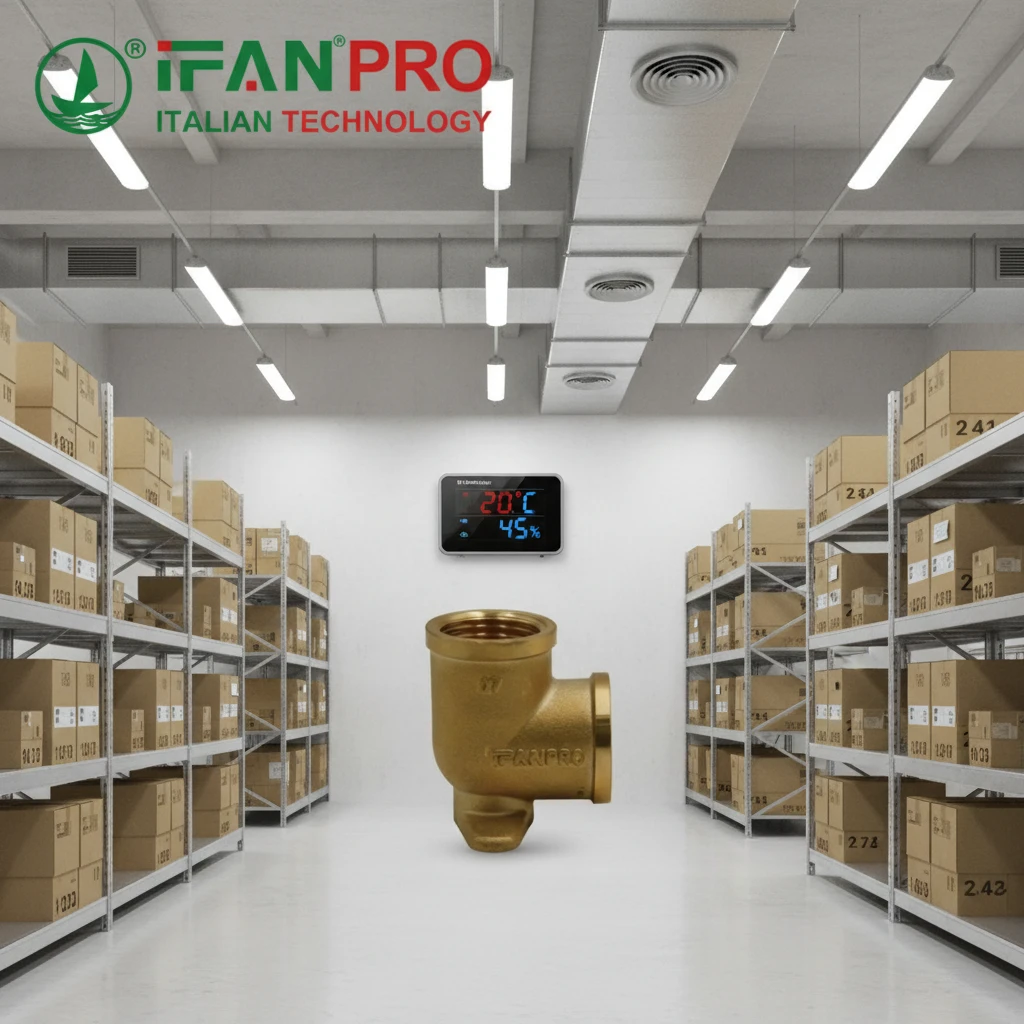
Yes, brass fittings should always be stored in a climate-controlled environment. The ideal conditions are a stable temperature between 15°C and 25°C (59°F – 77°F) and a relative humidity level consistently below 50%. Fluctuations in temperature and humidity are the primary causes of condensation and accelerated tarnishing.
Why Temperature and Humidity Control are Critical
Brass tarnishes through a process called oxidation, which requires moisture. When warm, humid air touches a cooler metal surface, condensation forms. This thin film of water dramatically speeds up the oxidation process, leading to spotting, staining, and even more severe white or green corrosion.
A climate-controlled warehouse does two vital things:
- It maintains low humidity: By keeping relative humidity below 50%, you effectively remove the “water” ingredient from the corrosion formula.
- It prevents temperature swings: Stable temperatures stop condensation from forming. A common problem occurs when fittings are delivered from a cool truck into a warm, humid warehouse—they instantly “sweat.”
Consequences of Poor Storage Environments
Storing brass in an uncontrolled space like a standard garage, shed, or non-insulated warehouse leads to predictable problems:
- Rapid Tarnishing: Bright brass will develop a dull, brown patina within weeks or even days.
- Spotty Corrosion: You may see localized green or white powder (verdigris), especially in recessed areas.
- Packaging Degradation: Constant humidity can weaken cardboard boxes and allow moisture to penetrate plastic bags.
Practical Storage Setup Tips
For businesses that don’t have a full warehouse HVAC system, here are practical steps:
- Use a Dehumidifier: A commercial dehumidifier in a sealed storage room is the most effective solution for humidity control.
- Avoid Concrete Floors: Never store boxes of brass directly on concrete. Concrete is porous and releases moisture. Always use pallets or shelving to keep inventory at least 15 cm off the ground.
- Keep Away from Doors: Store fittings away from loading dock doors or external walls where temperature fluctuates most.
- Monitor: Place a simple digital thermometer/hygrometer in the storage area to keep track of conditions.
Controlling the storage environment protects not just the brass, but also the integrity of its protective packaging, giving you a much longer shelf life.
How Can You Safely Clean Light Oxidation from Brass Elbows Before Installation?
Even with good storage, light tarnish can appear. Knowing how to clean it safely without damaging the fitting is crucial for a professional finish.
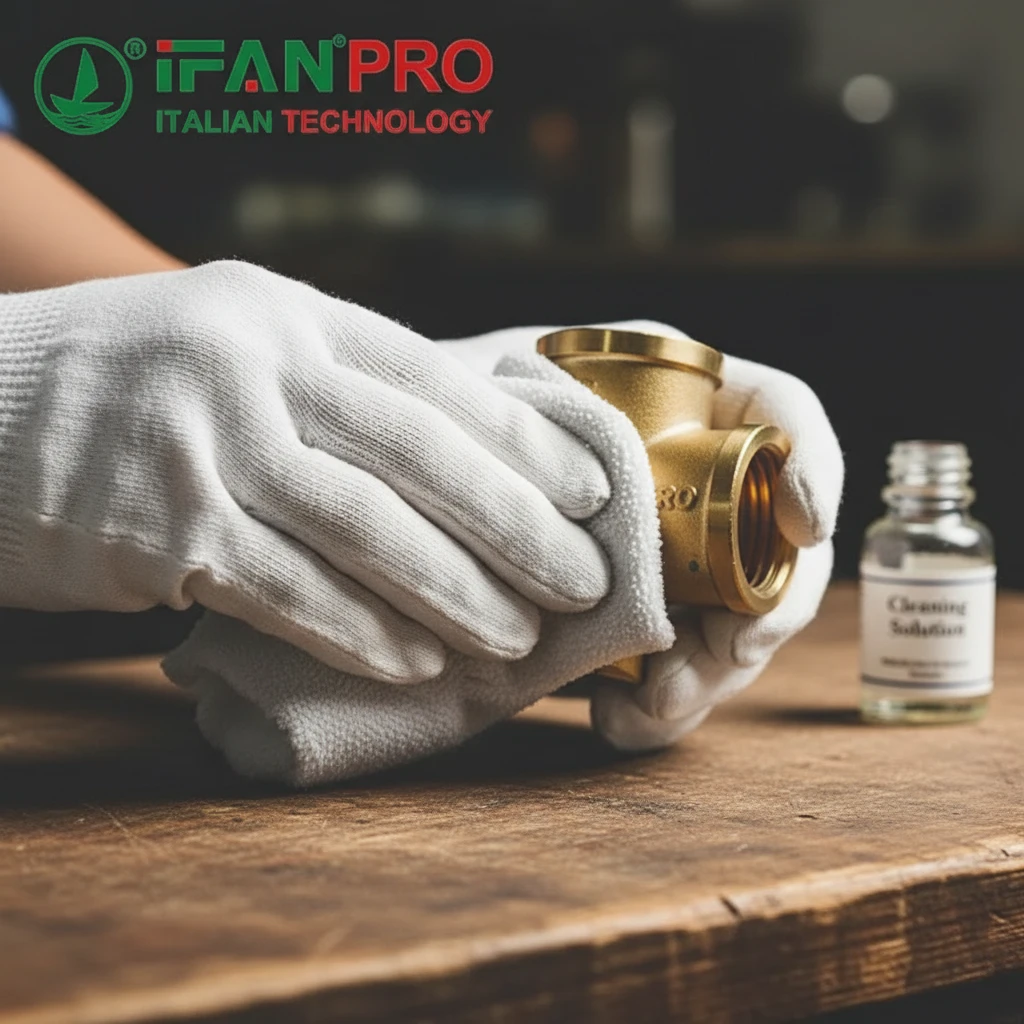
For light oxidation (dullness or light brown patina), safely clean brass elbows with a non-abrasive, acidic solution like diluted white vinegar or lemon juice, or a commercial brass cleaner. Gently apply with a soft cloth, rinse thoroughly with clean water, and dry immediately. Never use steel wool or harsh abrasive pads, as they will scratch the surface permanently.
Step-by-Step Guide for Safe Cleaning
If you discover light tarnish on fittings that are otherwise in good shape, follow this process to restore them without harm.
1. Assess the Oxidation: First, determine if it’s just surface tarnish or active corrosion. Light, even dullness is safe to clean. Thick green or white crusty deposits (verdigris) may indicate the fitting is compromised and should be replaced, not cleaned.
2. Choose Your Cleaner:
- Natural Method: Mix equal parts white vinegar and water. Add a teaspoon of salt for a stronger effect. Lemon juice also works well.
- Commercial Method: Use a trusted, non-abrasive brass polish or cleaning gel. These are formulated to be effective yet gentle.
3. Apply and Clean:
- Dip a soft cloth (microfiber or cotton) or a soft-bristled brush (for threads) into your cleaning solution.
- Gently rub the fitting in a circular motion. The tarnish should lift away easily. Do not scrub hard.
- For intricate parts, an old toothbrush dipped in cleaner works well.
4. Rinse and Dry Thoroughly:
- This is the most critical step. Rinse the fitting completely under running clean water to remove all traces of the acidic cleaner. Any residue left behind will cause faster re-tarnishing.
- Dry the fitting immediately and completely with a clean, dry towel. Do not let it air dry, as water spots can form.
What NOT to Do When Cleaning Brass
Avoid these common mistakes that can ruin brass fittings:
- Do Not Use Abrasives: Steel wool, Scotch-Brite pads, or harsh powders will create tiny scratches. These scratches increase the surface area and make the brass tarnish even faster in the future.
- Do Not Mix Cleaners: Never mix different chemical cleaners (e.g., ammonia and acid), as they can create dangerous fumes.
- Do Not Soak for Long Periods: Prolonged soaking in acid can start to etch the metal, damaging its finish and dimensional accuracy.
For fittings with a protective lacquer coating, do not use any chemical cleaner. It will damage the lacquer. Simply wipe lacquered fittings with a damp cloth to remove dust.
What Long-Term Storage Practices Prevent Corrosion and Maintain Quality?
For inventory that sits for months or years, a proactive, systematic approach is necessary to ensure brass fittings remain as good as new.
Effective long-term storage follows the “FIRST” principle: Keep fittings in their Factory-sealed packaging, on Inventory rotation (FIFO), Raised off the floor, in a Stable climate, and with a regular Tracking system for inspection. This disciplined approach prevents corrosion and maintains perfect quality indefinitely.

Implementing the “FIRST” Storage Principle
Let’s break down this best-practice acronym into actionable steps.
F – Factory Sealed: This is your first and best defense. Never open the protective VCI bag or remove the coating until you are ready to install that specific fitting. Once opened, the clock starts on exposure. Keep a stock of smaller, resealable plastic bags on hand to repackage any leftovers immediately.
I – Inventory Rotation (FIFO): Always practice “First-In, First-Out.” Use the oldest stock first. This prevents any boxes from being forgotten in the back of the shelf for years, where environmental factors might eventually defeat even the best packaging. Clearly label all boxes with the received date.
R – Raised Off the Floor: As mentioned, moisture seeps up from concrete floors. Store all boxes on sturdy steel shelving or on pallets. Ensure storage racks are not placed against exterior walls where condensation can form.
S – Stable Climate: For true long-term storage, invest in proper climate control. Aim for the gold standard: a dedicated storage area with air conditioning and dehumidification to maintain a steady temperature and humidity below 50%. The upfront cost saves money by eliminating waste from corroded stock.
T – Track and Inspect: Implement a simple quarterly inspection routine. Randomly select a box from your oldest stock, open it, and check the condition of the fittings. This early warning system allows you to identify any environmental problems in your warehouse before they affect your entire inventory.
Creating a Long-Term Storage Checklist
Use this table as a guide for setting up and auditing your storage system:
| Practice | Action Item | Frequency |
|---|---|---|
| Packaging Integrity | Check that all boxes are closed and VCI bags are sealed. Look for tears. | Monthly |
| Environmental Control | Record temperature and humidity readings from the storage area monitor. | Weekly |
| Inventory Management | Verify FIFO system is being followed; check date labels. | With each order pick |
| Physical Inspection | Perform a visual inspection of a sample from old stock. | Quarterly |
| Housekeeping | Ensure area is clean, dust-free, and no water pipes are leaking nearby. | Monthly |
By treating brass fittings as the valuable, precision components they are, you can avoid the headaches of last-minute cleaning, project delays, or the need to scrap corroded parts. A small amount of disciplined care in storage pays huge dividends in reliability and cost savings.
Conclusion
Proper storage in sealed VCI packaging within a controlled climate keeps brass elbows oxidation-free. For fittings delivered with superior, ready-to-install protection, trust IFAN’s premium brass plumbing products.










 Français
  English
  Русский
  Español
Commentaires récents