
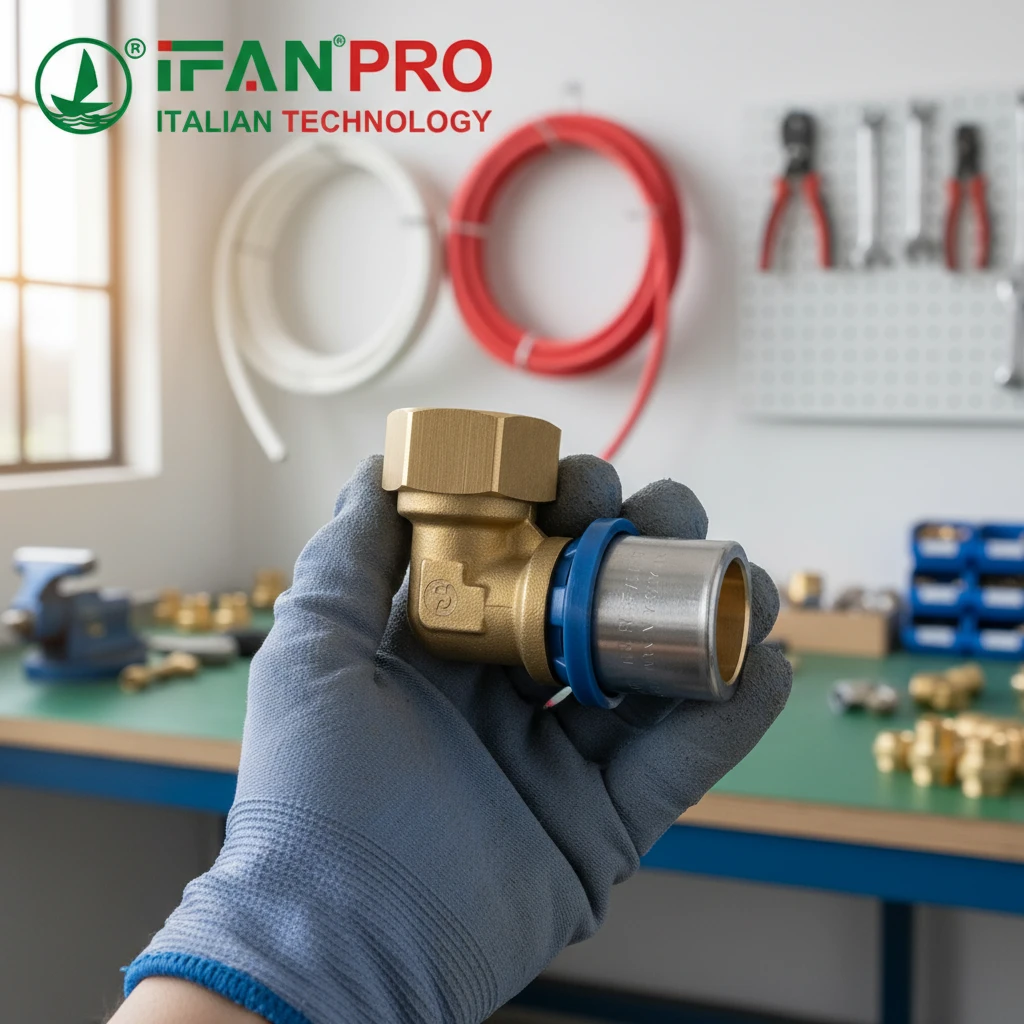
A client once faced a costly system shutdown because a reused union fitting failed. This made me deeply examine what makes a fitting truly reusable.
A high-quality PEX union elbow can absolutely withstand repeated tightening and loosening, but its longevity depends entirely on three key factors: a robust metal-to-metal thread design, a resilient sealing mechanism that doesn’t degrade, and proper installation technique to prevent damage during reconnection.
However, not all unions are created equal. Let’s break down exactly what makes a union fitting reliable for multiple uses and how to avoid common mistakes.
What Type of Durable Thread Design Allows for Multiple Reuses?
I’ve seen cheap fittings strip after just two cycles. The thread design is the first line of defense against wear.
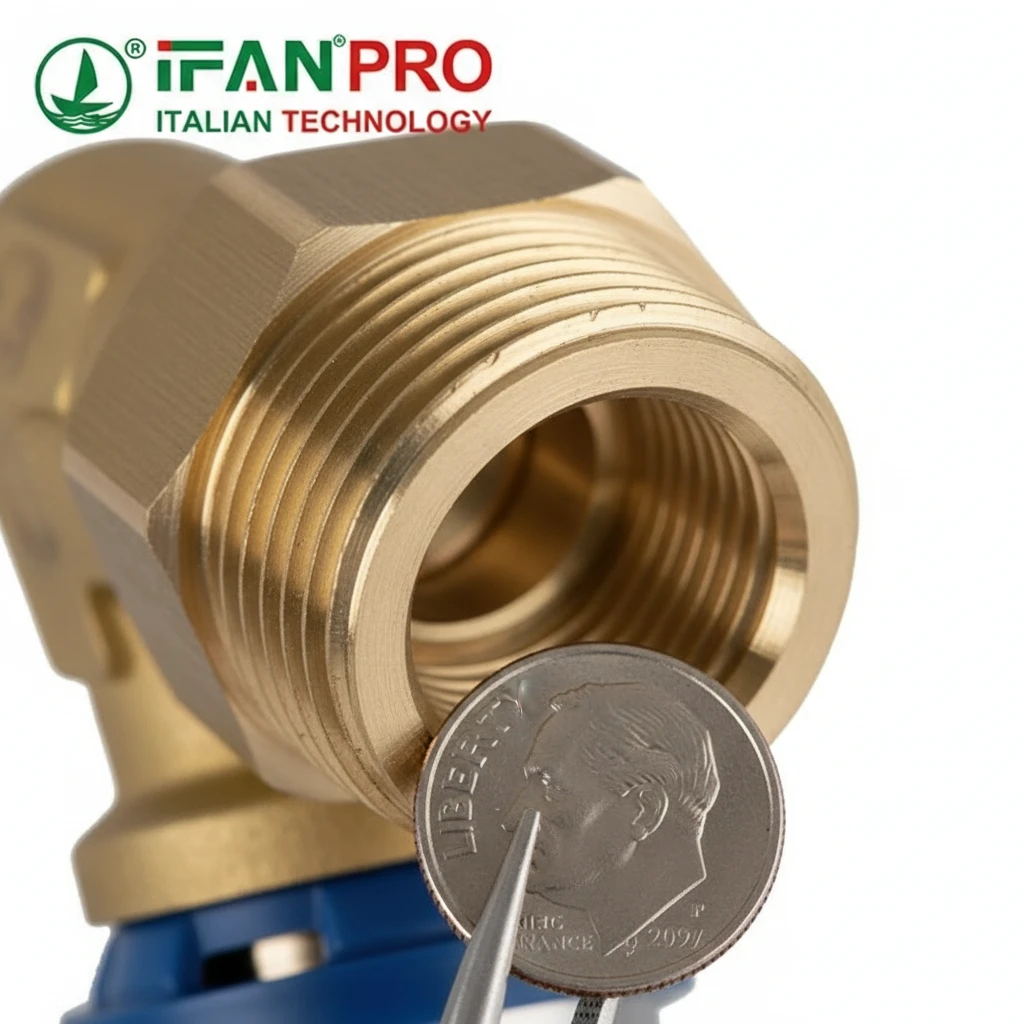
The most durable thread design for reuse is a full, deep-cut metal (usually brass) thread with a wide, flat crest. This design maximizes the surface area contact between the nut and the body, distributing tightening force evenly and resisting the cross-threading and stripping that plagues shallow, sharp threads.
The Anatomy of a Reusable Thread
When you tighten a union nut, you are essentially causing two threaded surfaces to slide against each other under high pressure. A design that minimizes wear on these contact points will last for many more cycles. Let’s look at the critical features.
First, the material is crucial. The threads should be cut into a thick, forged brass body, not a thin, cast metal. Forged brass is harder and more resistant to deformation. Second, the thread profile matters greatly. High-quality unions use a standard pipe thread (NPT or BSPP) but machine it with precision.
- Deep vs. Shallow Threads: Deep threads have more material between the root and the crest. This gives them greater structural strength to resist the shear forces applied during tightening. Shallow threads are weaker and more prone to cracking or stripping.
- Flat Crest vs. Sharp Crest: A thread with a flattened top (crest) provides a broader contact area. This reduces the point pressure (psi) on the metal, preventing galling (where metal surfaces cold-weld and tear). Sharp, pointed threads concentrate all the force on a tiny edge, leading to rapid wear.
Comparison of Thread Designs for Reusability
The table below shows why certain designs fail and others succeed.
| Thread Characteristic | Poor Design for Reuse (Fails Early) | Robust Design for Reuse (Lasts Longer) | Why It Matters |
|---|---|---|---|
| Material | Thin, cast brass or lower-grade alloy | Thick, forged brass or stainless steel | Resists deformation and cracking under repeated stress. |
| Thread Depth | Shallow cuts | Deep, full-profile cuts | Provides more material to absorb tightening torque without stripping. |
| Crest Shape | Sharp, pointed crest | Flat, wide crest | Distributes force evenly, minimizing wear and galling on contact surfaces. |
| Surface Finish | Rough, uneven machining | Smooth, precision-machined | Reduces friction during tightening, allowing for smooth engagement and less wear. |
The Role of the Swivel Nut
A true union elbow has a swivel nut. This is a key feature for reusability. The nut spins freely on one side of the fitting body. During installation or removal, you only turn the nut; the PEX tubing on that side does not twist. This prevents stress and kinking in the tubing every time you service the connection. The threads inside this swivel nut must be of the same high-quality design as those on the main body. A weak nut will fail long before the body does.
In short, a reusable thread is not an accident. It is the result of robust material choice and precision engineering that prioritizes wear resistance over lowest cost.
How Does the Seal Remain Effective After Several Disassembly Cycles?
A leak after reassembly is a common fear. The seal is the heart of the union’s function.
The seal remains effective through multiple cycles by using a durable, compressible gasket (like EPDM or silicone rubber) seated in a protected groove, combined with a flat, machined sealing surface. This design allows the gasket to rebound after compression and form a fresh seal each time, unlike tapered threads that rely on permanent deformation.
Understanding the Sealing Mechanism
There are two main ways to seal a pipe connection: thread deformation and gasket compression. For a reusable fitting, only one of these works.
A standard NPT (tapered) thread seal works by forcing the male and female threads together so tightly that the metal deforms and fills the microscopic gaps. This is a permanent, one-time deformation. If you take it apart and put it back together, the threads will never align in exactly the same way, and the seal is compromised. This is why Teflon tape is always needed on NPT threads, and why they are not considered reliably reusable.
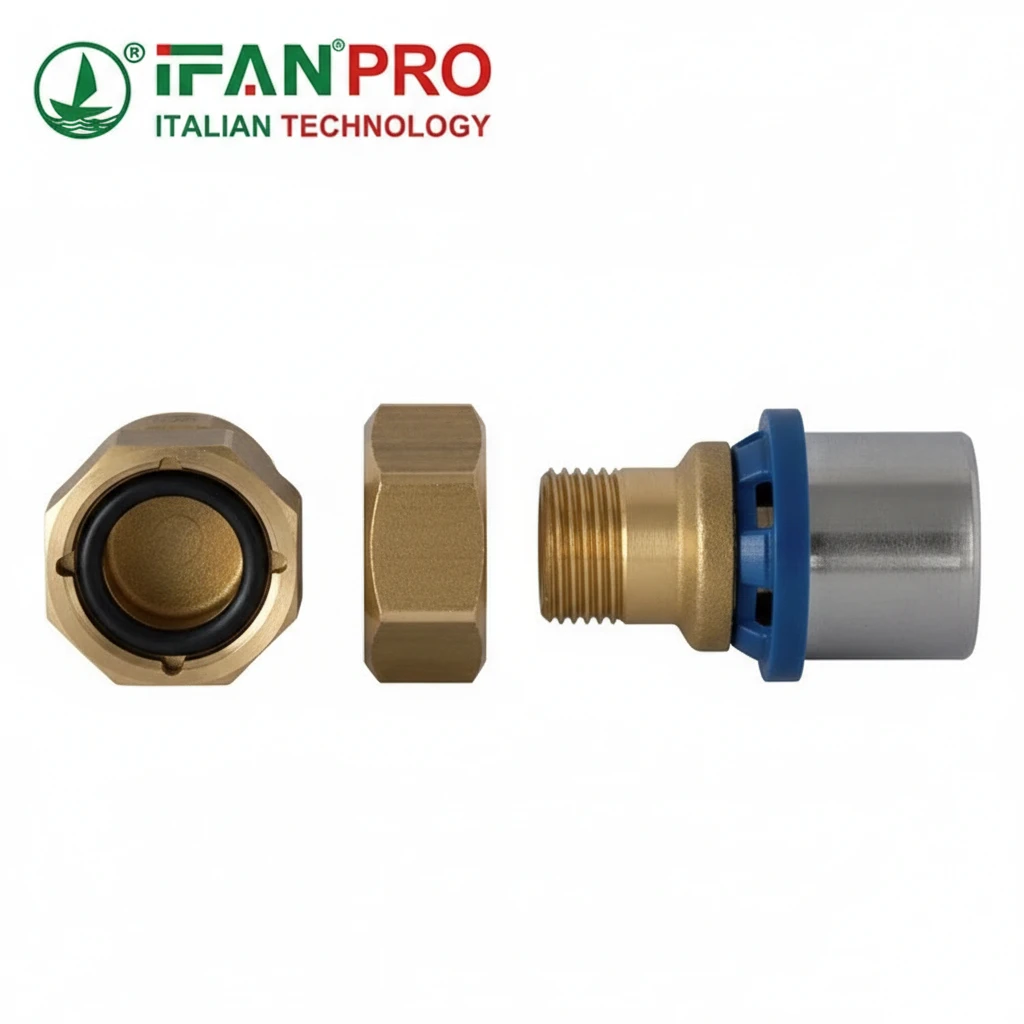
A union elbow uses a different, smarter principle: face seal with a gasket. Here’s how it works:
- The Gasket: A soft, resilient O-ring or flat washer sits in a machined groove on one side of the union.
- The Sealing Surface: The opposing side of the union has a perfectly flat, smooth, machined face.
- The Action: When you tighten the union nut, it pulls these two faces together, compressing the gasket between them.
- The Seal: The compressed gasket expands outward to fill the entire space between the two metal faces, creating a watertight barrier.
Why This Design is Reusable
The magic is in the gasket’s elastic recovery. High-quality EPDM or silicone rubber is designed to be compressed and then return to near its original shape when the pressure is released. When you loosen the union nut, the gasket rebounds. The next time you tighten it, the gasket compresses again into a new, perfect seal. The flat metal sealing surfaces are not damaged in the process.
Factors That Destroy Seal Reusability
| Factor | Consequence | How to Prevent |
|---|---|---|
| Damaged Gasket | Nicks, cuts, or permanent flat spots cause leaks. | Inspect the gasket before each reinstallation. Replace if damaged. Keep it clean. |
| Dirty Sealing Surface | Grit or debris on the flat face prevents the gasket from sealing evenly. | Always wipe both sealing faces clean with a cloth before reassembly. |
| Over-tightening | Can crush the gasket beyond recovery, extrude it out of its groove, or even crack the housing. | Tighten by hand, then use a tool for only 1/4 to 1/2 a final turn. Do not use excessive force. |
| Chemical Degradation | Wrong gasket material for the fluid (e.g., standard rubber with oil) can cause swelling or disintegration. | Ensure the gasket material (EPDM, Nitrile, Silicone) is compatible with your system’s media. |
The takeaway is clear: the sealing reliability of a union depends on caring for a simple, replaceable part—the gasket. This is far superior to trying to “re-seal” a damaged permanent thread.
Is There a Recommended Maximum Number of Times to Reuse the Union?
Clients want a simple number, but the real answer is about condition, not count.
There is no universal fixed number, as reuse limits depend on inspection results. A high-quality union from a reputable manufacturer, when properly installed and inspected each time, can often be reused 10-20 times or more. The limit is reached when inspection shows thread wear, gasket deterioration, or damage to the sealing faces.
Why a Fixed Number is Misleading
Giving a single number like “5 times” or “10 times” is tempting but inaccurate. Think of it like car brakes: you can’t say they’ll last exactly 50,000 miles. It depends on driving style, conditions, and material quality. Similarly, a union’s life depends on:
- Installation Torque: An overtightened union may be damaged on its first use.
- Thread Alignment: One instance of cross-threading can ruin the threads immediately.
- System Conditions: Exposure to high heat, chemicals, or constant vibration can age the gasket and metal faster.
- Handling: Dropping the fitting can dent sealing surfaces.
Therefore, the best practice is condition-based reuse. You reuse the fitting until an inspection tells you not to.
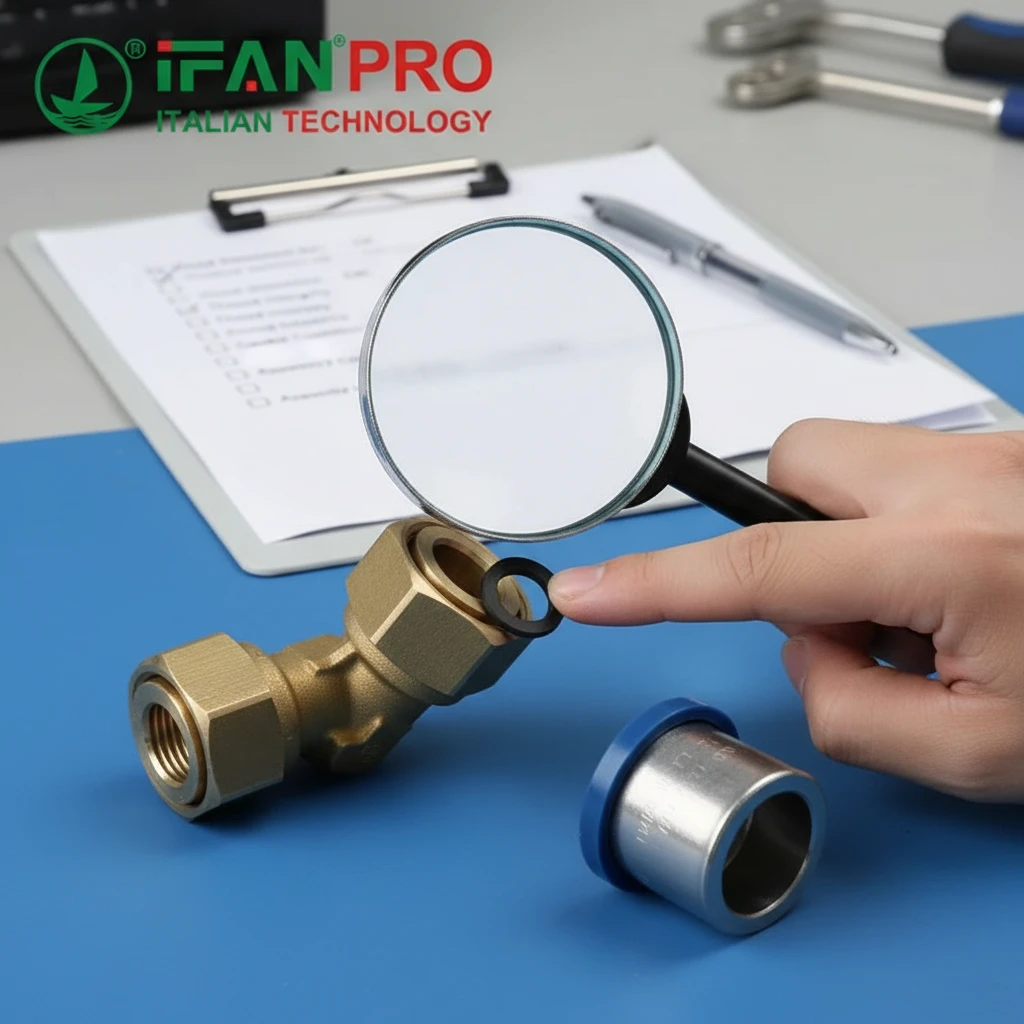
The Pre-Reuse Inspection Checklist
Before every reinstallation, you must perform this simple check. If the fitting fails any point, retire it immediately.
Visual and Physical Inspection Steps:
| Component | What to Check For | Action if Failed |
|---|---|---|
| Threads (Nut & Body) | Stripped, flattened, cracked, or shiny/worn spots. Cross-threading marks. | Do not reuse. Worn threads cannot hold proper torque and may fail under pressure. |
| Sealing Gasket | Cracks, cuts, deep permanent compression marks (flat spots), brittleness, or swelling. | Replace the gasket. A new gasket is cheap insurance against leaks. |
| Flat Sealing Faces | Scratches, deep gouges, pitting, or warping. Use a fingernail to feel for ridges. | Do not reuse. Imperfections will prevent the gasket from sealing evenly. |
| Swivel Action | The nut should spin freely without binding or gritty feeling. | Clean. If still gritty, internal threads may be damaged. Consider replacement. |
| General Body | Any cracks, especially near the tube insert barbs or the seal groove. | Do not reuse. A cracked body is a safety hazard. |
Establishing a Practical Guideline
While condition is king, for planning and quality assurance purposes, many professionals and responsible manufacturers like IFAN establish a conservative recommended limit. This limit is set far below the point where a fitting might actually fail under perfect conditions.
- For Critical Systems: (e.g., behind walls, in industrial panels) the recommendation may be as low as 5-10 reuses to guarantee absolute reliability.
- For Accessible, Low-Pressure Systems: With careful inspection, 15-20 reuses of a high-end fitting is often achievable.
The safest rule is this: If you have any doubt about the fitting’s condition after inspection, replace it. The cost of a new union is trivial compared to the cost of a water leak or system downtime.
What Happens if the Union Nut is Overtightened During Reinstallation?
Overtightening is the most common cause of premature union failure. I’ve seen it turn a reusable fitting into scrap metal.
Overtightening the union nut causes immediate and irreversible damage: it can crush the sealing gasket beyond recovery, strip or gall the threads, crack the fitting body, or warp the flat sealing faces. This renders the fitting unusable for future cycles and often causes an immediate leak by distorting the very seal it was meant to compress.
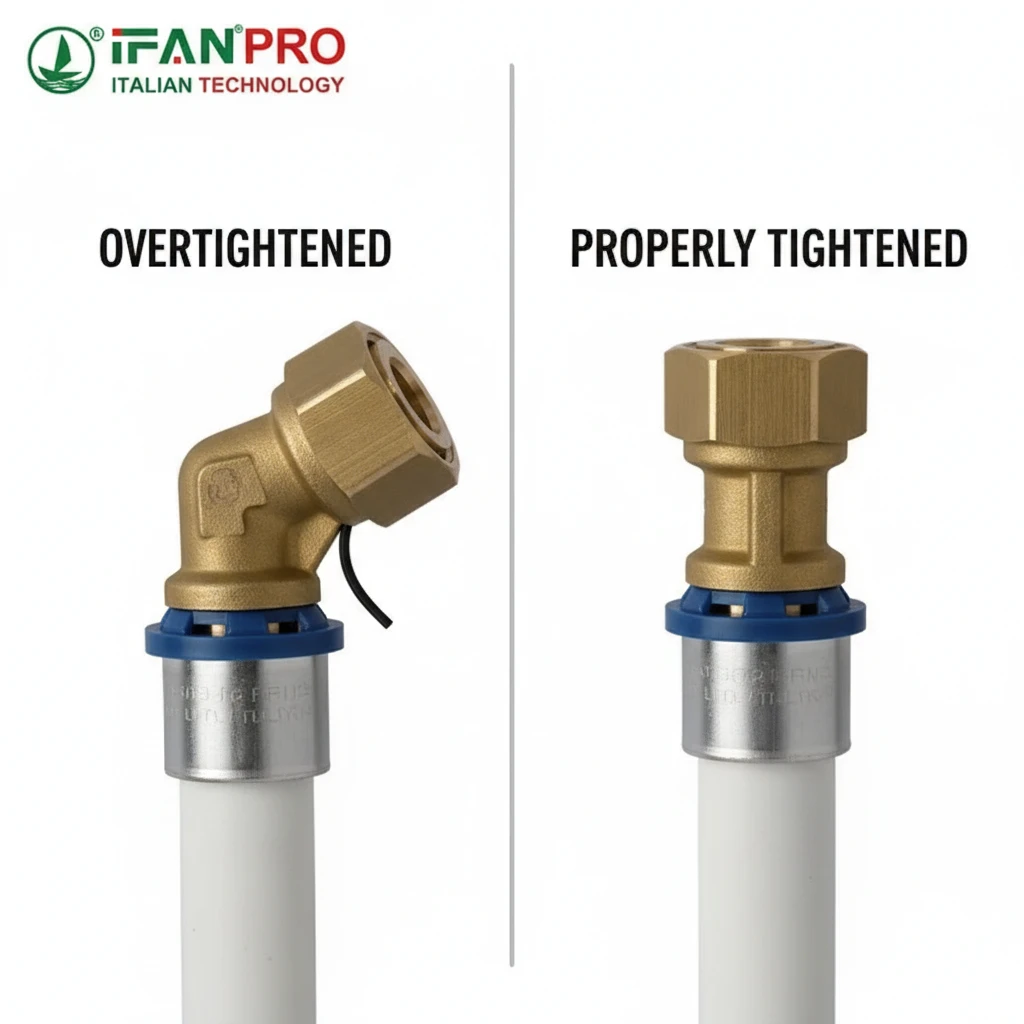
The Mechanics of Failure
Tightening a fitting is about applying the correct force to compress the gasket and engage the threads fully—not about applying the maximum force possible. More torque is not better. Here’s what happens when you exceed the necessary torque:
1. Gasket Failure:
The soft rubber or silicone gasket is designed to compress within a specific range. Overtightening compresses it too much. This can have two results:
- Extrusion: The gasket is squeezed out of its machined groove. Once extruded, it cannot rebound properly and will not seal on the next use.
- Compression Set: The gasket is permanently flattened and loses its elasticity. It becomes a hard, flat piece of rubber that cannot spring back to create a seal.
2. Thread Damage:
The threads bear the brunt of the excessive force. The metal, especially on the softer nut, can deform.
- Stripping: The threads shear off, turning the smooth spiral into a useless, smooth bore.
- Galling: Under extreme pressure and friction, the threads on the nut and body can cold-weld together. When you try to loosen it, the metal tears, destroying both sets of threads.
3. Body Stress:
The entire fitting body is put under extreme tensile (pulling) stress. In cheaper, cast fittings, this can lead to a hairline crack, often near the tube insert barbs or the seal groove. This crack may not leak immediately but will fail catastrophically later.
How to Tighten Correctly: A Practical Guide
The goal is to achieve a leak-free seal without damage. Follow these steps:
- Hand-Tighten First: Always start by screwing the union nut on by hand until it is fully seated and finger-tight. This ensures the threads are properly aligned and not cross-threaded.
- Use the Correct Tool: Use an appropriately sized open-end wrench or spanner. Adjustable wrenches can slip and round off the nuts.
- Apply Final Torque: After hand-tightening, use the wrench to apply a quarter to a half turn maximum. You should feel firm resistance. Stop when it is snug.
- Pressure Test: After assembling the system, perform a pressure test. If a slight weep leak occurs at the union, you can gently tighten it an additional 1/12 of a turn (about 30 degrees). Do not keep cranking.
Consequences of Overtightening: A Summary Table
| Damaged Component | Immediate Consequence | Long-Term Consequence for Reusability |
|---|---|---|
| Gasket | May still seal initially but is deformed. | Will leak upon next use. Fitting is not reusable without gasket replacement, if other parts are still ok. |
| Threads | May feel “tight” but are weakened. | Likely to strip on next disassembly or fail under system pressure. Fitting is not reusable. |
| Fitting Body | Could crack immediately or develop stress fractures. | Fitting is unsafe and must be replaced immediately. |
| Sealing Face | Can become warped or scored by an extruded gasket. | Will not provide a flat surface for any gasket to seal against. Fitting is not reusable. |
The message is simple: Snug is sufficient; brute force is destructive. Treat the union as a precision component, not a generic pipe fitting.
Conclusion
A PEX union elbow’s reusability hinges on quality design, careful inspection, and proper installation. For unions built to last through countless service cycles, specify IFAN’s premium brass union fittings for your next project.











 Français
  English
  Русский
  Español
Commentaires récents