
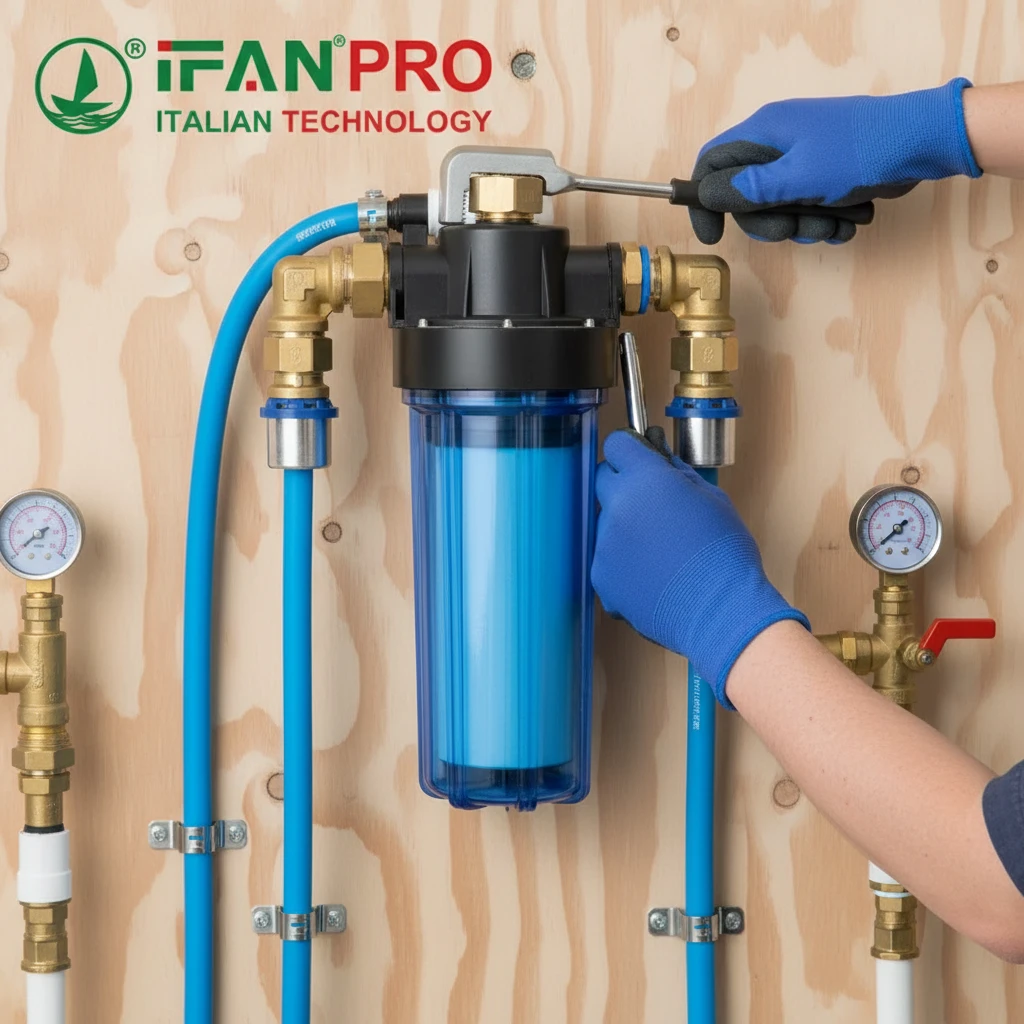
I once saw a client spend hours cutting and re-piping just to replace a small valve. That frustration is exactly why we always recommend union elbows for maintenance-heavy systems.
A union elbow is the best choice for easy maintenance in PEX lines because it allows you to disconnect a section of piping without cutting. This single fitting lets you quickly isolate and remove an appliance, valve, or filter for service and then reconnect everything leak-free, saving massive time and labor costs.
Now, let’s break down exactly how this simple fitting solves major maintenance headaches in plumbing systems.
How Does It Enable Isolated Servicing of a Single Appliance or Section?
Imagine needing to replace a faulty water heater valve and having to shut off water to the entire house. A union elbow changes that scenario completely.
A union elbow enables isolated servicing by providing a deliberate, leak-proof disconnection point within a rigid piping run. By simply loosening the union nuts at the elbow, you can disconnect and remove a single appliance or a specific pipe section for repair or replacement, while leaving the rest of the pressurized system completely intact and operational.
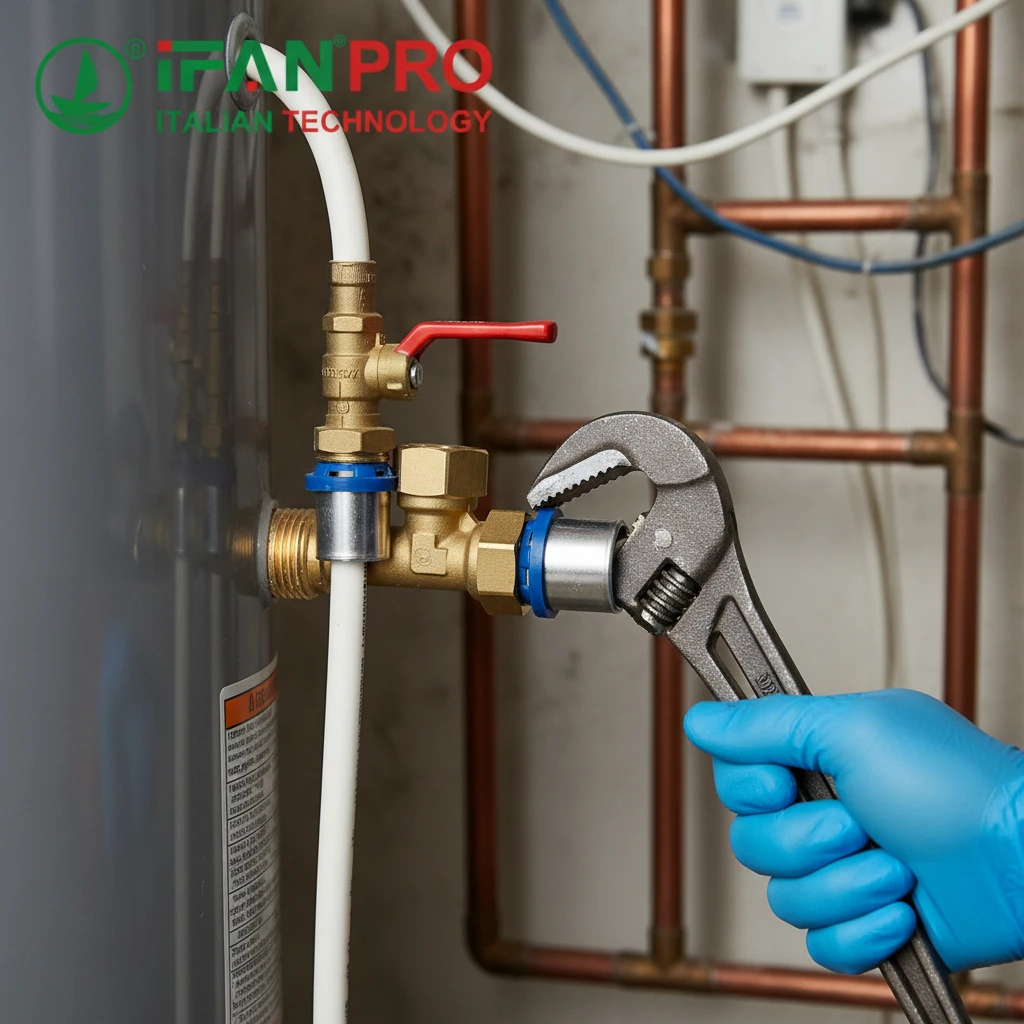
The Problem with Traditional Piping Connections
First, let’s understand the standard alternative. In a typical glued (PVC) or crimped (PEX) plumbing system, all connections are permanent. The pipes and fittings are fused together into one solid piece. This is great for preventing leaks, but it creates a huge problem for maintenance.
For example, if a valve on your washing machine supply line fails, you have only bad options in a traditional system. You could shut off the main water supply to the whole house. This inconveniences everyone. Alternatively, a plumber might cut the pipe on either side of the faulty valve. After replacing the valve, they must then install new pipe segments and multiple new fittings to bridge the gap they created. This process is messy, time-consuming, and expensive.
How the Union Elbow Works as a Solution
In contrast, a union elbow solves this by being a planned “service point.” It is a two-part fitting. The elbow body is permanently attached to one pipe. The union nut and tailpiece are permanently attached to the other pipe. These two parts join together with a threaded connection that compresses a rubber or plastic gasket.
When you need to service something downstream, you follow a simple process. First, shut off the water supply only to that specific section. Next, use two wrenches to loosen the union nuts. Then, the two parts of the elbow separate, creating a physical gap in the pipe. At this point, you can freely remove the appliance or section connected downstream. Finally, after service, you simply realign the pipes, hand-tighten the union nuts, and then give them a final precise turn with a wrench. The gasket compresses again, forming a perfect seal.
Comparing Service Scenarios
The table below shows the dramatic difference in effort.
| Task: Replace a Water Heater Inlet Valve | Traditional Crimped PEX System | System with Union Elbows |
|---|---|---|
| Steps Required | 1. Drain system. 2. Cut pipe. 3. Remove valve. 4. Install new valve. 5. Install new couplings/pipe. 6. Pressure test. | 1. Close local valve. 2. Loosen union nuts (x2). 3. Remove valve. 4. Install new valve. 5. Tighten union nuts. 6. Open valve. |
| Time Estimate | 60-90 minutes | 15-20 minutes |
| Water Disruption | Entire house may need to be drained. | Only the water heater is affected. |
| New Materials Needed | New valve, pipe segments, at least 4 crimp rings/couplings. | New valve only. |
In short, the union elbow turns a complex plumbing surgery into a simple, reversible connection. As a result, it gives you control and saves enormous time.
Why Is It Ideal for Valves, Pumps, or Filters That Require Routine Access?
Some components are designed to be serviced. Therefore, it makes no sense to bury them behind permanent pipes.
Union elbows are ideal for valves, pumps, and filters because these components are maintenance items themselves. The elbow provides a quick-disconnect “service port” that allows you to remove, clean, inspect, or replace the component in minutes without disturbing the surrounding piping, ensuring routine upkeep is simple and therefore more likely to be performed.
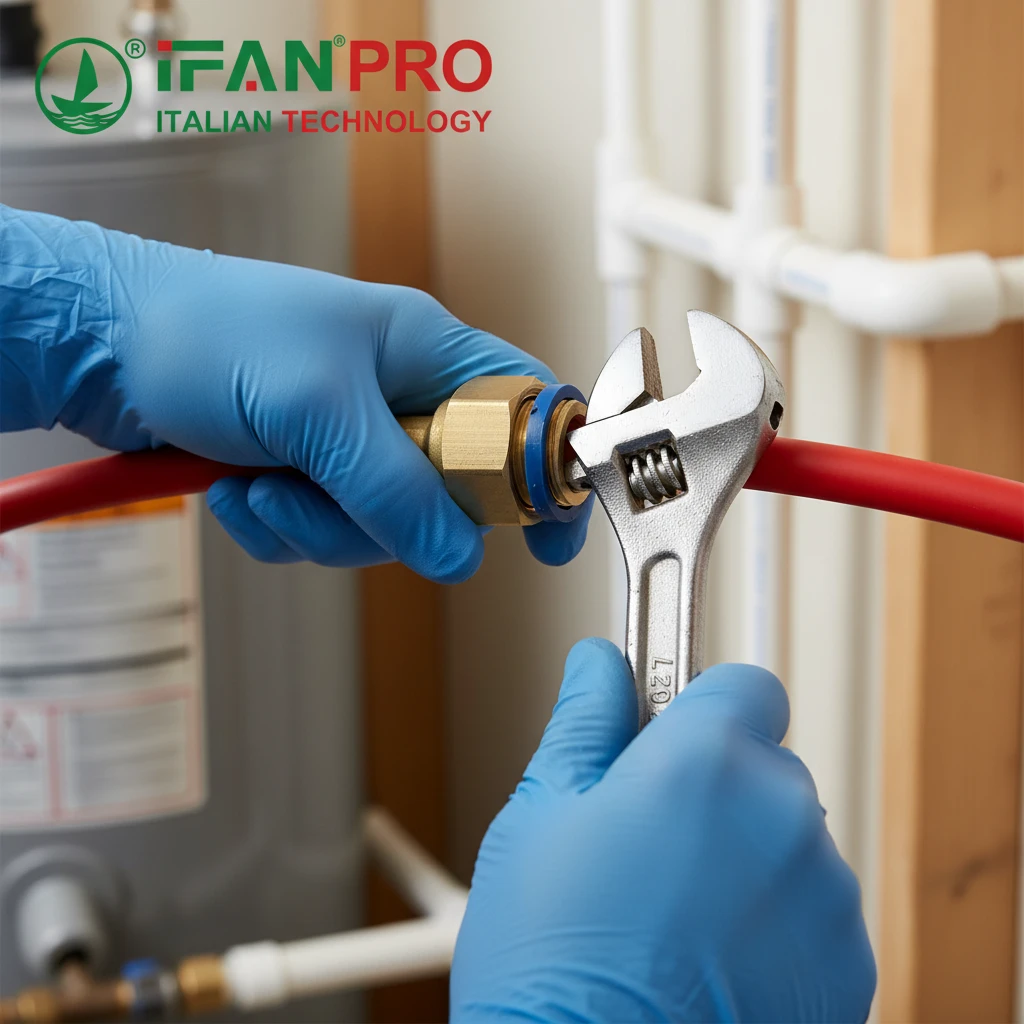
The Maintenance Mindset
First, think about common household and commercial water system components. For instance, water filters need changing every few months. Also, pressure relief valves require annual testing. Furthermore, circulation pumps may need cleaning or replacement every few years. Lastly, mixing valves can fail and require servicing.
If accessing any of these requires calling a plumber for cutting and re-piping, many people will delay the maintenance. Consequently, this leads to system inefficiency, scale buildup, or even safety hazards. So, the goal is to make routine service so easy that it happens on schedule.
Design Advantages for Routine Access
The union elbow’s design is perfect for this job. First, it provides a clear, physical break point right next to the component. Therefore, you don’t have to guess where to cut. Second, the sealing mechanism is designed for reuse. Specifically, a high-quality EPDM or nitrile gasket can compress and decompress dozens of times without losing its sealing ability. In contrast, glue or solder works only one time.
Moreover, using union elbows promotes better system design. It encourages installers to leave adequate space around components for future access. After all, you can’t install a union elbow in a tight, inaccessible spot; it needs room for the wrenches to turn. This approach forces good, maintainable design from the start.
Example: Annual Filter Change Procedure
Let’s map out a real-world example for changing a whole-house sediment filter.
System WITHOUT Union Elbows:
- Shut off main water supply and drain downstream pipes.
- Use a PEX cutter to cut the pipe on both sides of the filter housing.
- The housing is now free. Water may drip from the cut pipes.
- Change the filter cartridge inside the housing.
- Re-install the housing and use slip couplings or new crimp fittings to reconnect the pipes. This requires precise measurement and can be fiddly.
- Turn water back on and check for leaks at the four new connection points.
System WITH Union Elbows (installed on inlet/outlet of filter housing):
- Shut off the bypass valves installed before and after the filter unit.
- Place a bucket under the filter housing.
- Use a wrench to loosen the union nuts on the inlet and outlet lines.
- The filter housing drops down freely.
- Change the cartridge.
- Lift the housing back into place, align the pipes, and tighten the union nuts.
- Open the bypass valves.
Clearly, the process with union elbows is faster, cleaner, and requires no consumable piping materials. This ease directly leads to more consistent maintenance.
Can It Withstand Frequent Assembly and Disassembly for Maintenance Cycles?
A fitting you’re afraid to touch is useless for maintenance. Therefore, its durability under repeated use is critical.
Yes, a high-quality union elbow is specifically engineered to withstand frequent assembly and disassembly. Key features like brass or stainless steel construction, a robust O-ring/gasket seal, and machined mating surfaces ensure it can be taken apart and reconnected dozens of times without leaking or wearing out.
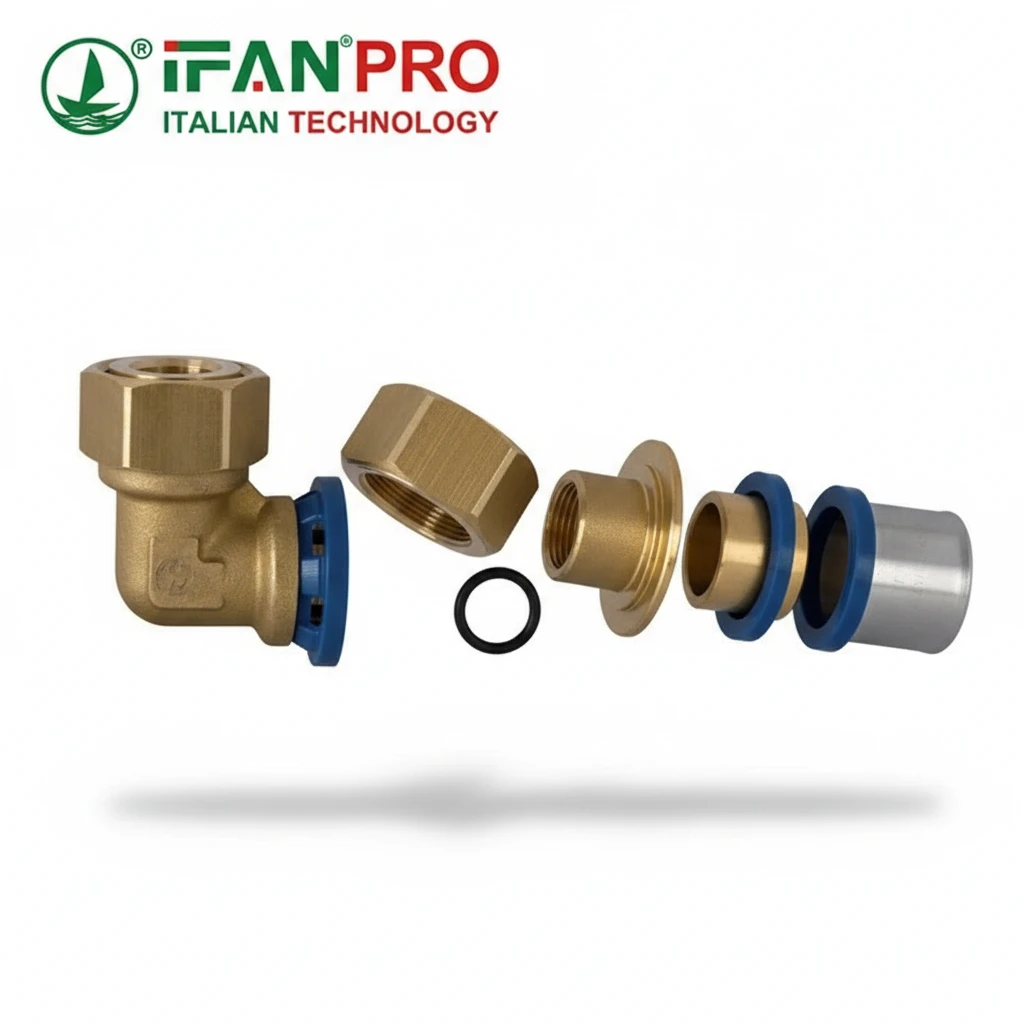
The Anatomy of a Reusable Fitting
First, understand that not all threaded connections are equal. A standard pipe thread (NPT) relies on thread deformation and sealant tape to create a seal. Every time you tighten it, you damage the threads a little. After a few cycles, it can start to leak.
In contrast, a maintenance-grade union elbow uses a different principle: a mechanical joint seal. Let’s look at its durable parts:
- Body & Tailpiece (Machined Surfaces): Manufacturers typically make these of corrosion-resistant brass or polymer. The surfaces that press against the gasket are smooth and flat. They don’t degrade with each use.
- The Sealing Gasket (The Heart of the System): This is a replaceable ring made of EPDM or similar rubber. It absorbs the compression force. When you loosen the nut, the gasket springs back. It can do this hundreds of times before possibly needing replacement, which is a simple and cheap fix.
- The Union Nut (Strong Threads): The threads on the nut and body are typically straight and designed to engage smoothly. They are not the sealing mechanism, so they experience less stress and last longer.
The Re-Assembly Process Ensures Longevity
The correct re-tightening process prevents damage. You should always follow these steps:
- Hand-tighten first: This ensures the parts are aligned correctly and avoids cross-threading.
- Use two wrenches: One wrench holds the elbow body steady while the other tightens the nut. This prevents twisting and stressing the adjacent pipes.
- Tighten to the correct torque: Usually just 1/4 to 1/2 turn past hand-tight. Remember, over-tightening is the main cause of failure, as it can crush the gasket or crack polymer parts.
Testing Standards for Durability
Quality manufacturers test these fittings for cyclic pressure performance. This simulates years of maintenance cycles.
| Performance Test | Standard Procedure | What It Proves |
|---|---|---|
| Cycle Pressure Test | Subject the fitting to pressure surges (e.g., 0-150 PSI) for thousands of cycles. | The metal and threads resist fatigue from pressure changes. |
| Assembly/Disassembly Test | Assemble, pressure test, disassemble, and re-assemble the fitting repeatedly (e.g., 50+ times). | The gasket retains its sealing ability and the threads do not wear out. |
| Thermal Cycling Test | Cycle the fitting between hot and cold water temperatures repeatedly while under pressure. | The different materials (metal, rubber, plastic) expand and contract together without leaking. |
A fitting from a trusted supplier like IFAN is built to pass these tests. Therefore, you can install it with confidence, knowing it won’t become a single-use item. Ultimately, the ability to be reopened is its core design feature, not an afterthought.
How Does It Future-Proof a System for Potential Upgrades or Changes?
Buildings and needs evolve. So, a plumbing system that can’t adapt becomes a liability.
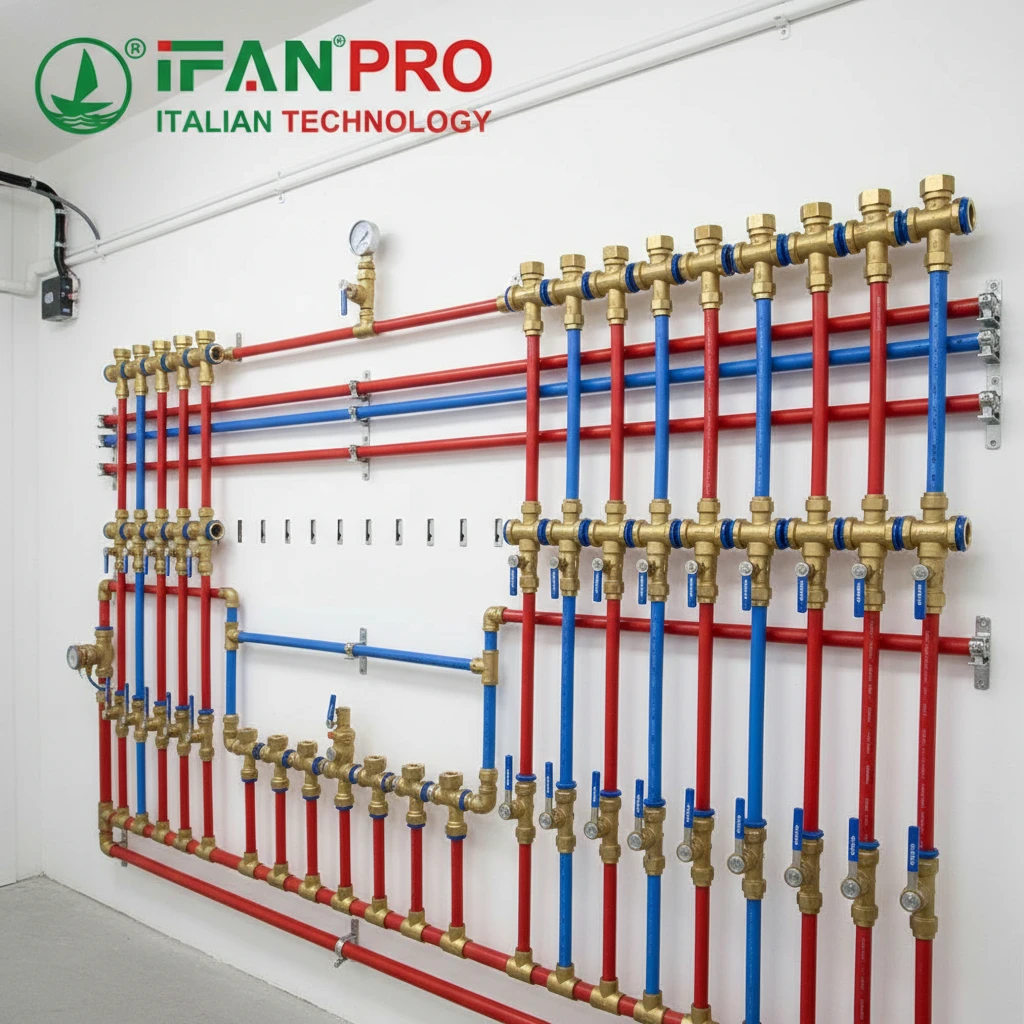
A union elbow future-proofs a system by making it modular and reconfigurable. It allows you to easily insert new components into an existing line, or to reroute pipes for a renovation, without the need for destructive cutting and extensive repiping, thereby protecting your initial investment.
Embracing Change in Building Systems
Consider these common scenarios a few years after a home or building is first plumbed. For example, the homeowner might want to add a central water filtration system. Alternatively, a bathroom renovation might require moving fixtures. Sometimes, a new appliance needs a different connection. Also, updated building codes may require adding a new safety device.
In a rigid, permanent-pipe system, each of these changes is a major, disruptive project. It involves cutting open walls, replacing long sections of pipe, and matching up old and new materials. Consequently, the cost and mess often discourage people from making sensible upgrades.
The Modular Plumbing Approach
However, strategic use of union elbows transforms your plumbing from a fixed “circuit board” into a modular one. Think of the union elbows as the “connectors” between modules. As a result, you can unplug one module and plug in a new one.
For example, imagine a cold water line running to your kitchen. If you installed union elbows at strategic points during the initial build, adding a water filter later becomes simple. First, shut off the water via a local valve. Next, loosen the union elbows on either side of the section where the filter will go. Then, remove a short, straight pipe segment. After that, install the new filter unit. Finally, connect the filter into the gap using the existing union elbows.
In this way, you can upgrade the system in an afternoon with minimal downtime and no wasted materials.
Planning for the Unknown: A Strategy
You don’t need to put union elbows everywhere. Instead, the key is intelligent placement at potential future “intervention points.”
| Strategic Location | Future-Proofing Benefit |
|---|---|
| At the inlet/outlet of major appliances (water heater, softener, pump) | Allows for easy appliance replacement or upgrade when models change. |
| At the beginning of branch lines (to a bathroom, kitchen, laundry) | Enables you to isolate and re-route an entire branch for a room renovation. |
| Before and after a manifold | Lets you replace or expand the manifold system as needs grow. |
| At the main water entry point | Simplifies the addition of whole-house components like pressure tanks or primary filters. |
Cost-Benefit of Future-Proofing
Some may argue that adding a few extra union elbows during initial construction increases the material cost. This is true, but the cost is very small compared to the potential savings.
Initial Cost: Adding 4-6 strategic union elbows might add $50 – $100 to material costs.
Future Savings: However, avoiding just one major re-piping job to add a component can save $500 – $2000 in labor, materials, and drywall repair.
Therefore, union elbows become one of the highest-return investments in plumbing system design. They provide flexibility and protect the functionality of the system for decades.
Conclusion
In summary, union elbows are the key to creating PEX systems that are maintainable, adaptable, and built to last. For reliable, reusable union elbows you can trust for every service cycle, specify IFAN’s premium brass PEX union elbows for your next project.








 Français
  English
  Русский
  Español
Commentaires récents