

I once watched a drainage system fail during a storm, flooding a client’s property. This event made me closely examine the real capabilities of materials like PVC.
Yes, properly designed and installed PVC drainage systems can effectively handle heavy rainfall runoff. Their smooth interior allows high flow rates, inherent strength resists collapse, and a well-planned layout with regular maintenance ensures reliable performance even during extreme weather events, making them a trusted choice globally.
Let’s look at the specific factors that determine how well PVC drainage manages stormwater.
What is the Maximum Flow Capacity of Standard PVC Drainage Pipes?
Clients often worry about water backing up during a downpour. The pipe’s flow capacity is the first line of defense.
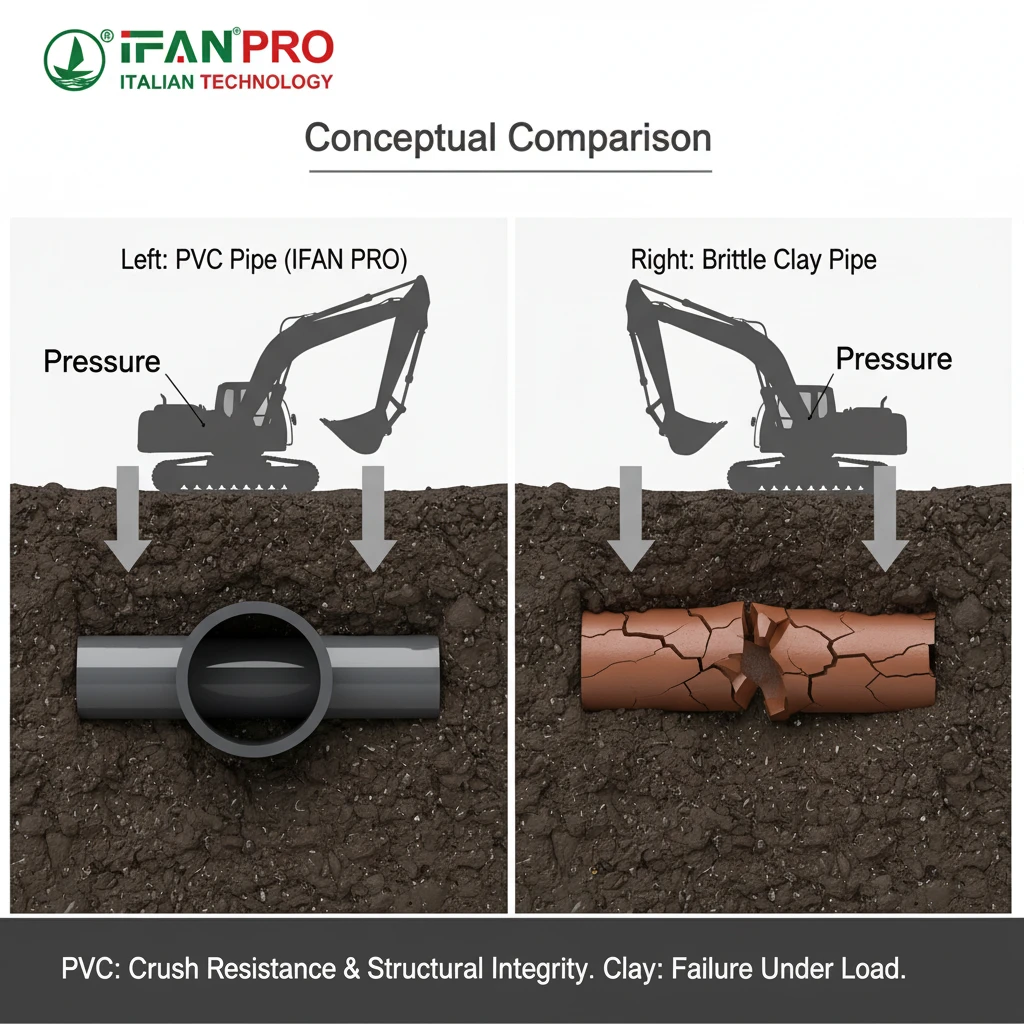
The maximum flow capacity of a PVC drainage pipe depends on its diameter, slope, and smoothness. For example, a standard 4-inch PVC pipe at a 1% slope can carry approximately 10 gallons per minute (GPM). Larger diameters like 6-inch or 8-inch pipes can handle exponentially greater volumes, easily managing runoff from large roof areas or paved surfaces.
Understanding Flow Capacity Factors
Flow capacity tells us how much water a pipe can move in a given time. For PVC pipes, this capacity is generally excellent for residential and commercial drainage. Three main factors work together to determine the final number.
First, the pipe diameter is the most obvious factor. A wider pipe simply has more space for water to flow through. But the relationship isn’t linear; doubling the diameter increases the cross-sectional area by four times, allowing for a much larger flow increase.
Second, the slope or gradient of the pipe is critical. Water flows faster and in greater volume down a steeper slope. Plumbing codes specify minimum slopes for different pipe sizes to ensure adequate self-cleaning velocity and flow capacity.
Third, PVC has a very low roughness coefficient. The inner wall is extremely smooth, which means water flows over it with very little friction. This smoothness allows water to move faster compared to rougher materials like corrugated metal or concrete, giving PVC a higher capacity for its size.
Key Calculations and Standards
Engineers use a standard formula called the Manning Equation to calculate flow. This formula considers the slope, diameter, and roughness of the pipe. PVC’s smoothness gives it a favorable Manning’s ‘n’ value of about 0.009 to 0.011, which is one of the lowest among common drainage materials.
Here is a simplified reference table for flow rates under typical residential drainage slopes:
| PVC Pipe Diameter | Minimum Slope (Code) | Approximate Flow Capacity (GPM) |
|---|---|---|
| 3-inch | 1/4″ per foot (2%) | ~ 8 GPM |
| 4-inch | 1/8″ per foot (1%) | ~ 10 GPM |
| 6-inch | 1/8″ per foot (1%) | ~ 30 GPM |
| 8-inch | 1/8″ per foot (1%) | ~ 70 GPM |
Putting Capacity into Practice
So, what does this mean for handling rain? A 4-inch downspout pipe from a roof can handle the runoff from about 1,200 square feet of roof area during intense rainfall. For main collection lines or yard drains, 6-inch or 8-inch pipes are standard. They can collect water from multiple sources and carry it away quickly. The key is to correctly calculate the total runoff area and choose a pipe size with a comfortable margin of safety above the expected flow. This prevents overloading and potential backup during the heaviest storms.
How Does PVC Pipe Strength Prevent Collapse During Heavy Rainfall Runoff?
A pipe that cracks or collapses under soil and water pressure is useless. Structural integrity is non-negotiable.
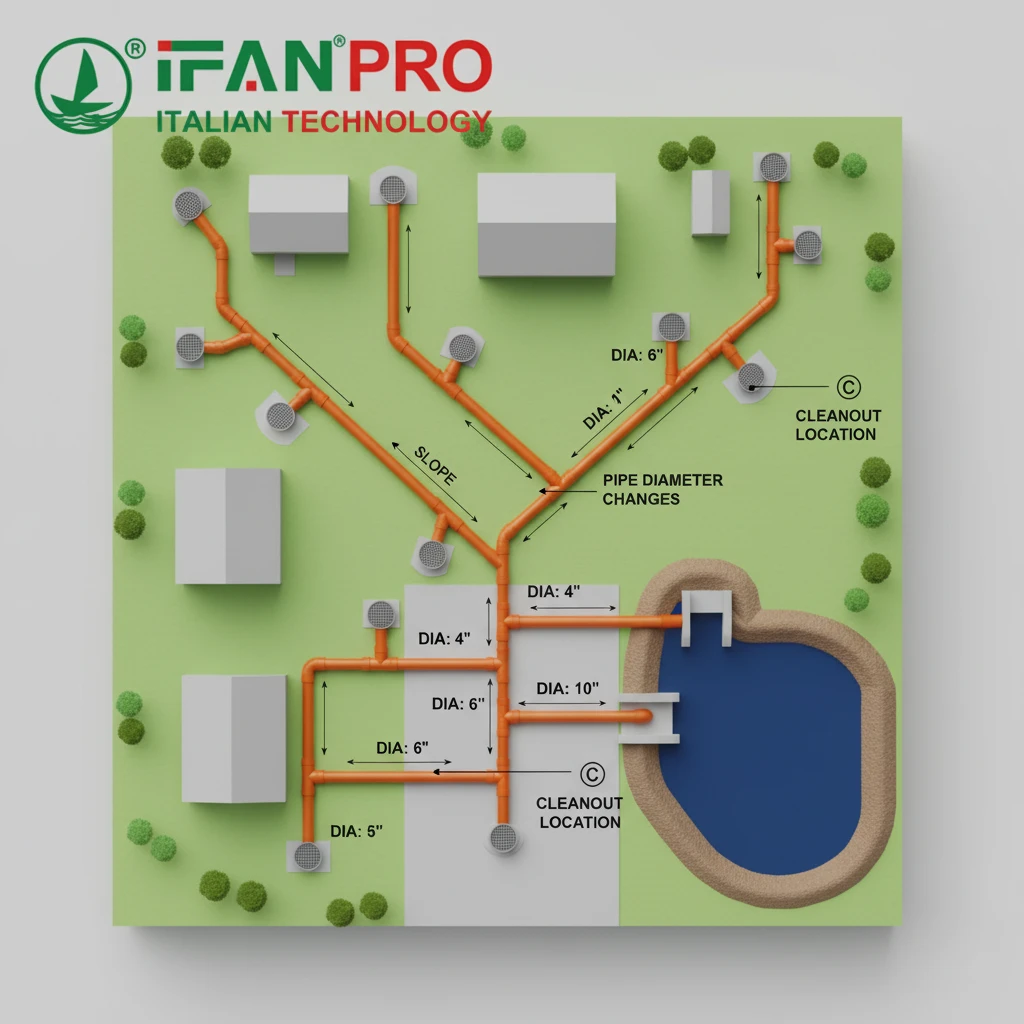
PVC pipe strength prevents collapse through its rigid, durable construction and high ring stiffness. This allows it to withstand the substantial external pressure from wet soil and surface loads during heavy rain without deforming. Proper bedding and installation further protect the pipe, ensuring the system remains intact and functional under stress.
The Science of Pipe Strength
When the ground is saturated from heavy rain, the pressure on buried drainage pipes increases significantly. PVC pipes are engineered to resist this pressure through two main strength properties: crush strength and ring stiffness.
Crush strength is the maximum load a pipe can withstand before it physically cracks. PVC pipes have high tensile and compressive strength due to their material properties. Ring stiffness measures a pipe’s resistance to deformation under external radial pressure—essentially, how well it keeps its round shape when buried. PVC scores highly here, too.
Material and Wall Thickness
PVC pipes come in different strength classes, most commonly Schedule 40 and Schedule 80. Schedule 40 is standard for most underground drainage applications. Schedule 80 has a thicker wall, offering higher pressure ratings and crush strength for areas with very deep burial or heavy traffic loads.
The table below compares common drainage pipe materials for collapse resistance:
| Pipe Material | Key Strength Feature | Vulnerability During Heavy Rain |
|---|---|---|
| PVC (Solid Wall) | High ring stiffness, crush strength | Excellent resistance; can fail if improperly bedded or damaged. |
| Corrugated Metal | High tensile strength | Can corrode over time, weakening the structure. |
| Clay | High compressive strength | Brittle; can crack under shifting, saturated soil. |
| Corrugated Plastic (HDPE) | Flexible, good crush strength | Can deform (ovalize) under high, uneven loads. |
The Role of Proper Installation
Strength isn’t just about the pipe itself; installation is half the battle. A perfectly strong pipe can fail if installed incorrectly. The concept of “bedding” is crucial.
A proper installation involves:
- Trench Preparation: Excavating a trench with a flat, stable bottom.
- Bedding Layer: Placing and compacting a layer of granular material (like sand or small gravel) to create a uniform, supportive base. This prevents point loads that can crack the pipe.
- Backfilling: Carefully placing and compacting backfill material in layers around the pipe. The first 6-12 inches over the pipe should be free of large rocks and carefully compacted.
This system distributes earth and surface loads evenly around the pipe, allowing its inherent strength to work effectively. During heavy rainfall, the soil load increases, but a well-installed PVC pipe in a stable trench will maintain its shape and continue to function.
What Drainage System Design Optimizes PVC Pipes for Rainfall Runoff?
Even the best pipes can fail in a poor design. A smart layout is what turns individual pipes into a high-performance system.
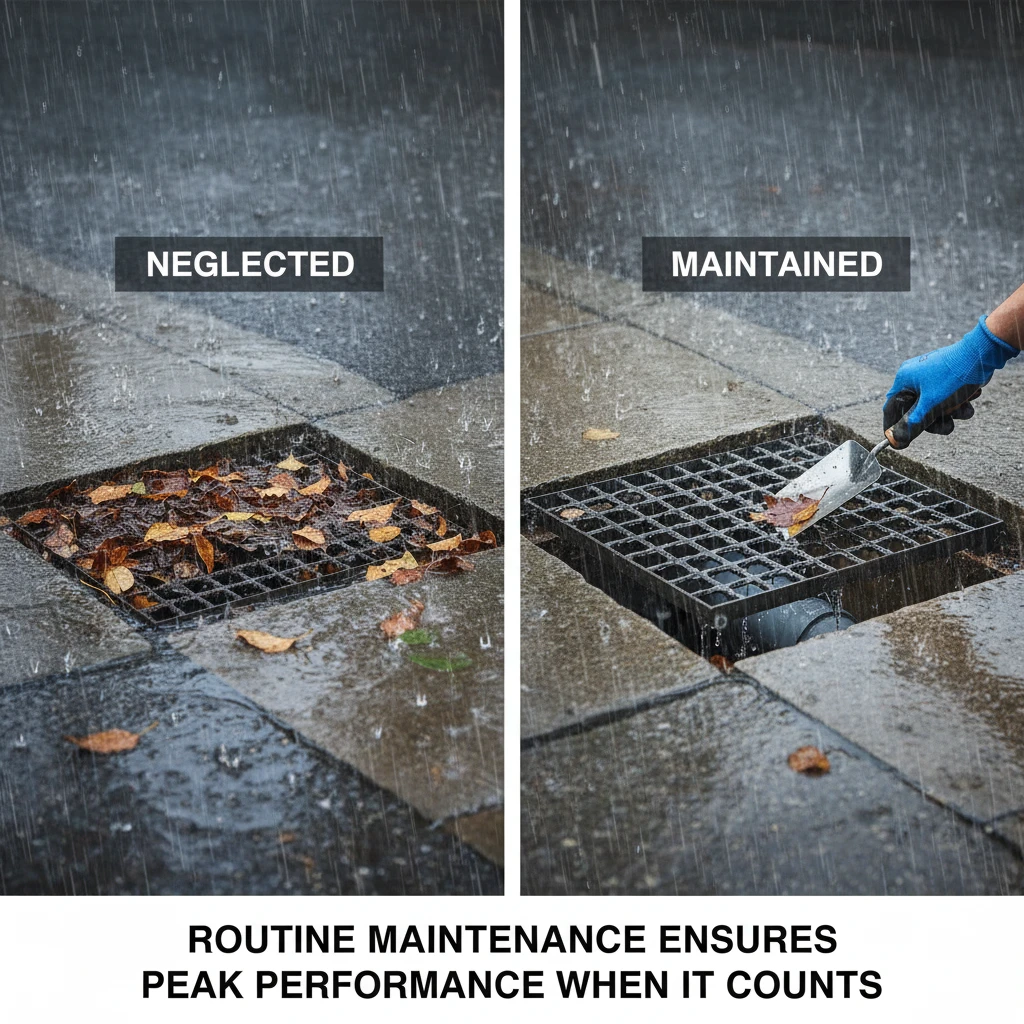
A drainage system design that optimizes PVC pipes for rainfall runoff uses correctly sized pipes, adequate slope, minimal bends, strategic placement of cleanouts, and integrates complementary components like catch basins and grates. This design efficiently captures, consolidates, and redirects water away from protected areas without bottlenecks.
Principles of Efficient Drainage Design
Designing for heavy rain is about managing volume and speed. The goal is to move water away quickly before it accumulates. A good PVC system design follows several key principles.
First, you must calculate the peak runoff. This involves understanding the total “catchment area” (like roof or pavement square footage) and the maximum expected rainfall intensity for your region. This calculation determines the required flow capacity for each section of pipe.
Second, the layout should be as direct as possible. Every bend or turn creates friction and slows water down. Long, straight runs with gentle slopes are most efficient. When bends are necessary, use long-radius elbows instead of sharp 90-degree turns to maintain better flow.
Key Components of an Optimized System
A complete system is more than just pipes in the ground. It includes several key parts that work together:
- Catch Basins and Grates: These are the entry points. They should be sized and placed in all low spots where water pools. Grates prevent large debris from entering.
- Pipe Network: This is the main artery. Pipes should increase in diameter as they move downstream and collect water from more sources. A typical design might use 4-inch pipes from downspouts that feed into 6-inch lateral lines, which then connect to an 8-inch main line.
- Cleanouts: These are access points installed at regular intervals (e.g., every 50 feet) and at every major direction change. They are essential for future maintenance to clear blockages.
- Outlet: The final point where water is safely discharged, such as a storm sewer, dry well, or approved drainage ditch.
Design Parameters Table
Here is a simplified design checklist for a residential PVC storm drainage system:
| Design Parameter | Recommendation | Purpose |
|---|---|---|
| Pipe Slope | Minimum 1/8″ per foot (1%); prefer 1/4″ per foot where possible. | Ensures self-cleaning velocity and adequate flow. |
| Pipe Sizing | Size up based on calculated peak runoff + safety margin. | Prevents overflow and backup during intense rain. |
| Cleanout Spacing | Install at every 50 ft and at every bend > 45 degrees. | Allows for easy access to clear clogs. |
| Bedding Material | Use compacted sand or fine gravel. | Provides uniform support to prevent pipe stress. |
| Catch Basin Placement | Install in all grade low points and under downspouts. | Captures surface water efficiently at the source. |
Finally, consider the discharge point. You must ensure the outlet can handle the increased volume during a storm. Also, in some cold climates, designers must consider burying pipes below the frost line to prevent freezing and blockage in winter storms. A well-designed system thinks about the entire path of the water from collection to disposal.
How Can PVC Drainage Maintenance Ensure Performance in Heavy Rainfall?
A neglected system will fail when it’s needed most. Simple, regular maintenance is the key to long-term reliability.
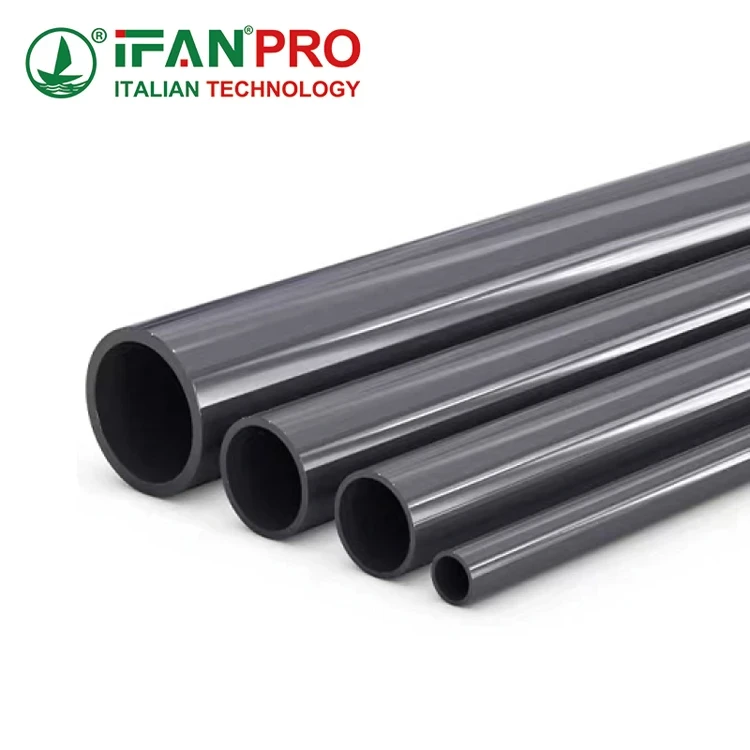
Regular PVC drainage maintenance ensures performance in heavy rainfall by proactively preventing blockages that reduce flow capacity. This involves inspecting and cleaning grates, flushing pipes through cleanouts, and removing debris from catch basins to keep the entire system clear and ready to handle sudden, high-volume runoff.
The Importance of Preventative Care
Heavy rainfall puts immediate, maximum demand on a drainage system. If the system is even partially blocked, the water will find another path—often into your basement or across your landscape. Maintenance for PVC systems is fortunately straightforward because of the material’s smoothness and the use of access points like cleanouts.
The main enemy of any drainage system is debris. Leaves, dirt, sand, plastic bags, and even tree roots can enter through grates and gradually build up, restricting flow. Over time, this buildup can completely block a pipe, rendering it useless.
A Step-by-Step Maintenance Routine
A good maintenance plan involves seasonal and annual tasks. Here is a practical routine:
Seasonally (Spring and Fall):
- Inspect and Clean Grates and Catch Basins: Remove all leaves, silt, and trash from the surface grates. Then, use a shovel or scoop to remove accumulated sediment from the bottom of the catch basins. This prevents debris from entering the pipes.
- Visual Inspection: After cleaning, run a hose into the basin and watch the outlet pipe. The water should drain quickly and smoothly. Slow drainage indicates a blockage downstream.
Annually or After Major Storms:
- Cleanout Flushing: Attach a garden hose with a high-pressure nozzle to each cleanout. Turn on the water and blast it through the pipes in both directions to dislodge and flush out any accumulated silt or fine debris.
- Camera Inspection (for persistent issues): For large systems or recurring problems, a small waterproof camera can be snaked through cleanouts to visually inspect the interior of pipes for cracks, offsets, or root intrusion.
Common Problems and Practical Solutions
Even with maintenance, problems can occur. Here’s how to address common issues:
| Problem Symptom | Likely Cause | Practical Solution |
|---|---|---|
| Water pools around drain grates. | Grate or catch basin is full of debris. | Remove grate and clean out the basin completely. |
| Water backs up from a cleanout. | Blockage between that cleanout and the outlet. | Use a drain snake or pressure washer from the next cleanout downstream. |
| Multiple drains are slow. | Blockage in the main line. | Locate the main cleanout and snake it, or use a professional jetter. |
| Sinkhole or depression forms over pipe. | Pipe may have collapsed or joint failed. | Requires excavation and repair of that pipe section. |
Proactive Tips for Longevity
Besides cleaning, you can take steps to reduce maintenance needs:
- Install Grate Guards: Use fine mesh screens or leaf traps over catch basins in areas with many trees.
- Mind the Landscaping: Avoid planting trees with invasive root systems near drainage lines.
- Keep Records: Have a simple map of your drainage system showing pipe runs and cleanout locations. This saves time during maintenance or emergencies.
Consistent maintenance ensures that when heavy rain comes, your PVC drainage system operates at 100% of its designed capacity, effectively protecting your property from water damage.
Conclusion
A well-designed and maintained PVC drainage system is fully capable of managing heavy rainfall runoff. For durable, high-flow PVC pipes and fittings that form the backbone of a reliable system, specify IFAN for your next drainage project.










 Français
  English
  Русский
  Español
Commentaires récents