
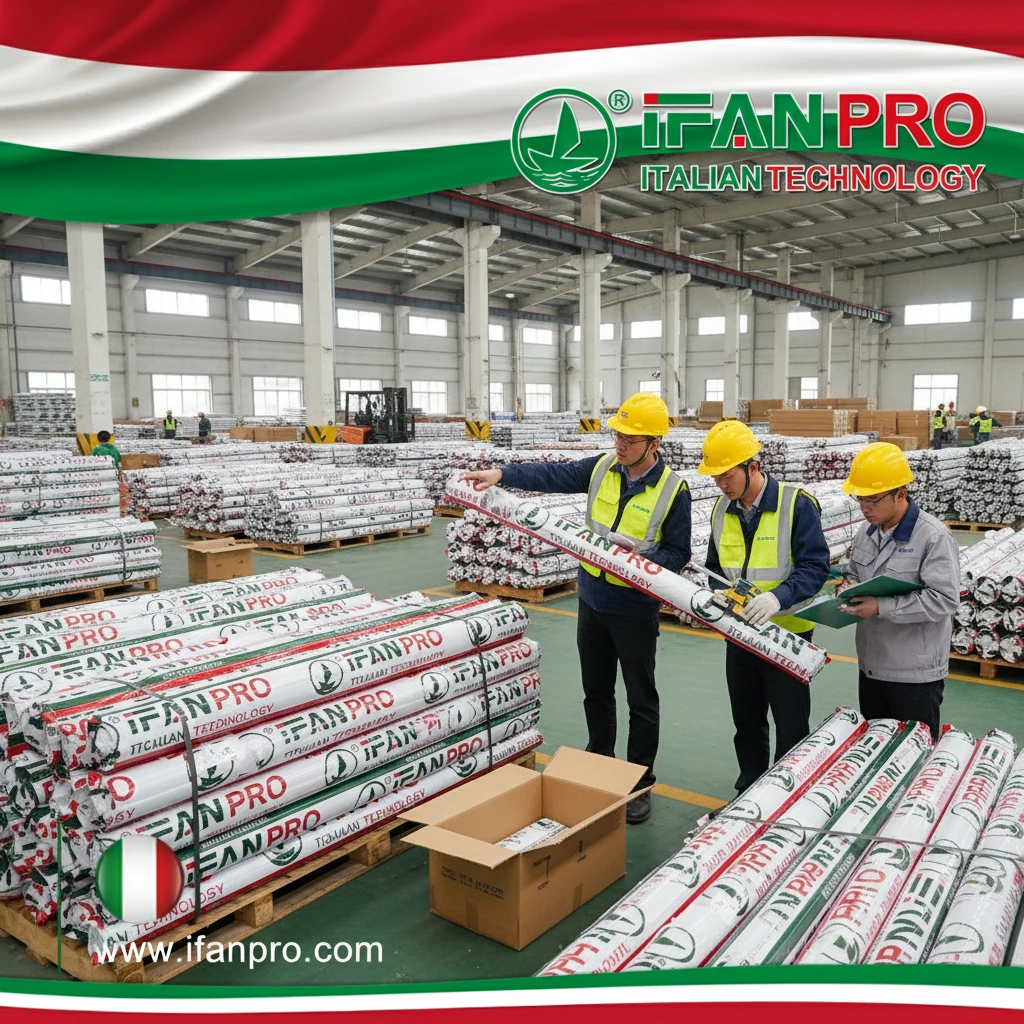
I once managed a bulk order where the pipes failed a simple dimension check, causing massive project delays. This pain point is why I developed a systematic quality assurance process.
To ensure quality in bulk pipe orders, you must implement a multi-stage verification system that covers supplier audits, on-site inspections, certified lab testing, and real-time production monitoring. This layered approach prevents defects, ensures specifications are met, and protects your investment from costly failures.
Let me break down this system into actionable steps based on years of field experience, specifically addressing the common pitfalls in bulk sourcing.
How Do You Audit and Qualify Pipe Suppliers for Bulk Order Quality?
Finding a supplier is easy; finding a reliable one for bulk orders is the real challenge. Many buyers skip this step and pay the price later.
You audit and qualify pipe suppliers by thoroughly evaluating their manufacturing capabilities, quality management systems, and production track record. This involves checking factory certifications, auditing physical facilities and machinery, reviewing past client references, and assessing their raw material sourcing policies before any order is placed.
The Pre-Qualification Checklist
A proper supplier audit is not just a website check. It is a deep dive into their operational backbone. The goal is to answer one question: Can they consistently produce the quality I need, at my volume?
First, start with documentation. Request and verify key certificates. A factory with ISO 9001 certification has a documented quality management system, which is a good baseline. For specific products like PPR or PVC pipes, look for product-specific certifications like NSF, WRAS, or CE marks, depending on your target market. These prove the product has passed independent performance tests.
Next, move to the factory visit. This is non-negotiable for bulk orders. You need to see their capability firsthand.
Critical On-Site Audit Points
During the visit, focus on these areas:
- Production Lines: Are the machines modern and well-maintained? Is the production floor organized and clean? Observe the extrusion process for pipes. Inconsistent temperature or speed can lead to weaknesses in the pipe wall.
- Raw Material Warehouse: Ask to see the raw material (PPR granules, PVC compound). Reputable suppliers use branded, virgin materials. Check the bags for labels. The use of recycled or mixed-grade material is a major red flag for bulk order consistency.
- Quality Control Station: Do they have a dedicated QC area with testing equipment? Look for basic tools like calipers, a hydrostatic pressure tester, and a dimension gauge. If they perform no in-house tests, they cannot control quality.
- Finished Goods Warehouse: Check how finished pipes are stored. They should be stacked properly on flat pallets, protected from sun and dust, and clearly labeled by batch.
Supplier Scoring Table
Create a simple scoring system to compare potential suppliers objectively.
| Audit Category | What to Look For | Weight | Score (1-5) |
|---|---|---|---|
| Management & Certificates | Valid ISO 9001, product certifications, export experience. | 20% | |
| Facility & Equipment | Modern, maintained extrusion lines; clean, organized plant. | 25% | |
| Raw Material Control | Use of certified, virgin materials; proper storage. | 25% | |
| In-House QC Capacity | Functional lab for pressure, dimension, and visual tests. | 20% | |
| Reference & Track Record | Positive client references for similar bulk orders. | 10% | |
| Total Score | 100% |
Finally, talk to their past clients. A reliable supplier will provide references. Contact them and ask about on-time delivery, defect rates, and how problems were resolved. This due diligence upfront is the strongest shield against quality disasters in bulk purchasing.
What On-Site Inspections Verify Pipe Quality Before Bulk Order Shipment?
Even a qualified supplier can have a bad production run. The inspection before shipment is your final safety net to catch problems while they are still at the factory.
On-site inspections before shipment verify critical quality aspects like dimensional accuracy, visual appearance, pressure rating performance, and packaging. A professional inspector performs random sampling based on international standards (like AQL) to check if the bulk order meets your agreed specifications and is ready for shipment.
The Inspection Sampling Plan
You cannot check every single pipe in a bulk order of thousands. Instead, you use a statistically valid sampling plan. The most common standard is AQL (Acceptable Quality Level). For industrial materials like pipes, an AQL of 1.0 for critical defects (like failed pressure tests) and 2.5 for major defects (like serious dimensional errors) is often used. An inspector will randomly select a sample size from the total order quantity based on these AQL tables to determine if the entire batch passes or fails.
The inspection itself is a hands-on process targeting key failure points.
Key Verification Checks During Inspection
The inspector will perform a series of checks on the sampled pipes:
- Visual and Dimensional Check: This includes measuring outer diameter (OD), wall thickness, and length with calipers to ensure they are within the tolerance range (e.g., ±0.1mm). They also check for visual defects like bubbles, discoloration, scratches, or contamination on the inner and outer surfaces.
- Hydrostatic Pressure Test: This is the most critical performance test. A sample pipe section is placed in a pressure tester, filled with water, and subjected to a pressure higher than its rated pressure (e.g., 2.5 MPa for a 2.0 MPa rated pipe) for a set time. The pipe must not rupture, leak, or show deformation. This test proves the pipe’s structural integrity.
- Heat Reversion Test (for PPR): A small ring of the pipe is placed in an oven for a set time. This test checks for material quality; poor or recycled material will cause the ring to distort or shrink excessively.
- Packaging and Marking Check: The inspector verifies that pipes are packed securely on pallets to prevent damage during sea freight. They also check if the printing on the pipe (size, rating, standard, batch number) is clear, correct, and permanent.
Common Defects Found in On-Site Inspections
Here are typical problems an inspection can catch before you pay:
| Defect Type | What It Is | Why It’s a Problem |
|---|---|---|
| Dimensional Out-of-Tolerance | Wall thickness or diameter is too thin or too thick. | Affects pressure rating and compatibility with fittings; can cause system failure. |
| Visual Defects | Bubbles, black spots, lines on the pipe surface. | Indicates poor material mixing or extrusion process; weak points. |
| Poor Printing | Faded, incorrect, or easily wiped-off markings. | Causes issues during installation and fails compliance checks on-site. |
| Incorrect Packaging | Loose bundling, lack of corner protection on pallets. | Leads to widespread damage during transportation, rendering the order useless. |
By catching these issues at the source, you force the supplier to sort, rework, or replace defective goods before they are shipped. This saves you from the logistical nightmare and cost of receiving, returning, or disposing of faulty products in your own country.
Which Test Reports Confirm Pipe Performance for Bulk Order Specifications?
Relying on a supplier’s word is risky. Certified test reports from independent labs provide the scientific proof that your pipes will perform as promised.
Test reports from accredited third-party laboratories confirm key pipe performance metrics like long-term hydrostatic strength, thermal stability, chemical resistance, and dimensional compliance against international standards such as ISO, ASTM, or EN. These reports are objective evidence that the material and manufacturing process meet the required specifications for your project.
Understanding the Different Types of Reports
There are generally two types of reports: a generic factory “Type Test Report” and a project-specific “Batch Test Report.” The Type Test Report is based on intensive testing done once to certify a product formula or model. It is valid for a longer period. However, for bulk orders, you should insist on a Batch Test Report (also called a Mill Test Report or Certificate of Analysis). This report is specific to the production batch from which your order is being filled, proving that particular batch meets the standard.
The most critical tests in these reports validate the pipe’s core functionality.
Breakdown of Critical Performance Tests
- Hydrostatic Strength Test: This is the most important. It doesn’t just test for bursts at high pressure. The Long-Term Hydrostatic Strength (LTHS) test subjects pipes to constant pressure at elevated temperatures (e.g., 20°C, 60°C, 95°C) for thousands of hours. The data predicts the pipe’s lifespan under pressure. The report will show a graph (stress vs. time to failure) proving the pipe meets the minimum required strength (MRS) rating, like PPR Class 1.25 MRS.
- Thermal Stability Tests: For hot water pipes like PPR, tests like the Thermal Cycling Test simulate years of heating and cooling cycles to ensure the pipe and its joints do not degrade or leak.
- Material Composition Tests: Techniques like FTIR (Fourier-Transform Infrared Spectroscopy) verify that the plastic is the correct type (e.g., PPR, not a cheaper substitute like PPH or PPB) and that it is virgin material, not contaminated with excessive recycled content.
- Density and Melt Flow Rate (MFR): These tests check the consistency of the raw material. Consistent density and MFR ensure uniform extrusion and consistent mechanical properties throughout the pipe length.
Essential Information in a Valid Test Report
A credible test report must include specific details. Don’t accept a generic, unnamed PDF.
| Report Section | What It Should Contain | Why It Matters |
|---|---|---|
| Lab Information | Name, accreditation logo (e.g., CNAS, ILAC). | Proves the lab is competent and internationally recognized. |
| Product & Client Info | Your company name, product description, order number. | Links the report directly to your purchase. |
| Sample Description | Unique batch number, production date, sampling method. | Proves the tested samples came from your specific order batch. |
| Test Standards | Referenced standards (e.g., ISO 15874, ASTM F2389). | Shows tests were done against the correct, agreed-upon rules. |
| Test Results | Clear PASS/FAIL status, actual measured values vs. limits. | Provides the objective evidence of compliance. |
| Signatures & Date | Authorized signature from the lab. | Validates the report’s authenticity. |
Always request these reports before shipment approval. They are your legal and technical assurance. For high-value or critical projects, you can even appoint a third-party inspector to witness the sampling and send samples directly to the lab, ensuring an unbroken chain of custody.
How Does Production Monitoring Maintain Quality in Bulk Pipe Manufacturing?
Quality cannot be inspected into a product at the end; it must be built in during manufacturing. For bulk orders, monitoring the production process itself is the key to consistency.
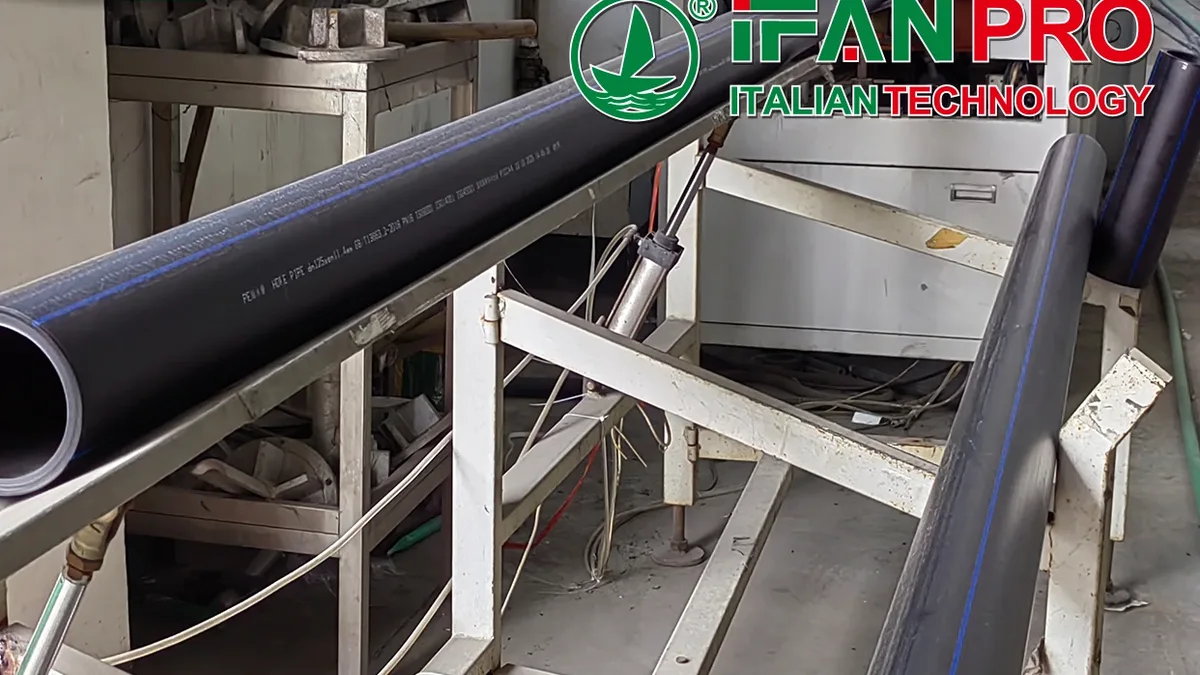
Production monitoring maintains quality by checking critical parameters like temperature, pressure, and speed during the extrusion process in real-time. It also involves regular checks of samples from the production line for dimensions and visual flaws. This allows for immediate corrections, preventing a single machine error from ruining an entire batch of pipes.
The Philosophy of Process Control
Think of it like baking a huge cake. You don’t wait until it’s baked to taste it; you check the oven temperature and the batter constantly. Similarly, production monitoring is about controlling the inputs and process variables to guarantee the output is correct. When you produce kilometers of pipe, a small drift in the machine settings can create hours of defective product before anyone notices at the final inspection.
A robust monitoring system focuses on two main areas: machine parameters and in-process product checks.
Key Parameters to Monitor on the Production Line
- Extrusion Parameters: The extruder machine must maintain strict settings:
- Temperature Zones: The barrel of the extruder has multiple heating zones. Each zone must be at a precise temperature to properly melt and homogenize the plastic granules. Too hot, and the material degrades; too cool, and it doesn’t mix well, causing weak spots.
- Screw Speed: This controls how much material is pushed through the die, affecting the pipe’s wall thickness and outer diameter.
- Haul-off Speed: This speed pulls the cooled pipe from the die. It must be perfectly synchronized with the extrusion speed to maintain consistent wall thickness.
- Cooling Process: Pipes must be cooled evenly in a water bath or spray chamber. Uneven cooling causes internal stress, making the pipe warp or become brittle.
In-Process Quality Checks (IPQC)
While the machine runs, a line technician performs regular checks, often every hour or at every shift change. This is called In-Process Quality Control (IPQC).
Typical IPQC Checks:
- Dimensional Check: The technician cuts a small ring from the newly produced pipe and measures the outer diameter and wall thickness at multiple points with a micrometer.
- Visual Check: They inspect a long section for any surface imperfections like lines, bubbles, or discoloration.
- Simple Functional Test: They might perform a quick crush test or a re-rounding test to check for ductility.
Production Monitoring Log Sheet Example
A disciplined factory will use a log sheet to track this data, creating a quality record for the production batch.
| Time | Batch No. | OD (mm) | Wall Thick. (mm) | Melt Temp (°C) | Visual Check | Technician |
|---|---|---|---|---|---|---|
| 08:00 | B-2415-A | 32.1 | 3.6 | 245 | OK | Zhang |
| 10:00 | B-2415-A | 32.0 | 3.5 | 243 | OK | Zhang |
| 12:00 | B-2415-A | 31.8 | 3.4 | 248 | Minor Line | Li |
| Action Taken | Adjust haul-off speed | Marked hour’s production for re-check |
As shown in the table, the 12:00 check showed a dimension starting to drift and a visual defect. The technician immediately adjusted the machine and quarantined the product from that period for a more thorough check. This prevents the defect from continuing and limits the amount of potentially faulty product.
For you as a buyer, you can request access to these production logs or have your inspector review them. It shows the factory is in control of its process, which is the ultimate guarantee of consistent quality for every meter of pipe in your bulk order.
Conclusion
Ensuring bulk pipe quality requires a system of audits, inspections, certified reports, and process monitoring. Partner with a professional like IFAN to implement this system, securing a reliable supply of high-quality pipes for your projects.










 Français
  English
  Русский
  Español
Commentaires récents