
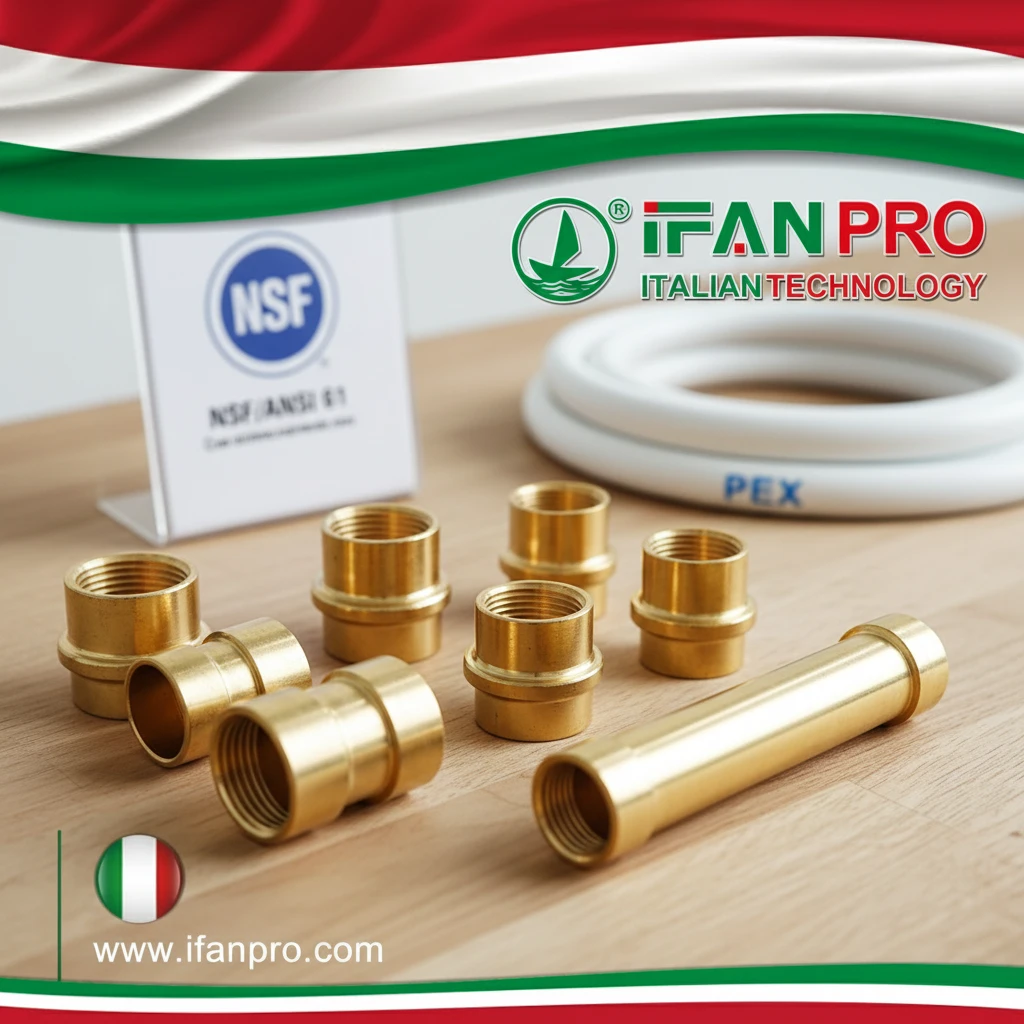
I once received a panicked call from a contractor; a fitting failure had flooded a nearly finished home. The culprit was a cheap, substandard brass fitting. That moment cemented my belief in the non-negotiable importance of quality materials, starting with lead-free brass.
Lead-free brass is the superior and safe choice for PEX crimp fittings because it eliminates the health risk of lead leaching into drinking water. This material also offers excellent durability, corrosion resistance, and reliable performance under pressure and temperature changes, making it the responsible standard for modern plumbing systems.
The crimp style is a trusted method, but its success depends entirely on using the right parts and tools. Let’s break down why lead-free brass matters and how to ensure a perfect, lasting installation.
What are the advantages of lead-free brass for PEX crimp fittings?
Choosing the wrong fitting material can risk both health and system integrity. The shift to lead-free brass is a critical advancement.
Lead-free brass offers key advantages for PEX crimp fittings: it ensures safe drinking water by meeting strict “lead-free” standards (containing less than 0.25% lead), provides superior strength and durability compared to plastic alternatives, and resists dezincification corrosion, which can cause fittings to fail over time.
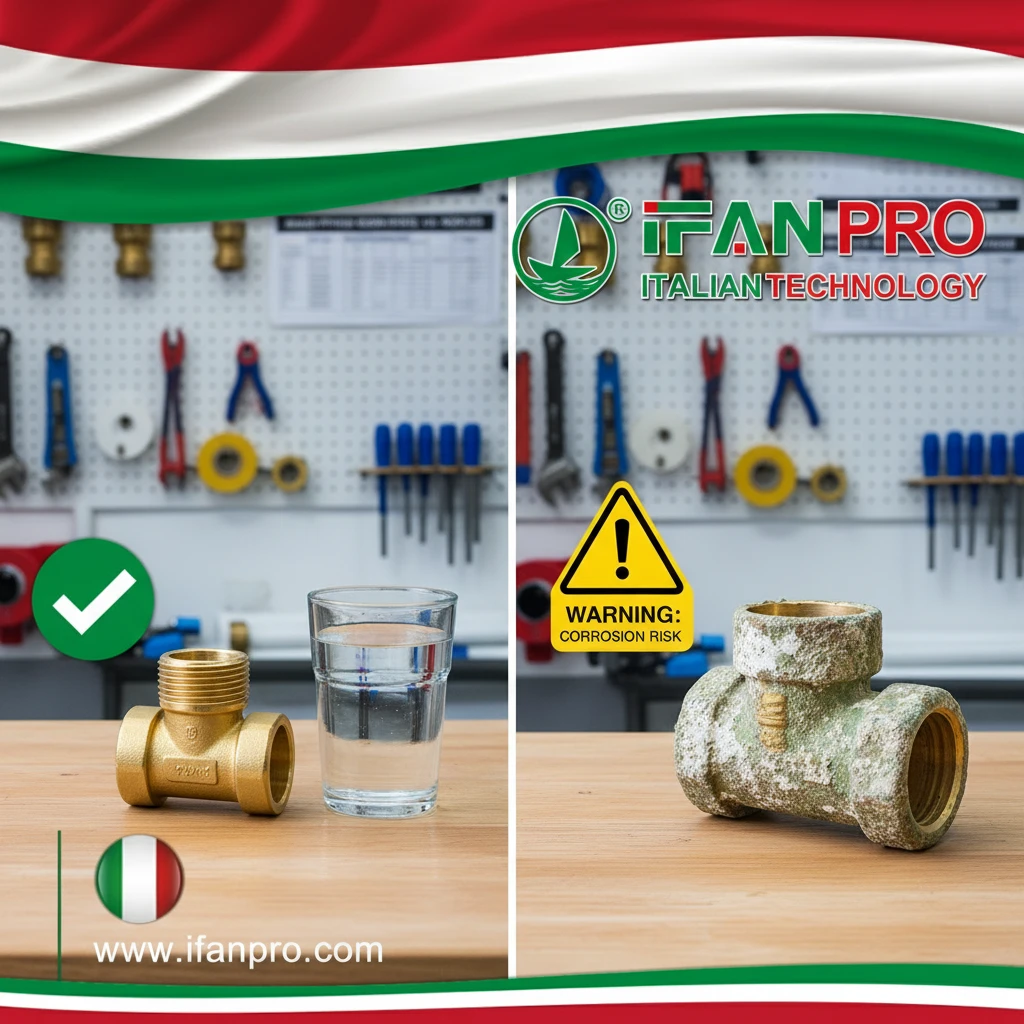
The Primary Advantage: Safety First
The most important advantage is health safety. Traditional brass alloys used to contain a significant percentage of lead to make them easier to machine. However, lead can leach from the fittings into the water, especially when water sits in the pipes for a long time. Lead is a toxic metal that can cause serious health problems. Lead-free brass is specifically engineered to contain less than 0.25% lead, as defined by laws like the U.S. Safe Drinking Water Act. This dramatically reduces the risk of lead contamination, ensuring the water in your home is safe for everyone, especially children.
Strength and Durability Benefits
Beyond safety, lead-free brass provides excellent mechanical properties. It is very strong and can handle the high pressure and temperature fluctuations common in home plumbing systems. This strength makes the crimp connection more secure. When you crimp a ring onto a brass fitting, the metal holds its shape and maintains a tight, permanent seal on the PEX pipe. Plastic or inferior metal fittings might deform, crack, or become brittle over time, but high-quality lead-free brass remains stable for decades.
Resistance to Corrosion
A major problem with some brass alloys is a type of corrosion called dezincification. In certain water conditions, the zinc in the brass can be slowly removed, leaving behind a weak, porous copper structure that can crumble or leak. Lead-free brass alloys, often called “DZR” (DeZincification Resistant) brass, are specially formulated to resist this process. This means the fitting will stay strong and intact inside, preventing catastrophic failures that can cause water damage.
Material Comparison for PEX Fittings
Not all fittings are created equal. Here is a clear comparison:
| Material Type | Key Advantages | Main Concerns | Best Used For |
|---|---|---|---|
| Lead-Free DZR Brass | Safe for potable water, very strong, corrosion-resistant, long-lasting. | Higher material cost than plastic. | All potable water applications, especially hot & cold supply. |
| Standard Brass (with lead) | Low cost, easy to machine. | Lead leaching risk, not compliant with modern codes for drinking water. | Not recommended for drinking water. |
| Polymer/Plastic | Low cost, completely lead-free. | Can be less durable, may not handle high heat as well, potential for creep over time. | Cold water lines, low-pressure applications. |
In summary, the advantages of lead-free brass are clear: it protects health, ensures system reliability, and provides long-term peace of mind. It is the professional standard for a reason.
Which tools are required for a proper crimp style PEX installation?
Trying to install crimp PEX without the right tools is a guaranteed path to leaks and frustration. A proper toolkit is your first step to success.
For a proper crimp style PEX installation, you need five essential tools: a PEX tubing cutter for a clean square cut, a deburring tool to smooth the pipe end, a go/no-go gauge to check the crimp depth, crimp rings, and a reliable, calibrated crimping tool (manual or battery-powered) that matches the ring and fitting size exactly.
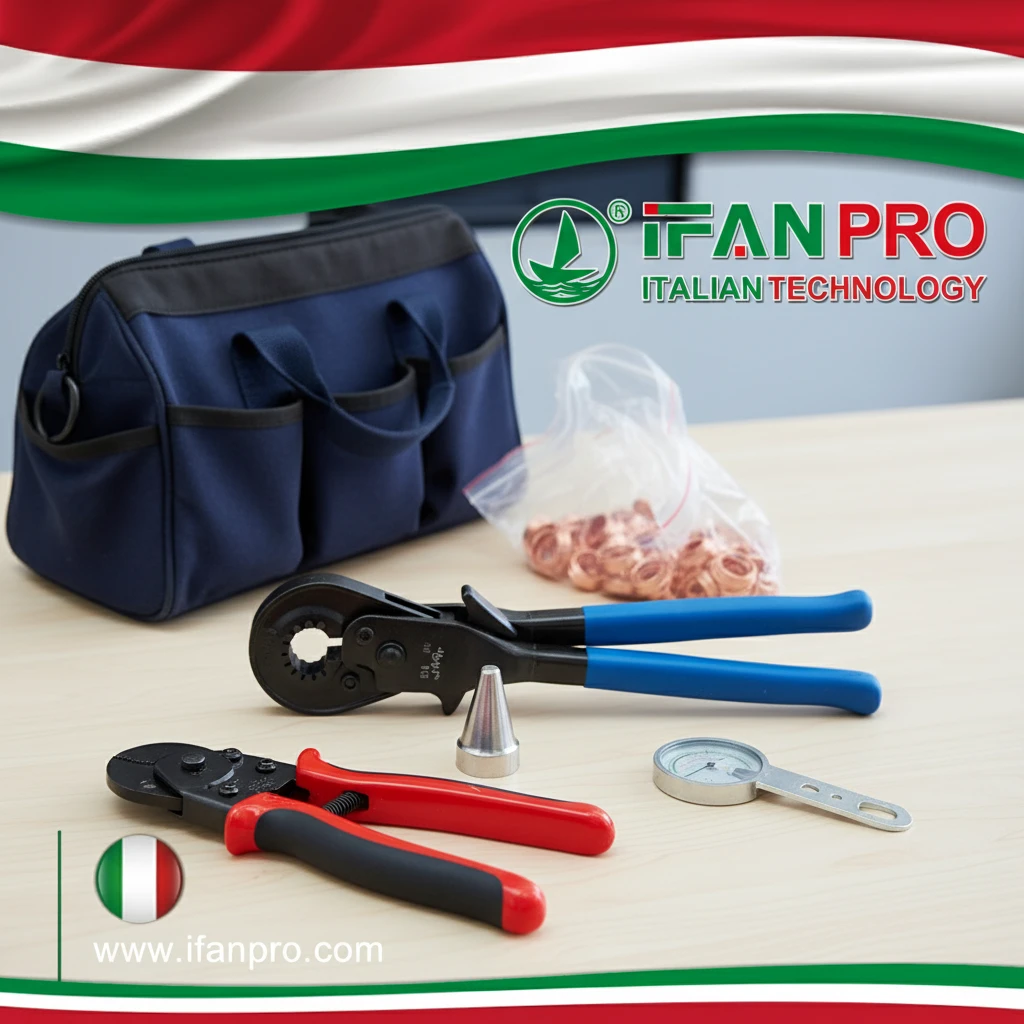
The Essential Tool List
You cannot make a reliable connection by improvising. Each tool has a specific job, and skipping any step risks a weak link in your system. Here is the complete list of what you need:
- PEX Tubing Cutter: This is not a regular saw. A ratcheting PEX cutter makes a perfectly square, clean cut in one second. A square cut is critical because if the pipe end is angled, it will not insert fully into the fitting, leaving a gap that will leak.
- Deburring/Chamfering Tool: After cutting, the inside and outside edges of the PEX pipe can have small rough burrs. These burrs can scrape against the fitting’s sealing O-ring as you push the pipe on, damaging it. A quick pass with a deburring tool smooths these edges.
- Crimp Rings: These are the circular copper or stainless steel rings that you slide onto the pipe before the fitting. When crushed, they create the permanent mechanical seal. They must match the size of your PEX pipe (e.g., 1/2-inch, 3/4-inch).
- Crimping Tool: This is the most important tool. It is a specialized pair of jaws that crushes the crimp ring with the exact right amount of force. The crimping tool must be matched to the brand and size of the crimp ring you are using. Using the wrong tool will create an under-crimped or over-crimped joint. Many professionals now use battery-powered crimp tools for speed and consistent force.
- Go/No-Go Gauge: This is a simple but vital quality-check tool. After you make a crimp, you slide this small, flat metal gauge over the crimped connection. One side (Go) should fit, and the other side (No-Go) should not fit. This instantly tells you if your crimp is within the correct tolerance range.
Tool Function and Importance Table
Here’s why each tool is non-negotiable:
| Tool | Its Specific Job | What Happens If You Skip It? |
|---|---|---|
| PEX Cutter | Creates a perfectly square, clean pipe end. | Angled cut prevents full pipe insertion; the fitting will leak. |
| Deburring Tool | Removes rough inner/outer edges from the cut pipe. | Burrs can cut or dislodge the fitting’s O-ring, causing a leak. |
| Crimping Tool | Applies precise, calibrated force to compress the crimp ring. | Wrong force creates a weak seal (leak now) or cracks the fitting (leak later). |
| Go/No-Go Gauge | Verifies the crimp diameter is correct. | You have no objective way to know if the connection is safe; relies on guesswork. |
Practical Tool Advice
My strong advice is to invest in a good quality toolkit. Do not use generic pliers or makeshift tools. A calibrated crimper ensures every connection gets the same, correct amount of pressure. Also, always perform the “go/no-go” test on your first few crimps of the day to confirm your tool is adjusted properly. Taking ten seconds to check can save you from hours of repair work later. Having the right tools makes the installation process fast, easy, and, most importantly, reliable.
How do you achieve a reliable and leak-proof crimp connection?
A leak-proof crimp is not about luck; it’s about following a precise, step-by-step process. Missing a single step can compromise the entire connection.
You achieve a reliable, leak-proof crimp connection by meticulously following a 5-step process: cut the pipe square, deburr the ends, fully insert the pipe into the fitting, position the crimp ring correctly, and use the calibrated tool to make a complete crimp, followed by verifying the crimp with a go/no-go gauge.
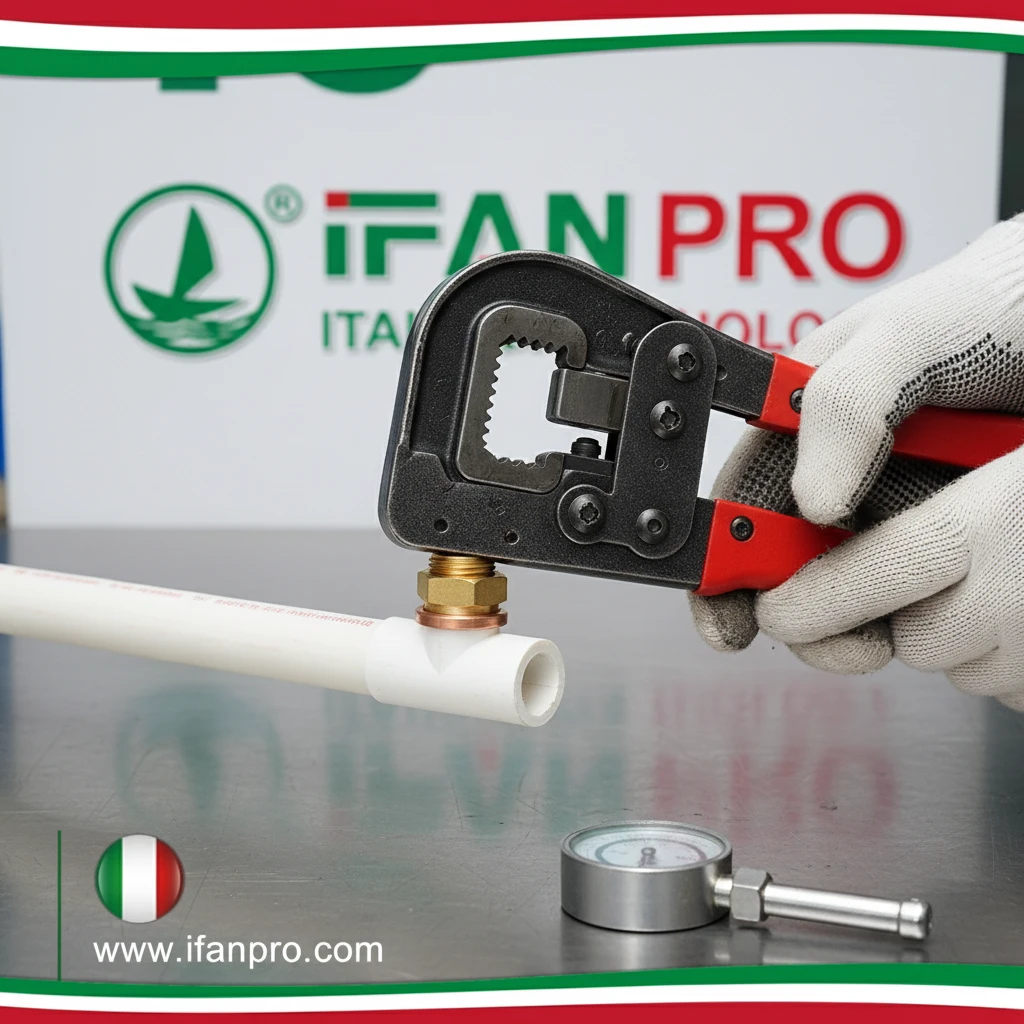
The Step-by-Step Crimping Process
Let’s walk through the correct procedure in detail. Each step builds on the last to create a perfect seal.
Step 1: Cut the PEX Tubing Square.
Use your dedicated PEX cutter. Place the tubing in the cutter’s jaws and make a smooth, firm cut. Look at the end of the pipe. It must be straight, not angled. An angled cut is the most common beginner mistake and will cause a leak 100% of the time.
Step 2: Deburr and Chamfer the Pipe End.
Take your deburring tool. Insert it into the cut end of the PEX pipe and give it 2-3 rotations. This shaves off the inner plastic burr. Then, use the outer chamfering edge to lightly bevel the outside corner. This makes it easier to slide the pipe over the fitting’s barbs without catching.
Step 3: Slide on the Crimp Ring and Insert the Fitting.
Before you do anything else, slide the crimp ring onto the pipe. Now, take your fitting. Align the pipe with the fitting and push it on firmly. You must push until the pipe reaches the shoulder of the fitting and will not go any further. You should see a small gap of bare pipe between the end of the crimp ring and the fitting’s shoulder. This visual check is crucial.
Step 4: Position the Crimp Ring and Crimp.
Slide the crimp ring so it is positioned about 1/8 to 1/4 inch from the end of the pipe, centered over the fitting’s barbed area. Open your crimping tool’s jaws, place them over the crimp ring, and squeeze the handles completely until they close and release. You should hear and feel a firm click. The crimp should be uniform and circular.
Step 5: Verify with the Go/No-Go Gauge.
This is your quality control. Take your gauge. Try to slide the “GO” side over the crimped ring. It should slide on with a slight drag. Then, try the “NO-GO” side. It should NOT fit over the crimp. If it does, your crimp is under-sized and will leak. You must cut out the fitting and try again.
Common Mistakes and How to Avoid Them
Even with good tools, errors happen. Here are the big ones to watch for:
- The Pipe is Not Fully Seated: This is the #1 cause of leaks. You must push hard until the pipe stops against the fitting shoulder. If you see a large gap, it’s wrong.
- Using the Wrong Size Crimp Ring or Tool: A 1/2-inch ring needs a 1/2-inch jaw. Mixing sizes from different brands is risky. Always use matched components.
- Damaging the O-Ring: Forcing the pipe on over sharp burrs or over-tightening the fitting during assembly can tear the rubber O-ring inside the fitting.
- Not Doing the Gauge Check: Never assume the crimp is good. Always verify with the gauge.
By following this disciplined process for every single connection, you build a plumbing system you can trust for years without worry about leaks.
What certifications ensure the safety of lead-free brass PEX fittings?
Not all “lead-free” claims are equal. Certifications from independent third parties are your only real proof that a fitting is safe and reliable.
The safety of lead-free brass PEX fittings is ensured by specific certifications, primarily NSF/ANSI 61 for low lead leaching and overall material safety, ASTM standards for material composition and performance, and regional codes like UPC (USA) or WRAS (UK) that approve the fittings for use in potable water systems.
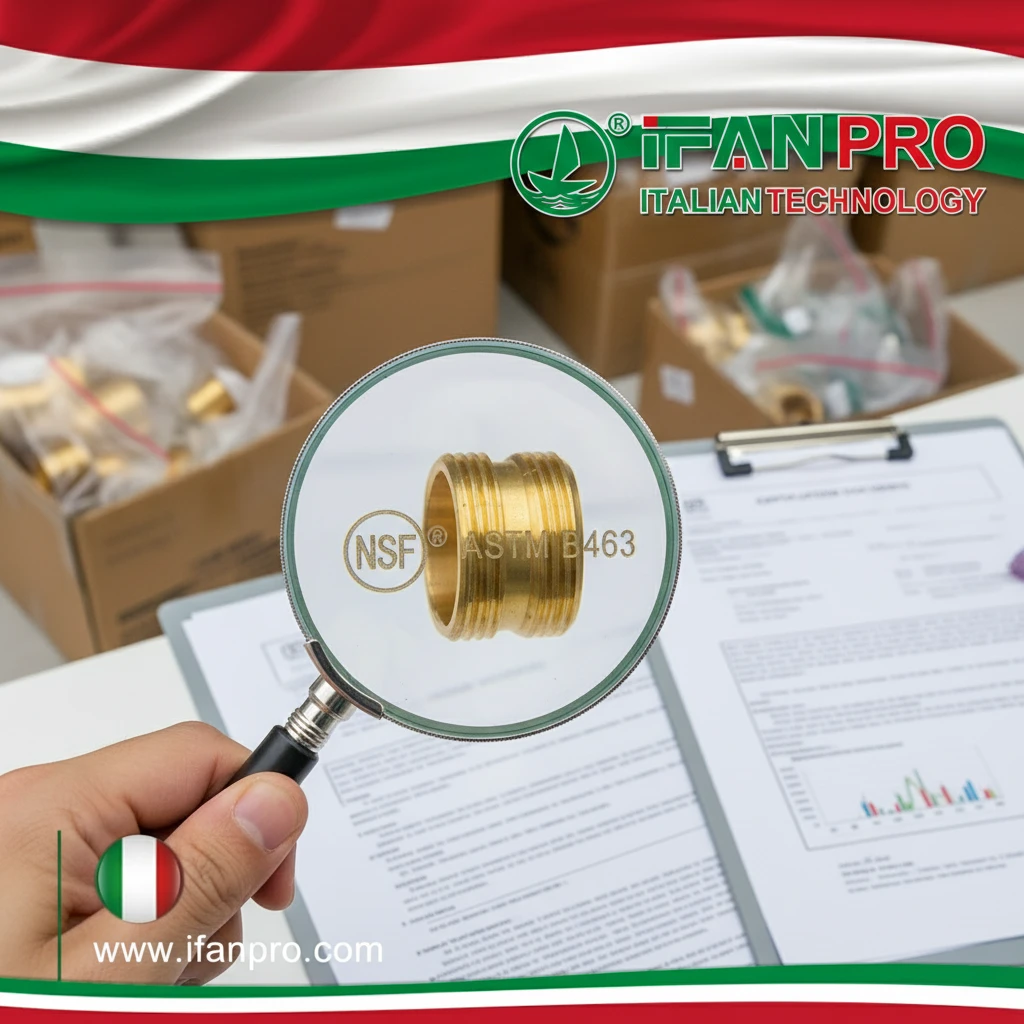
Understanding the Key Certifications
When you look at a fitting or its packaging, you should look for logos and standard numbers. These are not just marketing; they are evidence that the product has been rigorously tested.
NSF/ANSI 61: The Gold Standard for Health.
This is the most important certification for drinking water safety in North America. A product with the NSF/ANSI 61 mark has been tested in a lab to verify that it does not leach harmful levels of contaminants—including lead, but also other metals and chemicals—into the water. The “lead-free” aspect requires the fitting to be made from an alloy with less than 0.25% lead. Crucially, NSF certification also involves regular, unannounced audits of the manufacturing facility to ensure consistent quality. This means every batch of fittings should meet the same safe standard.
ASTM Standards: The Guarantee of Performance.
While NSF focuses on health, ASTM International standards define the material and performance requirements. The key standard for lead-free brass used in plumbing is ASTM B16. This standard specifies the exact chemical composition (like the percentages of copper, zinc, and other elements) required to make a true, corrosion-resistant DZR brass. Other ASTM standards might cover pressure ratings and dimensional tolerances. Together, they ensure the fitting is not only safe but also strong and durable.
Regional Plumbing Code Approvals.
Plumbing codes are laws that govern what materials can be used. In the United States, fittings must be approved for inclusion in the Uniform Plumbing Code (UPC) or International Plumbing Code (IPC). In the United Kingdom, the Water Regulations Advisory Scheme (WRAS) approval is required. These code approvals are often based on the product having the NSF and ASTM certifications first. Seeing a code approval means the fitting is legally accepted for use in that region.
A Guide to Key Certification Marks
This table explains what the common marks mean for you:
| Certification Mark | Who Grants It? | What It Specifically Means for the Fitter/Homeowner |
|---|---|---|
| NSF/ANSI 61 | NSF International (independent public health organization) | The product has been tested and will not contaminate drinking water. It is safe for health. |
| ASTM B16 | ASTM International (international standards organization) | The brass alloy meets strict material composition specs for strength and corrosion resistance. |
| UPC or IPC Listed | IAPMO or ICC (code bodies) | The product is approved for use under the local plumbing code. It is legal to install. |
| cUPC (for Canada) | Standards Council of Canada | The product is certified for use in Canadian plumbing systems. |
Why You Must Demand Certified Fittings
As a professional or a knowledgeable DIYer, you should always specify and purchase fittings that carry these certifications. They are your shield against liability and callbacks. Uncertified fittings from unknown sources may be cheaper, but they pose an unquantifiable risk. They might leach metals, corrode quickly, or fail under pressure, leading to expensive water damage and potential health hazards. By choosing certified lead-free brass fittings, like those from IFAN, you are choosing verified safety, reliability, and compliance.
Conclusion
Lead-free brass crimp fittings offer a safe, strong, and dependable solution for PEX plumbing when installed correctly with the right tools. For guaranteed quality and certified safety, specify IFAN‘s range of NSF/ANSI 61 certified lead-free brass PEX crimp fittings and compatible tools for your next project.






 Français
  English
  Русский
  Español
Commentaires récents