
Choosing between PEX fitting types comes down to one question every installer asks quietly on the drive home: which joint is going to call me back with a leak? Crimp, clamp, push-fit, and cold-expansion each solve the same problem — turning a length of flexible tubing into a pressure-tight system — but they do it with different rings, different tools, and very different failure profiles. Getting the pex crimp vs clamp decision right (and knowing when neither one is the answer) saves you warranty trips, callbacks, and the reputation hit that follows a ceiling stain.
This comparison breaks down all four connection systems the way a contractor evaluates them: tool cost, per-joint cost, which PEX grades each one accepts, flow restriction, and where each system belongs on a real job. If you want the wider picture on tubing grades, sizing, and code, start with our complete guide to PEX pipe and come back here to lock down the fitting decision.
Key Takeaways
- Crimp (ASTM F1807) is the cheapest joint on the truck — copper ring, one crimp tool per size range, works on PEX-a, PEX-b, and PEX-c. The catch: a go/no-go gauge is mandatory, and each nominal size wants its own die.
- Clamp/cinch (ASTM F2098) uses stainless ear clamps and one cinch tool for every size from 3/8″ to 1″. It shines in tight bays where a crimp tool can’t rotate — the ring costs a little more, but the flexibility usually wins.
- Push-fit needs no tool, pulls apart, and reuses — which makes it the fastest fix for repairs and retrofits. It is also the most expensive fitting per connection by a wide margin.
- Cold-expansion (ASTM F1960) works on PEX-a only, delivers the least flow restriction because the joint is close to full-bore, and carries the priciest tool. On long trunk runs it protects pressure that crimp joints quietly throttle.
- The tool locks in the crew, not the pipe. Standardize on a system before you standardize on a brand of tubing — switching fitting systems mid-portfolio means re-buying tools and retraining.
- Brass grade matters more than ring type for long-term reliability. Lead-free dezincification-resistant (DZR) brass resists the corrosion that pinholes cheap yellow-brass barbs in aggressive water — ask any supplier what alloy they pour before you ask their price.
The Four PEX Connection Systems
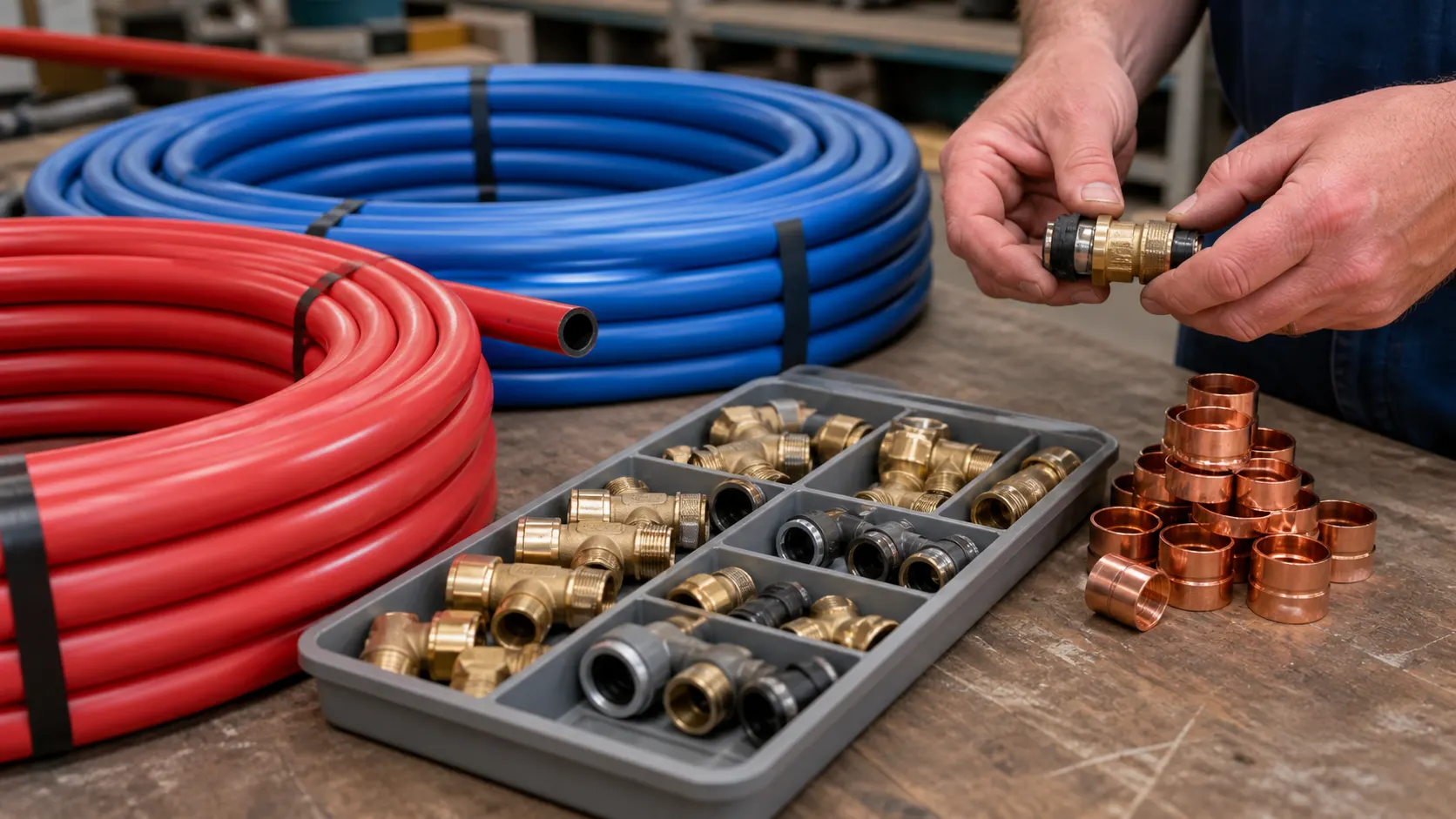
Four families of pex fitting types dominate North American and export markets, and each is governed by its own consensus standard. Knowing which standard a fitting carries tells you the tool, the ring, and the grades it accepts before you ever pick it up.
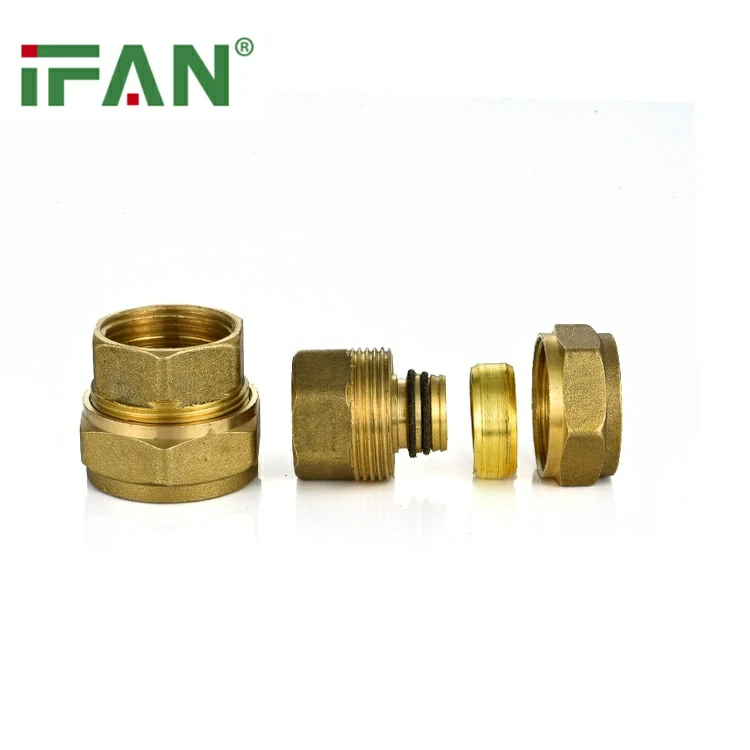
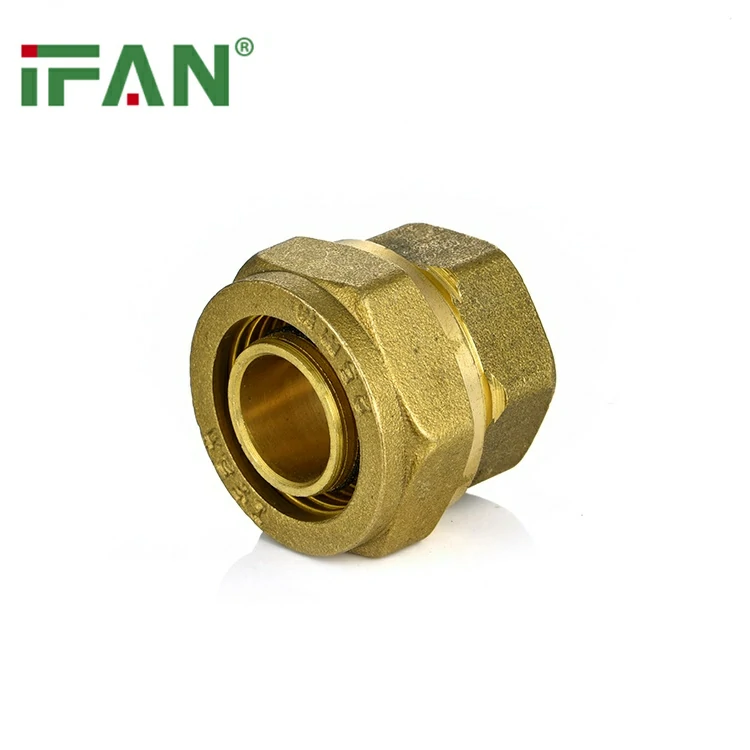
- Crimp (ASTM F1807): a barbed insert fitting sealed by a copper crimp ring compressed with a size-specific crimp tool — the low-cost workhorse.
- Clamp / cinch (ASTM F2098): the same barbed insert, sealed instead by a stainless-steel ear clamp that a single cinch tool closes across all common sizes.
- Push-fit: a mechanical fitting with an internal gripping ring and O-ring seal — no ring to add, no tool to buy, and it pulls apart for reuse.
- Cold-expansion (ASTM F1960): a fitting installed by expanding the tube and a reinforcing ring, then letting PEX-a’s shape memory shrink both back down over the barb — full-bore flow, PEX-a only.
Notice the split: three of these systems use an insert that narrows the pipe’s inside diameter, while cold-expansion keeps the bore nearly full. Hold that distinction — it drives the flow-restriction argument later and separates a comfortable choice from a costly one on long runs.
Crimp Fittings
Crimp is where most crews start, and for good reason. You slide a copper ring over the tube, push the barbed fitting home, position the ring 1/8″ to 1/4″ from the tube end, and squeeze a size-specific crimp tool until the ring deforms into a permanent seal. Per joint, this is the cheapest option in the PEX world — copper rings run pennies compared with stainless clamps or push-fit bodies.
The insider warning on crimp is the gauge. Every code jurisdiction that accepts F1807 expects you to check each crimp with a go/no-go gauge — the ring should pass the “go” slot and reject the “no-go” slot. Skip it and you are gambling: an under-crimped ring weeps within days under pressure cycling, and an over-crimped one can score the tube. A veteran plumber gauges the first few joints of every session to confirm the tool is still in calibration, because crimp dies drift with wear and cold weather.
The other cost buried in crimp is tooling. A basic crimp tool covers one size, so a crew handling 1/2″ and 3/4″ needs two tools or an interchangeable-die set. Crimp accepts every PEX grade — a, b, and c — which is why supply houses stock it deepest and why it remains the default for new-construction rough-in where speed and material cost dominate.
Clamp / Cinch Fittings
Clamp — often called cinch — uses the same barbed inserts as crimp but swaps the copper ring for a stainless-steel ear clamp. One cinch tool closes clamps across the full 3/8″ to 1″ range, which is the headline advantage. A crew running mixed sizes carries one tool instead of a kit, and the stainless ring shrugs off the corrosion that concerns some inspectors about copper in aggressive water.
Where clamp genuinely earns its keep is tight quarters. Picture a fitting three inches from a joist with a wall behind it. A crimp tool needs room to open its jaws around the full circumference of the ring; a cinch tool only has to reach the single ear on a clamp, so it works at angles a crimp tool can’t. In retrofit basements and cramped mechanical closets, that reach is the difference between one clean joint and cutting an access hole.
pex crimp vs clamp in one line: crimp wins on per-joint cost for high-volume new construction; clamp wins on tool simplicity and access in retrofits and tight framing. Both use ASTM barbed inserts, so the pipe grade compatibility is identical — a, b, and c all accept either ring.
The trade-off is ring cost. A stainless ear clamp costs more than a copper crimp ring, and on a job with thousands of joints that gap adds up. Clamp also has its own inspection discipline — the ear must be fully closed and centered, not cocked — so it swaps the crimp gauge for a visual-and-feel check rather than eliminating quality control.
Push-Fit Fittings
Push-fit fittings throw out the ring and the tool entirely. Inside the fitting, a stainless gripping ring bites the tube and an O-ring seals it; you deburr, mark your insertion depth, and push until it seats. That is the whole install. For a repair at 11 p.m. in a flooded crawlspace with no crimp tool in the van, push-fit is the fastest joint in plumbing.
Two properties make push-fit worth its premium. First, it is removable — a release clip or collar lets you pull the fitting off and reuse it, so a mistaken cut isn’t a wasted fitting. Second, most push-fit lines cross material boundaries, joining PEX to copper or CPVC with the same body, which is exactly what a retrofit throws at you. That versatility is why supply houses keep them behind the counter for emergency demand.
The consequence is price. A push-fit fitting can cost several times what a barbed insert plus ring costs, so nobody plumbs a whole house with them — the material bill would be brutal. Treat push-fit as a surgical tool: unbeatable for repairs, transitions, and access-restricted spots, financially irresponsible as a whole-system standard. Some inspectors also want push-fit joints left accessible rather than buried in a wall, so confirm local code before you close up.
Cold-Expansion (F1960) Fittings
Cold-expansion, standardized as ASTM F1960, works on one grade only: PEX-a. The install runs backward from what you’d expect. You slide a reinforcing ring over the tube, insert an expansion tool, expand tube and ring together several times, then quickly seat the fitting. PEX-a’s shape memory does the sealing — the stretched tube and ring shrink back down and clamp the barb with steadily increasing force over the following minutes.
The payoff is flow. Because the tube is expanded over the fitting rather than the fitting jammed inside a necked-down insert, F1960 joints keep a nearly full bore — the least flow restriction of any PEX system. On a manifold home with long home-run lines, that preserved diameter shows up as real pressure at the fixture. F1960 also holds well in freeze-prone lines because PEX-a’s elasticity gives the joint room to move.
Insider warning: in cold temperatures, PEX-a’s memory contracts slowly, so a rushed installer who pressure-tests immediately may see a fitting weep before it fully seats. Give expansion joints their published dwell time — especially below 40°F — before you charge the system.
The cost sits in the tool. A quality expansion tool — manual or battery — is the most expensive entry ticket of the four systems, and it only pays back at volume or when flow performance justifies it. Match this to the grade decision in our breakdown of which grade suits which fitting, because buying an expansion tool commits you to PEX-a tubing across the board. For the standard governing PEX-a tubing dimensions themselves, see ASTM F876.
Head-to-Head Comparison
Here is the whole field on one line each — the table a contractor actually prices a job from. Cost signals are relative to crimp as the baseline; local pricing and volume shift the exact numbers.
| System | Tool | Cost / joint | Grades | Flow / notes |
|---|---|---|---|---|
| Crimp (F1807) | Size-specific crimp tool + go/no-go gauge | Lowest | a, b, c | Insert necks the bore; gauge every joint |
| Clamp / cinch (F2098) | One cinch tool, all sizes | Low (ring slightly higher) | a, b, c | Same insert bore; best in tight spots |
| Push-fit | None | Highest | a, b, c (+ copper/CPVC) | Removable/reusable; repairs and transitions |
| Cold-expansion (F1960) | Expansion tool (priciest) | Medium | PEX-a only | Near full-bore; least restriction, dwell time |
Read the table as two clusters. Crimp and clamp are the volume systems — cheap joints, universal grade support, insert bores. Push-fit and expansion are the specialty systems — one for speed and reuse, one for flow and PEX-a performance. No single row wins every column, which is exactly why the next two sections matter more than the price tag.
Flow Restriction: The Hidden Cost of Insert Fittings
Here is the trade-off nobody sees at rough-in. Every barbed insert fitting — crimp and clamp alike — pushes a barb inside the tube, and that barb necks down the inside diameter at every joint. A 1/2″ crimp fitting can drop the effective bore noticeably at the connection. One joint is trivial. Twenty joints on a long trunk line stack up into measurable pressure loss at the far fixture.
Cold-expansion sidesteps this entirely. Because the tube expands over the fitting instead of choking down around an insert, F1960 joints stay close to full-bore — the reason expansion systems are the default when a designer is protecting flow on a manifold-fed layout. The Plastics Pipe Institute publishes flow and pressure-drop data that back this up for engineers who need to size against it; see the Plastics Pipe Institute resources, and the material background at cross-linked polyethylene.
Insider warning: if you commit to crimp or clamp on a long hot-water run or a high-demand branch, size the trunk up one nominal diameter. Going from 1/2″ to 3/4″ on the main run costs a little more pipe and buys back the head you lose to insert restriction. Skipping this is the number-one reason “the pressure feels weak” complaints trace back to fittings, not the pump.
This is where the fitting decision stops being a hardware detail and becomes a design decision. If flow is critical and budget allows the tool, expansion earns its premium. If crimp or clamp fits the wallet, protect the system by upsizing the trunk — don’t discover the loss after the drywall is up.
Which Connection Should You Standardize On?
Match the system to the work, not to the hype. The table below names a winner per use-case so you can standardize deliberately instead of drifting into whatever the supply house pushed last week.
| System | Best for | Not ideal for |
|---|---|---|
| Crimp | High-volume new construction, lowest material cost | Tight framing, mixed-size jobs needing many tools |
| Clamp / cinch | Retrofits, cramped spaces, one-tool crews | Ultra-high-volume where ring cost dominates |
| Push-fit | Repairs, transitions, tool-less emergency work | Whole-house rough-in (cost) or buried joints |
| Cold-expansion | Flow-critical, manifold homes, freeze-prone lines | PEX-b/c jobs, low-volume work vs. tool cost |
The practical call for most general contractors is to standardize on clamp for daily work and keep a push-fit kit in the van for repairs. Clamp’s single-tool simplicity beats crimp’s marginal ring savings once you count the tools, the gauges, and the training across a mixed crew. Reserve expansion for the flow-critical PEX-a jobs where its bore advantage pays for the tool.
The point most buyers miss: the fitting system, and specifically its tool, is what locks a crew in — not the pipe. You can switch tubing brands overnight, but switching from crimp to expansion means new tools, new stock, and retraining. Choose the system your team will keep for years, then choose fittings that fit it. For jobs that demand serviceable, reusable connections, compare a purpose-built union approach in IFANPRO 121UC vs standard PEX fittings and the deeper 121UC union fitting breakdown.
What We Check on Fittings Before They Ship
At IFANPRO, the ring type on a fitting matters far less to us than the metal underneath it. A perfectly crimped joint on a poor-alloy barb still fails, so our quality gate starts at the brass. Here is what we verify on PEX fittings before a batch leaves the factory.
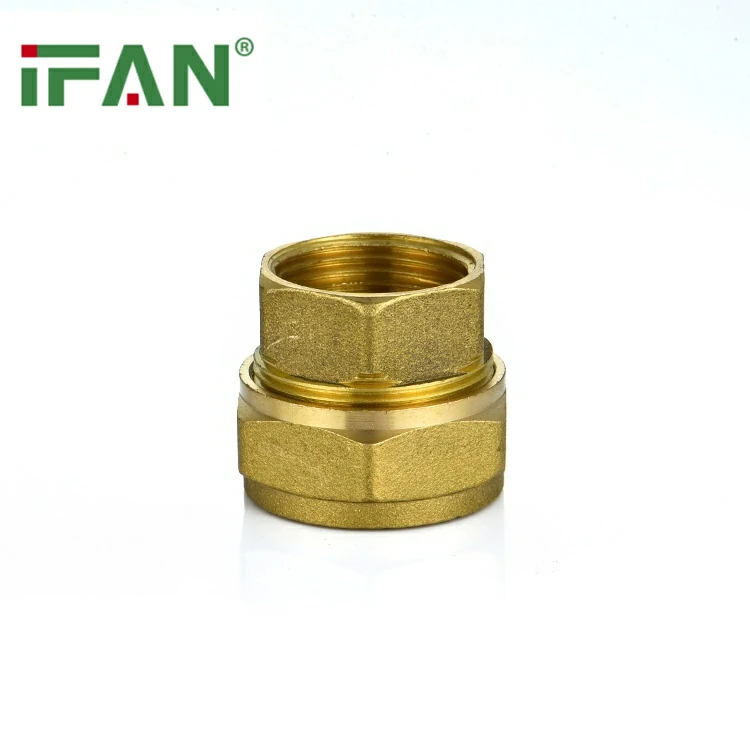
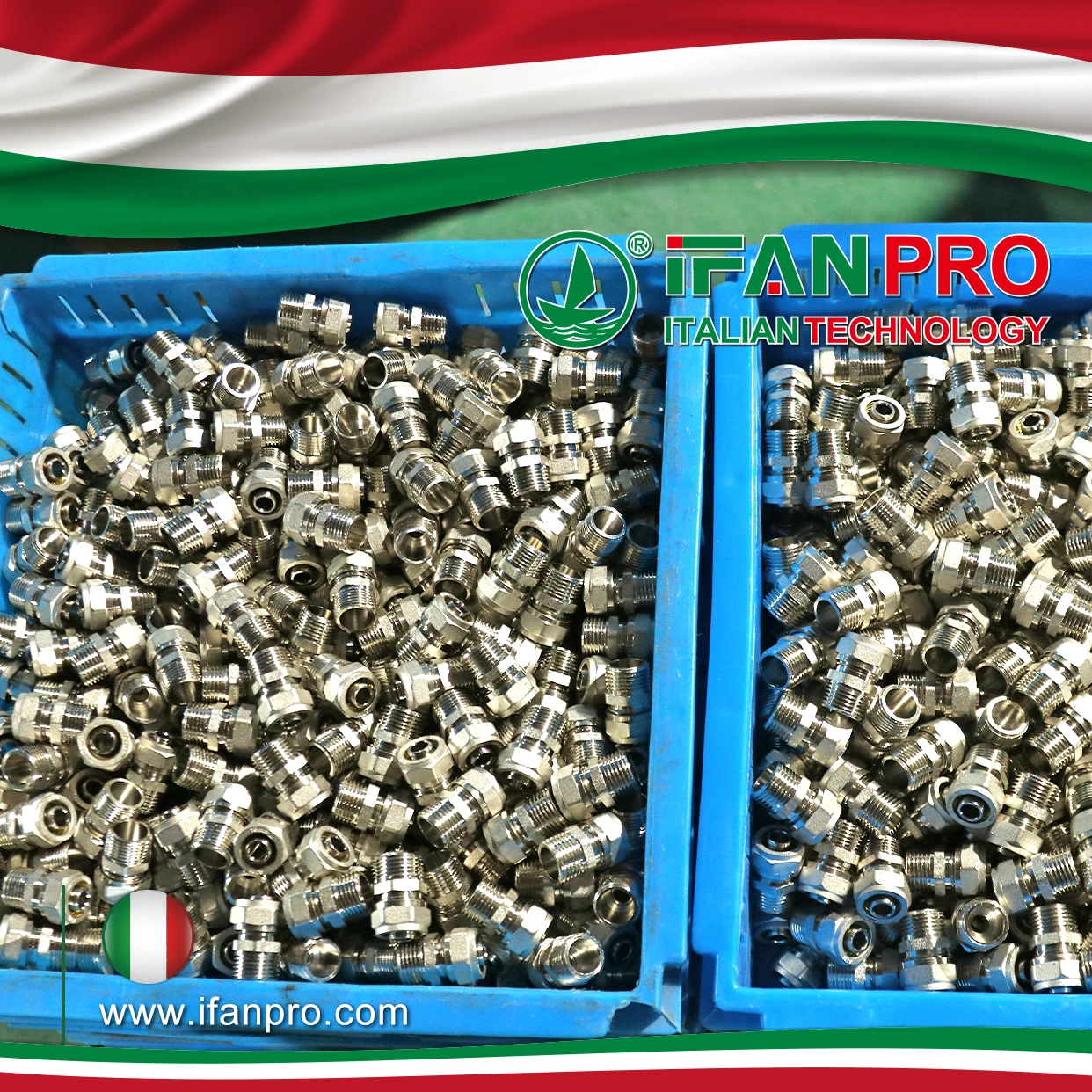
- Lead-free, DZR brass grade: we specify dezincification-resistant, low-lead brass so barbs resist the zinc leaching that pinholes cheap yellow-brass fittings in aggressive or chloride-rich water. Compliance with potable-water requirements should always be confirmed against your local code and certification marks.
- Dimensional and thread checks: barb profile, insert diameter, and thread pitch are gauged so the fitting mates correctly with standard rings and tools — an out-of-spec barb is where “it looked fine but leaked” starts.
- Pressure testing: sample joints are pressure-tested to confirm the seal holds under load before the batch is cleared for shipment.
We hold ISO 9001 and ISO 14001 systems and supply to markets that require marks such as CE, WRAS, NSF/IAPMO, and WaterMark, though the specific certification a project needs depends on the destination and application. When you standardize on a fitting system, standardizing on a manufacturer that pours the right alloy and gauges every batch is the quieter half of never getting the leak callback.
Conclusion
Crimp is the cheapest joint, clamp is the most flexible for tight retrofits, push-fit is the fastest repair, and cold-expansion protects flow on PEX-a systems. Standardize on the system whose tool your crew will keep — then insist the fittings that feed it are poured in lead-free DZR brass and gauged every batch.
Ready to spec fittings that match the system you run? Browse IFANPRO’s crimp, clamp, compression, and press PEX lines, or revisit the complete guide to PEX pipe to line up tubing grade and connection before you commit.
Frequently Asked Questions
Is PEX crimp or clamp better?
Crimp wins on per-joint material cost, which matters most on high-volume new construction. Clamp wins on tool simplicity — one cinch tool covers all sizes — and on access in tight framing where a crimp tool can’t rotate. Both use the same barbed inserts and accept every PEX grade, so reliability comes down to install discipline, not the ring itself. For most mixed-work contractors, clamp’s single-tool convenience edges it out.
Which PEX fitting type has the least flow restriction?
Cold-expansion (ASTM F1960) has the least restriction because the tube expands over the fitting rather than choking down around an inserted barb, keeping the joint close to full-bore. Crimp, clamp, and most push-fit fittings use inserts that neck down the inside diameter at every connection. On long trunk runs, size up one nominal diameter to offset that loss if you use insert-style fittings.
Can I use expansion fittings on any PEX?
No. Cold-expansion fittings rely on shape memory — the tube stretches and then shrinks back to seal — which only PEX-a delivers. PEX-b and PEX-c do not recover the same way and are not rated for F1960 expansion joints. Committing to an expansion tool commits you to PEX-a tubing across the job, so weigh that before buying in.
Are push-fit PEX fittings reliable for permanent installs?
Quality push-fit fittings are rated for permanent, in-wall use by their manufacturers, but many inspectors prefer them left accessible rather than buried. Their real strengths are speed, reusability, and cross-material transitions, which makes them ideal for repairs and retrofits. Whether a buried push-fit joint is code-compliant depends on your jurisdiction, so confirm locally before you close a wall.
Do I really need a go/no-go gauge for crimp fittings?
Yes — for crimp (F1807) joints, gauging is the accepted way to confirm the ring is compressed correctly, and most jurisdictions expect it. An under-crimped ring weeps under pressure cycling; an over-crimped one can damage the tube. Gauge the first joints of every session to catch tool drift, especially in cold weather when dies behave differently.
IFANPRO has manufactured PEX, PPR, HDPE, and PVC piping systems and brass fittings since 1993, from a 120,000 m² factory with 600+ staff. We ship certified products to 200+ countries and write to help contractors and distributors specify systems that hold up in the field.











 Français
  English
  Русский
  Español
Commentaires récents