
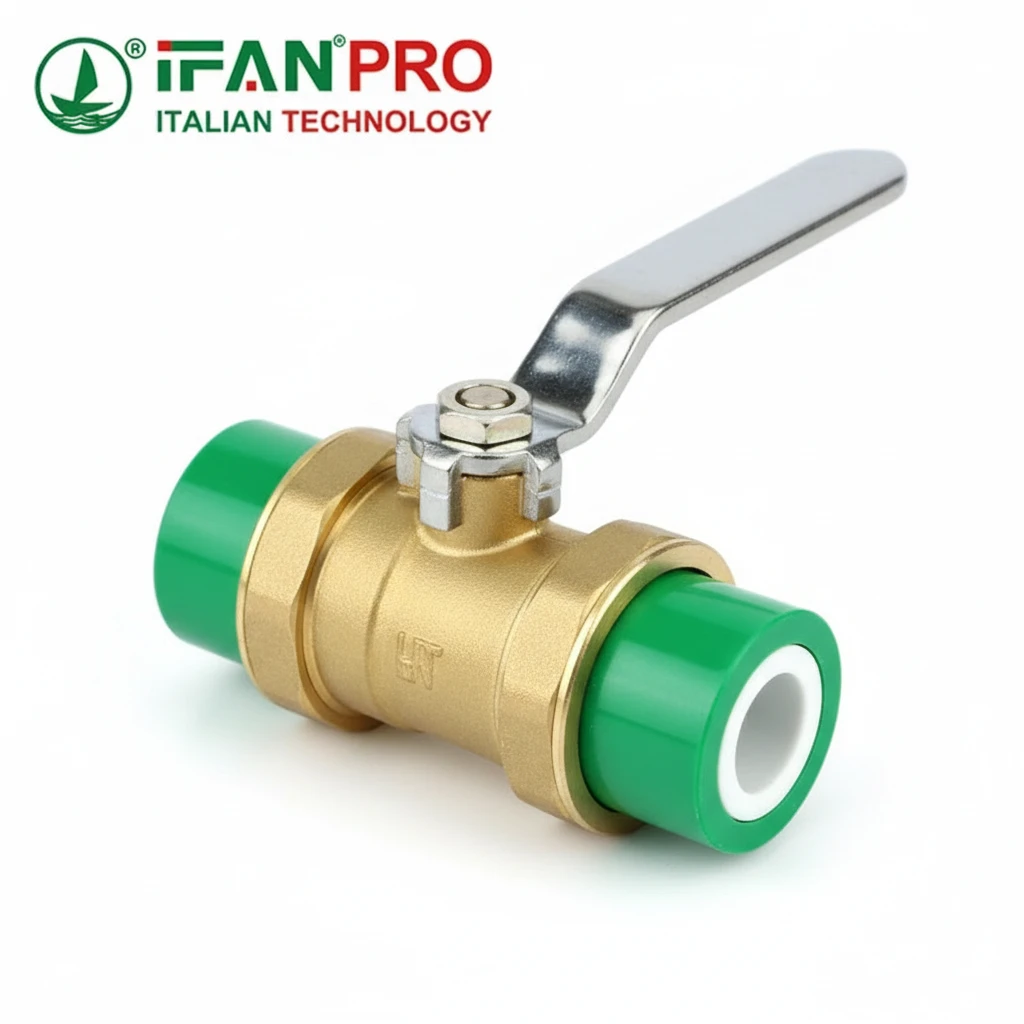
I once watched a cheap all-plastic valve crack under pressure in a client’s commercial building. That failure taught me why the right valve material matters for long-term system reliability.
PPR brass valves combine the corrosion resistance and easy installation of plastic pipes with the mechanical strength and precision of machined brass. The brass core provides a durable shut-off mechanism at critical points, while the PPR ends allow for direct fusion welding into the plastic piping network, creating a system that leverages the best properties of both materials.
Understanding how these components work together helps you choose the right valve for your project.
How Does the Brass Core Provide Superior Strength at High-Pressure Connection Points?
Plastic alone can fail at points of high stress. I’ve seen threaded plastic connections crack under torque, which is why brass cores solve this problem.
The brass core provides superior strength because brass has significantly higher tensile and yield strength than PPR plastic. This allows the valve body to withstand the mechanical stress of closing against high water pressure, the torque from installing connected equipment, and the repeated expansion and contraction cycles without cracking or deforming.
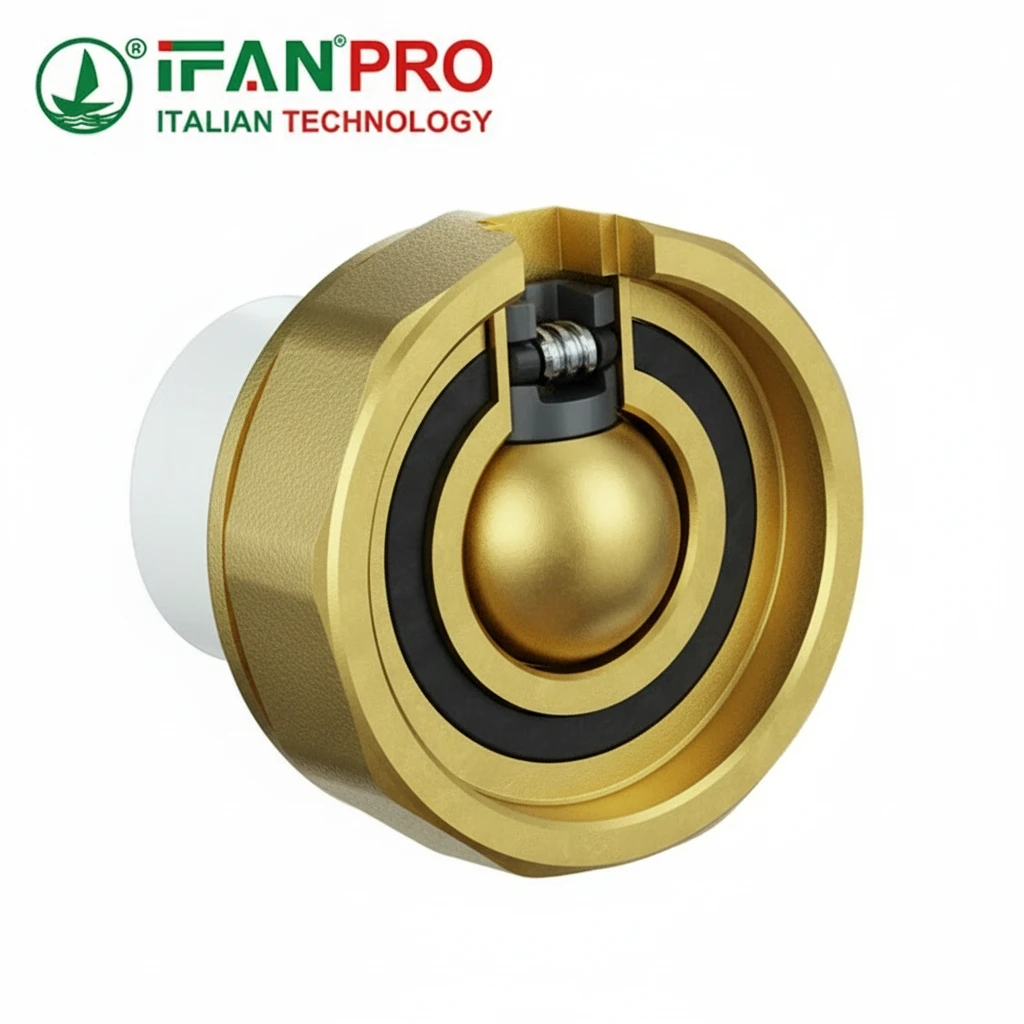
Material Properties Compared
The strength difference between brass and PPR comes down to fundamental material science. Brass is a metal alloy, typically copper and zinc, with a crystalline structure that resists deformation. PPR is a polymer with long molecular chains that can move and stretch under stress.
Here’s how they compare in key mechanical properties:
| Property | Brass (Typical) | PPR (Typical) | Why It Matters |
|---|---|---|---|
| Tensile Strength | 200-400 MPa | 20-30 MPa | Resistance to being pulled apart |
| Yield Strength | 70-350 MPa | 15-25 MPa | Point where permanent deformation starts |
| Hardness | 60-150 Brinell | Very low (Shore D) | Resistance to scoring and wear |
| Modulus of Elasticity | 100-120 GPa | 0.8-1.2 GPa | Stiffness and resistance to bending |
As the table shows, brass is roughly 10 times stronger in tension and 100 times stiffer than PPR. This makes it ideal for components that must hold their shape under load.
Where Strength Matters Most in Valves
The brass core handles three specific stress points:
1. The Shut-Off Mechanism: When you close a valve, the internal mechanism (ball, gate, or seat) must seal against the full system pressure. In a 100 PSI water line, a 1-inch valve experiences over 75 pounds of force trying to push the ball open. Brass threads and seats handle this force without deforming.
2. Connection Points for Fixtures: Many valves connect to threaded equipment like pressure gauges, hoses, or metal pipes. Applying a wrench to tighten these connections creates significant torque. A brass female thread can withstand this torque, while a plastic thread would strip or crack.
3. Thermal Cycling Stress: Hot water systems cycle between ambient and high temperatures. This causes expansion and contraction. Brass maintains its dimensional stability through these cycles, ensuring the valve continues to operate smoothly for decades.
Practical Implication for Installers
When you install a PPR brass valve, you can treat the connection to the PPR pipe with normal fusion techniques. But you can also attach metal components to the brass threads with standard tools and appropriate thread sealant. This gives you the best of both worlds: plastic pipe installation with metal-component reliability.
What Precision Machining Ensures Smooth Operation and a Perfect Seal?
A valve that sticks or leaks is worse than no valve at all. I’ve had clients complain about cheap valves that required excessive force to operate.
Precision machining ensures smooth operation and a perfect seal through tight tolerances on critical surfaces. The ball or gate is polished to a mirror finish, the seats are machined to exact dimensions, and the stem threads are cut with precision to allow smooth rotation without binding. These tolerances, often measured in microns, ensure the valve seals completely when closed and operates with consistent torque.
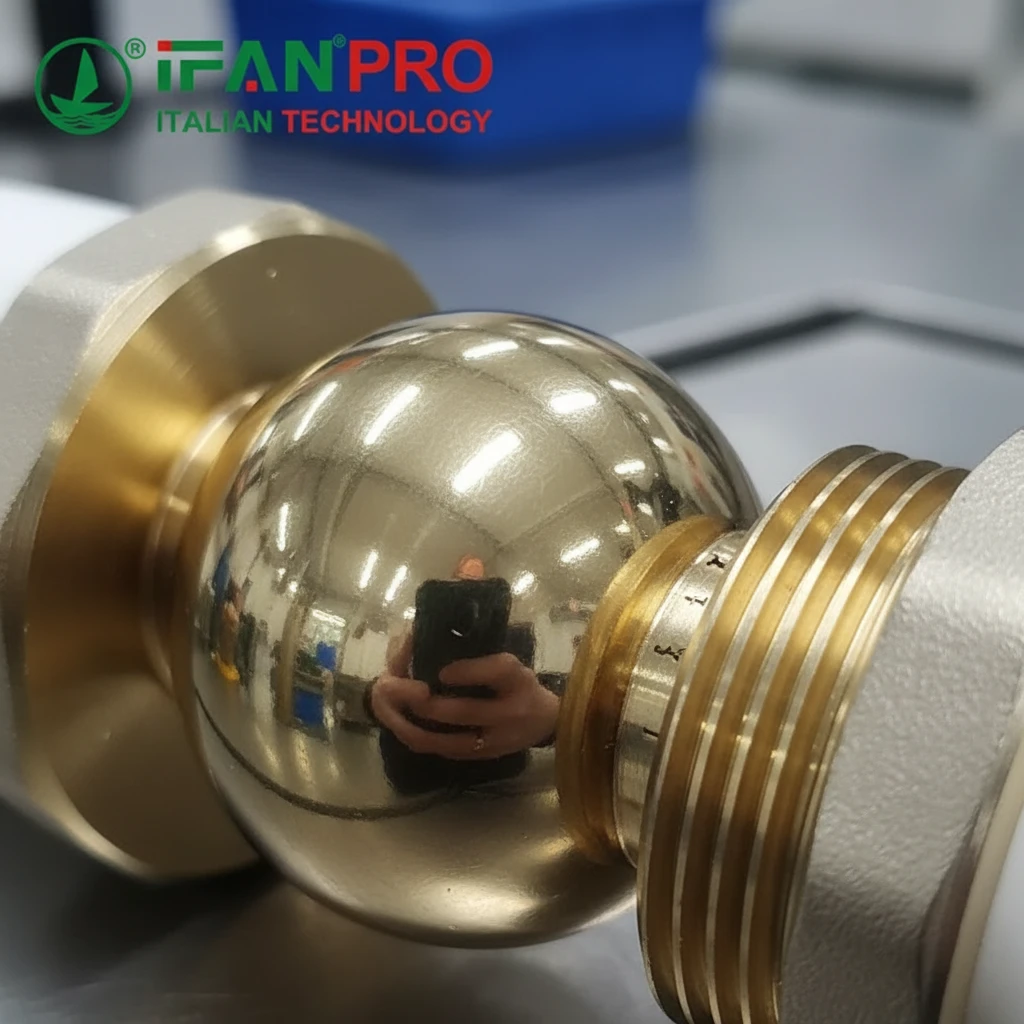
The Critical Machined Components
Several parts of a brass valve require precision manufacturing to work correctly:
The Ball or Gate Surface: In a ball valve, the brass ball must be perfectly spherical. It undergoes machining and then polishing to achieve a smoothness of 0.2 microns or better. This smooth surface allows it to rotate against the seats without scratching and creates a bubble-tight seal when pressed into the seat.
The Valve Seat: The seat is where the ball or gate meets the body to stop flow. In precision valves, this surface machines to an exact angle that matches the ball’s curvature. The contact area must be consistent around the entire circumference. Any variation creates a leak path.
The Stem and Packing Area: The stem transfers motion from the handle to the ball. It must fit precisely through the packing nut. Too loose, and it leaks around the stem. Too tight, and it binds. Precision machining creates a stem diameter within 0.05mm of the ideal size, allowing the O-rings or packing to seal effectively while letting the stem turn freely.
Threaded Connections: Both the internal threads for accessories and the external threads for the handle nut must cut to standard specifications. This ensures compatibility with industry-standard components and proper engagement without cross-threading.
Tolerance Grades and What They Mean
Manufacturing tolerances determine how precisely a part matches its design. The table below shows typical tolerance classes for valve components:
| Component | Tolerance Grade | Dimensional Variation | Effect on Performance |
|---|---|---|---|
| Ball Sphericity | IT5-IT6 | ±0.01mm to ±0.025mm | Consistent sealing contact |
| Seat Angle | IT6-IT7 | ±0.5 to ±1 degree | Even compression on seal |
| Stem Diameter | IT6-IT7 | ±0.01mm to ±0.03mm | Smooth operation, no binding |
| Thread Form | 6H/6g | Medium fit per standards | Proper engagement, no leaks |
Valves from reputable manufacturers like IFAN maintain these tight tolerances. Lower-quality valves may have wider variations, leading to inconsistent performance, leaks, or premature failure.
The Result of Good Machining
When you operate a well-machined valve, you feel the difference immediately. The handle turns smoothly with consistent resistance throughout its travel. There are no rough spots or sudden changes in torque. When closed, it stops water completely with no drip past the seat. This precision comes from careful attention to machining during manufacturing.
Why is the Combination of PPR and Brass Ideal for Mixed Material Systems?
Modern buildings use multiple materials. I’ve seen systems fail where different materials connect improperly, causing leaks at transition points.
The combination of PPR and brass is ideal for mixed material systems because the PPR ends fusion-weld directly to PPR pipes, eliminating potential leak points at material transitions. The brass body then provides standard metal threads or flanges for connecting to equipment, metal pipes, or fixtures. This creates a system where each material handles what it does best.
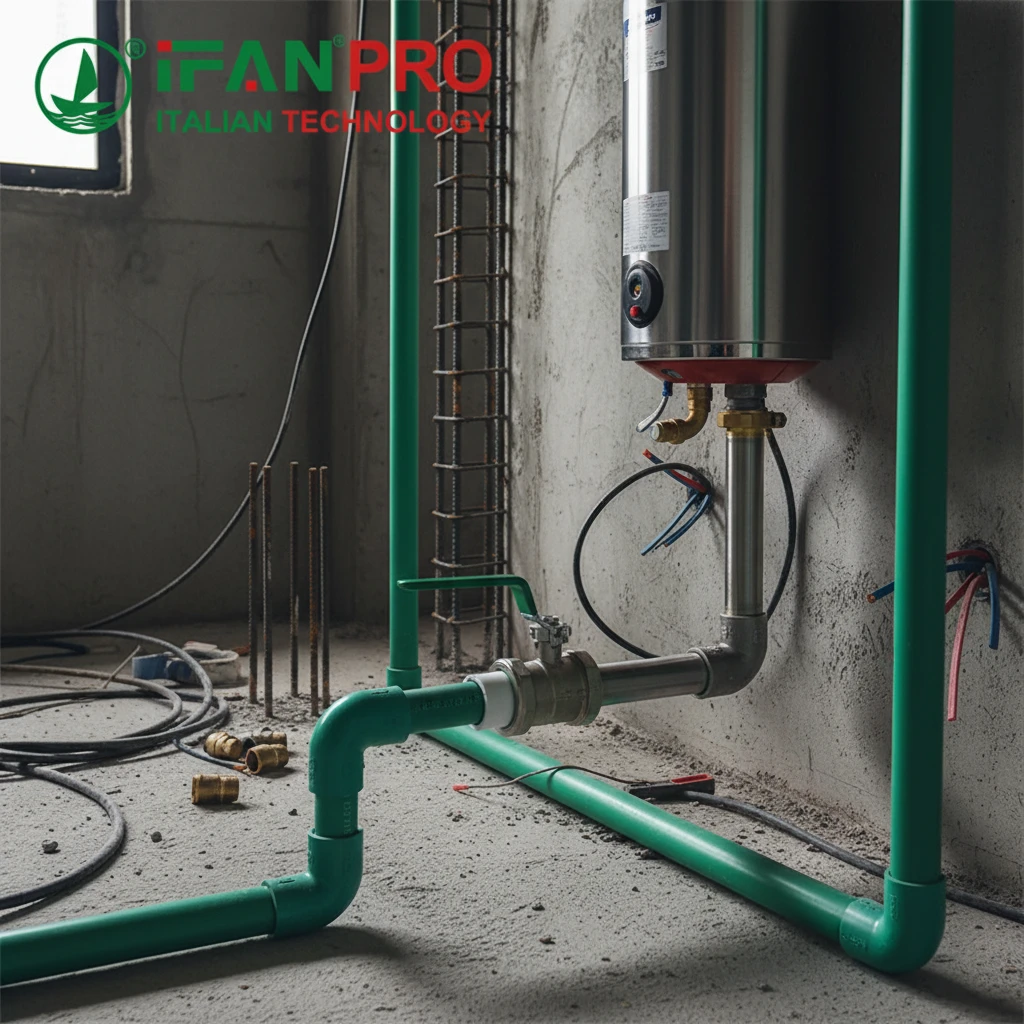
Solving the Transition Problem
Every plumbing system eventually needs to connect different materials. PPR pipes must attach to water heaters, pumps, gauges, and fixtures that have metal connections. Traditionally, this required mechanical adapters with multiple seal points.
A typical transition using separate components might look like this:
- PPR pipe → PPR-to-metal threaded adapter → Thread sealant → Metal pipe or equipment
This creates at least two potential leak paths: the threaded connection and the PPR fusion joint (if properly done). Each additional joint adds risk.
With a PPR brass valve, the transition happens inside a single component:
- PPR pipe → Fused directly to PPR valve end → Brass valve body → Metal threads for equipment
The PPR-to-brass bond is permanent and leak-free when properly fused. The equipment connects directly to the brass threads. This reduces the number of potential leak points by half.
Thermal Expansion Compatibility
Another challenge in mixed material systems is different expansion rates. When heated, PPR expands more than metal. If you rigidly connect PPR to metal without accounting for this, stress builds at the connection.
PPR brass valves address this through their design. The PPR ends are relatively short and rigidly bonded to the brass body. The body itself, being metal, doesn’t expand much. The PPR pipe beyond the valve can expand freely. The short PPR stub between the pipe and the brass body is stiff enough to transfer movement without creating stress concentration.
Application Examples
Here are common situations where PPR brass valves prove valuable:
| Application | Why PPR Brass Valve Works |
|---|---|
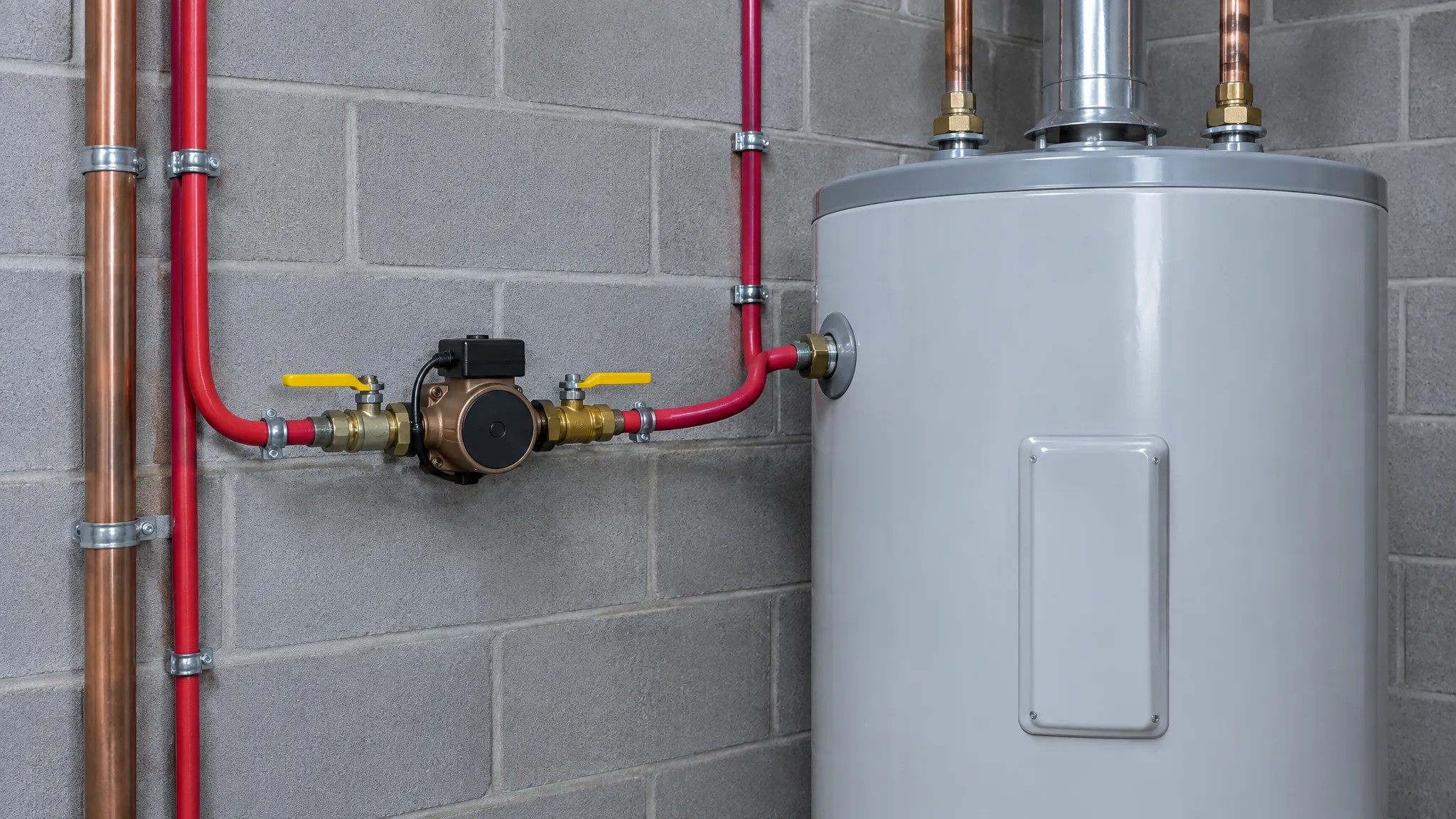
| Water Heater Connection | PPR to heater, brass threads accept metal dielectric unions or flex lines |
| Pump Isolation | Fused into PPR line, brass provides durable shut-off for pump maintenance |
| Equipment Tap-Offs | Branch from main PPR line, brass threads for pressure gauge or drain valve |
| Mixed Building Systems | Transition between PPR zones and metal equipment rooms |
Practical Installation Tip
When installing PPR brass valves in mixed material systems, always support the valve body independently if heavy equipment attaches to it. The PPR pipe can support the valve itself, but a heavy pump or heater hanging from the valve may stress the fusion joint. Use proper hangers or supports for attached equipment.
How Do These Valves Extend the Service Life of the Entire Piping Network?
A system is only as strong as its weakest component. I’ve seen well-installed piping fail prematurely because of poor valve selection.
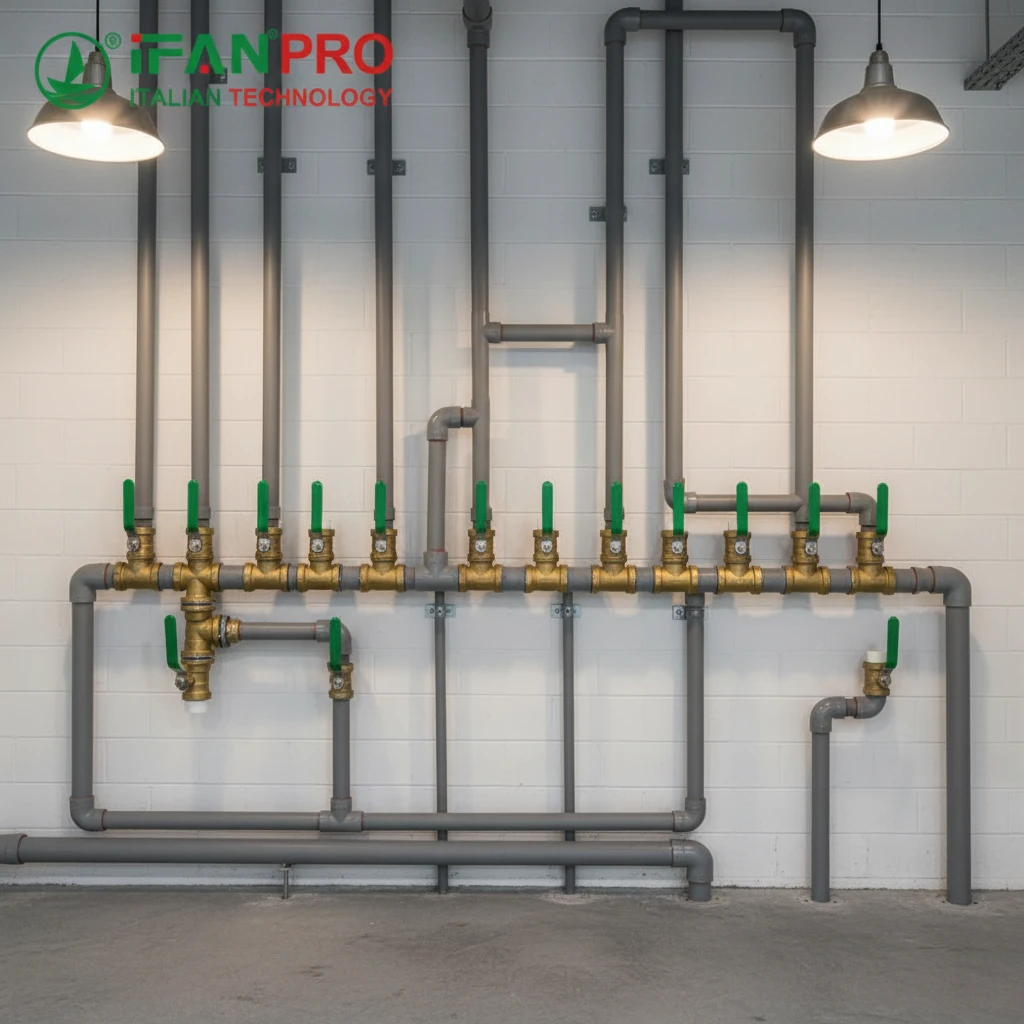
PPR brass valves extend service life by providing reliable isolation points that protect the network during maintenance, resisting corrosion that would weaken all-metal systems, and maintaining smooth operation for decades without seizing or leaking. This allows the PPR pipes to reach their full 50-year design life without valve-related failures.
Protection During Maintenance
One of the most stressful events for a piping system is maintenance. When you need to repair a fixture or replace equipment, you must isolate sections of the system. Without reliable valves, you either:
- Shut down the entire system, affecting all users
- Attempt repairs with water flowing, which rarely works well
- Risk damage by freezing or draining large sections
Quality PPR brass valves allow you to isolate specific branches or equipment. This means:
- The rest of the system continues operating normally
- You avoid draining and refilling large sections, which introduces oxygen and can accelerate corrosion elsewhere
- You minimize system stress from pressure changes during shutdown and restart
Corrosion Resistance Compared to All-Metal Systems
A full metal piping system faces corrosion throughout. Iron pipes rust. Copper develops pinholes over time. Even brass can suffer from dezincification in aggressive water.
By using PPR for the piping, you eliminate corrosion in the main lines. Only the valve bodies are metal, and they use brass specifically because of its corrosion resistance. Modern brass formulations resist dezincification and stress corrosion cracking.
This means the only potential corrosion points are the valves themselves, and they are designed to handle it. Regular inspection can catch any valve issues before they cause system failure, while the PPR pipes remain unaffected.
Mechanical Stability Over Time
Plastic pipes can creep or deform under constant stress. Valves, with their moving parts, must maintain dimensional stability. Brass provides this stability.
The table below compares long-term behavior:
| Component Material | Behavior Over 20+ Years | Impact on System |
|---|---|---|
| Brass Valve Body | Minimal dimensional change, maintains seal compression | Continued leak-free operation |
| Brass Stem/Threads | Resists wear, maintains smooth operation | Valve remains usable for maintenance |
| PPR Pipe | Some slow creep at joints, but within design limits | System remains functional |
| All-Plastic Valve | Can warp, threads wear, seats deform | May leak, fail to shut off, or seize |
The Economic Benefit
The extended service life translates directly to cost savings. A PPR brass valve costs more upfront than an all-plastic valve. But consider the economics over a 50-year building life:
- Plastic valve: Replace every 10-15 years (3-5 replacements)
- Brass valve: Lasts 50 years with the pipe (0 replacements)
- Labor cost for each replacement: Often exceeds valve cost
- Downtime and disruption: Priceless for occupied buildings
The brass valve pays for itself many times over by avoiding replacement costs and system downtime.
Conclusion
PPR brass valves offer the ideal combination of plastic pipe advantages and metal component reliability. For guaranteed performance, choose IFAN’s precision-machined PPR brass valves, available with certified materials and comprehensive quality testing.











 Français
  English
  Русский
  Español
Commentaires récents