

I was installing a new water heater last weekend and got stuck on one fitting. The choice between a 20×1/2F and a 25×1/2F elbow seemed small, but it made a huge difference.
A PPR female double elbow is a 90-degree pipe fitting with two female threaded ends, connecting PPR pipes to threaded fixtures like taps or valves. The key difference between 20×1/2F and 25×1/2F is the outer diameter (OD) of the PPR socket: 20mm for the 20×1/2F and 25mm for the 25×1/2F, while both have a 1/2-inch female thread.
Choosing the wrong one can lead to leaks, poor flow, or a project halt. This guide will break down every detail, from specs to real-world uses, so you can pick the perfect elbow with confidence.
What is a PPR female double elbow and how does it work?
I remember my first plumbing DIY; I had pipes and a tap, but no idea how to join them. That’s when I learned about this crucial connector.
A PPR female double elbow is a compact, L-shaped fitting made of Polypropylene Random Copolymer. It has two identical female threaded (F) ports, allowing it to connect a PPR pipe on one end to a standard threaded component, like a valve or showerhead, on the other, while making a 90-degree turn in the pipeline.
The Core Function and Mechanism
Think of it as a perfect adapter and directional changer. One side is designed for a permanent, leak-proof fusion weld with a PPR pipe. The other side has standard pipe threads (usually BSP or NPT) cut into its interior. You screw a male-threaded component into it. The 90-degree angle is its superpower, letting you navigate corners and tight spaces where a straight connection is impossible. Without it, connecting rigid PPR lines to the myriad of threaded devices in our homes would be a nightmare of custom fittings and potential leaks.
Material Science: Why PPR?
PPR isn’t chosen by accident. This material is a game-changer for modern plumbing. First, it’s incredibly inert. It doesn’t corrode like metal, so you’ll never get rusty water. It’s also highly resistant to scale and chemical buildup, keeping water flow smooth for years. The fusion welding process is key. When you heat the PPR pipe and the socket end of the elbow with a special tool, they melt and fuse into a single, homogeneous piece of plastic. This joint is actually stronger than the pipe itself and is guaranteed against leaks. It’s a permanent bond that thermal expansion and contraction won’t break.
| Feature | PPR Female Double Elbow | Traditional Brass Elbow |
|---|---|---|
| Corrosion Resistance | Excellent (No rust or scale) | Poor (Prone to dezincification and scaling) |
| Installation Method | Heat Fusion (Permanent, monolithic joint) | Threads + Sealant (Potential for leaks over time) |
| Water Quality Impact | None (Hygienic, inert material) | Possible metal leaching |
| Thermal Insulation | Good (Reduces heat loss/condensation) | Poor (Conducts heat, causes condensation) |
| Long-term Maintenance | Virtually zero | May require re-tightening or replacement |
Anatomy of the Fitting
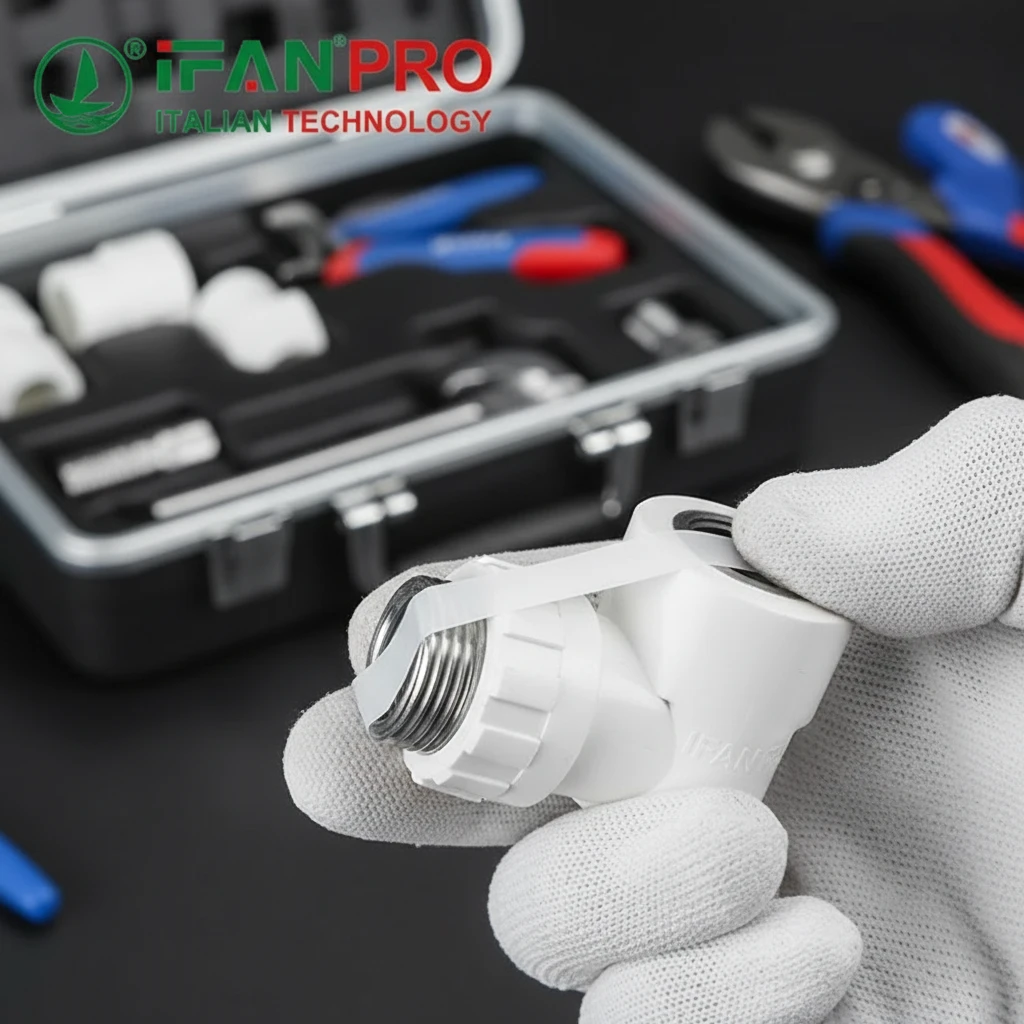
Let’s look closer at its parts. The ‘female’ descriptor means the threads are on the inside. You’ll see a hexagonal body in the middle. This is for gripping with a wrench during installation. The PPR socket has a depth gauge line inside; you must insert the pipe up to this line for a proper weld. The threaded port often has a small rubber or plastic sealing ring seated in a groove, but for high-pressure applications, using thread seal tape (PTFE tape) is still recommended. The 90-degree angle is precisely molded, ensuring a perfect turn that minimizes flow resistance and turbulence.
What are the key differences between 20×1/2F and 25×1/2F sizes?
Staring at two nearly identical elbows in the store, I wondered if the size code was just a marketing trick. It’s not. The numbers matter a lot.
The primary difference is the PPR socket size: ’20’ denotes a 20mm outer diameter (OD) socket, and ’25’ denotes a 25mm OD socket. The ‘1/2F’ is constant, meaning both have a 1/2-inch female thread. This dictates the pipe size they connect to and directly impacts water flow capacity and application.
Decoding the Size Nomenclature
The naming follows a clear logic: [PPR Pipe OD] x [Thread Size][Thread Gender]. So, 20×1/2F means: “For a 20mm OD PPR pipe, with a 1/2-inch female thread.” It’s that simple. The thread size (1/2″) is the nominal bore of the threaded connection, a standard in the plumbing world. It’s crucial to understand that PPR sizing is based on the pipe’s *outer* diameter, unlike some metal pipes that use inner diameter. Always measure your existing PPR pipe’s OD to choose correctly.
| Specification | 20×1/2F Female Double Elbow | 25×1/2F Female Double Elbow |
|---|---|---|
| PPR Socket Outer Diameter (OD) | 20 mm | 25 mm |
| Compatible PPR Pipe OD | 20 mm | 25 mm |
| Typical PPR Pipe Wall Thickness (PN20) | ~2.8 mm | ~3.5 mm |
| Approx. Inner Diameter (ID) of PPR Socket | ~14.4 mm | ~18 mm |
| Thread Specification (Common) | 1/2″ BSP (British Standard Pipe) or NPT | 1/2″ BSP or NPT |
| Primary Flow Capacity | Lower (Suitable for branch lines) | Higher (Suitable for main lines) |
Impact on Water Flow and Pressure
This is the most practical difference. A 25mm pipe has a larger internal cross-sectional area than a 20mm pipe. Physics tells us that for a given water pressure, a larger pipe can deliver a higher volumetric flow rate (more liters per minute). Therefore, a 25×1/2F elbow is part of a system designed for higher demand. If you use a 20mm elbow on a 25mm line, you create a bottleneck. This restriction can cause annoying pressure drops, especially if multiple outlets are used simultaneously. Conversely, using a 25mm elbow on a 20mm line is physically possible with a reducer, but it’s overkill and wastes money and space.
Physical and Installation Differences
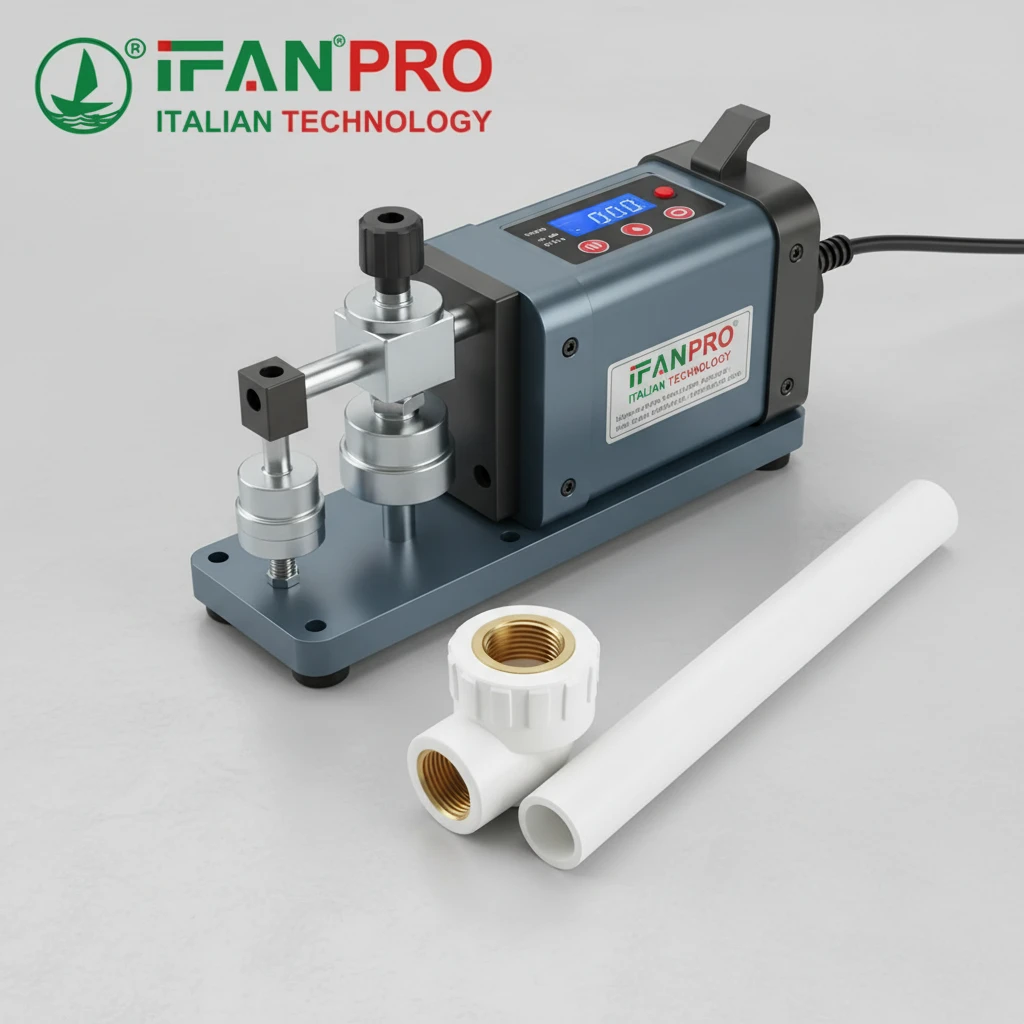
Beyond flow, the fittings differ physically. The 25×1/2F is noticeably larger and heavier. Its hexagonal body is bigger, requiring a larger wrench for installation. The depth of the fusion socket is also slightly greater to ensure a strong weld on the thicker pipe. This means your fusion welding machine must have the appropriate heating heads (20mm or 25mm). You cannot use a 20mm heating head to install a 25mm fitting. The thermal mass is different, so the heating and cooling times during fusion welding are slightly longer for the 25mm size.
Where are these specific PPR elbow fittings commonly used?
After learning the specs, I walked through my house and started spotting them everywhere. Their use is very logical based on their size.
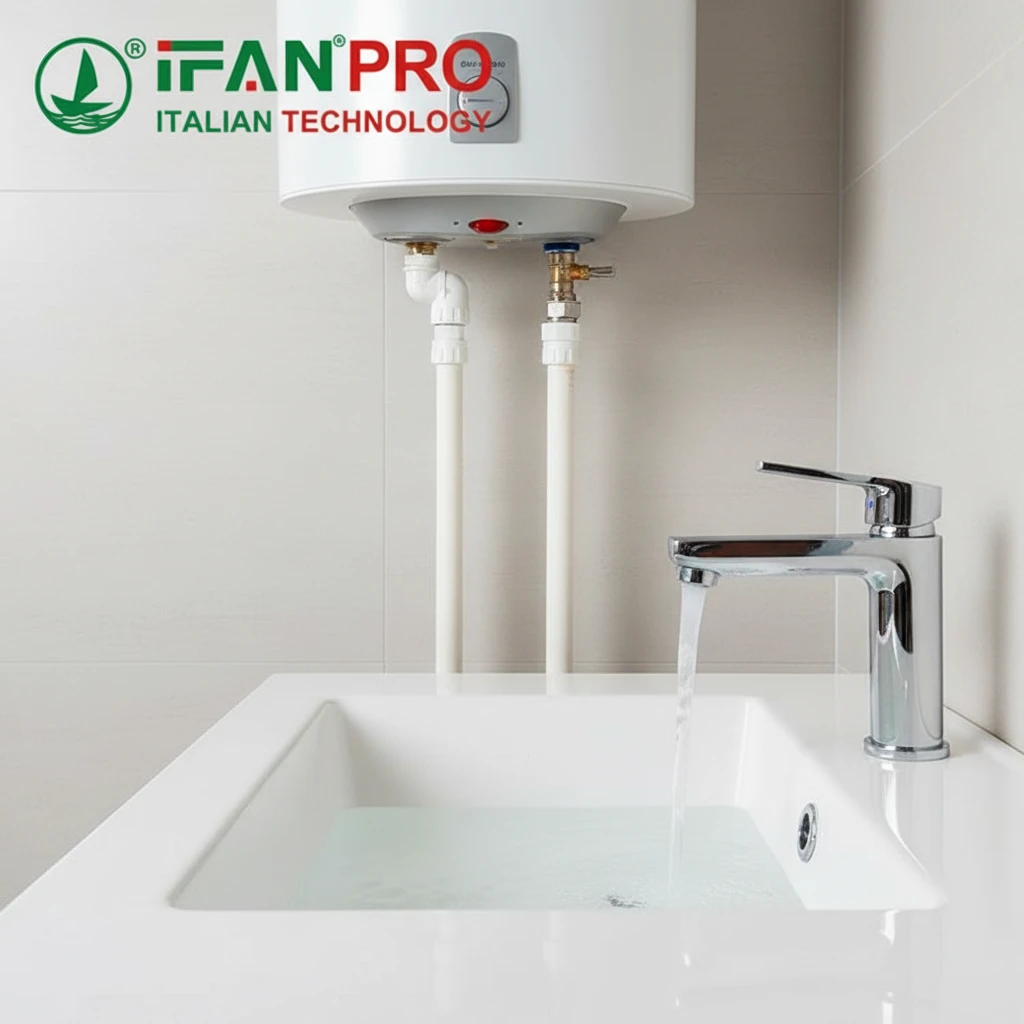
The 20×1/2F elbow is typically used for final branch connections to individual fixtures like sinks, toilets, and washing machines. The 25×1/2F elbow is used for main distribution lines, such as connecting to a water heater outlet, a main shut-off valve, or supplying a high-flow fixture like a rain shower.
20×1/2F: The Fixture Specialist
This is the workhorse of residential point-of-use connections. Its 20mm line is perfect for supplying a single fixture where the peak flow demand is manageable. You will find it hidden behind walls and under sinks. Common applications include: connecting the water supply valve under a bathroom or kitchen sink to the PPR system; linking the toilet fill valve to the wall pipe; providing the final connection for a washing machine or dishwasher inlet; and installing bidets or small utility sinks. In these spots, the 20mm pipe and 1/2″ thread match the standard inlet size of most fixture supply valves and flexible hoses.
25×1/2F: The Main Line Distributor
This fitting handles heavier lifting. It’s found where the main trunk line of the plumbing system needs to make a 90-degree turn and connect to a threaded device. Key applications are: at the outlet of a domestic water heater, where hot water is distributed into the main line; connecting the main whole-house shut-off ball valve to the PPR piping; supplying a high-capacity fixture, such as a large soaking tub filler, a multi-head rain shower system, or an outdoor garden tap manifold; and serving as a distribution point in apartment buildings where a single line feeds multiple branches. Here, the 25mm diameter ensures that sufficient flow is available even when other fixtures are in use.
| Room / System | Likely Use for 20×1/2F Elbow | Likely Use for 25×1/2F Elbow |
|---|---|---|
| Bathroom | Vanity sink tap, toilet supply | Main shower mixer valve supply, bathtub filler main line |
| Kitchen | Kitchen sink tap, dishwasher inlet | Main cold water line entry to kitchen |
| Utility Room | Washing machine connection | Water heater outlet connection, whole-house filter housing |
| Overall System | Branch line take-offs from main lines | Primary risers, main trunk lines before branching |
Commercial and Industrial Context
While we focus on homes, these fittings are everywhere. In commercial buildings, 20×1/2F elbows might connect hand wash stations in public restrooms. The 25×1/2F size sees more use in light commercial applications like small restaurant kitchens or laboratory sink lines. It’s important to note that for larger industrial mains, even bigger sizes like 32×3/4F or 40x1F are common. The principle remains the same: match the elbow’s PPR size to the pipe’s OD and its thread size to the valve or equipment being connected.
How do you choose the right size for your plumbing project?
Making the wrong choice cost me an extra trip to the hardware store. Now, I follow a simple, foolproof decision process.
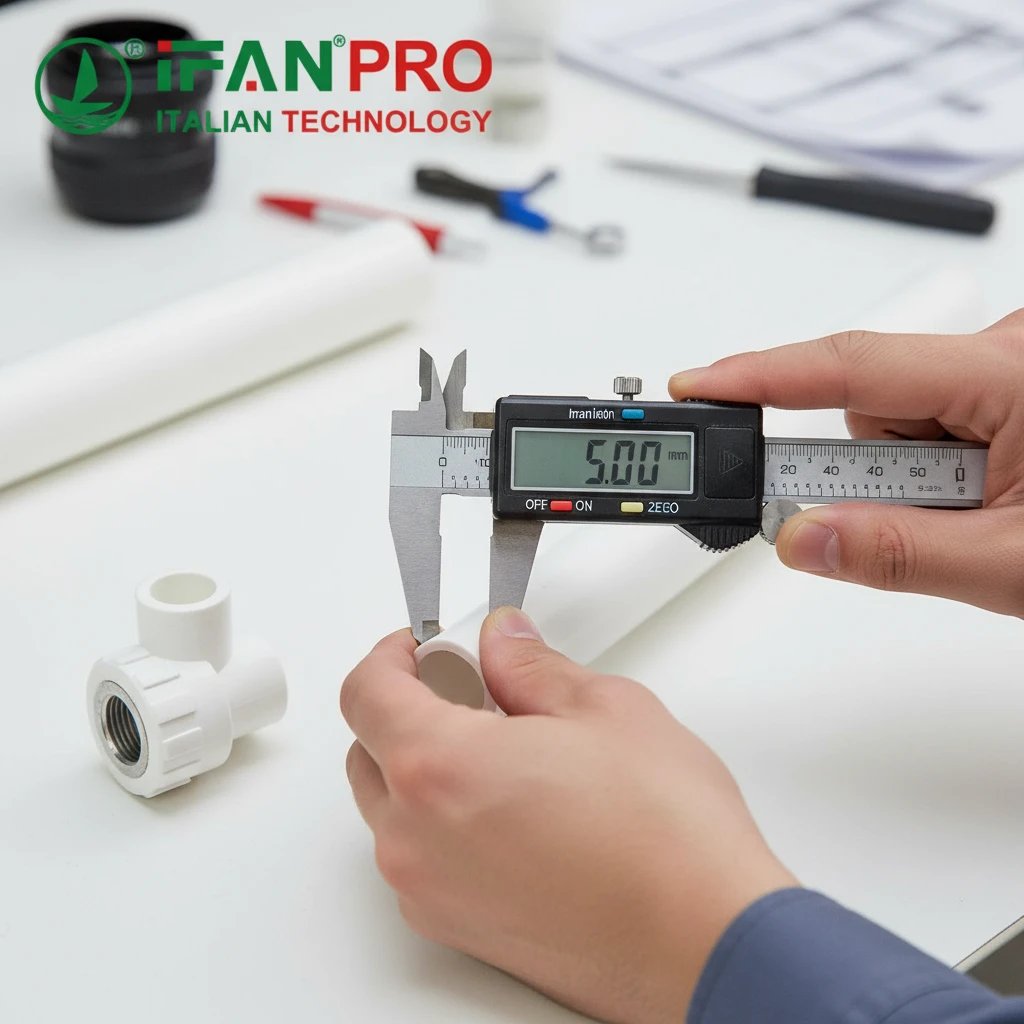
To choose the right size, first identify the outer diameter (OD) of your existing PPR pipe using a caliper. Then, determine the thread size of the device (valve, tap) you’re connecting to. Match these two measurements to the fitting code: Pipe OD (mm) x Thread Size (inches)F.
Step 1: Diagnose Your Existing Pipes
This is the non-negotiable first step. Never guess. If you have exposed PPR pipes, use a digital caliper to measure the Outer Diameter. If you don’t have a caliper, a ruler can give you a close estimate. Standard sizes are 20mm, 25mm, and 32mm. The pipe might also have its size printed on it. If the pipes are inside a wall and you’re doing a repair, you must identify the size from the system’s original plan or by carefully measuring a cut piece from the existing line. Remember, the pipe OD determines the first number in your fitting code.
Step 2: Identify the Threaded Component
Next, look at the part you want to connect to. Is it a tap, a valve, or a gauge? The male thread on that device needs to screw into the female thread of your elbow. The most common size for residential fixtures is 1/2 inch. You can use a thread pitch gauge to be sure, or simply try screwing a standard 1/2″ cap onto it. If you’re connecting to a metric device, you may need an adapter. The thread type (BSP, NPT) is also important. BSP threads are common globally, while NPT is standard in North America. They are not always interchangeable without the right sealant.
Step 3: Consider the System’s Hydraulic Demand
This is the advanced check. Ask yourself: What is this line supplying? Is it a single toilet (low demand) or the main feed to a whole bathroom (high demand)? If you are designing a new system or replacing a section, you must size the pipe and fittings according to the total fixture units it will serve. For example, a line feeding a shower and a sink might be okay with 20mm, but if it feeds a shower, sink, and toilet simultaneously, upgrading to 25mm from the start prevents future pressure issues. When in doubt, consulting a simple plumbing sizing chart or a professional can save future headaches.
Step 4: The Final Checklist Before Purchase
Before you buy, run through this list: 1) Pipe OD confirmed (20mm or 25mm). 2) Thread size and type confirmed (1/2″ BSP likely). 3) Application checked (branch or main line). 4) Material quality: Ensure the fitting is made from pure PPR (not recycled material) and has a clean, smooth interior. 5) Pressure rating: Most are PN20 (rated for 20 bar at 20°C), which is fine for homes. For higher temperature applications (like near heaters), ensure the rating is suitable. Buying a reputable brand often ensures consistency in these factors.
Conclusion
Choosing between a 20×1/2F and a 25×1/2F elbow boils down to your pipe size and water flow needs. Measure carefully, think about the demand, and you’ll install a reliable, leak-free connection every time.












 Français
  English
  Русский
  Español
Commentaires récents