
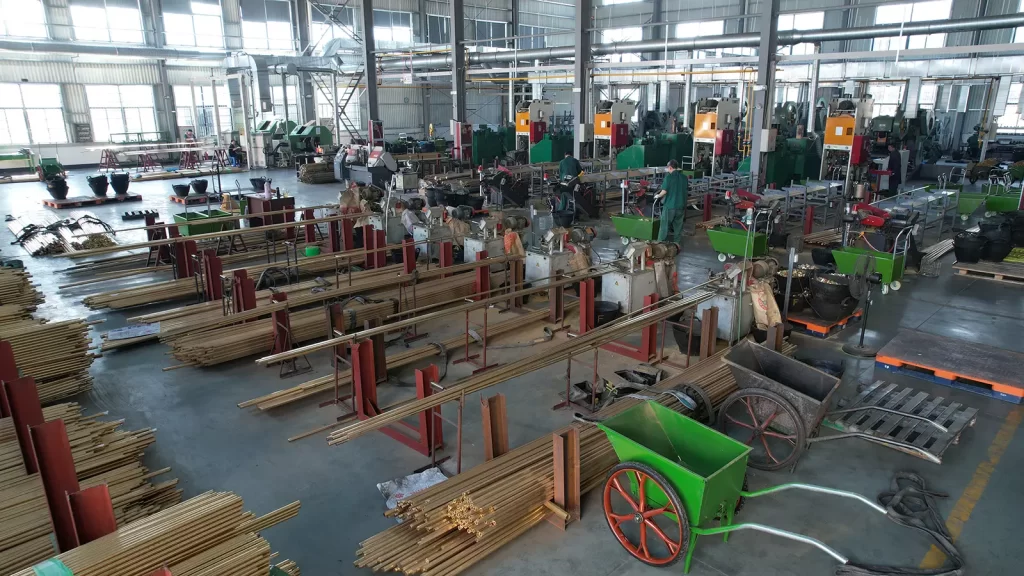
A brass fitting that has dezincified usually looks fine. It holds its shape, keeps its threads, passes the pressure test the plumber runs on the day, and then splits eighteen months later when somebody knocks it with a knee. The zinc has gone out of the alloy and left a copper sponge behind, and nothing on the outside of the part says so until it fails. That is what makes dezincification a purchasing problem rather than an installation problem: by the time you can see it, the container was bought two years ago.
This guide explains what the mechanism actually is, which water conditions drive it, and — the part most pages skip — how a buyer proves a fitting resists it. The short version is that “dezincification resistant” is not a property of an alloy name. It is a property of an alloy name plus a heat treatment, verified by a named test with a named acceptance limit, and every one of those three can be missing from a supplier’s paperwork while the word “DZR” still appears on the quotation.
Key Takeaways
- Dezincification is selective loss of zinc, leaving a porous copper structure that keeps the original shape but loses most of its strength.
- The “15% zinc” rule you will read everywhere is folklore with no traceable origin. The real metallurgical ceiling is around 36% zinc, where beta phase forms and inhibitors stop working.
- The 200 µm figure is not “the ISO 6509 limit”. ISO 6509 is the test method; 200 µm is NSF/ANSI 14’s acceptance criterion bolted on top of it. Other standards bolt on different numbers — AS 2345 allows 300 µm longitudinal but only 100 µm transverse — so the limit depends on which standard, product form and direction the report actually used.
- Rod supplied as forging stock is not dezincification resistant as delivered. Resistance is created by heat treatment at 500–550 °C for two hours after forging. Buying the right alloy does not get you a compliant fitting.
- In Australia and New Zealand this is enforced, not advisory. From 2 May 2026 New Zealand’s Amendment 14 is the only acceptable solution for Building Code clause G12, and a “DR” marking or an AS 2345 test report is what proves compliance.
Watch: the corrosion mechanism explained

“Lecture 18: Graphitic corrosion and protection from dezincification” — IIT Kanpur, NPTEL. An academic treatment of the dealloying mechanism, independent of any valve manufacturer.
What Dezincification Actually Does to a Fitting
Brass is copper and zinc. In water, under the right conditions, the zinc goes into solution and the copper stays behind — or, on the currently favoured reading, the whole alloy dissolves and the copper replates out of solution onto the surface. Either way the result at the wall of the fitting is the same: what used to be a solid two-element alloy becomes a copper skeleton full of voids. The US District Court record from the Zurn PEX multidistrict litigation, where this failure mode was litigated at length, describes the outcome as a porous copper-rich structure that is grossly weakened relative to the original alloy.
The dangerous property is that the part does not shrink. External dimensions stay put, threads still gauge, and a hydrostatic test at commissioning pressure passes without complaint because the corroded layer is still physically there — it is simply no longer load-bearing. A fitting can be most of the way through its wall thickness and give no external sign beyond a colour change, and if the body is chrome or nickel plated, even the colour change is hidden.
Stress makes the consequence worse. Where a fitting is held under sustained tension — a crimp ring clamped onto a body, a heavily torqued thread, a pipe pulling on an elbow — a weakened wall fails at a lower load and sooner. The Zurn record notes that the crimp system placed stress on the brass fitting even when correctly assembled, which is why fittings that spend their lives loaded deserve more scrutiny than a loose-fit coupling. Our comparison of brass versus plastic PEX fittings covers that material trade-off in detail, and the compatibility questions around joining brass elbows to copper and PEX are handled separately again.

The two shapes the attack takes
Corrosion engineers separate plug-type from uniform-layer dezincification, and the distinction decides how a part fails. Plug-type drives deep into one localised spot in the wall, so the component keeps almost all its strength until a pinhole opens straight through and it starts weeping. Uniform-layer thins the whole wall evenly, so nothing leaks for a long time and then the part shears when something loads it — a spanner on a seized union, thermal movement in a riser, a knee against a manifold in a plant room.
This is also why the test standards measure depth in two directions rather than one, which becomes important when you get to certificates.
What it looks like in the field
The observable symptoms are consistent enough to be worth memorising: a loosely adhering white deposit of zinc oxide on the outside of a valve body, often around the stem or bonnet seal; a reddish cast to the alloy where it should be yellow; weeping at a joint that has never been disturbed; and, in a system that has been running for years, falling flow because corrosion product has narrowed the bore. Treat these as prompts to cut a part open and look, not as a diagnosis on their own — the same white bloom appears on fittings that are merely doing battle with hard water.
The 15% Zinc Rule Is Wrong, and Believing It Costs Money
Almost every page that explains this topic will tell you that brass containing more than 15% zinc is at risk and brass under 15% is safe. It is worth knowing that this figure has no traceable source. Wieland Chase’s senior technical advisor Larry Muller went looking for its origin and reported that it is “lost to history” — older technical papers state it without attribution and later ones simply repeat it.
The evidence against it is the last hundred years of plumbing. Alloys C36000 and C37700, at roughly 36% and 39% zinc, were sold into US potable water in enormous volume for decades without a dezincification epidemic. In Europe the problem of severe dezincification in water fittings was solved in 1980 with the introduction of CZ132 / CW602N — a leaded brass at 36% zinc made resistant with an alloying inhibitor and a high-temperature anneal. If 15% were a real dividing line, none of that could have happened.
The number that does matter is 36%. Above roughly that zinc content, a zinc-rich beta phase forms during processing, and beta phase dezincifies preferentially. Past that point neither the minor inhibitor additions nor the major alloying additions can fully protect the metal, because the vulnerable phase is physically there in the microstructure. Below it, an inhibited and correctly treated brass is genuinely resistant.
The practical consequence for a buyer is uncomfortable. If you screen suppliers on zinc percentage alone you will reject perfectly good inhibited 36% brass and accept uninhibited 20% brass that will pit in aggressive water. Zinc content is not the specification. The specification is the alloy designation plus the processing plus the test result.
The three levers that make brass resistant
There are only three, and a real DZR product uses one or two of them deliberately:
- Minor alloying additions, 0.20% maximum — arsenic, antimony or phosphorus. These are the classic inhibitors, effective in brasses up to about 36% zinc. CW511L, for example, specifies arsenic at 0.02–0.15%.
- Major alloying additions, above 0.25% — nickel, tin or aluminium. Older in use than the minor additions and about as effective, with the same beta-phase ceiling.
- Thermal treatment — high-temperature annealing or forging that converts beta phase back to alpha, so the inhibitor can protect it. This is the lever most likely to be missing in practice, and the one nobody can see in a finished part.
There is a trap inside the third one. The cooling rate after thermal treatment has to be slow enough that beta phase does not simply reform on the way down. A furnace cycle that hits the right temperature and then cools too fast produces a part that has been “heat treated” on the traveller and is not resistant in the water.
Why the Alloy Grade on the Certificate Is Only Half the Answer
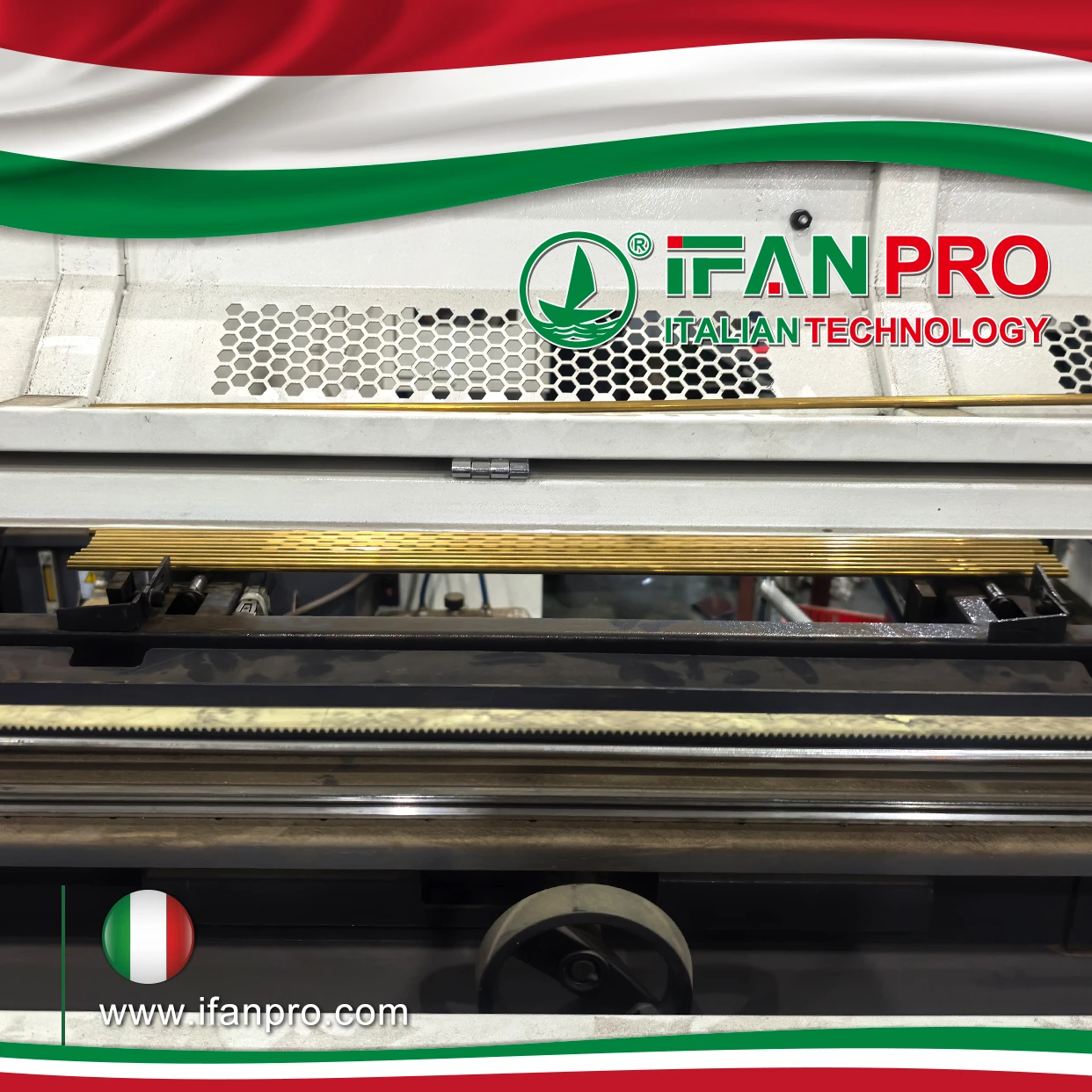
This is the section that changes how you buy, so it is worth being blunt about it. A mill test certificate for DZR-grade rod does not tell you that the fitting made from that rod is dezincification resistant. Diehl Metall states it plainly in its drinking-water alloy handbook: rods and profiles supplied as pre-material for forgings are not dezincification-resistant in the as-delivered state, and to achieve resistance, heat treatment at 500–550 °C for a duration of two hours is required after forging.
Read that again from the buyer’s side. The alloy can be correct. The mill certificate can be genuine. The zinc, the arsenic and the lead can all be inside specification. And the finished fitting can still fail an ISO 6509 test, because the step that actually confers the property happens in the fitting maker’s furnace, not the mill’s, and it is an extra cost that a price-driven factory can quietly skip.
Heat can also take the property away
The reverse failure is just as real and rarely discussed. Processing above a threshold temperature destroys dezincification resistance in alloys that had it. For CuZn21Si3P (CW724R) that threshold is 580 °C, and restoring the property takes 550–580 °C for two to three hours. For CuZn33Pb1AlSiAs (CW725R) the damage threshold is 600 °C, with restoration at 500–550 °C for two hours.
Those numbers matter because ordinary manufacturing operations go through that range. Hot stamping, brazing a component into an assembly, an aggressive de-stressing cycle — any of them can push a compliant part back out of compliance, and the corrective anneal is a deliberate step somebody has to schedule. If a supplier cannot tell you what happens to the part thermally after forming, they are not in control of this property; they are hoping.
The alloys you will actually be quoted
| Designation | Composition name | What makes it resistant | Watch for |
|---|---|---|---|
| CW602N (CZ132) | CuZn36Pb2As | Arsenic inhibitor plus a high-temperature anneal, at 36% zinc | Leaded — check separately against the market’s lead limit |
| CW511L | CuZn38As | Arsenic 0.02–0.15%; Cu 61.5–63.5%; lead capped at 0.2% | As forging stock it is not resistant until heat treated after forging |
| CW724R | CuZn21Si3P | Silicon–phosphorus low-lead alloy, high corrosion resistance | Property impaired by processing above 580 °C |
| CW617N | CuZn40Pb2 | Nothing — this is the standard machining brass, not a DZR grade | At about 40% zinc it sits above the beta-phase ceiling |
CW511L and CW602N are supplied against EN 12164:2024 (rod for free machining purposes) and EN 12165:2024 (wrought and unwrought forging stock) — note that both are 2024 editions, so a certificate citing an older edition is worth a question. CW617N is on that list deliberately: it is an excellent, entirely legitimate machining brass that appears in enormous volumes of plumbing hardware, and it is not a dezincification-resistant grade. Seeing it on a quotation is not a scandal. Seeing it on a quotation for an Australian or New Zealand potable job is.
One more grade deserves a note because it causes recurring confusion in enquiries. The 407 series of inhibited brass fittings is often described as naturally dezincification resistant, and we have written separately about where 407 brass suits plumbing and HVAC duty. The caution from this article still applies to it: inhibition is one of the three levers, and it does not remove the need to know what happened thermally after the part was formed.
Where Dezincification Actually Bites in a Real System
The mechanism needs water chemistry to run, and the peer-reviewed work on it — Zhang and Edwards in the Journal AWWA, 2011 — sets out the direction of each variable. Chloride makes things worse: it raises zinc solubility and drives the pH down at the brass surface itself, which is a different thing from the pH of the bulk water. Bicarbonate alkalinity makes things better, because it helps form a passivating layer on the brass that slows further leaching. Temperature makes things worse. Stagnation makes things worse, because the local chemistry at the metal surface is never flushed away and drifts to its most aggressive state.
A caution on numbers here, because this is where a lot of published guidance overreaches: the specific chloride concentration at which attack becomes severe depends on hardness, pH, temperature and alloy together, and no single threshold in milligrams per litre transfers safely from one water supply to another. Anyone quoting you one number as the trigger point is simplifying. Use the directions, then test against your actual supply.
A worked example you can reuse
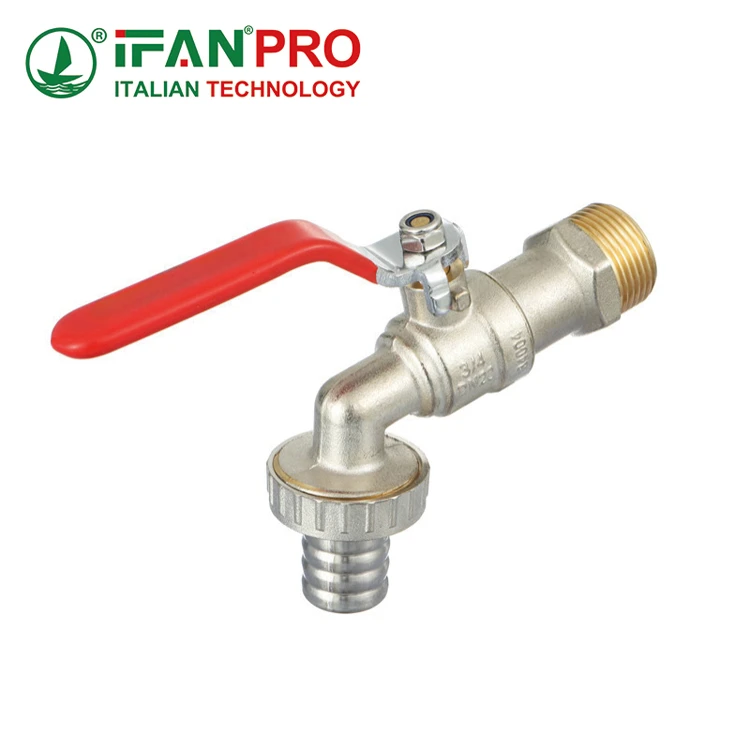
Take a concrete case. You are supplying brass hardware for a 90-unit residential block in a coastal town with chloride-bearing supply water, a hot-water circuit running at the top of its normal range, and a good number of fittings that will barely be used — balcony taps, laundry stop valves, isolation valves behind appliances. Walk it through as a specifier would.
First, split the schedule by exposure rather than by product family. The hot-water circuit and the coastal chloride are the two aggravating factors, so anything wetted on the hot side and anything on a low-flow branch goes into the high-risk group; a cold main that is flushed constantly is lower risk.
Second, decide what the high-risk group must carry: a DZR grade, evidence that it was heat treated after forming, and a test result to the acceptance limit that the destination market recognises. Third — and this is the step people miss — ask what happens to the resistant parts after forging, because a compliant alloy that was brazed into a sub-assembly at 620 °C without a corrective anneal is no longer compliant.
Fourth, plan for stagnation in the design rather than only in the material: a low-use branch that is dead-legged will attack even a good alloy harder than a well-flushed one will attack a mediocre alloy. Finally, keep the paperwork per production lot, not per product family. The lot is the unit that shares a furnace cycle, and the furnace cycle is what you are actually buying.
Best for, and not for
- DZR is worth insisting on for potable systems in Australia and New Zealand where it is mandatory, hot-water circuits, coastal and high-chloride supplies, softened water, buried or ground-contact fittings, and any low-duty-cycle fitting that holds standing water.
- DZR is not the deciding factor for closed heating loops with treated, oxygen-controlled water, compressed-air and pneumatic lines, gas service, or fittings that will never see potable water. Paying a DZR premium on a compressed-air manifold buys nothing. The lead-content rule, on the other hand, may still apply — that is a separate question with a separate certificate.
How to Specify and Verify Dezincification Resistance
Here is where most sourcing goes wrong: “passed the dezincification test” is not a statement of fact until you know which test and which acceptance limit. ISO 6509 is the test method and has been the international standard since 1981. It does not, by itself, tell you what counts as a pass. The acceptance criterion comes from whichever standard is citing the test, and they do not agree with each other.
| Standard | Solution & temperature | Duration | Acceptance limit |
|---|---|---|---|
| NSF/ANSI 14 | 1% CuCl2, 75 °C | 24 hours | 200 µm maximum depth |
| AS 2345 | 1% CuCl2, 75 °C | 24 hours | 300 µm max longitudinal (L), 100 µm max transverse (T) |
| ISO 6509-2 (from 2017) | 1% CuCl2, 75 °C | 24 hours | Forgings & castings 100 µm avg / 200 µm max; extruded rod 300 µm avg / 400 µm max longitudinal, 100 µm avg / 200 µm max transverse |
| UL 199 (sprinklers) | 1% CuCl2, 75 °C | 144 hours | See UL 199 §40B.1.1 |
Three things fall out of that table. The 200 µm number everyone quotes as “the ISO 6509 limit” is really NSF/ANSI 14’s acceptance criterion — a user-defined pass/fail bolted onto a shared test method. The sprinkler standard runs the identical chemistry for 144 hours instead of 24, six times as long, so a certificate that satisfies a plumbing standard says nothing about a sprinkler application. And the limits themselves are direction-dependent, which is the detail most summaries flatten away.
AS 2345 allows 300 µm measured longitudinally but only 100 µm transversely, so the same depth of attack passes or fails depending on which way the section was cut. ISO 6509-2 stacks product form on top of direction: extruded rod tested longitudinally is allowed 300 µm average where a forging is held to 100 µm. A bare “passes AS 2345” or “meets ISO 6509” line is not a specification. Ask which orientation was measured and on which product form, because a rod certificate cannot be transferred onto a forged fitting even when the alloy is identical.
What the regulator will accept as evidence
New Zealand is the clearest current example because the rules changed this year and are unusually explicit about proof. From 2 May 2026, Amendment 14 became the only MBIE acceptable solution for Building Code clause G12, with Amendment 13 revoked at 11:59pm on 1 May 2026. Under it, exactly three things demonstrate dezincification resistance: building product information stating how the product contributes to compliance with clause G12.3.2(c); a “DR” identification marking on the copper alloy component; or an AS 2345 test report from a facility with IANZ or equivalent accreditation.
Notice what is not on that list: a supplier’s own declaration in an email, a mill certificate for the raw material, and a general ISO 9001 quality certificate. In-scope products include copper alloy fittings, valves, taps and mixers, water meters and water heaters. Out of scope are showers and baths for bathing, non-potable systems, and anything used exclusively for irrigation or industrial processing — so the requirement is narrower than “all brass”, and reading the scope carefully can save you money on the parts that genuinely do not need it.
Australia enforces the same idea through its water authorities rather than only through a code. TasWater’s standard for property service connections, for instance, requires that connectors and gate valves be pressure rated PN16, with a minimum body of dezincification resistant brass to AS/NZS 2345, complying with potable water contact to AS/NZS 4020 — a requirement written into the schedule of approved items, which means a non-compliant fitting is refused at the connection, not debated afterwards.
The practical effect on a stock list is that a single product family often has to exist in two versions: a standard machining-brass line for markets that do not require DZR, and a resistant line for the ones that do. When you are reviewing a brass valve range for a mixed territory portfolio, it is worth deciding up front which SKUs need to carry the resistant specification rather than discovering at customs that one market’s approval does not travel.
Three certificates, three different questions
Buyers routinely collapse these into one and then discover the gap at a border. They are separate tests answering separate questions. Dezincification resistance is a corrosion property. Lead content is a composition property — New Zealand caps copper alloy in contact with drinking water at no more than 0.25% lead, matching the US Safe Drinking Water Act’s weighted average of not more than 0.25% across wetted surfaces. Leaching and health effects are a third question again.
| The certificate | The question it answers | What it does not tell you |
|---|---|---|
| ISO 6509 / AS 2345 | Will the zinc leach out and leave a porous wall? | Nothing about lead content or what the part leaches into the water |
| NSF/ANSI/CAN 372 | Is the weighted average lead across wetted surfaces at or below 0.25%? | Nothing about corrosion — a low-lead brass can still dezincify |
| NSF/ANSI 61 | What does the material extract into drinking water, and is that safe? | Nothing about corrosion resistance or structural durability |
If the lead side of that trio is the one biting you, our guide to what lead-free brass fittings actually have to prove works through the standards by market and how to verify a supplier’s claim — this page deliberately stops at the corrosion question so the two do not blur together.
A fitting can hold a valid NSF 61 listing and a valid 372 lead-free mark and still be made of a brass that will dezincify, because neither of those documents tests for it. That combination is not fraud — it is three correct certificates answering questions you did not ask.
Specifying brass for a market that requires DZR?
This is aimed at plumbing wholesalers, importers and contractors stocking brass for a named destination market. If that market is Australia, New Zealand or a WRAS territory, put the alloy designation, the post-forging heat treatment and the acceptance limit in writing on the purchase order before the first container — those three lines are what a compliance officer will ask you for, and they are far cheaper to obtain before production than after.
The Questions That Separate a Real DZR Supply from a Claimed One
Everything above reduces to a handful of questions that are awkward to answer if the property is not really there. Send them in writing and keep the reply.
- Which alloy designation, exactly? “DZR brass” is not an answer. CW602N, CW511L, CW724R or C69300 is an answer. A supplier who cannot name the grade for a specific part number does not control their material.
- What thermal treatment is applied after forging, at what temperature, for how long? You are looking for something in the region of 500–550 °C for two hours. A blank here means the resistance may exist on paper only.
- Does any later process exceed 580–600 °C, and is there a corrective anneal after it? This catches brazed assemblies and hot secondary operations that undo the property.
- Is the test report against the finished part or against the rod? Given ISO 6509-2’s separate limits for forgings and for extruded rod, a rod certificate does not settle a forging.
- Which acceptance limit, and which lab? AS 2345 at 300 µm longitudinal and 100 µm transverse, measured in a named accredited laboratory and with the orientation stated, is a different assurance from an unnamed in-house pass.
- Is the report tied to a production lot or to a one-off sample? The lot shares a furnace cycle. A type-test from three years ago does not describe this year’s container.
What We Publish, and Where We Stop
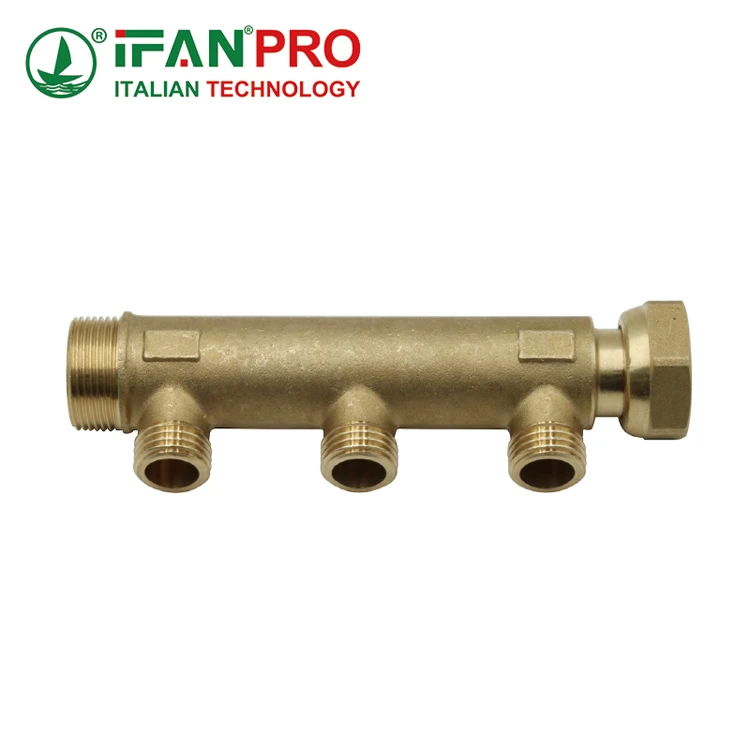
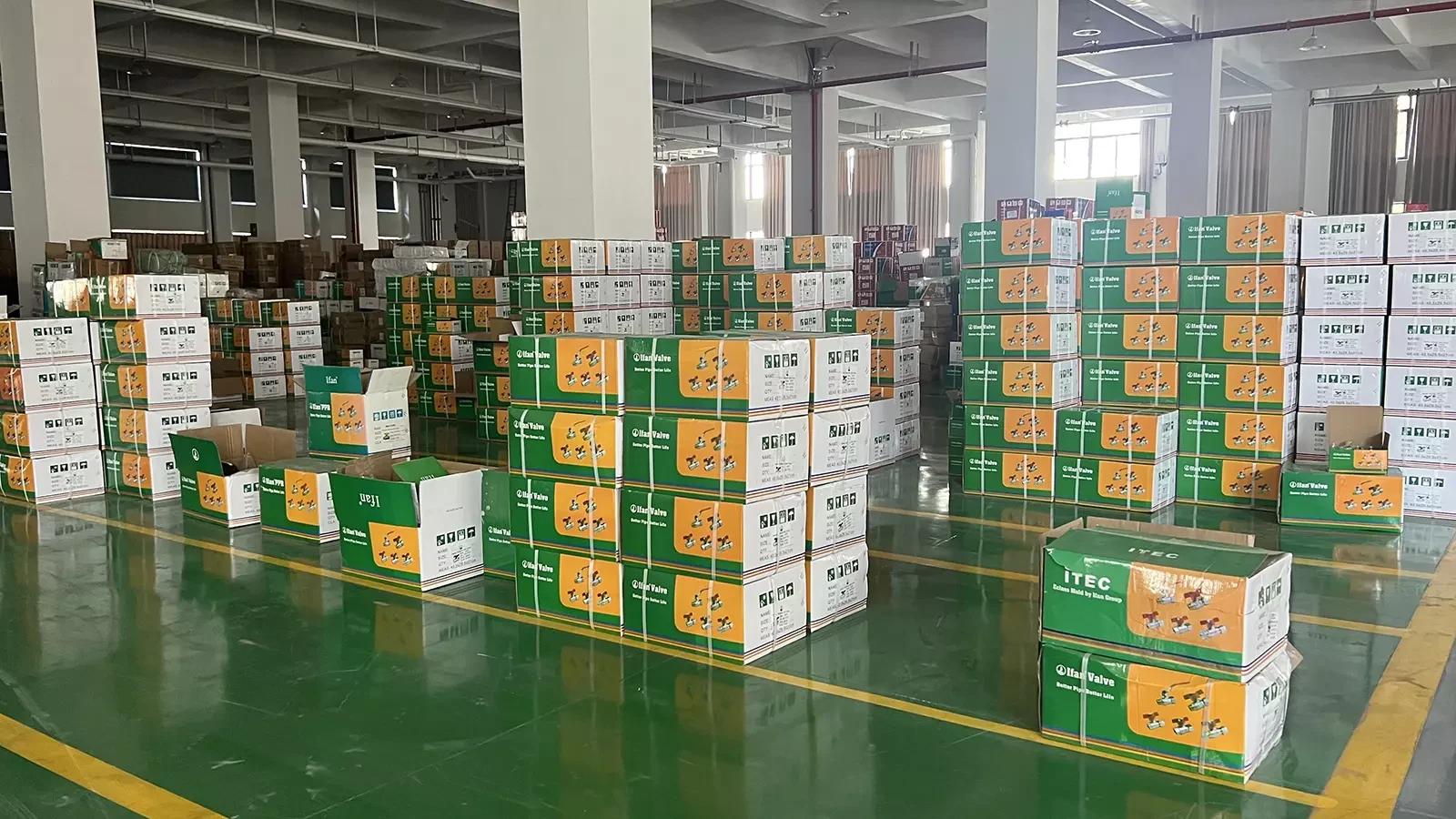
It would be inconsistent to write the questions above and then dodge them, so here is the same disclosure applied to this site. IFANPRO manufactures from a 120,000 m² plant with more than 600 employees, over 50 R&D and technical staff and more than 200 production and testing machines, and holds ISO 9001, ISO 14001, CE, WRAS, NSF/IAPMO, Intertek, EAC, Watermark and SAI Global marks. Of the 572 products currently published in the online catalogue, 234 return against a search for brass.
What that catalogue does not publish is an alloy designation for most of those parts. A search across it returns exactly one named brass grade — CW617N, on the brass core of a PPR gate valve — and zero results for CW602N, CW511L, CW724R, C69300 or the term DZR.
Take that at face value. It means the published product data is not yet detailed enough to answer question one from a web page, and a buyer specifying for an AS 2345 or G12 market needs to request the designation, the post-forging heat treatment and the test report for their specific part numbers rather than infer them from the catalogue. That request is the correct move with any supplier, this one included.
Where the catalogue does carry hard figures, they are of the ordinary specification kind rather than the corrosion kind. The PPR gate valve that names CW617N, for example, is published as DN20 to DN63, rated PN20, with a working temperature range of −10 °C to 95 °C. Those are the numbers a buyer can take from the page today. A dezincification depth in µm against a named acceptance limit is not among them, for this or any other brass part — which is precisely the gap the six questions above are designed to close, and one we would rather state than paper over.
Conclusion
Dezincification is a solved metallurgical problem and an unsolved purchasing one. The science has been settled since the 1980s: pick an inhibited alloy below the beta-phase ceiling, heat treat it properly after forming, do not cook it afterwards, and it will survive decades in water that would destroy plain machining brass.
Independent studies referenced by the mills suggest ISO 6509 correlates with more than 30 years of service in corrosive drinking water — while also reminding you that the test uses deliberately extreme conditions to compress decades into a day, so a pass is a comparative quality signal rather than a warranty on service life. The mills say this themselves; treat any supplier who offers it as a guarantee with corresponding caution.
What is not solved is the paperwork chain between that metallurgy and the box that arrives at your warehouse. The alloy can be right and the treatment missing. The certificate can be genuine and cover the wrong product form. The lead-free mark can be valid and irrelevant to corrosion. If you take one operational habit from this page, make it this: specify the alloy designation, the post-forging heat treatment and the acceptance limit as three separate line items on the purchase order, and require the test report to name the production lot. That costs nothing at the quotation stage and is the only part of this problem you can still control once the container has sailed.
Frequently Asked Questions
Can you tell if a fitting is dezincified without cutting it open?
Sometimes. Look for a loose white zinc-oxide deposit, a reddish cast where the brass should be yellow, and weeping at undisturbed joints. Plated bodies hide the colour change, so on chrome or nickel parts a section cut is the only reliable check.
Is DZR brass the same as lead-free brass?
No. They are separate properties with separate tests. Lead content is proven by NSF/ANSI/CAN 372; dezincification resistance by ISO 6509 or AS 2345. A fitting can legitimately hold one certificate and fail the other requirement entirely.
Does a water softener increase dezincification risk?
It can. Softening exchanges hardness ions for sodium and tends to lower bicarbonate alkalinity, and alkalinity is what helps form the protective surface layer on brass. Softened supplies are commonly treated as a reason to specify DZR.
Can a dezincified fitting be repaired?
No. The zinc loss is not reversible and the remaining copper structure is porous. Replacement is the only remedy, and if one fitting in a system has failed this way, the others sharing its alloy and water are on the same clock.
Do stainless steel or plastic fittings avoid the problem?
Yes, neither contains zinc, so this specific mechanism cannot occur. Both bring their own trade-offs in cost, jointing method and temperature limits, which is a separate material-selection decision from this corrosion question.
How long does dezincification take to cause a failure?
It varies enormously with water chemistry, temperature and alloy — from a few years in aggressive hot water to no measurable attack over decades. That variability is exactly why the accelerated laboratory test exists as a comparative screen.



 English
  Français
  Русский
  Español
Recent Comments