
I once faced a project where standard fittings created a maze of elbows and extra welds, slowing flow and inflating costs. That’s when the true value of a custom solution became crystal clear.
Yes, custom sweep tees can significantly optimize complex pipe layouts. They are engineered to replace multiple standard fittings with a single, streamlined component, improving flow efficiency, reducing pressure loss, simplifying installation in tight spaces, and lowering the total cost of the system by minimizing parts and labor.
Let’s examine how a custom-designed fitting transforms challenging pipe routing from a problem into an efficient, reliable solution.
How Do Custom Tees Enhance Flow Efficiency in Complex Piping Networks?
In complex networks, every turn and connection can disrupt smooth flow. Standard fittings often create more problems than they solve.
Custom tees enhance flow efficiency by providing a smooth, continuous interior path for fluids. Unlike standard tees with sharp corners, a custom sweep tee features a curved branch that guides the flow direction gradually. This design minimizes turbulent flow and dead zones, allowing liquids or gasses to move with less resistance and more consistent velocity throughout the system.
The Problem with Standard Fittings
Flow efficiency is about moving fluid from point A to point B with the least amount of energy loss. In a network with many branches and direction changes, standard tees are a major obstacle. Their sharp, 90-degree branch creates an abrupt change in flow direction. This sudden turn causes turbulence. Turbulence is chaotic flow that wastes energy, creates noise, and can lead to vibration and wear on the pipe walls.
Furthermore, at the branch of a standard tee, you often find a “dead zone” or area of low flow. This is where solids in the fluid, like scale or debris, can settle and build up over time. This buildup further restricts flow and can be difficult to clean.
How Custom Sweep Tees Provide the Solution
A custom sweep tee solves these problems through intelligent design. The key feature is the curved radius of the branch outlet. Think of it like a highway on-ramp versus a sharp right turn. The on-ramp allows cars to merge smoothly without slowing down traffic. Similarly, a sweep tee allows the fluid to change direction gradually.
This gradual curve maintains a more laminar (smooth, layered) flow. Laminar flow has much lower friction against the pipe wall than turbulent flow. This means the pumps or compressors driving the system don’t have to work as hard to maintain the desired flow rate, leading to direct energy savings.
Key Design Considerations for Optimal Flow
When designing a custom tee for flow efficiency, engineers consider several factors:
- Branch Angle: While 90 degrees is common, the branch can be customized to any angle (45°, 60°, etc.) to match the specific layout needs, further optimizing the flow path.
- Radius of the Sweep: The curvature of the branch is critical. A larger, gentler radius typically provides better flow characteristics than a tighter one.
- Matching Pipe Diameters: The tee can be designed with different inlet and outlet sizes (reducing tee) to match the specific requirements of each branch in the network.
Flow Performance Comparison
| Flow Characteristic | Standard 90° Tee | Custom Sweep Tee |
|---|---|---|
| Turbulence at Branch | High – Creates significant chaotic flow and energy loss. | Low – Promotes smooth, laminar flow transition. |
| Pressure Drop | High due to sharp directional change and turbulence. | Significantly Lower due to gradual guidance of fluid. |
| Potential for Sedimentation | High in the dead zone behind the sharp branch. | Low due to consistent flow velocity through the curve. |
| Long-Term Efficiency | Decreases as scale builds up in dead zones. | Remains stable due to self-cleaning, scouring action. |
For plant managers and engineers, this enhanced flow efficiency translates to lower operational costs, reduced pump wear, and a more reliable and consistent process performance.
What Are the Key Benefits of Custom Sweep Tees for Reducing Pressure Drop?
Pressure drop is a silent profit killer. Every unit of pressure lost requires more pumping energy, which increases electricity costs month after month.
The key benefit of custom sweep tees for reducing pressure drop is their aerodynamic design that minimizes flow resistance. The sweeping curve prevents the sharp, sudden turns that cause dramatic energy loss. By maintaining smoother flow, they reduce the workload on pumps or compressors, leading to substantial long-term energy savings and allowing for the use of smaller, less expensive pumping equipment.
Understanding Pressure Drop in Systems
Pressure drop is the loss of water or air pressure as it moves through a piping system. Fittings are primary contributors to this loss. Each standard elbow or tee acts like a partial blockage, forcing the system to use extra energy to push the fluid through. In a complex layout with many fittings, these small losses add up to a major drop in overall system pressure.
This isn’t just a technical detail; it has real financial impact. To compensate for a high-pressure drop, you need a larger, more powerful pump. This pump costs more upfront and consumes significantly more electricity over its lifetime.
The Sweep Tee Advantage
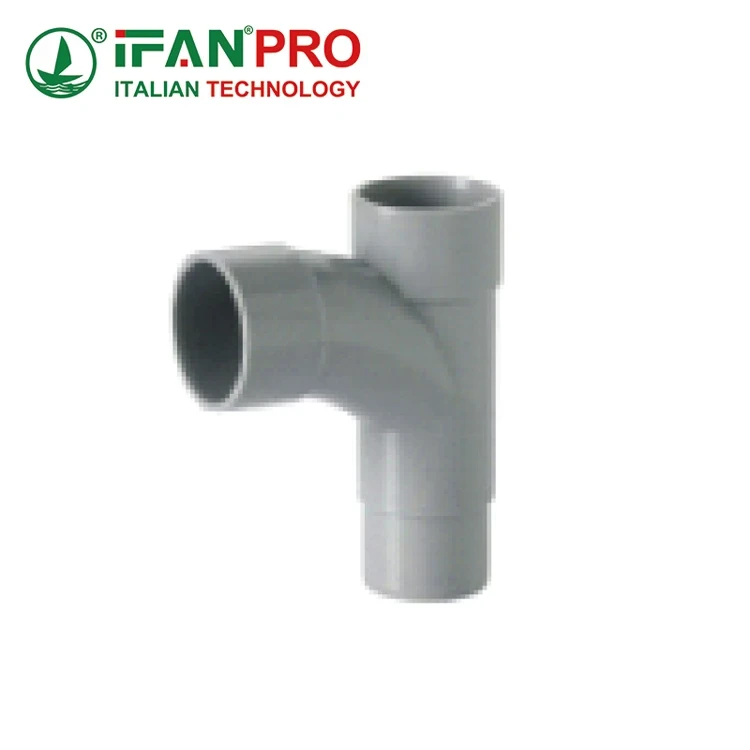
A custom sweep tee is engineered to be a low-resistance fitting. The fundamental principle is simple: a gentle curve offers less resistance than a sharp corner. By eliminating the sharp turn inside a standard tee, the sweep tee removes a major source of pressure loss.
This has a cascading effect on system design:
- Lower Required Pump Head: Because the overall system pressure drop is lower, the pump only needs to provide a lower “head” or pressure to move the fluid. This often allows you to specify a smaller, more efficient, and less costly pump.
- Reduced Energy Consumption: The pump motor doesn’t have to work as hard. This directly reduces your facility’s energy bill. For systems that run continuously, even a small percentage of savings amounts to a large sum of money over years.
- Increased System Capacity: Alternatively, the energy saved from reduced pressure drop can be used to increase flow rate or extend the system to serve additional equipment without upgrading the pump.
Quantifying the Savings
Let’s consider an example. Replacing just five high-resistance standard tees with low-resistance custom sweep tees in a pumping system could reduce the total system pressure drop by 10-15%. This reduction might allow you to downgrade pump size or, in an existing system, simply save on energy. The table below shows a simplified comparison.
Impact of Fitting Choice on System Pressure
| System Scenario | Total System Pressure Drop | Pump Size Required | Estimated Annual Energy Cost |
|---|---|---|---|
| Using Standard Tees | High (e.g., 50 psi) | Large, 75 HP pump | $39,000 |
| Using Custom Sweep Tees | Lower (e.g., 42 psi) | Optimized, 65 HP pump | $33,800 |
| Benefit | ~16% Reduction | ~13% Smaller Pump | ~$5,200 Annual Savings |
Note: Values are illustrative; actual savings depend on system size and runtime.
For a procurement manager focused on total cost of ownership, the value of custom sweep tees is clear. The higher initial cost of the custom fitting is quickly offset by the savings in pump costs and, most importantly, the ongoing reduction in energy expenditure.
How Can Custom Sweep Tee Designs Simplify Compact Piping Installations?
Space is always at a premium. I’ve seen installers struggle to fit a puzzle of standard fittings into a tight equipment skid, resulting in compromised layouts.
Custom sweep tee designs simplify compact installations by consolidating multiple direction changes into one fitting. A single custom tee can often replace a combination of a standard tee, elbow, and short pipe spool. This reduces the number of welds or connections, saves crucial space, and creates a cleaner, more robust layout that is easier to insulate and maintain.
The Challenge of Tight Spaces
In modern plants, marine engine rooms, or modular skids, piping must navigate through very confined areas. Using off-the-shelf fittings in these spaces often leads to a “spaghetti” layout—a tangled web of short pipes connected by many elbows and tees. This approach has several drawbacks:
- Many Connection Points: Each weld or threaded joint is a potential future leak point.
- Difficult Installation: It is hard to accurately align and fit many small pieces in a tight space.
- Poor Accessibility: The dense network of fittings makes it difficult to access valves or instruments for maintenance.
- Increased Labor: More fittings mean more time spent measuring, cutting, and welding.
The Consolidation Power of Custom Design
A custom sweep tee tackles this problem head-on by acting as a integrated solution. Instead of taking a pipe run, connecting a tee, then adding an elbow to turn the branch, a designer can create one fitting that does it all. This custom fitting has the main run and a branch that exits at the precise angle and orientation needed to connect directly to the next valve or piece of equipment.
This consolidation is transformative:
- Fewer Parts: One custom tee replaces multiple standard parts. This simplifies the bill of materials, reduces procurement complexity, and minimizes inventory.
- Fewer Welds: Fewer parts mean far fewer welds. This dramatically reduces the risk of leaks, lowers welding labor costs, and shortens installation time. It also reduces the need for costly post-weld inspections.
- Guaranteed Fit: The custom tee is fabricated to exact dimensions based on the installation drawings. This ensures it fits perfectly the first time, eliminating costly on-site modifications and delays.
Advantages for Pre-Fabrication
Custom tees are ideal for the modern construction method of modular pre-fabrication. Entire piping assemblies can be built cleanly and efficiently in a controlled workshop environment using custom-designed fittings. These pre-built modules are then simply lifted and connected at the job site. This method drastically cuts field installation time, improves quality control, and enhances safety by moving complex work away from the final, often crowded, installation site.
Comparison: Standard vs. Custom Approach
| Installation Aspect | Standard Fitting Approach | Custom Sweep Tee Approach |
|---|---|---|
| Number of Components | 3 (Tee, Elbow, Nipple) | 1 (Custom Sweep Tee) |
| Number of Welds/Connections | 4 | 2 |
| Required Space | Larger footprint due to extra fittings. | Compact, minimal footprint. |
| Installation Time | Longer (fit-up and weld multiple pieces). | Shorter (fit and weld one piece). |
| Potential Leak Points | 4 | 2 |
For project managers facing tight deadlines and space constraints, custom sweep tees are a powerful tool for simplifying logistics, accelerating installation, and delivering a more reliable final product.
What Makes Custom Tees a Cost-Effective Solution for Unique Layout Challenges?
Many buyers see “custom” and think “expensive.” However, for non-standard layouts, the opposite is often true when you consider the complete project cost.
Custom tees are cost-effective for unique layouts because they solve multiple cost problems at once. They eliminate the need for extra fittings, reduce expensive field labor and welding, minimize long-term maintenance, and prevent flow inefficiencies that waste money on energy. While the unit price is higher, the total installed cost and lifecycle cost are frequently lower than a makeshift solution using standard parts.
Analyzing Total Project Costs
To understand cost-effectiveness, we must look beyond the price tag on a single fitting. The total cost of a piping installation includes material, labor, operational efficiency, and maintenance. A standard fitting might seem cheap, but the problems it creates in a complex layout can make the overall project very expensive.
Let’s break down how custom tees save money across all these areas:
1. Savings on Materials and Labor:
As shown earlier, one custom tee can replace several standard fittings. This means you buy fewer parts. More importantly, you pay for fewer welds. Field welding is one of the most costly and time-consuming parts of installation. Reducing weld counts by 50% or more in a complex junction creates massive savings in labor hours and associated costs (welders, equipment, inspections).
2. Avoiding Rework and Delays:
Trying to force standard fittings into a unique layout often leads to compromises, mistakes, and on-the-fly modifications. This rework wastes time and materials. A custom tee, built to precise specifications, fits right the first time. This keeps the project on schedule, avoiding costly delays that can hold up entire construction teams.
3. Long-Term Operational Savings:
This is where the real value compounds. A custom sweep tee improves flow and reduces pressure drop, as discussed. The energy savings from a more efficient system pay dividends every single day of operation, for decades. These ongoing savings often surpass the entire initial cost difference between standard and custom fittings.
4. Reduced Maintenance Costs:
A system with fewer welds has fewer potential leak points. A system with smooth flow has less erosion and vibration. This translates to lower maintenance costs, less downtime for repairs, and higher overall system reliability.
Total Cost of Ownership Comparison
| Cost Category | Standard Fittings Solution | Custom Sweep Tee Solution | Notes |
|---|---|---|---|
| Initial Material Cost | Lower | Higher | Custom parts have higher unit cost. |
| Installation Labor Cost | Higher | Lower | Fewer parts and welds save huge time. |
| Risk of Rework/Delays | High | Very Low | Custom parts are made to fit. |
| System Energy Cost | Higher | Lower | Improved flow efficiency saves power. |
| Long-Term Maintenance | Higher | Lower | Fewer leaks, less erosion/vibration. |
| Total Lifecycle Cost | Higher | Lower | Higher initial cost is outweighed by long-term savings. |
For a savvy procurement professional, the goal is to minimize the total cost of ownership, not just the purchase order total. Custom sweep tees, specified for the right challenging applications, are a strategic investment that delivers a clear financial return over the life of the plant or building.
Conclusion
Custom sweep tees optimize complex layouts by improving flow, saving energy, simplifying installation, and lowering total costs. For your next project, specify IFAN’s custom-designed pipe fittings for a smarter, more efficient solution.






 English
  Français
  Русский
  Español
Recent Comments