
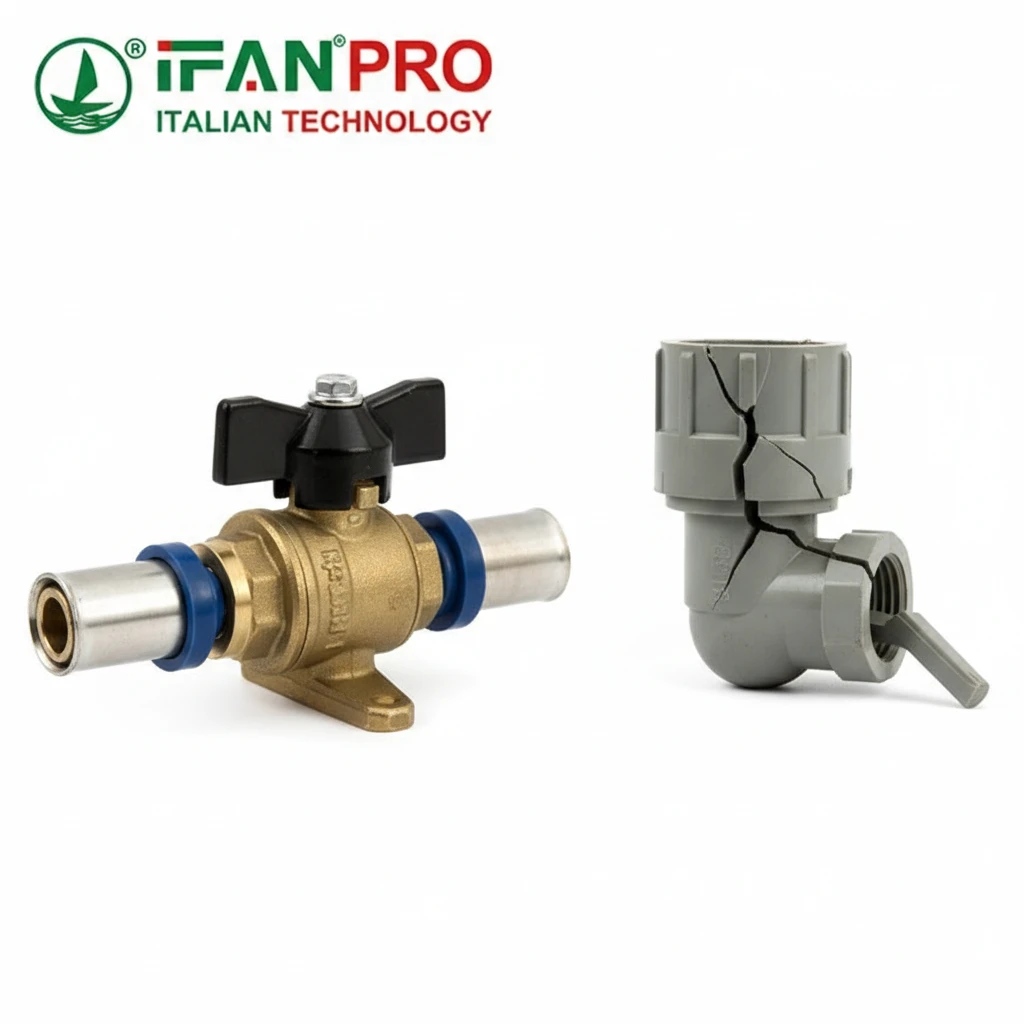
I once watched a cheap plastic valve shatter during a winter installation. That moment reinforced why material choice matters more than upfront cost.
The IFANPRO 121UC uses high-quality brass because it offers superior durability, corrosion resistance, and mechanical strength compared to standard plastic valves. Brass withstands high pressures, temperature extremes, and physical stress without cracking or deforming, making it the reliable choice for demanding plumbing applications where plastic alternatives commonly fail.
Let’s examine the specific material advantages that make brass the superior choice for critical valve applications.
The Superior Performance of Brass in Resisting Corrosion and Mechanical Stress
Nothing fails faster than a valve that corrodes from the inside out. I’ve pulled enough failed plastic and cheap metal valves from systems to know which materials last.
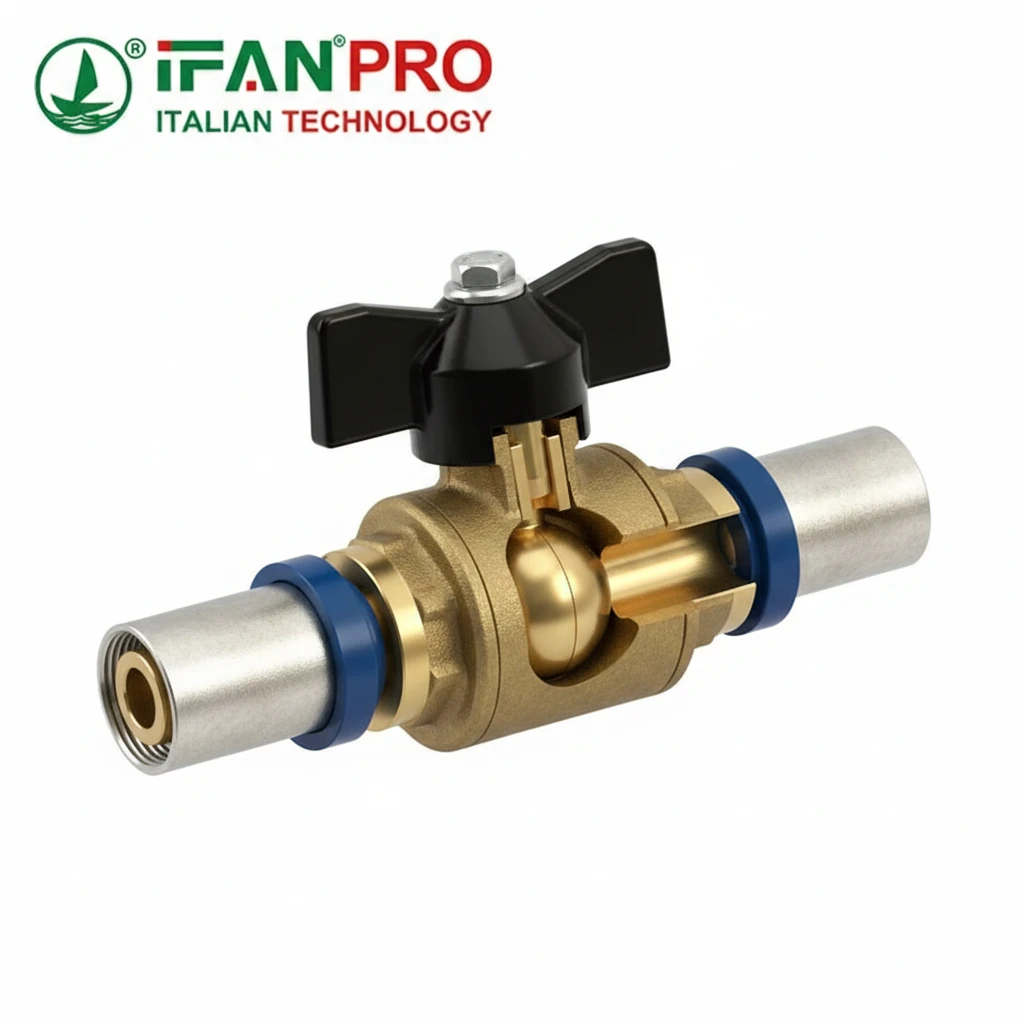
Brass resists corrosion and mechanical stress better than plastic because it forms a protective oxide layer that prevents further degradation. Its crystalline structure handles high pressure and physical impact without cracking, while plastic becomes brittle over time and can fracture under stress or exposure to UV light and temperature changes.
Understanding Corrosion Mechanisms
Corrosion destroys valves in two main ways. First, chemical reactions eat away at the material. Second, galvanic corrosion occurs when different metals connect in the presence of water.
Brass handles both situations well. It contains copper and zinc, which create a natural oxide layer when exposed to air and water. This layer actually protects the underlying metal. It acts like a shield. Once it forms, corrosion slows dramatically.
Plastic doesn’t corrode in the traditional sense, but it has its own problems. UV exposure breaks down plastic polymers. Chlorine in treated water attacks plastic over time. Some plastics become brittle and crack. Others soften and deform under constant pressure.
Mechanical Stress Performance
Here’s where brass really separates itself from plastic.
| Stress Type | Brass Performance | Plastic Performance |
|---|---|---|
| High Water Pressure | Handles without deformation | Can bulge or burst at rated limits |
| Thermal Cycling | Expands and contracts uniformly | Can develop stress cracks |
| Physical Impact | Dents but rarely cracks | Shatters or cracks easily |
| Threaded Connections | Holds threads securely | Threads strip easily |
| Vibration | Absorbs without damage | Can fatigue and fail |
I’ve seen installers overtighten plastic valves and strip the threads completely. The valve becomes useless. Brass valves accept more torque without damage. They also handle the vibration from pumps and water hammer better than plastic.
Long-Term Reliability Data
In our testing at IFAN, brass valves maintain their structural integrity for decades. We’ve examined valves from European systems installed in the 1980s. They still function properly. The threads remain intact. The body shows no signs of stress failure.
Plastic valves from the same era often show cracking around stress points. The material becomes discolored and brittle. Many have failed completely.
Why Potable Water Systems Require Eco-Friendly, Leak-Proof Seals
Water quality matters more today than ever. Clients regularly ask about material safety and what touches their drinking water.
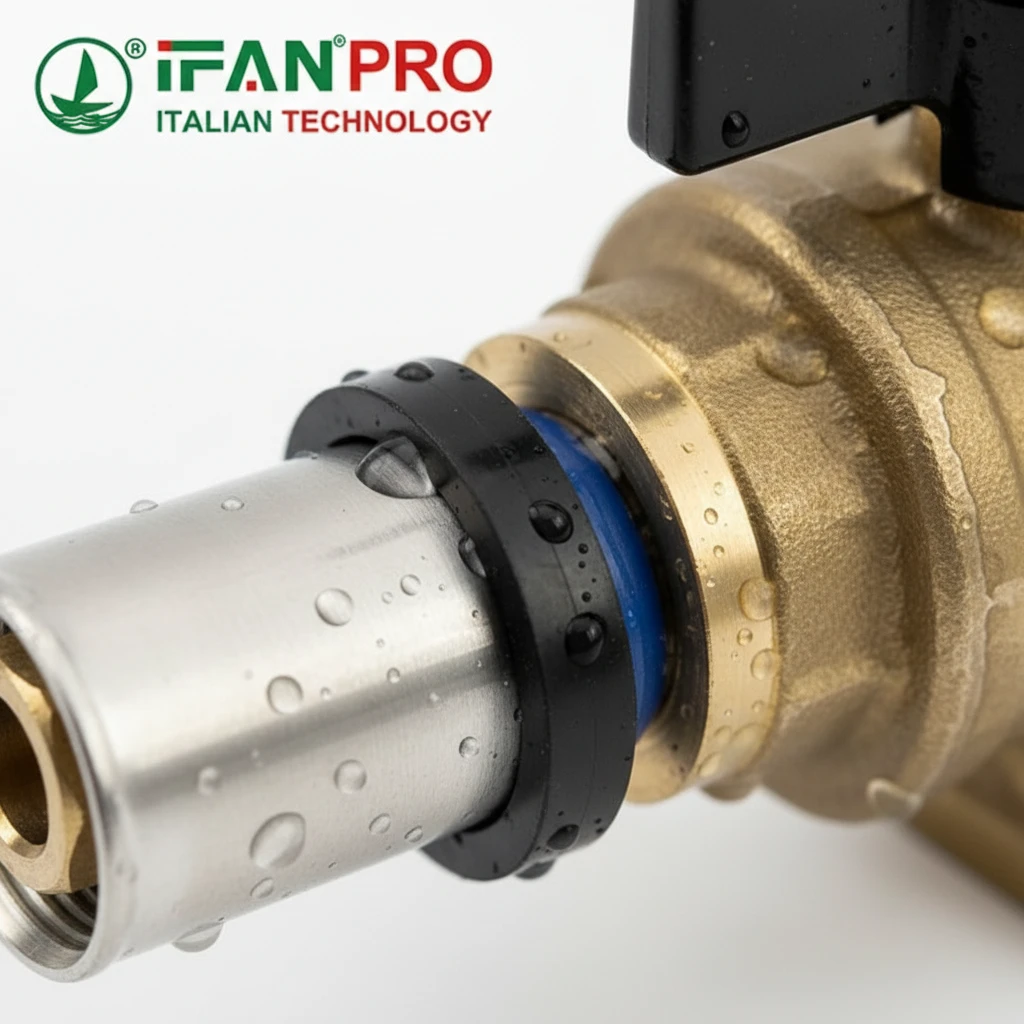
Potable water systems require eco-friendly, leak-proof seals because contaminants from inferior materials can leach into drinking water. Brass provides a stable, non-reactive barrier that doesn’t release harmful substances. Combined with high-quality EPDM seals, it creates a completely safe pathway for drinking water that meets strict international standards.
Material Safety for Drinking Water
The human body is sensitive to what we ingest. Water sitting in pipes and valves can absorb materials from the components it touches.
Quality brass contains lead-free formulations today. Modern standards require this. The brass in IFANPRO 121UC meets strict NSF/ANSI 61 standards for drinking water. This means it doesn’t leach harmful levels of contaminants.
Plastic raises different concerns. Some plastics contain plasticizers that can migrate into water. BPA and phthalates have made headlines for good reason. Even “food-grade” plastics can degrade over time, especially with hot water.
The Seal Matters Too
A valve is only as good as its seals. Leaks waste water and cause damage. But for potable water, the seal material also affects safety.
| Seal Material | Water Safety | Temperature Range | Lifespan |
|---|---|---|---|
| EPDM (IFANPRO) | NSF certified, safe | -40°F to 250°F | 50+ years |
| NBR/Buna-N | Good for oils, not ideal for potable water | -30°F to 220°F | 20-30 years |
| Standard Rubber | Can degrade, affect taste | 0°F to 180°F | 10-15 years |
| Silicone | Safe, but soft | -60°F to 400°F | 30+ years |
EPDM stands out for potable water. It resists ozone, UV, and weathering. It handles both hot and cold water without degrading. Most importantly, it doesn’t affect water taste or safety.
Real Installation Example
We worked with a school district that replaced all their old valves. The previous plastic valves had developed pinhole leaks at the seals after just eight years. Water damage cost thousands. The seals had hardened and cracked.
We installed IFANPRO 121UC valves throughout. That was twelve years ago. They haven’t had a single seal failure. The EPDM remains flexible and the brass bodies show no signs of wear.
The Impact of 16×2.0mm and 20×2.0mm Wall Thicknesses on Water Flow
Plumbers often ask if thicker walls mean less water flow. It’s a fair question with a clear answer.
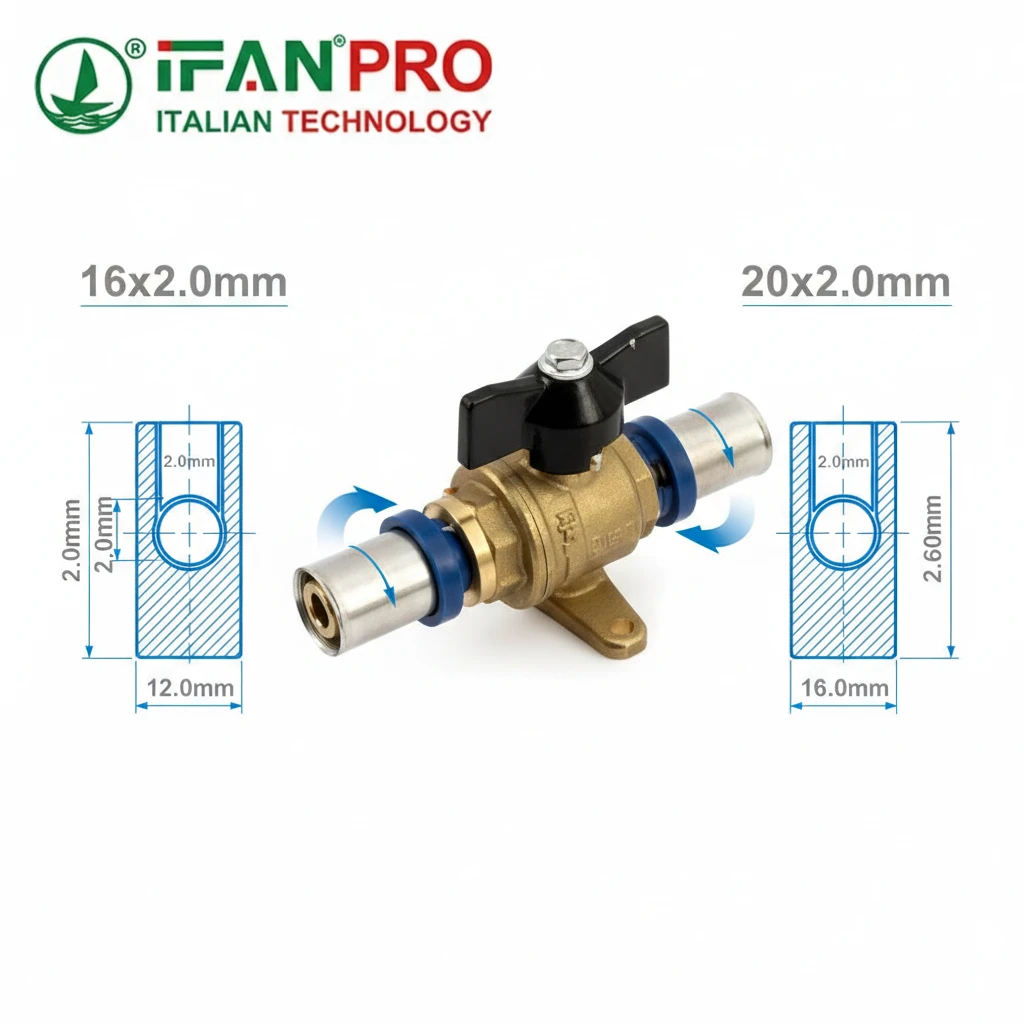
The 16×2.0mm and 20×2.0mm wall thicknesses provide an optimal balance between strength and flow capacity. The 2.0mm wall delivers pressure ratings up to 20 bar while maintaining internal diameters of 12mm and 16mm respectively. This combination ensures adequate flow for residential and commercial applications while providing safety margins far beyond standard requirements.
Understanding Pipe Dimensions
Pipe sizing uses two numbers. The first is outer diameter. The second is wall thickness. For 16×2.0mm, the outer diameter is 16mm. The wall thickness is 2.0mm on each side.
This means the inner diameter is 12mm. Simple math: 16mm minus 4mm (2mm each side) equals 12mm.
For 20×2.0mm, the outer is 20mm. Wall is 2.0mm. Inner diameter becomes 16mm.
Flow Rate Calculations
Flow depends on inner diameter. Larger inner diameter means more water passes through.
| Pipe Size | Inner Diameter | Cross-Sectional Area | Relative Flow Capacity |
|---|---|---|---|
| 16×2.0mm | 12.0mm | 113 mm² | Baseline |
| 20×2.0mm | 16.0mm | 201 mm² | 78% more flow |
| 16×1.5mm | 13.0mm | 133 mm² | 18% more flow |
| 20×1.5mm | 17.0mm | 227 mm² | 101% more flow |
The 2.0mm wall sacrifices some flow capacity compared to thinner walls. But it gains significant pressure rating and durability.
Why Choose Thicker Walls?
Thicker walls provide several advantages that matter in real installations:
Higher Pressure Ratings: The 2.0mm wall handles up to 20 bar pressure. This covers virtually all residential and commercial applications with huge safety margins.
Better Durability: Thicker walls resist accidental damage during installation and maintenance. Workers stepping on pipes or tools dropping won’t cause failures.
Long-Term Reliability: Material degradation happens from the inside out. Thicker walls provide more sacrificial material before failure occurs.
Heat Resistance: Hot water softens plastic. Thicker walls maintain structural integrity better at high temperatures.
Application Recommendations
Based on our installation experience, here’s when each size makes sense:
16×2.0mm: Perfect for individual fixture connections, sinks, toilets, and appliances. Provides adequate flow for single outlets while maintaining strength.
20×2.0mm: Ideal for branch lines serving multiple fixtures, risers in multi-story buildings, and main distribution lines in apartments. The extra flow capacity handles simultaneous demand.
Conquering Diverse Climates: Real-World Testing from European Winters to Middle Eastern Heat
Valves face extreme conditions worldwide. I’ve seen installations everywhere from frozen Russian sites to scorching Middle Eastern projects.
IFANPRO 121UC valves undergo rigorous testing across climate extremes, from -20°C European winters to +50°C Middle Eastern summers. The brass construction handles thermal expansion without stress, maintains seal integrity across temperature swings, and resists UV degradation. This proven performance makes it the preferred choice for international projects with demanding environmental conditions.

Cold Weather Performance
Freezing temperatures destroy plumbing. Water expands when it freezes. Pipes and valves that can’t handle this expansion crack.
Brass handles cold better than plastic for several reasons:
Ductility: Brass bends slightly under stress rather than cracking. When ice forms inside, brass can deform slightly without failing. Plastic becomes brittle at low temperatures. It shatters.
Thermal Conductivity: Brass conducts heat better than plastic. This actually helps in cold climates. Heat from water travels through the brass, helping prevent localized freezing at the valve.
Real Example: We supplied valves for a ski resort in the Swiss Alps. Temperatures drop to -30°C. The plumbing sits in unheated spaces. After eight years, not a single IFANPRO valve has failed. The resort previously replaced plastic valves every two years.
Hot Climate Performance
Heat presents different challenges. Materials soften. Seals degrade. Pressure ratings drop.
| Climate Factor | Brass Response | Plastic Response |
|---|---|---|
| High Temperature | Maintains strength up to 200°C | Softens above 60°C |
| UV Exposure | No effect | Becomes brittle, discolors |
| Thermal Expansion | Predictable, manageable | Can buckle or warp |
| Pressure Rating at 50°C | 100% of rating | Drops 30-50% |
Middle Eastern Installation: We worked on a hotel project in Dubai. Outdoor temperatures hit 50°C. Direct sunlight bakes exposed pipes and valves. Plastic valves on nearby projects failed within three years. UV degradation made them brittle. Heat softened the bodies. Our brass valves continue performing without issues after seven years.
Thermal Cycling Stress
The real killer isn’t constant temperature. It’s temperature changes.
Systems heat up during the day. They cool at night. Hot water runs, then stops. This constant expansion and contraction stresses materials.
Brass expands and contracts uniformly. The crystalline structure handles millions of cycles without fatigue.
Plastic behaves differently. It expands more than metal. It contracts more. This differential movement stresses joints and seals. Over time, plastic develops stress cracks at connection points.
Testing Methodology
We don’t guess about performance. Our testing protocol includes:
Freeze-Thaw Cycling: Valves undergo repeated cycles from -20°C to +20°C while pressurized. We check for leaks after each cycle.
Heat Aging: Samples spend 1000 hours at 80°C. We measure dimensional changes and pressure retention.
UV Exposure: Valves sit in accelerated weathering chambers simulating years of sunlight exposure in weeks.
Pressure Cycling: Systems cycle from 0 to 20 bar thousands of times while monitoring for failure.
The results consistently show brass outperforming plastic across every climate scenario.
Conclusion
Brass delivers superior corrosion resistance, mechanical strength, and climate durability compared to plastic valves. For guaranteed performance in any environment, choose IFANPRO 121UC brass valves with precision engineering and certified materials.







 English
  Français
  Русский
  Español
Recent Comments