
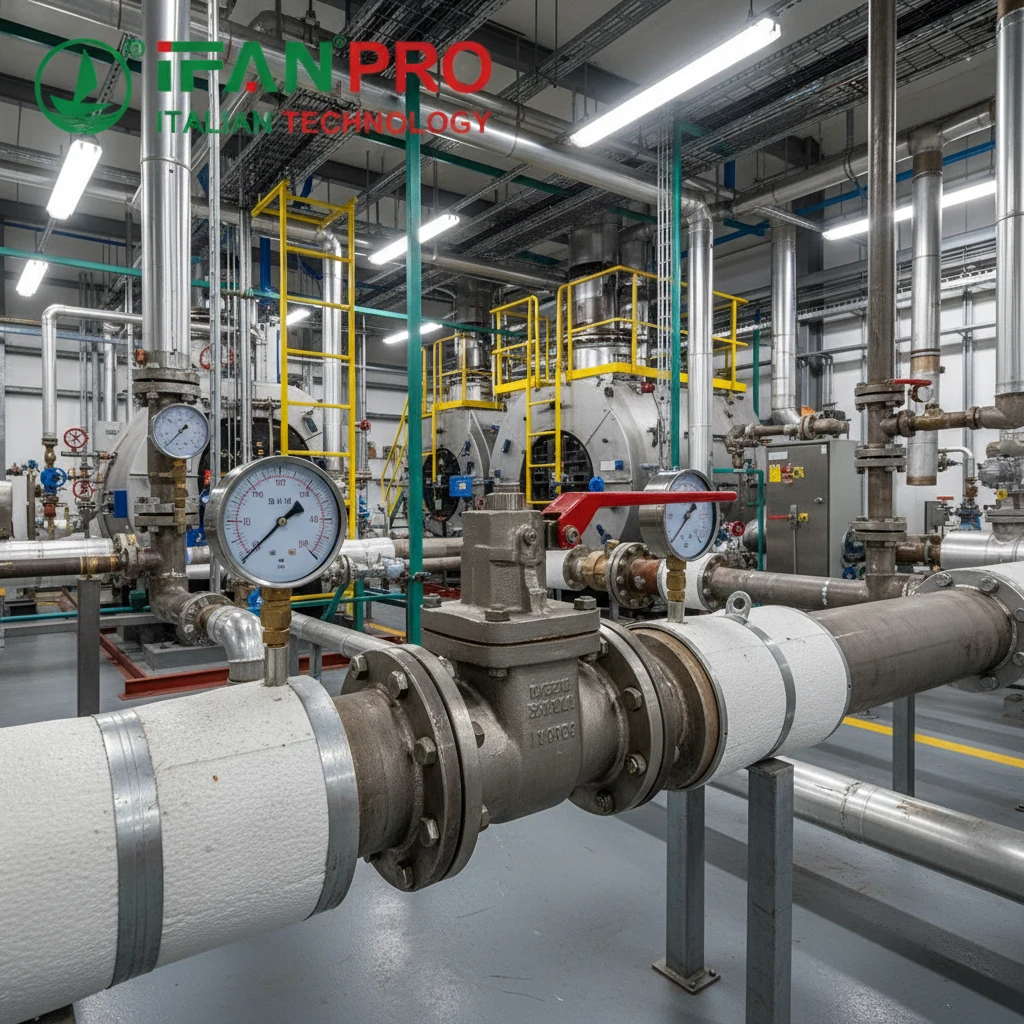
A failed valve in a heating loop once caused a three-day plant shutdown for one of my clients. That costly lesson taught me that the right valve is not just a part; it serves as the heart of system reliability.
Yes, a valve like the 121UC is engineered to be an ideal choice for both central heating and demanding industrial loops. Its success hinges on a robust design that meets precise temperature and pressure ratings, ensures integrity in continuous operation, holds necessary global certifications, and utilizes materials capable of handling elevated temperatures common in these applications.
However, simply matching basic specs is not enough. Therefore, let’s examine why a dedicated industrial valve stands apart from standard options.
Why Are Its Temperature and Pressure Ratings Perfect for Boiler Supply Lines?
Boiler systems demand unwavering stability. For instance, I have seen generic valves fail quickly under thermal cycling, but a purpose-built valve handles this with ease.
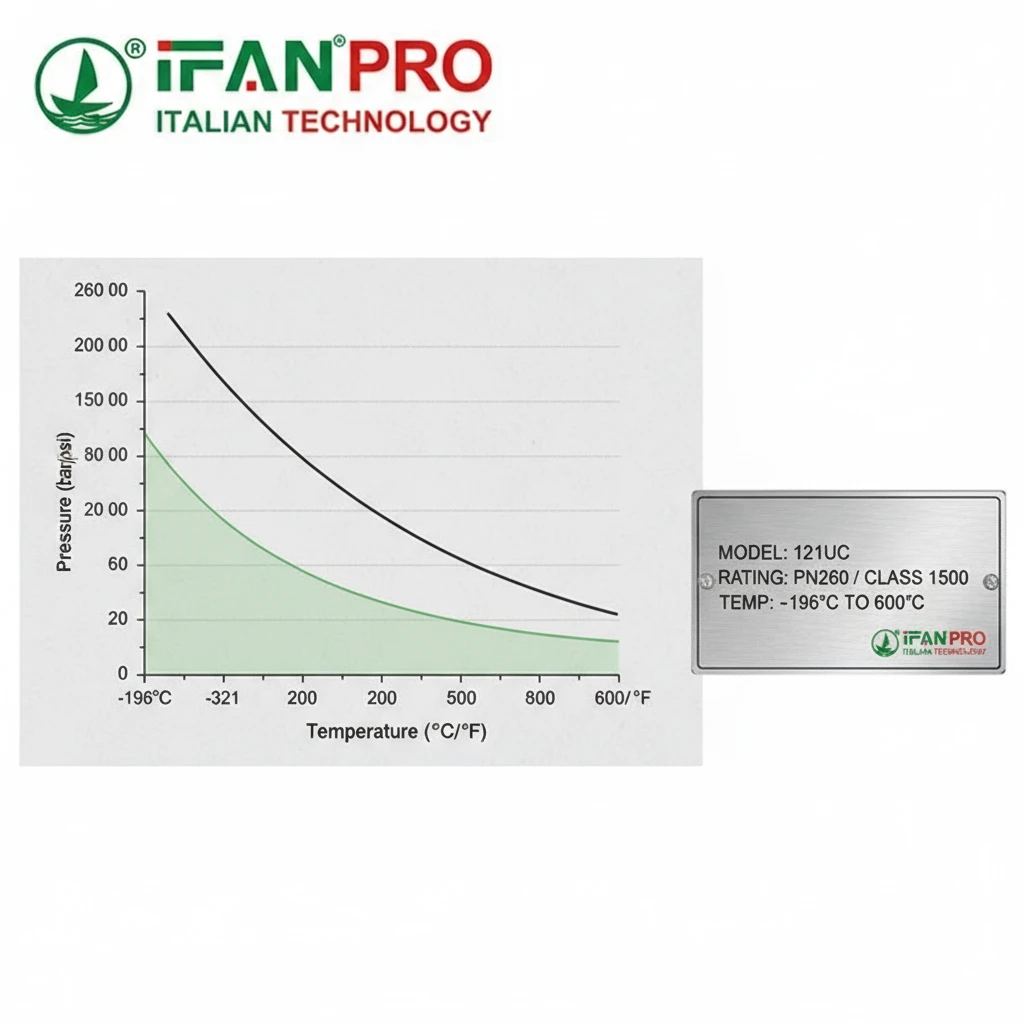
The 121UC valve’s temperature and pressure ratings are perfect for boiler supply lines because engineers specifically designed them to exceed the typical operating conditions of such systems. With pressure ratings potentially up to 1500 Class (PN260) and a temperature range covering -196°C to 850°C, it provides a significant safety margin against the surges and thermal stresses that cause standard valves to fail.
The Critical Need for a Safety Margin
A boiler supply line is not a gentle environment. In fact, it experiences constant thermal cycles, pressure fluctuations from pump operations, and potential water hammer. Because a valve rated at the system’s maximum operating point has no room for error, the 121UC valve, with its high-pressure capability, operates so that normal system pressures only utilize a fraction of its capacity. This margin is crucial for long-term safety and durability, as it prevents metal fatigue and deformation over thousands of heating and cooling cycles.
Material and Design for Thermal Resilience
Beyond the numbers on a spec sheet, the valve’s construction matters immensely. For high-temperature service, manufacturers often specify materials like carbon-molybdenum steel or stainless steel (e.g., F304H, F316H) for the body and critical components. These alloys retain their strength and resist creep (slow deformation under stress) at boiler temperatures where standard carbon steel would weaken.
Furthermore, the design incorporates features for thermal expansion. For example, specialized seals, such as flexible graphite or metal-seated designs, maintain a leak-tight closure even as the valve body and piping expand and contract at different rates. While a standard valve might seal perfectly at room temperature, it could develop a severe leak once the system reaches operating temperature. In contrast, the 121UC’s design anticipates this, ensuring reliable sealing throughout the entire thermal cycle.
Table 1: Typical Boiler System Demands vs. Industrial Valve Capabilities
| Parameter | Typical Residential/Commercial Boiler System | 121UC Valve Example Capability | Why the Margin Matters |
|---|---|---|---|
| Operating Pressure | 2 – 10 bar | Up to 260 bar (PN260) | Handles pump surges, water hammer, and safety valve set points without stress. |
| Operating Temperature | 70°C – 120°C | Up to 600°C (standard) or 850°C (special) | Withstands superheated steam, prevents material degradation, and ensures seal integrity. |
| Material | Often Bronze or Cast Iron | Carbon-Moly Steel, Stainless Steel | Provides superior strength and corrosion resistance for a decades-long service life. |
How Does It Perform in Continuous Operation Within Industrial Process Loops?
Process loops never stop. For example, in one facility, a valve failure halted a chemical batch, which resulted in a six-figure loss. Clearly, continuous operation is the ultimate test.
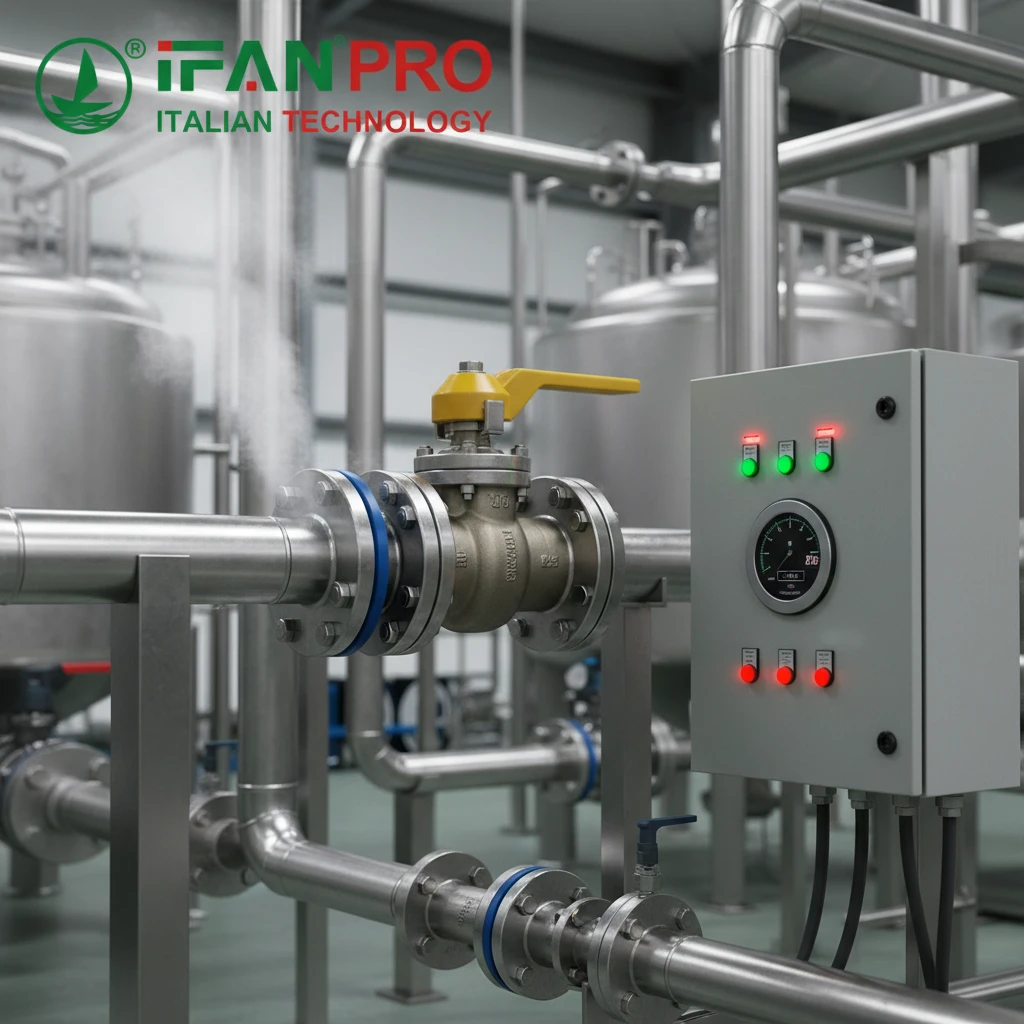
It performs excellently in continuous operation due to features like a double bearing design for smooth, low-wear actuation, anti-blowout stem construction for safety, and robust sealing solutions that withstand constant fluid exposure and pressure. Essentially, this design philosophy prioritizes longevity and minimal maintenance over millions of cycles.
Engineering for Endurance, Not Just Function
Industrial process loops can run 24/7 for years. Consequently, a valve here cannot be a disposable component. Instead, its design must address the primary enemies of continuous operation: wear, fatigue, and seal degradation.
Key features of a valve like the 121UC address these directly:
- Double Bearing Design: This supports the valve stem at two points, which drastically reduces wobble and uneven wear on the stem and seals during repeated operation. Think of it as having a well-supported rotating shaft versus one that bends with each turn.
- Anti-Blowout Stem: This is a critical safety and reliability feature. Specifically, this design ensures that internal pressure cannot eject the valve stem, thereby guaranteeing the valve remains operable and safe even under full line pressure.
- Live-Loaded Spring Technology: For critical sealing, some advanced designs use springs behind the seal. These springs continuously apply a compensating force, which maintains seal contact pressure even as the sealing faces naturally wear down over time.
The Importance of Operational Modes
From an engineering perspective, equipment is rated for different operational modes (like S1 for continuous operation). A valve like the 121UC is designed and tested for S1 – Continuous Duty, meaning it can handle the nominal load indefinitely and reach a stable temperature that does not exceed its design limits. This is fundamentally different from a valve designed for intermittent use (S3 mode), which would overheat and fail if run constantly.
Table 2: Design Features for Continuous vs. Intermittent Duty Valves
| Design Focus | Valve for Continuous Duty (e.g., 121UC in Process Loop) | Valve for Intermittent/General Duty |
|---|---|---|
| Stem Guidance | Double bearing design for minimal deflection. | Often single guide, prone to wear. |
| Seal Technology | Live-loaded springs or advanced self-compensating seals. | Static seals, prone to leakage as they wear. |
| Thermal Management | Materials and design chosen for stable heat dissipation in S1 mode. | Not optimized for constant thermal load. |
| Maintenance Expectancy | Designed for long service intervals (years). | Requires more frequent packing adjustment or replacement. |
What Certifications Make It Suitable for Closed-Loop Heating Systems?
Certifications are your legal and technical guarantee. I recall a project that was delayed for weeks because valve certifications weren’t in order for the local jurisdiction.
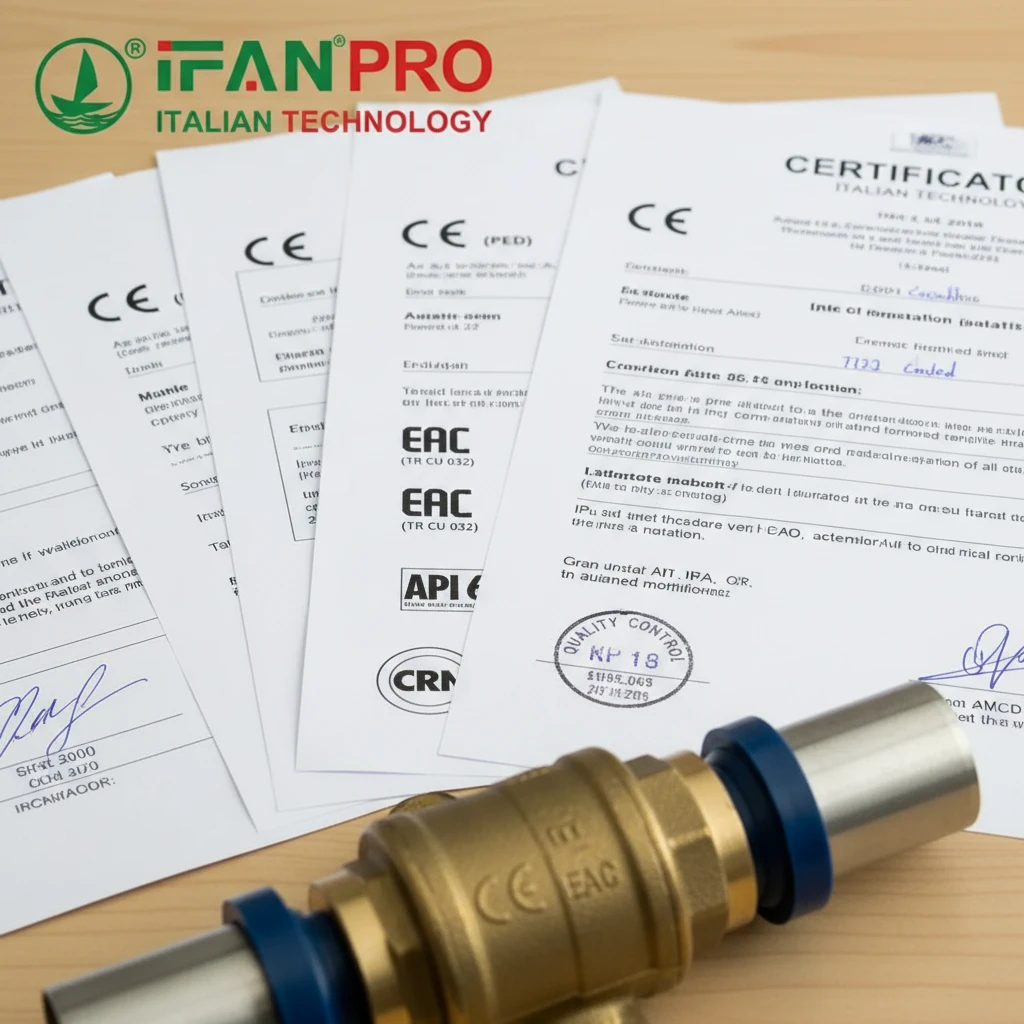
The key certifications that make it suitable are the CE Mark (under Pressure Equipment Directive PED), the EAC mark for Customs Union countries, and often specific standards like API for oil and gas or CRN for Canada. Importantly, these are not just stickers; they provide third-party verification that the valve’s design, manufacturing, and testing meet rigorous regional safety laws.
More Than a Mark: The Assurance Behind Certifications
In closed-loop systems, especially large commercial or district heating systems, a failure can have significant safety and financial consequences. Therefore, certifications shift the responsibility of proof from the installer to the manufacturer, demonstrating due diligence.
- CE PED (2014/68/EU): This is mandatory for the European market. Valves are classified (I to IV) based on hazard level. A valve suitable for a high-energy heating system would likely fall into a higher category (II, III, or IV), which requires a more stringent conformity assessment involving a Notified Body. This means an independent expert has reviewed the technical design and manufacturing quality.
- EAC (TR CU 032): This is the mandatory equivalent for Russia, Belarus, Kazakhstan, and other Customs Union countries. For heating systems, the “On the safety of equipment operating under excess pressure” regulation is key. Without this, you cannot legally install the valve in these regions.
- API & CRN: While CE/EAC cover broad regions, API 6D is a globally recognized industry standard for pipeline valves, which professionals often specify in oil, gas, and industrial projects for its stringent material and testing requirements. Additionally, CRN is a Canadian registration system where each province reviews and registers the valve design for use under its pressure codes.
Avoiding the Pitfall of “Paperwork Valves”
A common industry pain point is manufacturers who claim certifications but cannot provide the proper supporting documentation (technical file, Notified Body certificate, test reports). Therefore, a reputable supplier provides full, traceable certification dossiers. For a closed-loop system, insisting on seeing the CE Declaration of Conformity with the applicable Notified Body number (for higher categories) and the EAC Certificate of Conformity is essential risk management.
Can It Handle the Higher Temperatures Found in Some Industrial Applications?
Beyond standard heating, some processes demand extreme heat. For instance, we supplied valves for a thermal oil system that operates above 300°C, which is a realm where standard elastomers fail instantly.
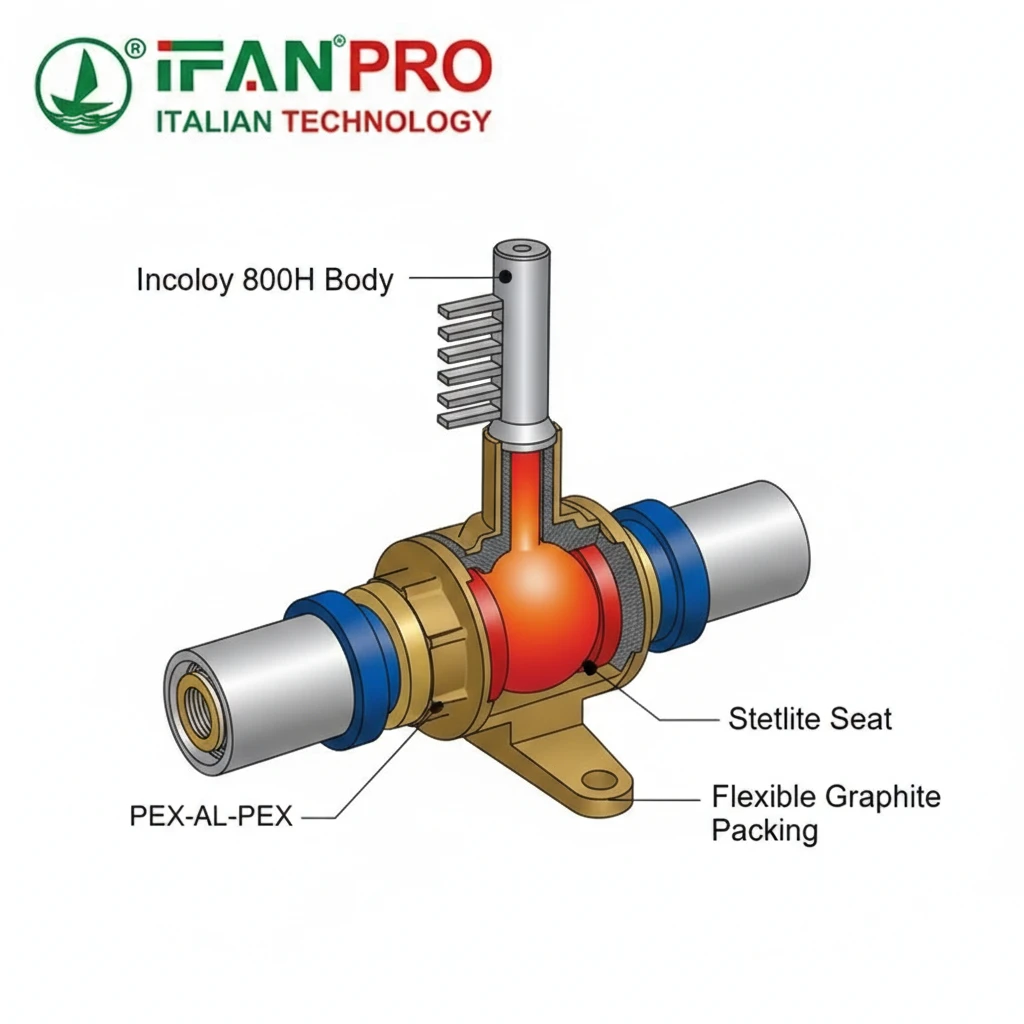
Yes, it can handle them through specialized material selections and engineering designs. By offering trim components (ball, seat, stem) in high-temperature alloys like Incoloy 800H and employing metal-seated or flexible graphite sealing solutions, it can reliably function in applications up to 600°C or even 850°C, far beyond the reach of standard valves.
The Material Science of High-Temperature Performance
Standard valve seals (like NBR or EPDM) degrade rapidly above 150°C. Therefore, for true high-temperature service, every material choice is critical:
- Body & Trim Alloys: While standard stainless steel (e.g., F304/316) serves up to ~400°C, for temperatures above that, manufacturers use materials like Incoloy 800H. This nickel-iron-chromium alloy has excellent strength and resistance to oxidation and carburization in extreme heat.
- Sealing Revolution: This is the core challenge. Mainly, two solutions exist:
- Metal-Seated Designs: Here, the valve seat is made of a similar or compatible high-grade alloy (e.g., Stellite). It provides a hard, durable seal that won’t melt or decompose. The trade-off can be a slightly higher permissible leakage rate compared to soft seals, but it is the only option for very high temperatures.
- Flexible Graphite: Professionals use this material for stem packing (seals around the moving stem) and sometimes gaskets. It remains chemically stable and seal-tight from cryogenic temperatures up to 850°C in inert atmospheres, which makes it perfect for high-temperature steam or thermal oil.
Design Adaptations for Thermal Growth
At 600°C, metal expands significantly. As a result, a valve must manage this differential expansion between the body, stem, and internal parts without binding (getting stuck) or losing seal pressure. Therefore, features like special clearance calculations, spring-loaded components, and advanced cooling fin designs on extended stems are not extras; they are essential for high-temperature functionality.
Table 3: Valve Material & Seal Selection for Temperature Ranges
| Temperature Range | Typical Fluid | Recommended Body/Trim Material | Recommended Seal/Packing Type | Key Consideration |
|---|---|---|---|---|
| -10°C to 150°C | Hot Water, Low-Pressure Steam | Carbon Steel, Bronze, CF8 (304 SS) | EPDM, NBR, PTFE | Standard HVAC/plumbing range. |
| 150°C to 400°C | High-Pressure Steam, Thermal Oil | CF8M (316 SS), Carbon-Moly Steel | Reinforced PTFE, Flexible Graphite | Elastomers fail; need PTFE or graphite. |
| 400°C to 600°C+ | Superheated Steam, Flue Gas, Molten Salt | Incoloy 800H, F310S | Flexible Graphite, Metal-to-Metal | Oxidation resistance is critical; only graphite or metal seals work. |
Conclusion
For central heating and industrial loops where failure is not an option, the 121UC valve’s robust ratings, continuous-duty design, full certifications, and high-temperature capability make it a superior, reliable choice. For your next project, specify with confidence: choose IFAN’s 121UC series valves for performance engineered to endure.











 English
  Français
  Русский
  Español
Recent Comments