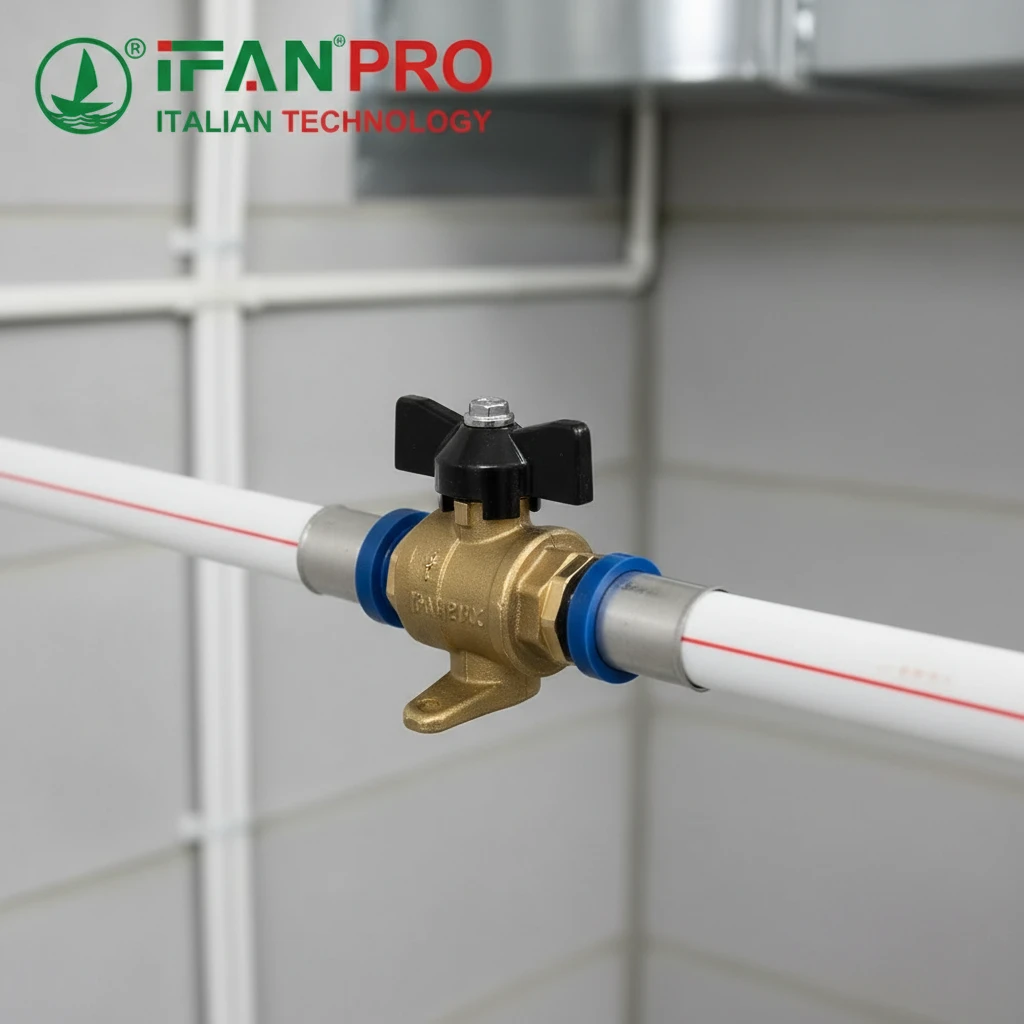
I once investigated a system failure where a standard valve melted inside a high-temperature line. This costly mistake taught me that every component must share the same performance language.
You must choose a 121UC-rated valve for a PEX-AL-PEX composite piping system to ensure the entire system—pipes, fittings, and valves—can safely and reliably withstand continuous operation at 121°C (250°F) under pressure. Using a valve with a lower temperature or pressure rating creates a dangerous weak point, risking leaks, burst failures, and system-wide non-compliance.
Matching components is not just good practice; it’s a fundamental rule for system integrity. Let’s explore why this specific rating is non-negotiable.
Why Must the Valve’s Performance Match the Composite Pipe’s 121UC Rating?
A chain is only as strong as its weakest link. In plumbing, the weakest link is usually the most overlooked component.
The valve’s performance must match the pipe’s 121UC rating because the valve becomes the controlling weak point if it is under-specified. The 121UC rating certifies that both the pipe and the valve are engineered to perform as a unified system under continuous high heat and pressure, preventing premature failure at the valve body or seal.
Understanding the 121UC Language
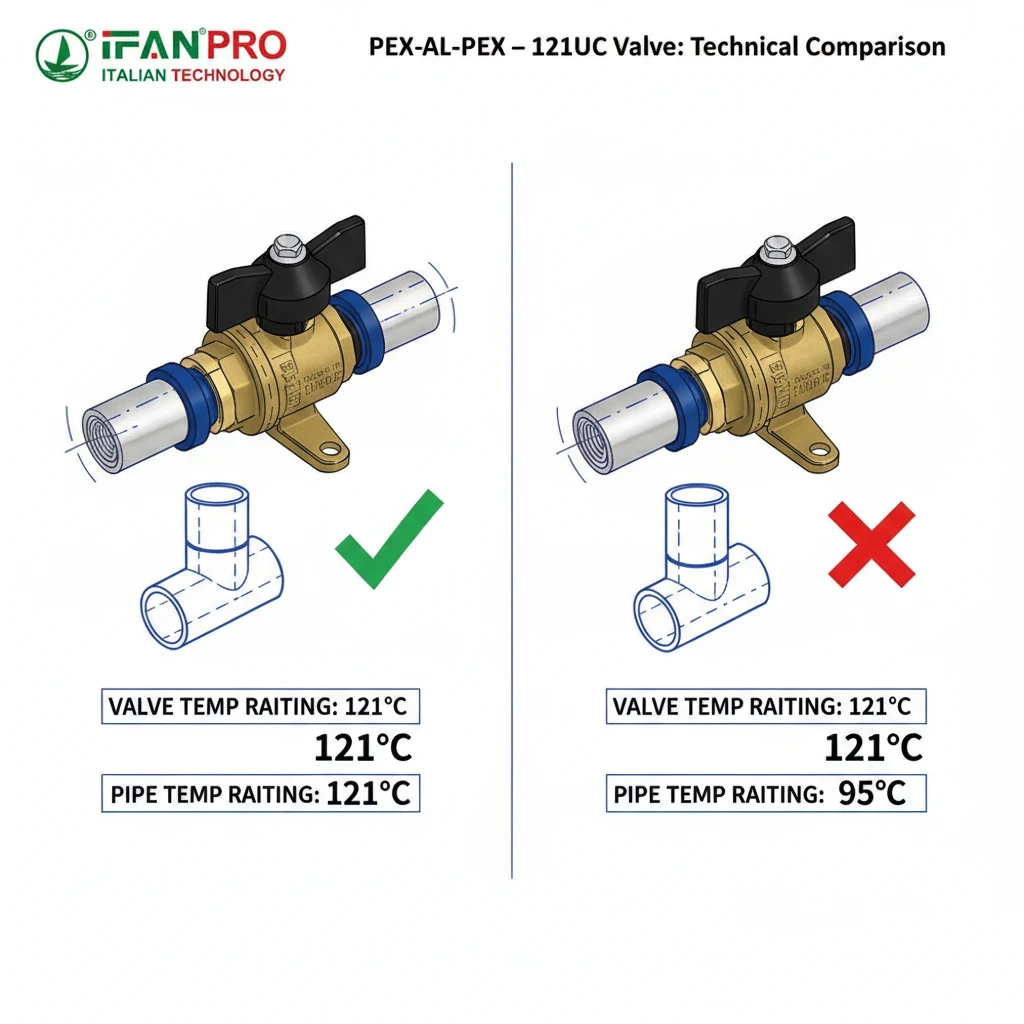
First, we must understand what “121UC” actually means. It is a performance standard, not just a model number.
- 121 stands for the continuous maximum operating temperature: 121 degrees Celsius (250°F).
- UC stands for “Upper Control,” indicating the component is rated for continuous high-temperature service under pressure.
When a PEX-AL-PEX pipe carries this rating, it promises a certain lifetime (often 50 years) at that temperature and pressure. If you install a valve rated for only 82°C (180°F), you have broken that promise at the valve location. The system can now only perform to the valve’s lower rating, wasting the capability of the pipe.
The Consequences of a Mismatch
Think of it like putting a regular car tire on a high-performance racing car. The car might be built for 200 mph, but the tire will fail catastrophically at half that speed, causing a crash.
In a piping system, the valve is a complex assembly. It has a body, internal mechanisms, and, most critically, sealing elements (like seats and O-rings). These materials are chosen based on the expected temperature.
- A 121UC-rated valve uses high-temperature polymers (like PPSU or specialty nylons) and heat-resistant EPDM or FKM seals.
- A standard valve might use lower-temperature plastics and common rubber seals that harden, crack, or deform well below 121°C.
If hot water at 110°C flows through your 121UC pipe and hits a standard valve, the valve’s internals will degrade rapidly. This mismatch doesn’t just lower performance; it creates a predictable point of failure.
System Rating vs. Component Rating
The table below shows how mixing components downgrades the entire system:
| Component Spec | Pipe Rating | Valve Rating | Effective System Rating |
|---|---|---|---|
| Matched System | 121UC | 121UC | 121UC (Fully capable) |
| Mismatched System | 121UC | 82°C Max | 82°C (The valve limits the system) |
Therefore, matching the rating is not about luxury; it’s about preserving the designed safety, performance, and investment in the entire composite piping system.
How Does It Ensure System-Wide Consistency in High-Temperature Applications?
Consistency is key for reliability. A single inconsistent component can destabilize everything downstream.
A 121UC valve ensures system-wide consistency by using materials and a design that maintain their strength and seal integrity at the same high temperatures as the pipe. This prevents localized thermal degradation, ensures uniform expansion, and guarantees that the shut-off function remains reliable when needed, creating a homogenous, predictable high-temperature loop.
Material Compatibility Under Thermal Stress
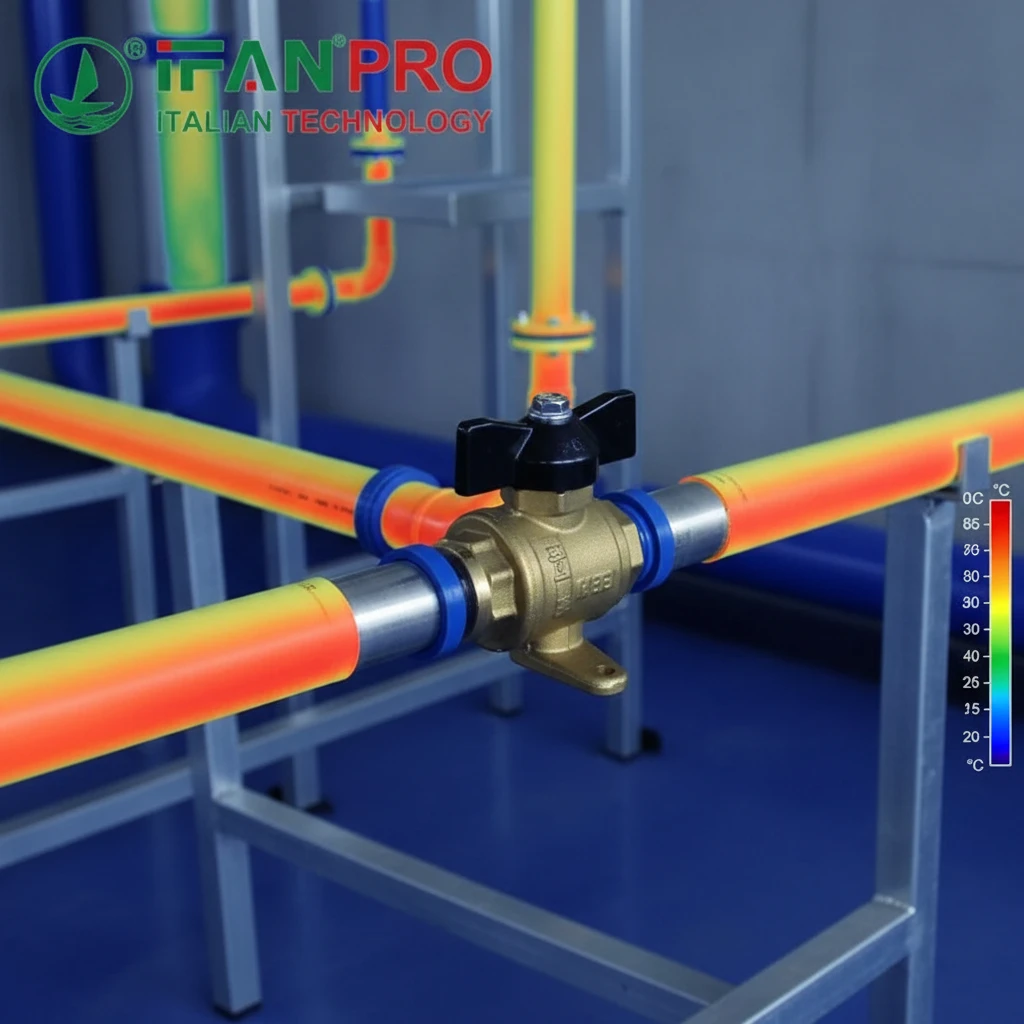
In a high-temperature application, every component expands. Different materials expand at different rates. A 121UC valve is designed with this in mind.
The body material and the PEX-AL-PEX pipe have carefully matched thermal expansion coefficients. This means they expand and contract at a similar rate when heated and cooled. Using a valve made from a different plastic with a much higher expansion rate could create stress at the connection points, leading to leaks over many heating cycles.
Seal Integrity When It Matters Most
The most critical job of a valve is to seal shut. In a high-temperature system, this is often needed in an emergency or for maintenance.
The seals inside a standard valve can become soft and deform under high heat (a process called thermal creep). This can cause a shut-off valve to leak through even when closed. Alternatively, the seals can harden and crack when cooled down, causing them to leak when reopened.
A 121UC valve uses seals specifically compounded for high-temperature stability. They maintain their elasticity and sealing force whether the system is at 20°C or 110°C. This gives you consistent, reliable control over your system under all operating conditions.
Uniform Performance and Longevity
When all components share the 121UC rating, they age together predictably. The system designer can calculate a precise service life for the entire loop. If you introduce a lower-rated valve, you introduce an unknown variable. That valve will fatigue and fail on a much shorter timeline than the pipe, forcing an early, disruptive, and costly replacement.
Essentially, a 121UC valve speaks the same “thermal language” as the pipe. It ensures that the high-performance characteristics you paid for in the composite pipe are not lost at every control point, providing peace of mind that the system will behave as one unified, reliable unit.
What Failures Can Occur Using an Under-Specified Valve on a 121UC System?
Using the wrong valve doesn’t just lower performance; it actively invites a series of predictable and dangerous failures.
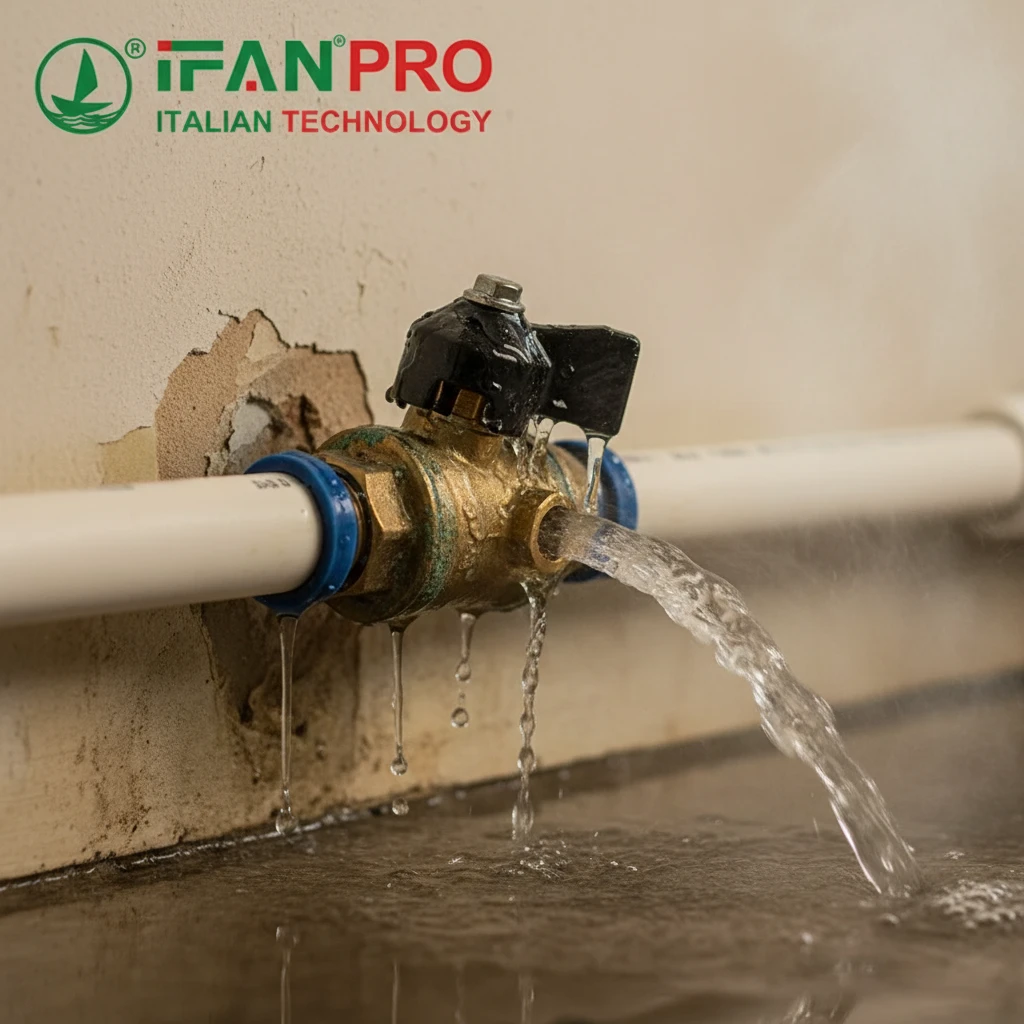
Using an under-specified valve on a 121UC system can cause three main types of failure: 1) Seal failure, leading to leaks or an inability to shut off flow; 2) Body/distortion failure, where the valve housing softens, deforms, or cracks under heat and pressure; and 3) Catastrophic burst failure, resulting in sudden flooding, property damage, and safety hazards.
Detailed Failure Mode Analysis
Let’s break down exactly what goes wrong, step by step.
1. Seal and Internal Failure (The Most Common)
This is the first sign of trouble. The valve’s internal components are not made for the heat.
- O-rings and Stem Seals: These will harden, crack, and shrink. The result is a constant drip from the valve stem packing, even when the valve is open. In the closed position, shrunken or deformed seat seals allow water to bypass, meaning the valve fails to shut off completely.
- The Valve Seat: The surface the seal presses against can itself soften or deform. A shut-off valve might slowly weep water forever, or debris can become embedded in the softened seat, preventing a proper seal.
2. Body and Mechanical Distortion
If the water gets hot enough, the plastic valve body itself is at risk.
- Softening: The plastic can soften, losing its structural strength. The pressure in the pipe (which is still within the pipe’s rating) can now cause the valve body to bulge or distort.
- Thread Failure: The threaded connections (to the pipe or other fittings) can soften. This leads to leaks at the threads or, worse, the threads can strip completely if someone tries to tighten a leaking connection.
- Operational Failure: The internal mechanism (like the ball in a ball valve) can warp or bind. The valve becomes very hard to turn and may snap the handle off if forced.
3. Catastrophic Burst Failure
This is the worst-case scenario and is a direct risk with severe under-specification.
- A softened valve body, combined with normal system pressure and a potential pressure surge (water hammer), can rupture. This causes an immediate and massive release of hot water, leading to extensive water damage, mold risk, and potential injury from scalding water or steam.
Real-World Consequences Summary
The table links failure modes to their direct outcomes:
| Failure Mode | Immediate Consequence | Long-Term Business Impact |
|---|---|---|
| Seal Leakage | Water damage, inability to isolate sections for repair. | Increased maintenance costs, customer complaints. |
| Body Distortion | Leaks at connections, valve operational failure. | Emergency repair calls, system downtime. |
| Catastrophic Burst | Major flooding, property damage, safety hazard. | Insurance claims, legal liability, reputational ruin. |
In short, an under-specified valve transforms a reliable system into a liability, guaranteeing premature failure and negating the core benefits of using a high-performance composite pipe.
Is It the Only Safe and Compliant Choice for Certified 121UC Installations?
When specifications and codes are involved, “good enough” is not acceptable. Compliance is a legal and safety checkpoint.
For a fully certified and compliant 121UC installation, a 121UC-rated valve is not just the best choice—it is the only legally and technically defensible choice. Building codes, engineering standards, and manufacturer warranties all require that every system component meets the specified performance rating to validate the installation’s certification and ensure insurability.
The Role of Codes, Standards, and Warranty
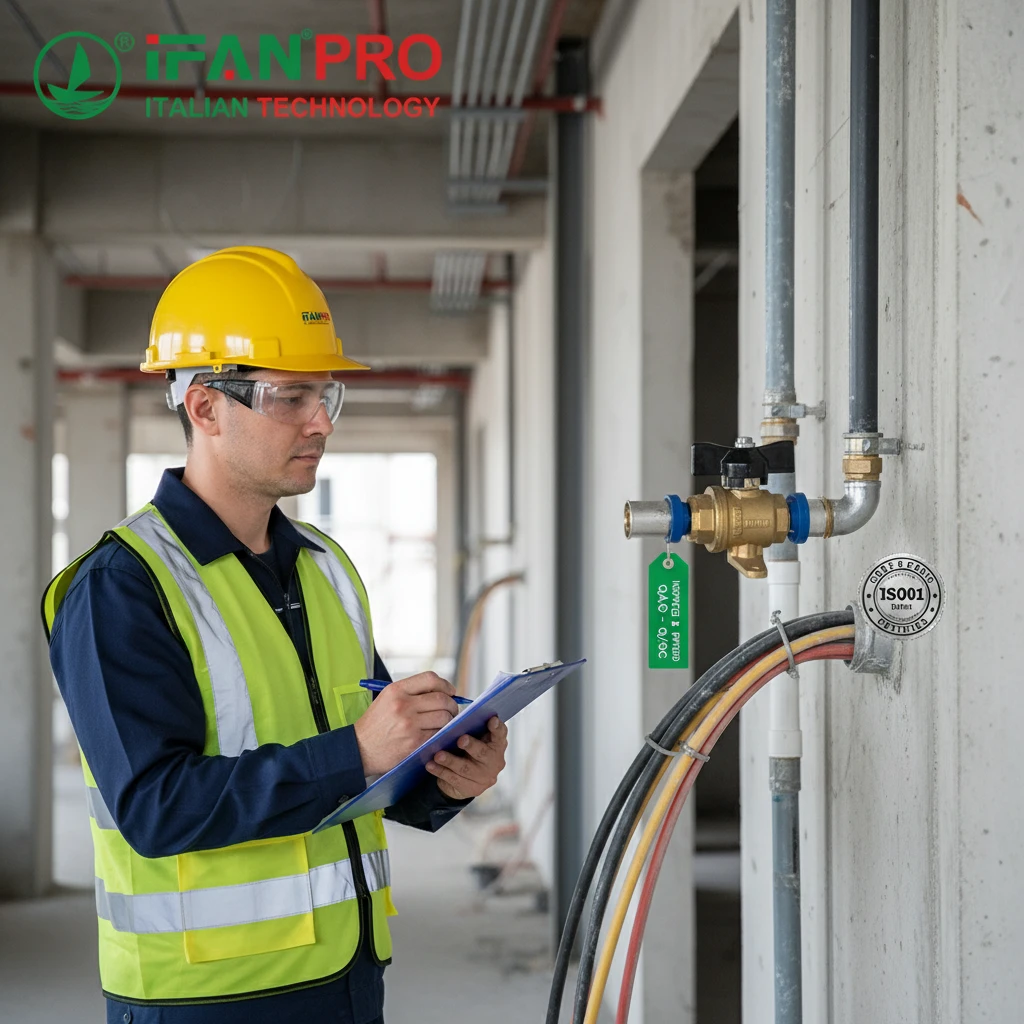
Installations, especially in commercial, industrial, or multi-family buildings, must follow plumbing codes and engineering standards. These documents reference performance ratings like 121UC.
- Code Compliance: An inspector verifying a 121UC system will check that all pressurized components carry the appropriate rating. Installing an under-rated valve makes the entire system non-compliant. This can lead to a failed inspection, halting the project until the valve is replaced.
- System Certification: Many projects require the installed system to be certified to a particular standard (like ISO or EN). This certification is void if any component does not meet the prerequisite ratings. The certifying body will not approve the installation.
- Manufacturer Warranty: The warranty on the PEX-AL-PEX pipe is often conditional on the use of correctly rated fittings and valves. If a system fails and the investigation reveals a non-compliant valve, the pipe manufacturer will deny the warranty claim, leaving the installer or building owner with the full cost of repairs.
The “Safe” Versus “Compliant” Distinction
One might ask: “What if I use a very high-quality 95°C valve? Isn’t that safe enough?” The answer is twofold.
From a safety perspective, it introduces an unquantified risk. The system is no longer performing to its designed specifications, and the failure modes described earlier become possible. You have knowingly created a weak link.
From a compliance and liability perspective, it is unequivocally wrong. In the event of any failure, an investigation will immediately pinpoint the non-compliant valve. This exposes the installer, engineer, and building owner to significant liability. Insurance companies may refuse to cover damages stemming from a known code violation.
Therefore, specifying a 121UC valve is a matter of professional responsibility. It ensures the installation is:
- Safe: All components are designed for the intended service.
- Compliant: It meets all applicable codes and standards.
- Warrantied: The product and labor warranties remain valid.
- Insurable: The risk is managed and recognized by insurers.
Using anything else compromises all four pillars.
Conclusion
For safety, performance, and compliance in high-temperature PEX-AL-PEX systems, the 121UC-rated valve is essential. Ensure total system integrity by specifying IFAN’s 121UC Ball Valves, engineered to match the full capability of your composite piping.





 English
  Français
  Русский
  Español
Recent Comments