

As an OEM project manager, I once struggled to fit a standard valve into a tight device layout, forcing a costly redesign. That moment made me truly understand the critical role of compact mini valves.
Compact mini valves are essential for OEM designs because they provide precise fluid control in extremely limited spaces, directly enabling smaller, lighter, and more efficient final products. Their high reliability ensures the consistent performance of the machinery they are built into, making them a foundational component, not just an accessory.
Let’s break down exactly how these small components deliver massive value in original equipment manufacturing.
How Do Mini Valves Enable Higher Component Density in OEM Machinery?
Facing a crowded control panel or a dense hydraulic block, every cubic millimeter counts. Mini valves are the key to unlocking that space.
Mini valves enable higher component density by their drastically reduced footprint, allowing engineers to place more functionality—like multiple control points, safety shut-offs, or pressure regulation circuits—within the same or even a smaller overall envelope. This direct integration supports the trend toward miniaturization across industries.

The Space-Saving Design Principle
In modern OEM machinery, from medical devices to robotics, the push is for more features in less space. This is called increased component density. Standard-sized valves often become the limiting factor, forcing enclosures to be larger than otherwise needed.
Mini valves solve this by offering full valve functionality—whether on/off, regulating, or directional control—in a package that is often less than half the size and weight of a standard valve. This allows design engineers to think differently. They can now add redundant systems, finer control loops, or additional safety features without expanding the machine’s footprint.
Facilitating Modular and Integrated Design
Furthermore, the small size of these valves makes them perfect for creating modular sub-assemblies or manifolds. Instead of running long tubes between large, separately mounted valves, multiple mini valves can be clustered together on a single compact manifold block. This approach does several great things:
- It saves space by eliminating the air gaps needed for tool access around individual valves.
- It improves reliability by reducing the number of external fittings and potential leak points.
- It speeds up assembly because the plumbing is built into the manifold.
Impact on Different OEM Sectors
The need for density varies by industry. Here’s how mini valves address specific challenges:
| OEM Sector | Density Challenge | How Mini Valves Help |
|---|---|---|
| Medical Equipment | Devices must be portable and ergonomic for bedside use. | Enable compact, lightweight designs for infusion pumps, analyzers, and handheld surgical tools. |
| Semiconductor Manufacturing | Cleanrooms are extremely expensive per square meter. | Allow more process control stations within a single tool, maximizing cleanroom floor space ROI. |
| Mobile Hydraulics | Every gram of weight impacts fuel efficiency and payload. | Reduce weight and allow tighter integration of control systems in excavators and aerial work platforms. |
| Industrial Automation | Control panels and robotic arms have strict spatial limits. | Permit the installation of multiple valves directly on or within moving parts for precise local control. |
By enabling this high density, mini valves become a strategic enabler for innovation, allowing OEMs to design the next generation of smarter, more capable, and space-efficient machinery.
What Role Do They Play in Reducing the Overall Size and Weight of Products?
Size and weight are not just design specs; they are major cost drivers for shipping, materials, and end-user portability. Mini valves make a direct impact here.
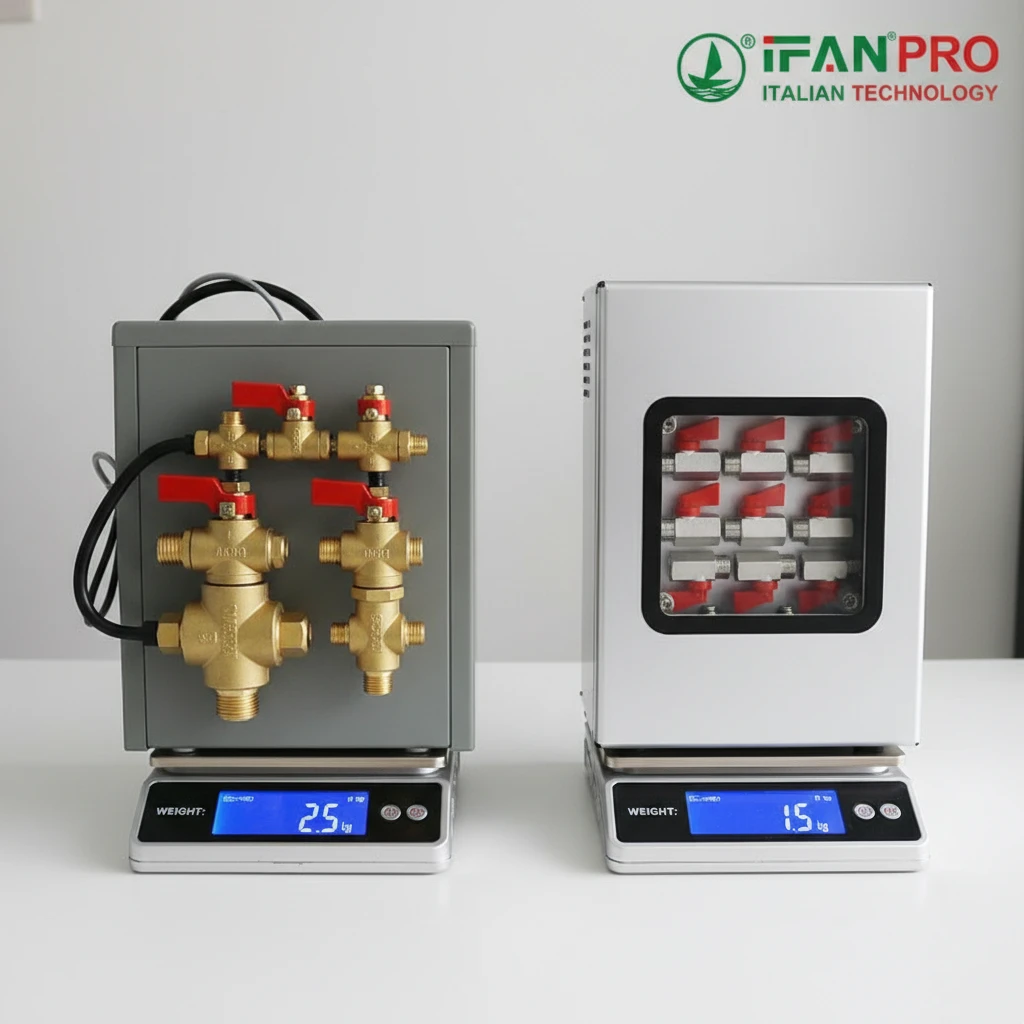
Mini valves play a crucial role in reducing overall product size and weight by replacing bulkier valve solutions. Their small mass and volume allow for smaller supporting structures, enclosures, and fluid reservoirs, creating a compounding effect that leads to significantly lighter and more compact final assemblies.
The Direct and Indirect Weight Savings
The benefit starts with the valve itself. A mini brass or stainless steel valve weighs a fraction of its standard counterpart. When you need dozens of valves in a single machine, this weight saving adds up to kilograms.
But the bigger impact is often indirect. A smaller, lighter valve requires less robust mounting hardware. The brackets can be thinner. The machine’s frame or housing does not need to be as large or as strong to support the valve’s weight and operating forces. This is known as “mass decompounding”—saving weight in one area allows you to save more weight in connected areas.
Enabling New Product Categories
This reduction is critical for emerging product categories. For example:
- Portable and Wearable Devices: Diagnostic equipment or oxygen concentrators used in field settings must be light enough to carry. Mini valves are indispensable here.
- Drones and UAVs: In aerial applications, every gram is critical for flight time and stability. Mini valves for fuel or coolant systems contribute directly to performance.
- Electric Vehicles: OEMs are aggressively minimizing the size and weight of all auxiliary systems, including thermal management (battery cooling) to maximize range. Compact valve solutions are vital.
Quantifying the Impact: A Comparison
Consider a theoretical fluid control module for a piece of factory equipment:
| Component | Standard Design | Design Using Mini Valves | Saving |
|---|---|---|---|
| 6 Valves | 4.2 kg | 1.8 kg | 2.4 kg |
| Mounting Bracket/Manifold | 3.5 kg (large, steel) | 1.5 kg (compact, aluminum) | 2.0 kg |
| Enclosure Size | 500 x 400 x 300 mm | 350 x 300 x 250 mm | ~60% volume reduction |
| Estimated Total Weight | ~8.5 kg | ~3.5 kg | ~5 kg (59% lighter) |
As the table shows, the initial valve saving sparks a chain reaction. The overall system becomes lighter and smaller, which lowers material costs, reduces shipping expenses, and often makes the end product more attractive and easier to handle for the customer.
How Does Their Reliability Impact the Performance of the Final OEM Product?
An OEM’s brand reputation is tied to its machine’s uptime. A failed valve, no matter how small, can stop an entire production line.
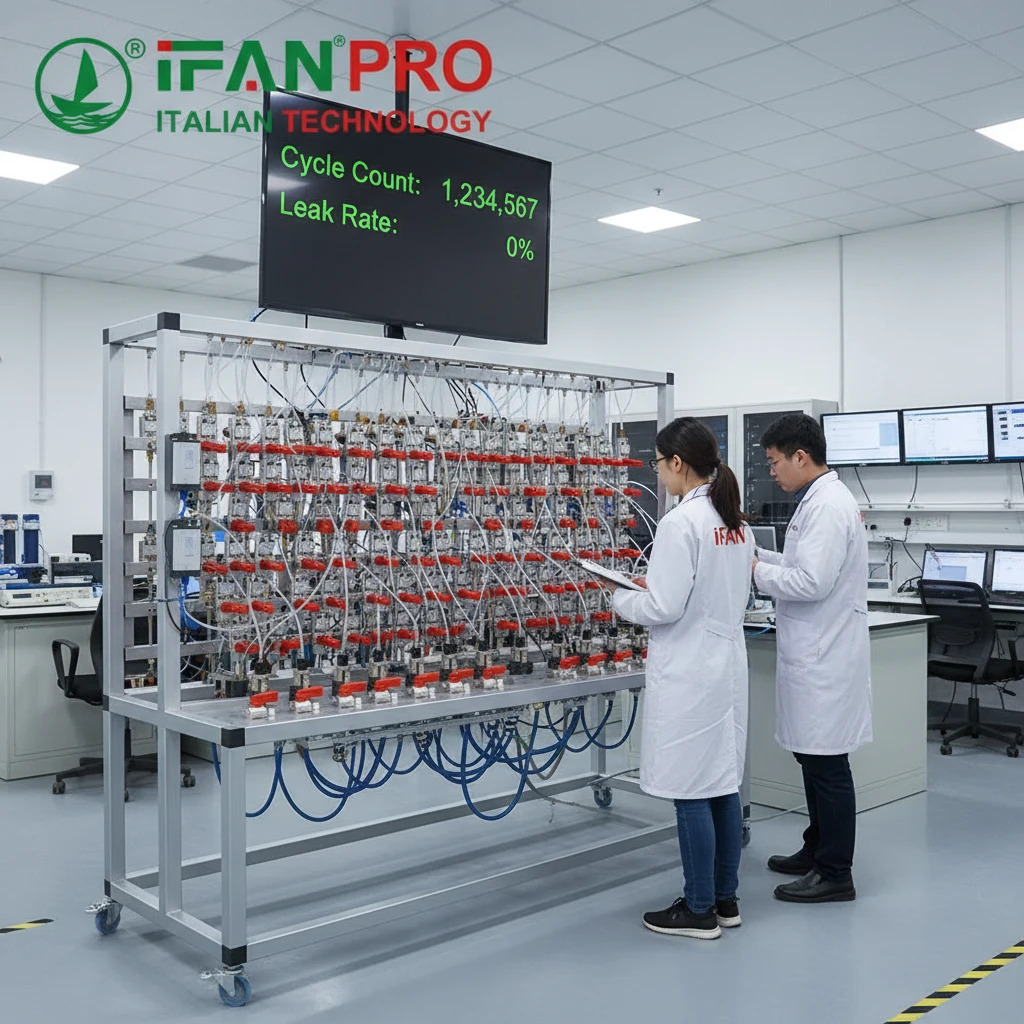
The reliability of mini valves directly determines the uptime, safety, and consistency of the final OEM product. A leak or stuck valve can cause machinery to malfunction, halt, or even damage itself. High-reliability mini valves ensure precise control over thousands of cycles, protecting the OEM’s performance guarantee and brand reputation.
Defining Reliability in the OEM Context
For an OEM, reliability means the valve will perform its intended function—opening, closing, or modulating—consistently and accurately for the designed lifespan of the equipment, under specified operating conditions. This is non-negotiable.
A mini valve is often a critical control point for pressure, flow, or direction. If it fails:
- In a medical device, it could compromise patient safety or diagnostic accuracy.
- In a refrigerant system, it could cause a loss of cooling and overheating.
- In an automated machine, it could lead to improper actuator movement, causing jams or poor product quality.
Key Factors Driving Valve Reliability
Several design and manufacturing factors determine if a mini valve is reliable enough for OEM integration:
1. Material Quality and Suitability: The body (brass, stainless steel) and seals (NBR, EPDM, FKM/Viton) must be chosen to resist the fluid type, pressure, and temperature. Using incorrect or poor-quality materials leads to quick corrosion, swelling, or cracking.
2. Precision Manufacturing: The tolerances on the valve seat, stem, and sealing surfaces are extremely tight. High-precision CNC machining ensures a perfect seal every time and smooth operation without binding.
3. Rigorous Testing: Reputable manufacturers subject valves to cycle life testing (tens of thousands of cycles), burst pressure testing, and leak testing. This data gives OEM engineers confidence in their design calculations.
The High Cost of Failure
Choosing a cheaper, less reliable valve is a high-risk decision. The cost of a valve is tiny compared to the cost of failure:
| Cost Factor | Description |
|---|---|
| Field Service Visit | Dispatching a technician to diagnose and replace the valve on the customer’s site. |
| Production Downtime | Lost revenue for your customer while their machine, which contains your valve, is not working. |
| Warranty Claim | Covering the repair costs under your product’s warranty agreement. |
| Brand Damage | Loss of trust, making the customer think twice before buying your equipment again. |
Therefore, investing in proven, reliable mini valves from the start is the most cost-effective strategy. It minimizes the risk of catastrophic failures and ensures the OEM product performs as promised, building a strong reputation for quality.
Why is Standardization and Availability Crucial for OEM Valve Sourcing?
During a product launch, discovering that a critical valve is suddenly on a 26-week lead time can be a nightmare. Standardization prevents this.
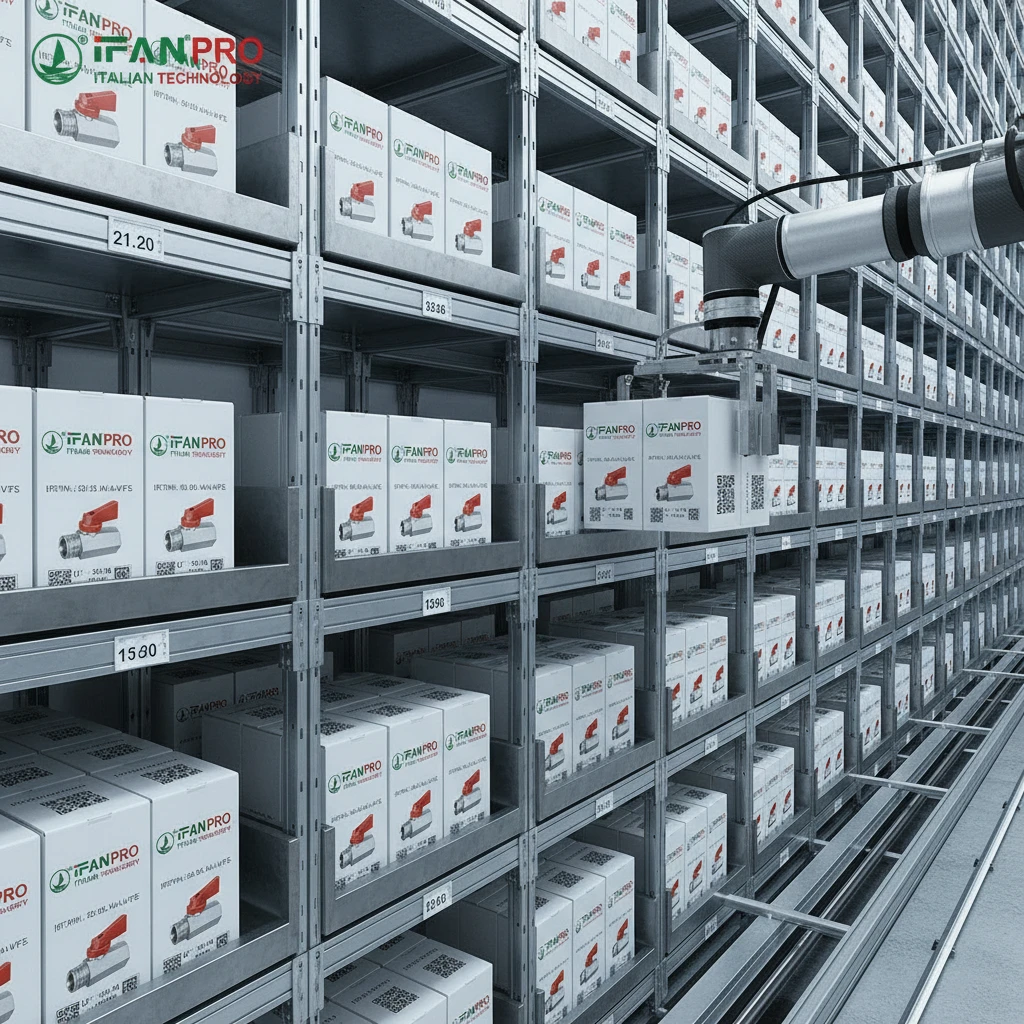
Standardization and availability are crucial because OEMs require predictable, long-term part supply to support multi-year production runs. Using standardized, widely available valve models prevents production delays, allows for flexible inventory management, and simplifies future maintenance and repairs for end-users.
Supporting Uninterrupted Production
OEM manufacturing is planned years in advance. Once a Bill of Materials (BOM) is locked, any change is disruptive and expensive. Sourcing a specialized, custom valve from a single supplier is a major supply chain risk. If that supplier has a production issue, the OEM’s entire assembly line can stop.
Standardized mini valves—those built to common thread standards (like G1/8″, M5), port sizes, and operating specifications—are typically produced in high volumes by multiple reputable manufacturers. This creates a resilient supply chain. If one source has a problem, an equivalent part is often available from another, keeping production moving.
Benefits for Inventory and Service
A standardized component strategy offers clear advantages at every stage:
For the OEM Factory:
- Reduced Inventory Cost: You can stock fewer part numbers to cover more models of your equipment.
- Simplified Procurement: Buyers can negotiate better prices with higher, consolidated volumes.
- Easier Design Updates: New product versions can often reuse the same proven valve components.
For the End-User / Maintenance Technician:
- Easier Replacement: A standard valve is easier to locate and purchase for repair, reducing machine downtime.
- Clearer Documentation: Service manuals can reference common, recognizable part numbers.
How to Implement a Smart Standardization Strategy
OEMs should work with suppliers who understand this need. Here is a practical approach:
| Step | Action | Benefit |
|---|---|---|
| 1. Design Phase | Select valves from the supplier’s standard product catalog rather than designing in a custom part immediately. | Guarantees availability and often lower cost. |
| 2. Supplier Selection | Choose a supplier (like IFAN) with a strong commitment to long-term manufacturing of core standard products. | Ensures the valve won’t be discontinued unexpectedly. |
| 3. Qualification | Perform reliability tests on the standard valve you plan to use. | Validates performance with your actual application. |
| 4. Partnership | Establish a forecast-sharing agreement with your supplier. | Allows them to plan raw materials and capacity to meet your future needs reliably. |
In short, a standardized, available valve is a low-risk, high-reward component. It simplifies logistics, de-risks production, and ultimately contributes to a more stable and profitable OEM business model. Partnering with a supplier that stocks key standard items, like IFAN’s range of mini ball valves, needle valves, and check valves, is a strategic decision.
Conclusion
Compact mini valves are fundamental to building smaller, smarter, and more reliable OEM machinery. For a dependable supply of high-quality, standardized mini valves, partner with IFAN to support your next design.











 English
  Français
  Русский
  Español
Recent Comments