
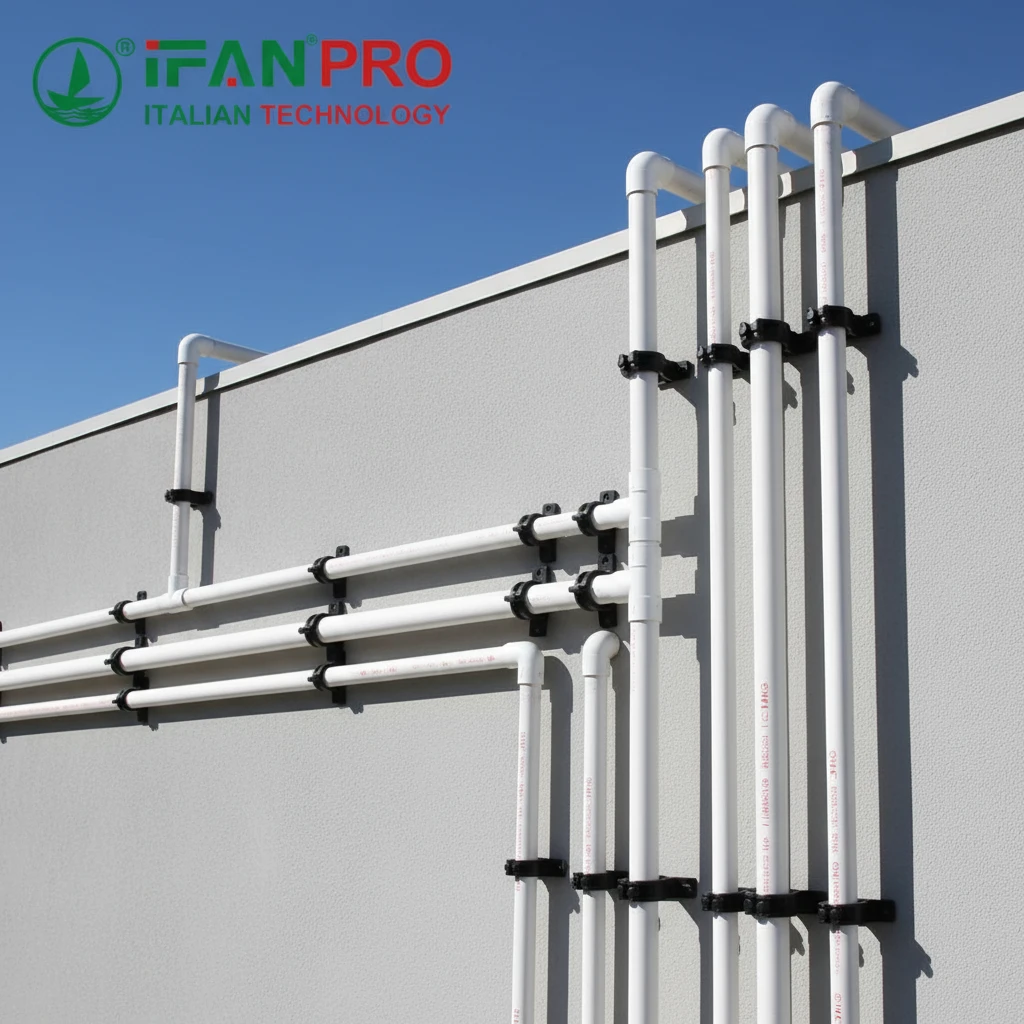
I once saw a costly piping project fail because the support clips cracked and broke after just one summer. The pipes were fine, but the clips were not.
You must use UV-resistant clips for outdoor piping because standard plastic clips will degrade quickly under sunlight. Ultraviolet (UV) radiation breaks down the chemical bonds in non-resistant plastics, making them brittle, weak, and prone to snapping, which can lead to pipe damage, leaks, and system failure.
This common oversight can ruin an otherwise perfect installation. Let’s explore why UV resistance is critical and how to ensure your outdoor pipe supports last for years.
How Does Sunlight UV Exposure Degrade Non-Resistant Pipe Clips Outdoors?
Sunlight seems harmless, but its UV rays are a silent destroyer of plastics. I’ve picked up clips that crumbled like crackers in my hand.
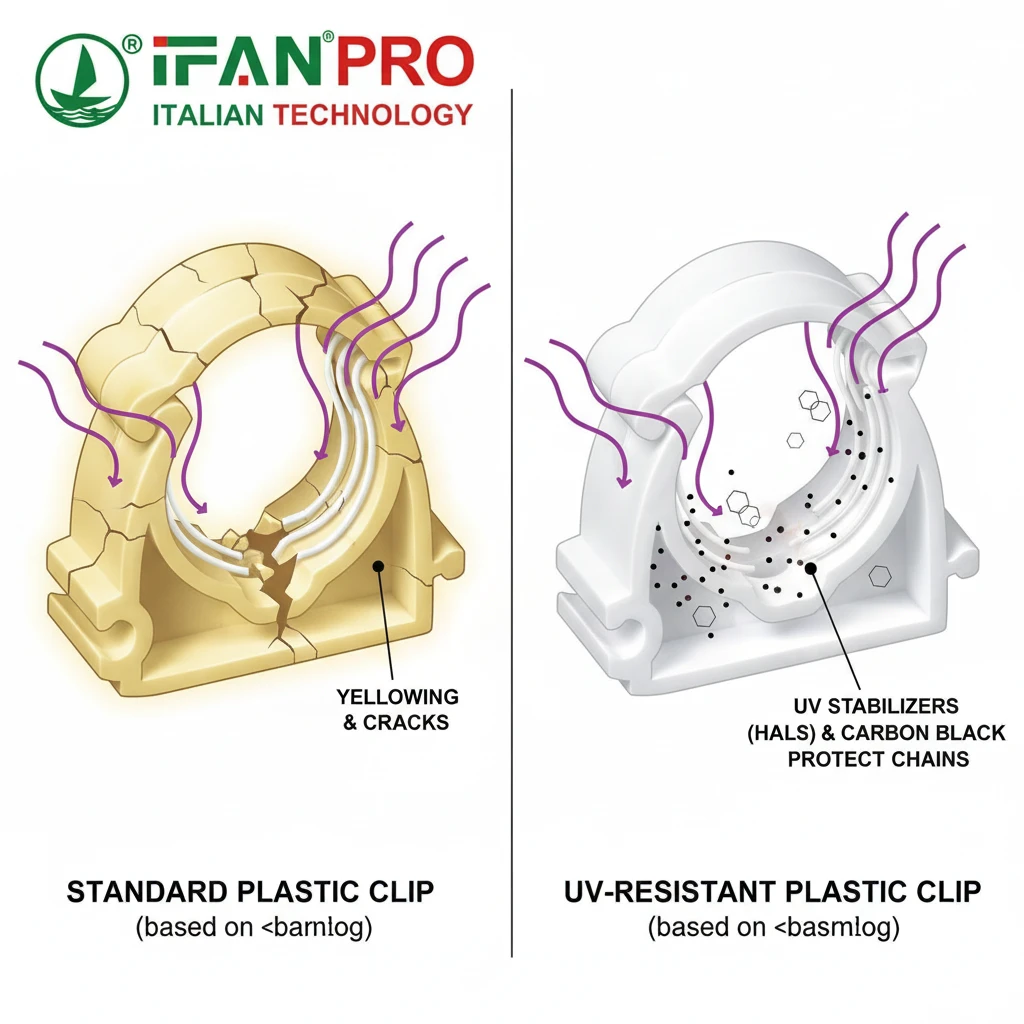
Sunlight UV exposure degrades non-resistant clips through a process called photo-oxidation. UV radiation provides energy that breaks the long polymer chains in plastic, making the material lose its flexibility and strength. This leads to discoloration, surface cracking, extreme brittleness, and ultimately, catastrophic failure under load or stress.
The Science of Photodegradation
To understand the problem, we need to look at what sunlight does to plastic. The primary culprit is ultraviolet light, specifically UV-A and UV-B rays. These are high-energy waves that penetrate the atmosphere and hit materials outdoors every day.
For common plastics like standard PVC, nylon, or polypropylene without stabilizers, this energy is destructive. The process works in a few key stages:
- Chain Scission: The UV radiation hits the plastic polymer. It transfers enough energy to break the chemical bonds holding the long molecular chains together. Think of it like cutting the links in a chain.
- Oxidation: This breakage creates free radicals—highly reactive molecules. They immediately react with oxygen in the air, causing further breakdown and creating new, weaker chemical structures. This is “photo-oxidation.”
- Loss of Plasticizers: Many plastics contain additives called plasticizers that keep them flexible. UV radiation causes these plasticizers to evaporate or break down, leaving the plastic hard and stiff.
Visible Signs and Consequences of Failure
The damage isn’t invisible. You will see clear signs before a clip fails completely.
- First, Color Change: The clip will turn yellow, chalky white, or fade significantly. This is the first warning sign of chemical change.
- Then, Surface Damage: You will see tiny micro-cracks on the surface. Over time, these cracks deepen and spread.
- Finally, Brittleness: The clip loses all flexibility. It becomes so brittle that a light squeeze or the pressure from a expanding/contracting pipe can cause it to snap.
The consequence of using the wrong clip is not just replacing the clip. A failed clip can cause the pipe to sag, putting stress on joints. In pressurized systems, this can lead to joint failure and leaks. For hot water pipes, a falling pipe is a serious safety hazard.
Comparison: UV Exposed vs. Protected Clip
| Property | Non UV-Resistant Clip (After 6-12 Months Outdoor) | Properly UV-Stabilized Clip |
|---|---|---|
| Appearance | Yellowed, chalky, faded color. | Color remains stable. |
| Surface Integrity | Micro-cracks and brittleness. | Surface remains smooth and intact. |
| Flexibility | Very brittle, snaps easily. | Retains designed flexibility and toughness. |
| Tensile Strength | Can lose over 50% of original strength. | Minimal strength loss over years. |
| Expected Service Life | 1-3 years before failure. | 10+ years of reliable service. |
Understanding this degradation process makes it clear why selecting the right material from the start is not an option—it’s a requirement for any durable outdoor installation.
What Material Properties Make Pipe Clips Truly UV-Resistant for Outdoor Use?
Not all “outdoor” clips are equal. True UV resistance comes from specific materials and additives engineered for the task.
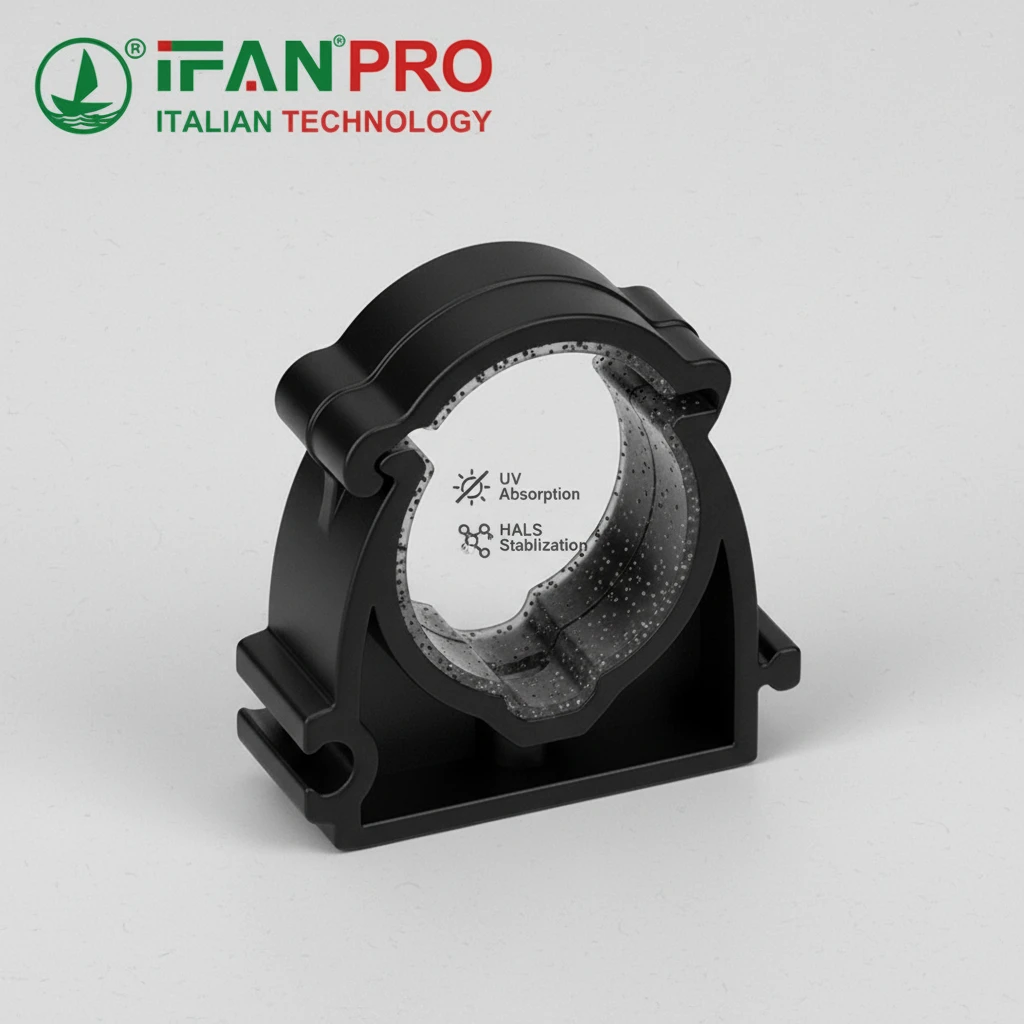
Truly UV-resistant pipe clips are made from plastics that either inherently resist UV (like PVC-U) or are compounded with special additives such as carbon black, UV stabilizers (HALS), and pigments. These additives absorb or block UV radiation before it can damage the polymer chains, preserving the clip’s mechanical strength and flexibility for over a decade outdoors.
Inherently Resistant Base Materials
The foundation of a good clip is the base polymer. Some plastics are naturally better at handling sunlight than others.
- PVC-U (Unplasticized PVC): This is a top choice. It has a naturally high chlorine content which helps shield it from UV. While it can still degrade over very long periods, its baseline resistance is good, especially in darker colors.
- Polypropylene (PP) with Stabilizers: Standard PP is poor outdoors, but when formulated correctly with high levels of stabilizers, it becomes excellent. This is a common and cost-effective option for quality UV-resistant clips.
- Other Engineering Plastics: Materials like ASA (Acrylonitrile Styrene Acrylate) or PVDF (Polyvinylidene Fluoride) have exceptional inherent UV resistance and are used in high-end, critical applications, though at a higher cost.
The Role of Critical Additives
For most plastics, achieving true UV resistance requires adding specific chemicals during manufacturing. These are the true heroes:
- Carbon Black: This is one of the most effective and common UV blockers. Adding a sufficient percentage (typically 2-3%) of fine carbon black particles creates a physical barrier. It absorbs UV radiation across the spectrum and converts it to harmless heat. Clips that are deep black in color often get their UV resistance primarily from carbon black.
- Hindered Amine Light Stabilizers (HALS): These are “sacrificial” molecules. They work by neutralizing the free radicals created by UV exposure before those radicals can attack the polymer chains. They are continuously consumed over time, protecting the plastic.
- UV Absorbers (UVAs): These chemicals, like Benzophenones or Benzotriazoles, absorb harmful UV energy and release it as lower-energy, safe heat.
- Pigments: Certain inorganic pigments (like titanium dioxide for white, or various oxides for colors) also help reflect and scatter UV light, providing an additional layer of protection.
How to Specify the Right Material
When reviewing clips, don’t just look for “UV resistant” in the name. Look for specific material codes or descriptions:
| Common Material Designation | What It Usually Means for UV Resistance |
|---|---|
| PP (Polypropylene) | Likely poor unless specified as “UV-stabilized PP” or “PP+UV”. |
| PVC-U | Good inherent resistance. Sufficient for most climates. |
| PP + UV or PP-UV | Polypropylene compounded with UV stabilizers. A very good, standard option. |
| ASA, PVDF | Excellent inherent resistance. Best for harsh, high-sun environments. |
A high-quality manufacturer, like IFAN, will compound the base material with the right type and quantity of stabilizers during the pellet stage, ensuring protection is built into every part of the clip, not just the surface.
How Can You Identify UV-Resistant Clips from Product Labels and Specifications?
The words “for outdoor use” are not enough. You need to read the technical details to be sure.
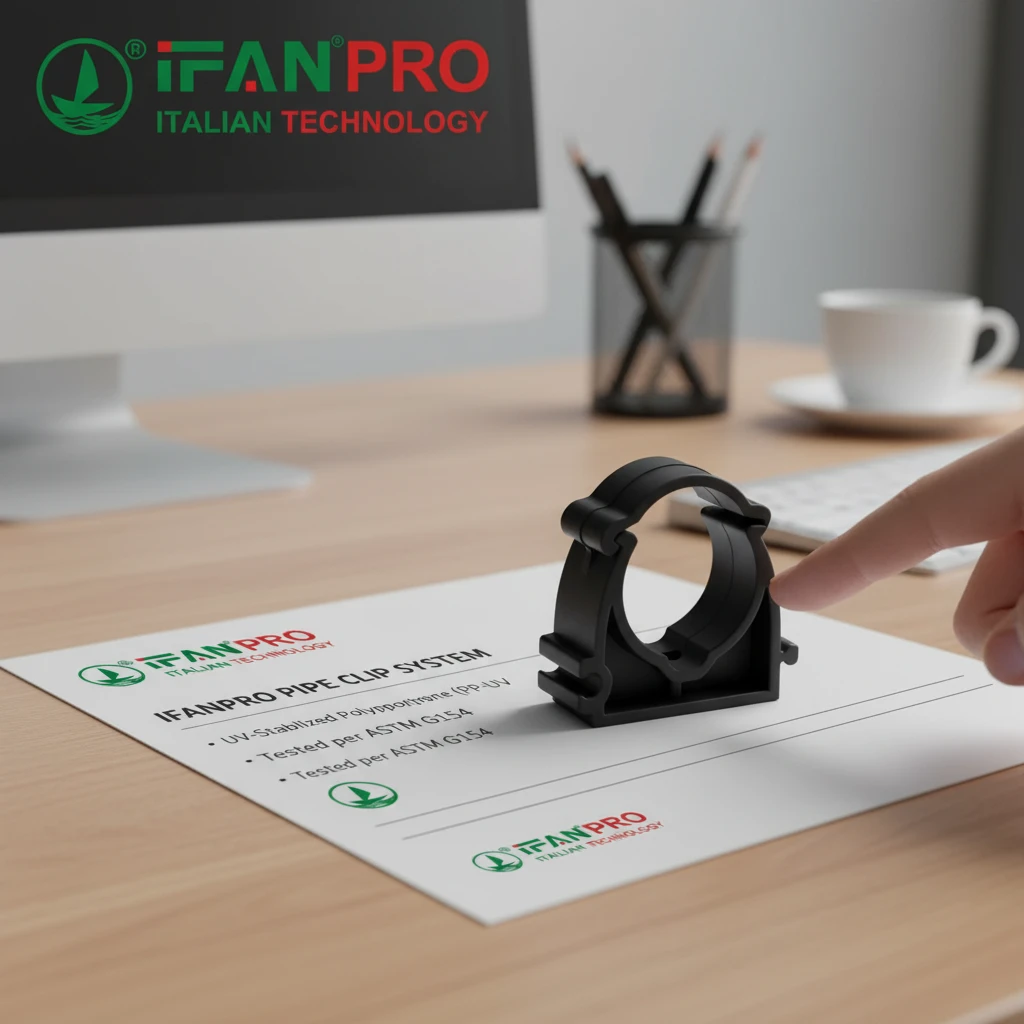
You identify UV-resistant clips by looking for specific keywords on labels and datasheets: “UV Stabilized,” “UV Resistant,” or “Weatherproof.” More importantly, check the technical specifications for references to test standards like ISO 4892-3 (Xenon arc weathering) or ASTM G154 (QUV test), which simulate years of sun exposure in a lab.
Decoding Marketing Language vs. Technical Specifications
Product packaging and online listings use various terms. Some are meaningful, others are vague. Here’s how to tell the difference:
- Strong, Specific Terms:
- “UV Stabilized”: This is a good term. It indicates additives were mixed into the plastic.
- “Weather Resistant” or “Weatherproof”: Better than nothing, but ask for what this is based on.
- Material Codes: Look for “PP-UV”, “UV-Resistant Nylon”, etc.
- Vague, Less Reliable Terms:
- “Suitable for Outdoor Use”: This could just mean it won’t dissolve in rain. It doesn’t guarantee UV longevity.
- “Durable Plastic”: Meaningless without context.
- “Outdoor Grade”: Ask for the grade specification.
The Gold Standard: Laboratory Test Data
The most reliable way to identify a product is through technical datasheets that reference standardized aging tests. Reputable manufacturers test their products. The key tests are:
- ISO 4892-3 (Xenon Arc Exposure): This test uses a xenon arc lamp to closely simulate full sunlight spectrum (UV, visible, and infrared). Samples are exposed for set hours (e.g., 1000 hours, 2000 hours), which correlate to multiple years of outdoor exposure.
- ASTM G154 (QUV Fluorescent UV Exposure): This test uses special fluorescent UV lamps to accelerate the damaging effects of sunlight. It’s a common and effective test for UV resistance.
A credible datasheet will state something like: “Material tested per ASTM G154 for 2000 hours with no significant reduction in tensile strength or impact resistance.” This is concrete proof of performance.
Checklist for Evaluating Product Information
Use this table as a guide when selecting clips:
| Information Source | What to Look For | What It Tells You |
|---|---|---|
| Product Title/Name | Words like “UV-Stabilized”, “Sunlight Resistant”. | Initial filter. Requires further verification. |
| Material Description | Specific polymer + additive: e.g., “UV-stabilized Polypropylene”. | Confirms the material is engineered for the purpose. |
| Technical Datasheet | Reference to ISO 4892-2/3 or ASTM G154/G155 weathering tests. | Proof that the product has been formally tested. |
| Color | Deep black (carbon black) or dark, consistent colors. | A visual cue, but not a guarantee on its own. |
| Manufacturer Reputation | A known supplier specializing in plumbing or industrial components. | Companies like IFAN stake their reputation on providing correctly specified parts. |
Always ask the supplier for the technical datasheet. If they cannot provide test data or a clear material specification, it is a major red flag. Investing a few minutes in verification can save you from costly callbacks and repairs.
What Are the Best UV-Resistant Alternatives for Securing Outdoor Piping Systems?
Clips are common, but they aren’t your only option. The best choice depends on your pipe material, environment, and budget.
The best UV-resistant alternatives include stainless steel bands/clamps, galvanized or powder-coated metal brackets, and specialized UV-stabilized plastic saddles or guides. For most plastic piping systems, using UV-stabilized polypropylene or PVC-U clips from a trusted supplier like IFAN is the optimal balance of cost, corrosion resistance, and long-term performance.
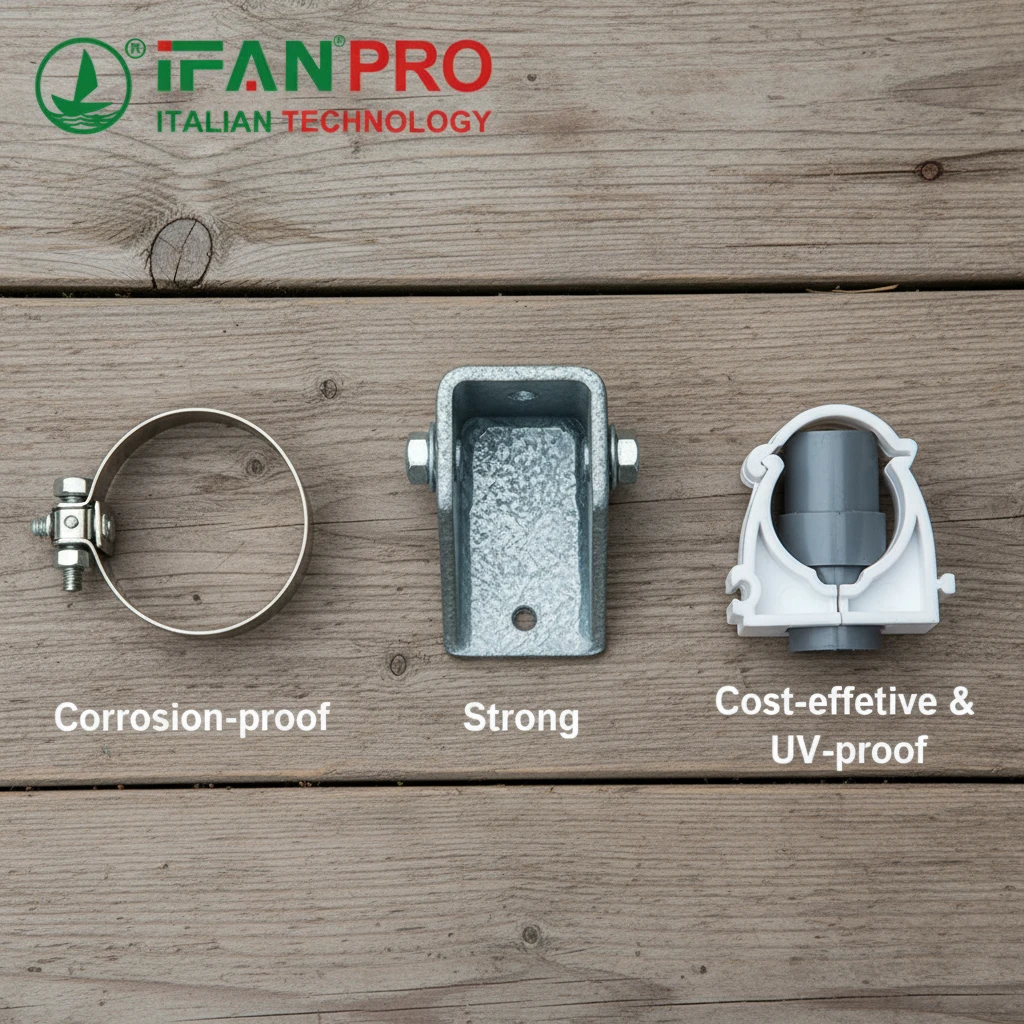
Evaluating Metal Alternatives
Metal is a natural choice for outdoor durability, but it has its own considerations.
- Stainless Steel (A2/A4 Grade): This is the premium choice for harsh environments, especially coastal areas with salt spray. It will not rust or degrade from UV. Use it with stainless steel bands or clamps. It is more expensive and requires care to avoid galvanic corrosion if in direct contact with dissimilar metals.
- Hot-Dip Galvanized Steel: The thick zinc coating provides excellent corrosion resistance. It is very strong and UV-proof. However, the coating can be damaged during installation, creating a spot for rust to start.
- Powder-Coated Steel: The paint provides color and some protection, but UV can eventually degrade the coating, and chips can lead to rust. It is better than plain steel but not as robust as galvanized or stainless.
Metal supports are ideal for heavy pipes, high-wind areas, or when supreme fire resistance is needed. However, they can be overkill and costly for standard residential plastic (PP-R, PEX) water lines.
Advanced Plastic and Composite Solutions
For plastic pipes, plastic supports are often the most compatible and cost-effective.
- High-Performance UV-Stabilized Plastics: As discussed, clips made from properly formulated PP-UV or PVC-U are excellent for 10-20+ year service life. They are lightweight, non-corrosive, and electrically insulating.
- Composite Clips: Some clips combine a plastic body (for cushioning and compatibility) with a stainless steel screw or band. This offers the UV/corrosion resistance of metal in the load-bearing part with the gentleness of plastic where it touches the pipe.
- Pipe Saddles and Guides: For larger pipes or specific routing, UV-stabilized plastic saddles that cradle the pipe are a great alternative to tight clips, allowing for thermal expansion.
Decision Guide: Choosing the Right Support
The table below helps match the support type to the application:
| Application Scenario | Recommended Best Alternatives | Key Reason |
|---|---|---|
| Residential PP-R/PEX Water Lines | UV-Stabilized PP or PVC-U Clips | Cost-effective, fully compatible, non-corrosive, and durable enough for the job. |
| Commercial/Industrial Metal Pipes | Stainless Steel or Galvanized Brackets | Strength required to support heavy pipes; material compatibility. |
| Coastal or High-Chemical Areas | AISI 316 Stainless Steel Clamps | Maximum resistance to salt and chemical corrosion. |
| Solar Thermal Hot Water Lines | Stainless Steel or High-Temp UV Plastics (like PVDF) | Handles both high temperatures and constant sun exposure. |
| Conduit & Electrical Trunking | UV-Resistant Nylon or PP Clips | Electrical insulation is maintained; adequate environmental protection. |
For the vast majority of outdoor plumbing projects using plastic pipes, the simplest and most reliable solution is to source high-quality, properly certified UV-stabilized plastic clips. They are designed specifically for this job. As a specialist in pipe systems and supports, IFAN offers a full range of these UV-resistant clips, tested to ensure your outdoor installation remains secure season after season.
Conclusion
Choosing the right UV-resistant support is crucial for a lasting outdoor piping system. For guaranteed quality and performance, specify IFAN’s range of UV-stabilized pipe clips and supports on your next project.










 English
  Français
  Русский
  Español
Recent Comments