
Early in my career, I saw a project delayed for weeks because a cheap coupling failed. This taught me that the joint is often the weakest link in any piping system.
The pipe couplings and joining product category includes all mechanical devices and methods used to connect pipe sections, manage direction changes, and terminate lines. Key products are couplings, unions, flanges, elbows, and tees, while common methods include threaded, grooved, clamped, and flanged connections, each suited for specific pressures, materials, and applications.
Choosing the wrong joining method can lead to leaks, pressure drops, and system failure. Let’s explore the main types, their best uses, and how to select the right one for your project.
What are the main types of mechanical pipe joining methods available?
In our daily operations at IFAN, we see a consistent pattern: confusion over joining methods leads to specification errors and costly rework.
The main mechanical pipe joining methods are threaded connections, grooved couplings, flanged joints, and clamped couplings. Each method works differently: threading screws pipes together, grooved systems use a rubber gasket and housing, flanged joints bolt together with a seal, and clamp couplings use a stainless steel clamp for a quick seal.
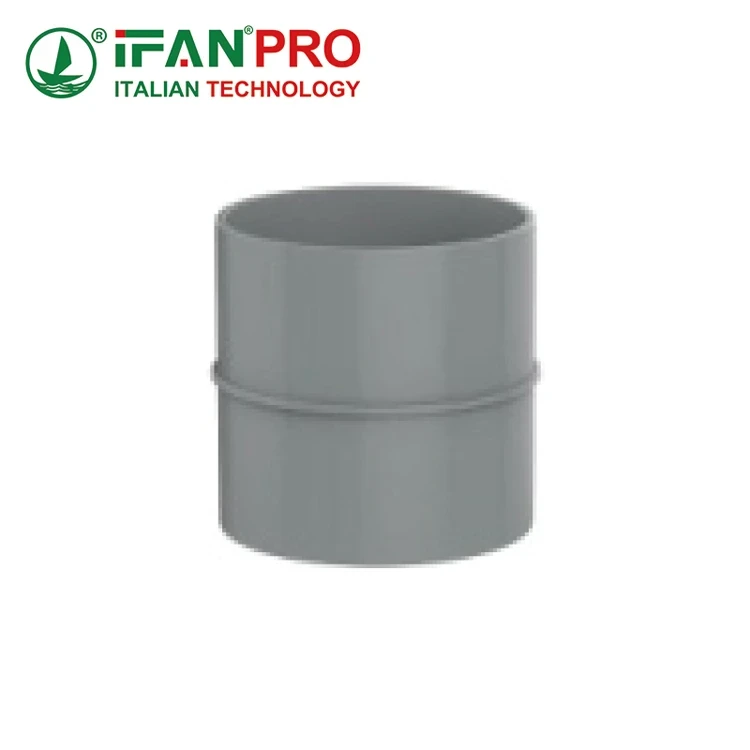
Threaded Connections: The Traditional Choice
Threaded connections are one of the oldest and most common methods. Workers cut matching spiral threads onto the ends of pipes and fittings. They then screw them together, often using a sealant tape or compound to prevent leaks.
This method is simple and requires no special tools beyond a thread cutter. However, it has downsides. Threading removes material from the pipe wall, which can make it weaker. It is also time-consuming for large projects and is not ideal for high-pressure applications because the threads can be a leak path. People commonly use it for small-diameter steel, stainless steel, and PVC pipes in low to medium-pressure water, gas, and oil lines.
Grooved Couplings: Fast and Flexible
The grooved method is faster and more reliable for many industrial uses. A worker rolls or cuts a groove near the end of the pipe. Then, a rubber gasket fits around the two pipe ends. A housing made of two pieces wraps over the gasket and bolts together. The gasket creates the seal, and the housing provides strength.
This system allows for some movement, which helps with thermal expansion and vibration. Installation is very quick, which saves on labor costs. It is excellent for fire protection systems, HVAC, and large water lines. But, it requires an initial investment in grooving tools.
Flanged Joints: For High Pressure and Easy Access
Flanged joints are the standard for high-pressure, large-diameter, or systems that need frequent disassembly. Workers weld or thread a flat, round flange to each pipe end. They then align the flanges and bolt them together with a gasket in between.
The main advantage is strength and ease of access. You can unbolt a section to replace a valve or clean the pipe without cutting. This makes flanges perfect for chemical processing, oil and gas, and major water treatment plants. The downside is that they take up more space and can be heavy and expensive.
Clamp Couplings: Simple and Effective
Clamp couplings, like Victaulic styles, are similar to grooved but even simpler for certain cases. They use a single, rolled stainless steel clamp that tightens around a special gasket. They install in minutes with just a wrench.
We often recommend them for temporary repairs, irrigation, or connecting different materials. They are not typically for the highest pressures but are very reliable for their intended uses.
Quick Comparison Table:
| Method | Best For | Pressure Rating | Ease of Installation | Need for Special Tools? |
|---|---|---|---|---|
| Threaded | Small dia., low-med. pressure | Medium | Slow | Yes (Threader) |
| Grooved | Large dia., HVAC, fire sprinklers | Medium-High | Very Fast | Yes (Groover) |
| Flanged | High pressure, frequent access | Very High | Slow/Medium | Yes (Weld/Bolt tools) |
| Clamped | Quick repairs, irrigation | Low-Medium | Very Fast | No (Just a wrench) |
Which pipe joining products are best for high-pressure applications?
A client once insisted on using standard couplings for a high-pressure steam line. The resulting failure confirmed that pressure rating is not a place to cut corners.
For high-pressure applications, forged steel flanged joints and buttweld fittings are the best and most reliable choices. Flanged joints allow for bolted, gasketed connections that can withstand extreme pressure and allow for component isolation. Buttweld fittings, where pipe ends are beveled and welded together, create a permanent, seamless connection that is as strong as the pipe itself.
Understanding Pressure Integrity
High-pressure systems, common in oil and gas, power generation, and chemical plants, demand joints with zero tolerance for failure. The goal is to create a connection that distributes stress evenly and has no inherent weak points.
Flanged joints excel here because their design spreads the clamping force from multiple bolts across a large gasket area. This creates a very tight, uniform seal. The materials matter greatly: forged steel flanges are superior to cast ones for high pressure because forging creates a denser, stronger grain structure. The gasket material also becomes critical, often moving from rubber to spiral-wound metal or ring-type joints for the most demanding services.
The Superiority of Buttweld Fittings
For the ultimate in pressure integrity, buttweld fittings are unmatched. In this method, the ends of pipes and fittings are cut at a precise angle (beveled). A welder then aligns and welds them, fusing the metal to create a continuous piece. There is no reduction in wall thickness (as with threading) and no separate sealing element that could fail.
This results in a smooth interior for good flow and a connection that is often stronger than the adjoining pipe. The downside is that it requires highly skilled certified welders, x-ray inspection, and the connection is permanent.
Key Selection Criteria for High-Pressure Joints
When selecting products for high pressure, you must look beyond just the “pressure rating” in a catalog. Consider these factors:
- Material and Manufacture: Always specify forged (not cast) components for critical service. Verify the material grade matches the pipe (e.g., ASTM A105, A182).
- Pressure-Temperature Rating: Each flange class (150, 300, 600, etc.) has a maximum working pressure at a given temperature. The pressure rating decreases as temperature rises. You must use the rating for your operating temperature.
- Seal Type: The gasket must be compatible with the fluid, pressure, and temperature. PTFE, graphite, and metal gaskets are common for high pressure.
- Standards Compliance: Products must meet strict standards like ASME B16.5 for flanges or B16.9 for buttweld fittings.
High-Pressure Joining Product Guide:
| Application | Recommended Product | Key Reason | Important Standard |
|---|---|---|---|
| Steam Lines (>200 PSI) | Forged Steel Flanges (Class 300+) | Handles thermal cycling and high pressure. | ASME B16.5 |
| Process Piping (Chemicals) | Buttweld Fittings + Welding | Creates leak-proof, corrosion-resistant joint. | ASME B16.9 / B31.3 |
| Hydraulic Systems | High-Pressure SAE Flanges/JIC Fittings | Designed for very high fluid power pressure spikes. | SAE J514 / J516 |
| Subsea/Oil & Gas | Specialty Flanges (RTJ, Weldneck) | Extreme pressure and environmental resistance. | ASME B16.5 / API 6A |
The core principle is that for high pressure, you invest in superior materials, robust design, and often, permanent welding. Choosing a cheaper, lower-class product is a major safety and financial risk.
How do you choose the right pipe coupling for different pipe materials?
Mixing the wrong coupling with a pipe material is a frequent source of leaks and corrosion. We’ve audited factories where galvanic corrosion from a mismatched coupling destroyed a line in months.
You choose the right pipe coupling by matching the coupling’s material to the pipe material to prevent corrosion, ensuring the joining method is suitable for the pipe’s wall thickness and strength, and selecting a design that accommodates the material’s thermal expansion and flexibility. Always consider chemical compatibility between the fluid, pipe, and coupling seal.
The Corrosion Compatibility Rule
The most critical rule is to avoid galvanic corrosion. When two different metals touch in the presence of an electrolyte (like water), one metal will corrode faster. This is disastrous for pipes.
For metal pipes, the safest approach is to use a coupling of the same material. Connect steel pipe with steel couplings. Connect stainless steel with stainless steel couplings. If you must connect different metals, use an insulating coupling or gasket that physically separates the two metals to break the electrical circuit. For non-metallic pipes like PVC or HDPE, this is not a concern, but the coupling’s liner or gasket must still be chemically compatible.
Matching Method to Material Strength
Different pipe materials have different strengths and weaknesses, and the joining method must respect this.
- Cast Iron: Brittle and thick-walled. Do not thread. Use flanged or grooved connections that don’t compromise its structure.
- PVC/CPVC: Can be threaded, but this creates thin, weak walls. For pressure, solvent welding (for permanent joints) or flanged adapters are better. Use gasketed couplings designed for plastic’s expansion.
- HDPE: Flexible and cannot be threaded. Use heat fusion for permanent joints or specially designed stainless steel clamp couplings with supportive inserts.
- Thin-Walled Stainless Steel: Threading weakens it. Grooved or clamped connections are often superior, preserving the thin wall.
Accounting for Thermal Movement
Materials expand and contract with temperature changes at different rates. A rigid coupling on a long run of PVC could crack it on a hot day. For materials with high expansion rates (like plastic), or in applications with large temperature swings, you need a coupling that allows movement.
Flexible couplings, expansion joints, or grooved systems with loose-grip housings are designed for this. They let the pipe slide slightly or flex without stressing the joint.
Selection Guide for Common Pipe Materials:
| Pipe Material | Recommended Coupling Type | Why It Works | What to Avoid |
|---|---|---|---|
| Carbon Steel | Threaded, Grooved, Flanged | Strong, versatile material suits all methods. | Using brass couplings in water systems (causes galvanic corrosion). |
| Stainless Steel | Grooved, Flanged, Buttweld | Preserves corrosion resistance; avoids iron contamination. | Carbon steel couplings (causes rust and pitting). |
| PVC/CPVC | Solvent-Weld, Flanged (with plastic adapter), Plastic-specific clamped. | Matches material & allows for expansion. | Standard metal threaded couplings (can over-crush and crack pipe). |
| HDPE | Heat Fusion, Electrofusion, or Stainless Steel Slip-On Couplings. | Works with flexibility; fusion creates monolithic joint. | Any method that requires threading. |
| Ductile Iron | Flanged, Grooved, MJ (Mechanical Joint). | Suits its weight and strength; gaskets seal well. | Threaded connections (not standard, weakens pipe). |
Always request a chemical compatibility chart from your supplier. It should show that the gasket (EPDM, Nitrile, Viton) is safe for your specific fluid, whether it’s water, oil, acid, or something else.
What standards ensure the quality and safety of pipe joining products?
We once prevented a major client loss by spotting a non-compliant coupling that lacked proper markings. Standards are your blueprint for safety.
Key standards that ensure quality and safety include ASME B16 for dimensional integrity and pressure-temperature ratings, ASTM for material composition and performance, and NSF/ANSI 61 for potable water safety. Compliance with these standards, verified through markings and certification documents, guarantees the product is fit for its intended service and reduces the risk of system failure.
Dimensional Standards: The Blueprint for Interchangeability
Imagine ordering a 2-inch flange from the US, Germany, and China, and finding they don’t bolt together. Dimensional standards prevent this chaos. The most important family is the ASME B16 series.
- ASME B16.5 covers pipe flanges and flanged fittings. It dictates the exact dimensions, bolt hole patterns, and face types. A Class 150, 2-inch, raised face flange from any certified manufacturer worldwide will mate perfectly.
- ASME B16.9 covers factory-made buttweld fittings (elbows, tees).
- ASME B16.11 covers forged steel socket weld and threaded fittings.
These standards ensure that components are interchangeable and will assemble correctly, which is fundamental for system integrity and global sourcing.
Material Standards: Defining Strength and Composition
A fitting marked “ASTM A105” is not just steel; it is a specific grade of carbon steel forging with defined chemical limits and mechanical properties. Material standards, primarily from ASTM International, tell you what the product is made of and its guaranteed strength.
- ASTM A105: Standard for carbon steel forgings for piping components.
- ASTM A182: Standard for forged or rolled alloy and stainless steel pipe flanges and fittings.
- ASTM A234: Standard for wrought carbon steel and alloy steel fittings of seamless and welded construction.
Using products that meet these standards means you know the yield strength, tensile strength, and hardness. This allows engineers to correctly calculate if the joint will survive the system’s pressure and stress.
Safety and Performance Certifications
For specific applications, third-party certifications are non-negotiable.
- NSF/ANSI 61: For any pipe, fitting, or gasket in contact with drinking water in North America. It certifies that the product does not leach harmful levels of contaminants. This is a legal requirement.
- UL Listing/FM Approval: Crucial for fire protection (sprinkler) systems. These certifications mean the product has been tested to perform reliably under fire conditions.
- API (American Petroleum Institute): Standards like API 6A are for wellhead and Christmas tree equipment in the oil & gas industry, covering extreme pressures and sour service.
How to Verify Compliance
As a buyer, you must demand proof. Look for:
- Markings: Legitimate products are permanently marked with the standard (e.g., B16.5), material grade (e.g., A105), pressure class, size, and manufacturer’s logo.
- Mill Test Reports (MTRs): Reputable suppliers like IFAN provide MTRs for metal products, which are lab reports from the steel mill confirming the chemical and mechanical properties of the batch.
- Certification Documents: For NSF, UL, or FM approved products, there must be a valid certificate number you can verify online.
Key Standards at a Glance:
| Standard / Certification | Governs | Why It Matters |
|---|---|---|
| ASME B16 Series | Dimensions of flanges, fittings, unions. | Ensures global interchangeability and proper fit. |
| ASTM A105, A182, etc. | Material composition and properties. | Guarantees the strength and chemistry of the metal. |
| NSF/ANSI 61 | Health effects of products in drinking water. | Legally required for potable water systems; ensures safety. |
| UL/FM | Performance in fire protection systems. | Insurance and code requirement for sprinkler systems. |
| API 6A | Wellhead and tree equipment. | Mandatory for safety and reliability in oil & gas extraction. |
Ignoring standards means gambling with system safety, performance, and regulatory approval. Always specify and purchase standardized, certified products.
Conclusion
Choosing the right pipe coupling requires understanding the method, pressure, material, and governing standards. For reliable, certified couplings that meet these needs, source your IFAN pipe joining products for a secure and efficient supply chain.






 English
  Français
  Русский
  Español
Recent Comments