
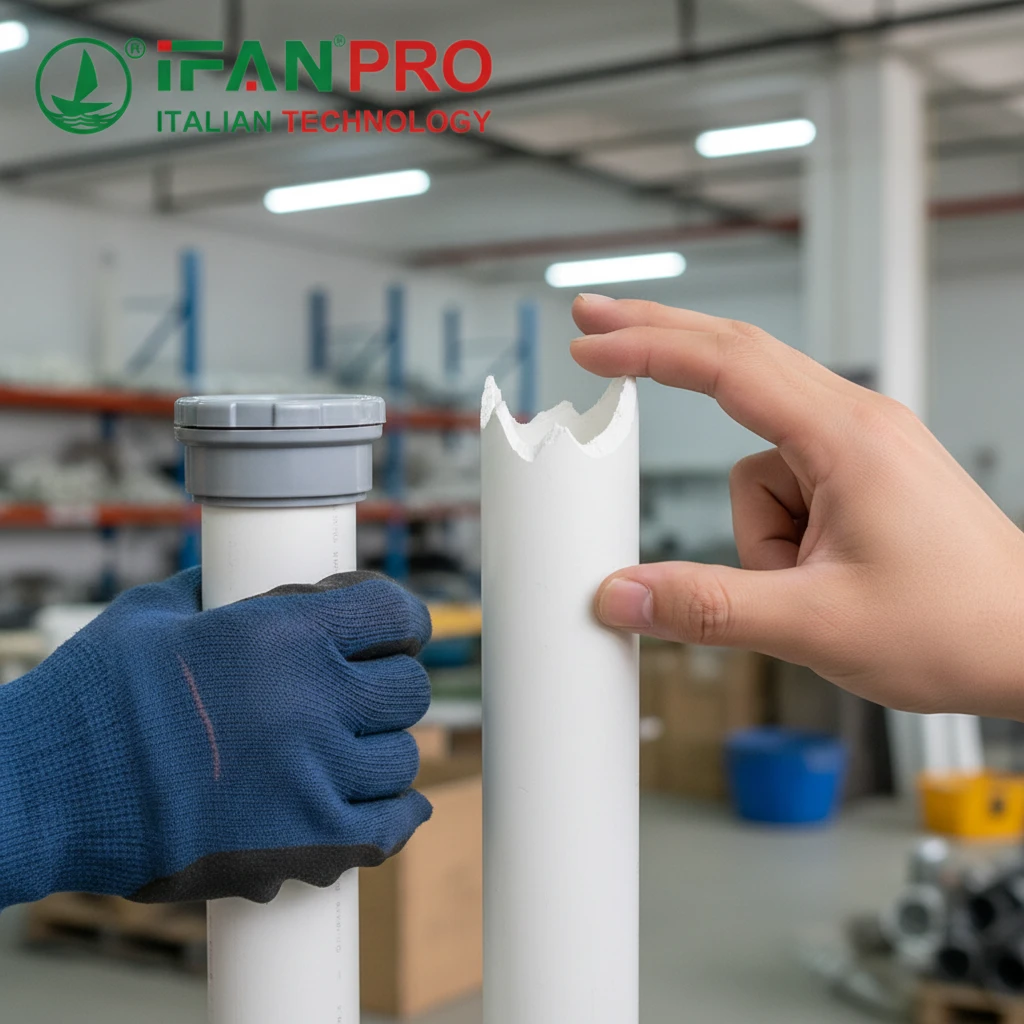
On a construction site, I once saw a worker get a nasty cut from a rough, exposed pipe end. That moment proved to me that even a small part like an end cap matters a lot for safety and project success.
Using an end cap on a PVC pipe provides essential protection, safety, and project management benefits. It shields pipe threads from damage, prevents debris and water from entering the pipeline during installation, eliminates injury risks from sharp edges, and allows for reliable pressure testing. This simple accessory is crucial for maintaining system integrity from the warehouse to final commissioning.
Let me break down the key reasons why this humble component is a must-have on any job site.
How Does a PVC End Cap Protect Pipe Threads from Damage and Contamination?
We receive countless pipes with damaged threads. This often happens because the threads were left exposed during storage or transport without a simple protective cap.
A PVC end cap protects pipe threads by physically covering them, preventing impacts that can crack or strip the plastic. It also acts as a barrier against dust, dirt, moisture, and concrete splatter, which can become lodged in the threads and compromise the seal of future connections, leading to leaks.
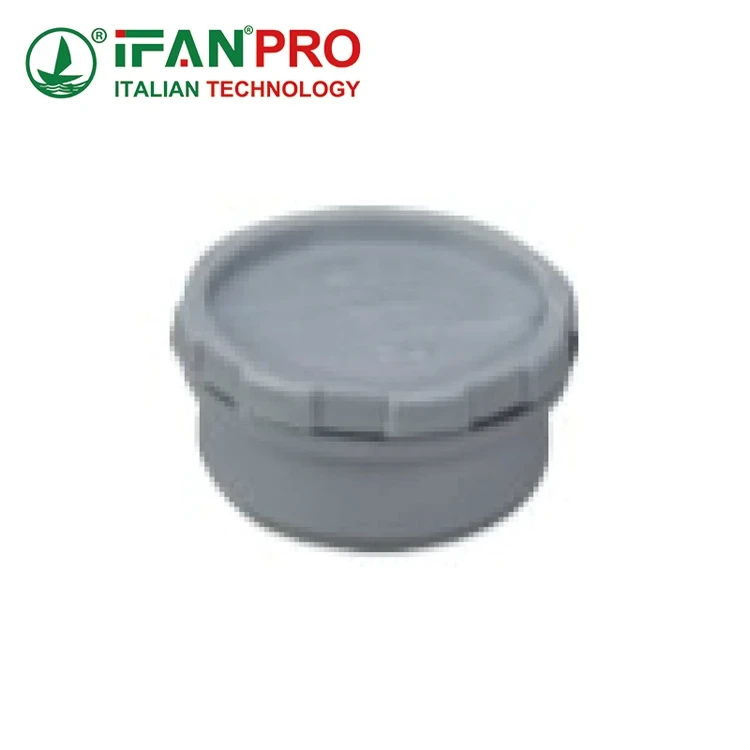
The High Cost of Damaged Threads
Think of pipe threads like the threads on a screw. If they are damaged, you cannot screw on a fitting properly. For PVC pipes, the threads are precision-molded into the pipe end. They are strong but can be brittle. If another pipe or tool hits them, they can easily crack or get pieces chipped off. Once damaged, the entire pipe section often becomes useless. You must cut it off and re-thread it, which wastes time and material. An end cap is a simple, cheap helmet for these vulnerable threads.
Keeping Contaminants Out
But protection isn’t just about physical hits. Contamination is a silent problem. On a construction site, dust is everywhere. If dirt gets into the threads, it can prevent the fitting from screwing on all the way. Even worse, moisture can lead to mold or mildew growth inside the pipe before it’s even used. During concrete pours, splash can get into open pipes and harden, making them completely blocked. An end cap seals this out.
A Practical Comparison: With vs. Without Cap
The table below shows the direct impact of using an end cap on thread condition.
| Scenario | Thread Condition After 2 Weeks on Site | Resulting Action Required |
|---|---|---|
| Pipe with End Cap | Clean, undamaged, ready for installation. | Remove cap and install fitting. |
| Pipe without End Cap | Dirty, possibly dented or cross-threaded from impacts. | Clean threads, attempt installation, often leading to leaks or the need to replace the pipe section. |
Best Practice from the Warehouse
The protection should start as soon as the pipes leave our factory. We always advise clients to specify that pipes are delivered with end caps on both threaded and unthreaded ends. It is the first step in a quality assurance chain. Before installation, the cap is removed, the threads are quickly inspected, and the fitting is attached. This ensures a perfect, leak-free connection every time. Ignoring this step risks leaks that are much more expensive and difficult to fix once the system is buried in a wall or underground.
Why Use a PVC End Cap to Prevent Debris Entry During Construction Pauses?
Projects often stop for days or weeks. I’ve seen pipes left open become homes for insects, trash, and rainwater, causing huge cleanup problems and delays.
You should use a PVC end cap during construction pauses to actively block the entry of dirt, rocks, rainwater, and animals. This prevents costly and time-consuming clean-out procedures later and ensures the pipe’s internal diameter remains clear for proper water flow and easy installation of downstream components.
The Unseen Problem of an Open Pipe
An open pipe on a construction site is like an open invitation. It doesn’t take long for problems to start. Wind blows leaves and dirt inside. Rain fills the pipe with water. Small animals or insects might crawl in and get stuck. Workers might even accidentally drop small tools or debris into them. At first, this might seem like a minor nuisance, but it has major consequences.
The Domino Effect of Debris
When work resumes, this debris causes a domino effect of issues. First, crews must spend time and labor cleaning out each pipe section. This often requires specialized flushing equipment or rods. If debris is not fully removed, it can travel down the line and clog valves, meters, or sprinkler heads. Second, standing water in pipes can accelerate the growth of bacteria or biofilm before the system is even filled with potable water. Third, debris can physically block the passage of pipe-cleaning pigs or inspection cameras later on.
Managing Multi-Phase Projects
In large projects, plumbing might be installed in Phase 1, but the final connections aren’t made until Phase 3, months later. Without end caps, those pipes are vulnerable the entire time. Using caps is a simple act of project management. It “mothballs” the installed sections, preserving your work and investment until you are ready to proceed. It turns an open, active problem into a closed, stored asset.
A Simple Checklist for Project Managers
Here is a simple routine to follow during any work pause:
| Action | Tool Required | Benefit |
|---|---|---|
| 1. Inspect | Visual check. | Identify all open pipe ends. |
| 2. Clean | Dry cloth or air blower. | Remove any loose surface dust from pipe end. |
| 3. Cap | Correct size PVC end cap. | Create a watertight and debris-proof seal. |
| 4. Record | Project log or tag. | Note which sections are sealed for the next team. |
This simple process, taking just minutes, can save days of remedial work. It keeps the project on schedule and within budget. For us at IFAN, supplying these caps is part of ensuring our clients’ projects run smoothly from start to finish.
How Does a PVC Pipe End Cap Enhance Safety on Exposed Pipe Ends?
Safety is our top priority. The sharp, rough edge of a cut PVC pipe can be as dangerous as a knife, especially at eye level or in tight spaces where workers move quickly.
A PVC pipe end cap enhances safety by covering the sharp, often rough-cut edge of the pipe. This eliminates the risk of lacerations to workers’ hands, arms, or faces. It also makes pipes easier and safer to handle during transport and installation, reducing the chance of accidental injury on the job site.
Understanding the Injury Risk
When a PVC pipe is cut, the edge is rarely perfectly smooth. It often has small burrs and sharp points. These edges are not always obvious, but they can easily cut skin or tear gloves. In busy, crowded work areas where people are carrying materials and tools, an exposed pipe end at waist or face level is a real hazard. A simple brush against it can result in a deep cut. End caps solve this by providing a smooth, rounded, and impact-resistant cover.
Beyond Cuts: Other Safety Benefits
The safety benefits go beyond just preventing cuts. First, a capped pipe end is more visible, especially if you use brightly colored caps. This makes pipes more obvious in dimly lit areas, preventing workers from tripping over them or walking into them. Second, caps can prevent eye injuries. During pressure testing or if a pressurized pipe accidentally bursts, a capped end contains the direction of any debris or water spray much better than an open end, protecting anyone standing in front of it.
Legal and Site Compliance
Many modern construction sites have strict safety protocols that mandate the capping of all exposed pipe ends. It is a visible sign of good housekeeping and proactive hazard management. Using end caps helps contractors comply with OSHA (Occupational Safety and Health Administration) and other local safety regulations regarding “guarding against sharp edges” and maintaining a safe work environment. Failure to do so can result in safety violations, work stoppages, and increased liability.
Creating a Culture of Safety
Providing end caps and enforcing their use is part of creating a strong safety culture. It shows workers that management cares about their well-being in a very practical way. It turns a potential hazard into a controlled item. When safety is built into the process with simple solutions like this, it reduces accidents, lowers insurance costs, and keeps the project team healthy and productive.
Safety Gear Comparison
Think of an end cap as essential personal protective equipment (PPE) for the pipe itself.
| Hazard | Without End Cap | With End Cap |
|---|---|---|
| Laceration Risk | High. Exposed sharp edge. | Eliminated. Smooth, covered edge. |
| Tripping/Puncture Hazard | Moderate. Pipe end can snag. | Reduced. More visible and blunt. |
| Containment during Failure | None. Open path for debris. | Improved. Cap helps contain spray. |
| Site Safety Audit | Likely a violation. | Demonstrates proactive compliance. |
In short, the small cost of an end cap is insignificant compared to the cost of a single workplace injury, a safety fine, or a delayed project. It is one of the easiest and most effective safety investments you can make.
What Makes PVC End Caps Ideal for Temporary Sealing in Testing Phases?
Before a system goes live, it must be tested. We’ve learned that using the right temporary seal is the difference between a quick, confident test and a frustrating, leak-chasing exercise.
PVC end caps are ideal for temporary sealing during testing because they are lightweight, easy to install and remove, and provide a pressure-tight seal at a very low cost. They allow plumbers to isolate specific sections, test for leaks reliably, and then be removed without damaging the pipe ends, unlike permanent adhesives or complicated plugs.
The Role of Testing in Plumbing
Pressure testing is a critical step. It proves that all the joints and fittings in a newly installed system are sound and leak-free before walls are closed up or trenches are backfilled. For this test, you need to temporarily seal all the open ends of the pipeline to build up pressure inside. The temporary seal must be absolutely reliable; if it leaks, you waste time searching for a “leak” that isn’t in your permanent plumbing.
Why End Caps Excel in This Role
PVC end caps are the perfect tool for this job. First, they install in seconds—simply glue them on with standard PVC cement just as you would a normal fitting. This creates a strong, solvent-welded joint that can withstand high test pressures. Second, after the test is complete, they are easy to remove. A plumber simply cuts the pipe just behind the cap. This removes the capped section and leaves a fresh, clean pipe end ready for its final connection. This is much faster and cleaner than trying to remove a threaded plug or break a glued permanent fitting.
Flexibility for Different Test Scenarios
Different tests require different setups. End caps provide this flexibility.
- Sectional Testing: You can cap off branches to test the main line first, then move the caps to test the branches. This helps pinpoint problems in large systems.
- Air vs. Water Test: They work equally well for both air and water pressure tests.
- Future-Proofing: If a final connection (like to a municipal line or a piece of equipment) isn’t ready, the pipe can be capped and pressure-tested independently. The cap stays on as a permanent protective seal until the final connection is made.
Step-by-Step Testing Procedure with End Caps
Here is a reliable process for using end caps in pressure testing:
| Step | Action | Purpose |
|---|---|---|
| 1. Install Caps | Solvent-weld end caps onto all open terminations. | Create a sealed, pressurized vessel. |
| 2. Install Test Port | Install a dedicated test tee with a valve and pressure gauge. | Allow for filling and pressure monitoring. |
| 3. Pressurize | Fill system with water or air to 1.5x normal operating pressure. | Stress the joints to reveal leaks. |
| 4. Monitor | Hold pressure for a set time (e.g., 2 hours). Check gauge for drops. | Confirm system integrity. |
| 5. Drain & Cut | Drain system and cut off end caps. | Prepare for final connections. |
This method is clean, reliable, and leaves no room for error from inadequate temporary seals. For contractors, it means passing inspections on the first try and avoiding costly call-backs. For us at IFAN, supplying these test caps ensures our clients can validate their installation work with confidence.
Conclusion
PVC end caps are essential for protecting threads, keeping pipes clean, ensuring worker safety, and enabling reliable pressure tests. For high-quality, reliable PVC pipe end caps in all standard sizes, trust IFAN to support your project from start to finish.









 English
  Français
  Русский
  Español
Recent Comments