
Choosing to wholesale PEX pipe from China puts you in front of a real advantage and a real trap at the same time. The factories that supply half the world’s cross-linked polyethylene tubing sit within a few hundred kilometers of each other, and their price and capacity are hard to beat. The catch: two containers of pipe that look identical on a photo can differ by 15% in wall thickness and by the entire question of whether the resin was virgin or reground. That gap is where importers lose money, warranty claims, and market approvals.
This guide is written for the importer or wholesaler who has already decided PEX is the product and now needs to buy it correctly. It covers grade and spec selection, the certifications to demand before a deposit leaves your account, how to separate a real factory from a trading company, MOQ and pricing logic, and the physical checks that catch recycled or thin-wall pipe before it loads. For the fundamentals of the material itself, see our complete guide to PEX pipe. Everything below assumes you want pipe that passes inspection in your own market, not just pipe that arrives.
Key Takeaways
- Match the certification scope to each SKU, not to the factory name; a WRAS or NSF listing typically covers specific sizes and formulations only.
- Wall thickness drives both price and safety; a 5–15% cut in wall is the most common way a low quote hides regrind or under-spec pipe.
- Typical PEX MOQs run around 3,000–5,000 meters per size, though a mixed 20ft container is often negotiable with real factories.
- Confirm the seller’s business license name matches the sales contract and the bank account; a mismatch usually signals a trading company.
- Ask for a batch cross-linking (gel content) certificate and a temperature-rated pressure test report tied to your production run, not a generic sample.
- Lead times for a first PEX order typically fall in the 25–45 day range depending on volume, printing, and season; treat any figure as approximate.
- Order paid samples from the exact line before the deposit; virgin-resin PEX should be uniform in color with no burnt or sour smell.
Why Buyers Source PEX from China — and the Real Risk
The reason to wholesale PEX pipe from China is not a mystery: concentrated extrusion capacity, resin sourced at scale, and factory-direct pricing that a domestic distributor cannot match on volume orders. A buyer moving full containers routinely sees landed costs 20–40% below local wholesale, and that spread is what funds the margin. Capacity is deep enough that a serious factory can run several sizes in parallel and hold stock, so repeat orders do not restart the clock from zero.
The risk sits underneath that same price. The three failures that hurt importers are recycled resin blended into the compound, wall thickness shaved below the dimension standard, and certificates that exist but do not cover the SKU you actually shipped. Picture a distributor who buys 40,000 meters at a quote 12% under everyone else. The pipe arrives, sells, and six months later a batch fails a pressure test on a job site. The cross-linking was low, the gel content never met ASTM, and the “WRAS certificate” turned out to cover a different size and a different resin grade. Now the importer owns the warranty exposure, not the factory.
A quote that undercuts the market by more than roughly 10–15% is rarely a better deal. It usually reflects a lower resin cost, and the only ways to lower resin cost are to add regrind or to reduce wall thickness. Both are invisible in a product photo.
Which PEX Grade and Spec to Order
Grade is the first decision and it is market-driven, not preference-driven. PEX-a is made by the peroxide (Engel) method and has the highest cross-linking with shape memory, which appeals to plumbers who use expansion fittings; it commands a premium and dominates parts of the North American market. PEX-b is silane-cross-linked, the workhorse for cost-sensitive potable and radiant projects worldwide, and typically the volume grade for importers. PEX-c is electron-beam cross-linked and sits between the two. Before you commit, read our breakdown of PEX-a vs PEX-b vs PEX-c so the grade matches what your customers actually install.
CTS versus metric sizing
Ordering the wrong sizing convention is a quiet way to lose a container’s worth of sellable stock. North American plumbing runs on CTS (copper tube size) in fractional inches: 1/2″, 3/4″, 1″. Europe, the Middle East, and much of Asia run metric outside diameter: 16, 20, 25, 32 mm. A 1/2″ CTS pipe and a 16 mm pipe are close but not interchangeable at the fitting. Specify the convention in writing, and confirm the factory’s tooling produces that dimension natively rather than an approximation.
Pressure rating and oxygen barrier
Pressure class matters because it maps to wall thickness and temperature rating. Confirm the SDR or PN class and the rated service temperature; potable-hot and radiant-heating duty are not the same load case. For any closed-loop heating system, order pipe with an EVOH oxygen barrier (often printed as PE-RT/PEX with oxygen diffusion barrier per DIN 4726) to protect steel boiler components from corrosion. Selling barrier pipe as non-barrier, or the reverse, generates returns. State the barrier requirement per SKU on the purchase order.
Certifications to Demand Before You Pay
Certification is where the wholesale PEX transaction is won or lost, because a certificate is only as good as its scope. A listing typically names specific sizes, a resin grade, and a factory line; pipe outside that scope is not covered even if it comes from the same building. Ask for the certificate number and verify it directly with the issuing body rather than trusting a PDF. Which marks you need depends on the destination and on your role as importer, so confirm the current requirement with the local authority or certification body before you rely on any single mark.
| Certification | Primary market | What it typically proves |
|---|---|---|
| WRAS | UK and WRAS-recognizing markets | Material safe for contact with potable water |
| NSF/ANSI 61 & 14 | USA and Canada | Health effects and product performance to standard |
| CE / EN ISO 15875 | European Economic Area | Conformity with the PEX product standard |
| WaterMark | Australia and New Zealand | Fitness for plumbing use under AS/NZS rules |
The insider move is to request a certificate-to-SKU map: a short table from the factory listing each pipe you plan to order against the exact certificate number and its covered size range. If a size you want is missing from any listing, treat that as an uncertified item until proven otherwise. Our note on the certifications importers must verify walks through what potable-water approval actually tests. For the drinking-water health-effects criteria behind these marks, the NSF and WRAS bodies publish their scopes publicly.
How to Vet a PEX Factory, Not a Trading Company
A large share of “factories” on sourcing platforms are trading companies that buy from whichever plant offers the lowest price that week. That is a problem because it breaks the chain of accountability: your certificates, your resin spec, and your wall thickness can all change between orders without your knowledge. Buying from the actual manufacturer keeps one license, one line, and one QC team behind your product. Use this checklist before wiring anything.
- Business license versus invoice name: the manufacturer’s registered name should match the sales contract and the receiving bank account. A third name on the invoice usually means a middleman.
- Ask for the production scope on the business license; a genuine pipe maker lists plastic pipe manufacturing, not “wholesale and import/export” only.
- Request a live video factory tour of the extrusion lines and the QC lab, or commission a third-party audit (SGS, BV, or Intertek) before the first large order.
- Demand paid samples from the running production line, not a hand-picked showcase coil, and hold them against your own market’s spec.
- Ask for recent third-party test reports with dates inside the last 12 months; expired or undated reports are a warning sign.
A trading company will often refuse a video walk of the extrusion floor and instead send stock footage. A manufacturer that owns its lines will usually put a phone in front of a running machine within a day. That single test filters most intermediaries.
For a worked example of buying straight from the plant, see our note on factory-direct sourcing, which shows how the paperwork and samples line up on a real fittings order.
MOQ, Pricing, and Lead Times
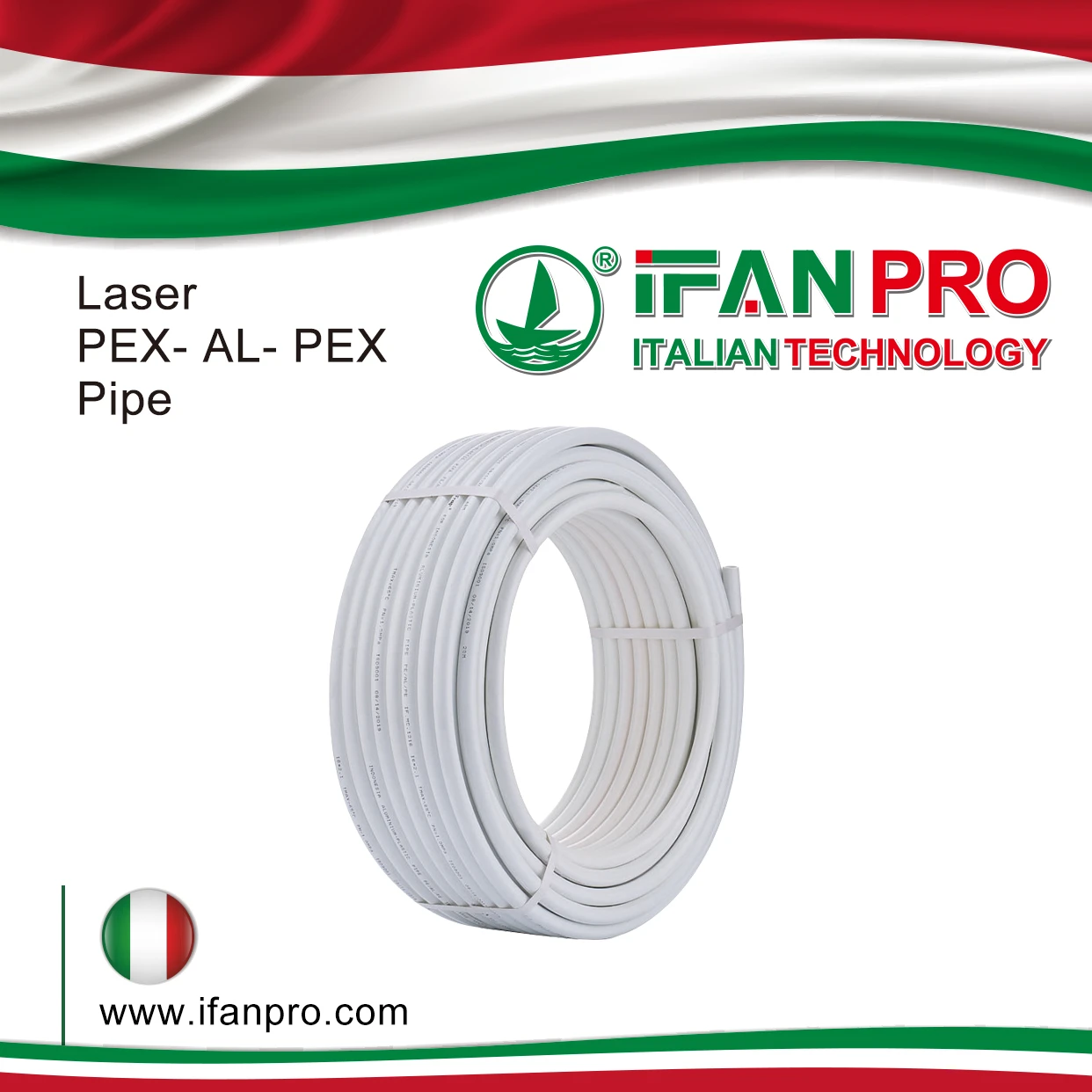
MOQ on PEX is set by extrusion economics: a line has to run long enough to stabilize dimensions and color, so tiny orders are uneconomical. Typical minimums land around 3,000–5,000 meters per size, though a real factory can usually combine several sizes into one mixed 20ft container to help a first-time buyer test the market. These figures are approximate and shift with resin prices, color, and print requirements, so treat every number below as a range to confirm on your own quote.
| Factor | Typical range | Why it moves |
|---|---|---|
| MOQ per size | ~3,000–5,000 m | Line setup and color/print changeover |
| Mixed container | Often negotiable | Factories bundle sizes for new buyers |
| Price driver: resin | ~60–70% of cost | Virgin vs regrind, grade of PE-Xb resin |
| Price driver: wall | Direct multiplier | Thicker wall means more resin per meter |
| Lead time | ~25–45 days | Volume, custom print, and season |
Read a quote for what it does not say. If one supplier is far cheaper, ask two questions on the record: what percentage of virgin resin is in the compound, and what is the minimum wall thickness the line guarantees on this SDR. The answers, in writing, are worth more than the price. Custom print (your brand, size, and standard on the pipe) usually adds a few days and a plate charge but rarely changes the per-meter cost much.
Spotting Recycled or Thin-Wall Pipe Before It Ships
This is the section that saves the order. Recycled resin and shaved walls are the two defects that pass a casual look and fail on a job site, so build the checks into your pre-shipment inspection rather than trusting the first coil. The material standard behind proper dimensions and pressure rating is ASTM F876, and the Plastics Pipe Institute publishes the engineering rationale for wall and rating; cite them when you set acceptance criteria.
- Caliper photos: require the inspector to measure wall thickness at four points around the pipe on several coils and photograph the caliper reading. Ovality and thin spots show up here first.
- Cross-linking (gel content) certificate: PEX-b should typically test above roughly 65% gel content per the standard. Low cross-linking is the fingerprint of a cheap compound.
- Burst and sustained-pressure test: ask for a report run at the rated temperature, not just room temperature. Regrind fails hot-pressure long before it fails cold.
- Visual and smell signs: virgin PEX is uniform in color with a clean surface. Gray specks, uneven pigment, brittle offcuts, or a sour or burnt smell point to reground material.
The most common thin-wall trick is legal-looking. The pipe meets outside diameter and prints the correct standard, but the wall runs at the very bottom of tolerance or just under it. A caliper at the port catches it; a glance at a photo never will. Make wall measurement a contractual inspection point, not a courtesy.
Logistics: Incoterms, Packaging, and Container Loading
Incoterms decide who owns the risk and the paperwork, and the right choice depends on your customs experience. FOB puts the pipe on the vessel and hands you the freight and import clearance; it suits buyers with a forwarder they trust. CIF adds sea freight and insurance to the seller’s job, useful for a first order. DDP puts the goods at your door with duties handled, which simplifies life but bundles costs you cannot always audit; the exact duty and clearance treatment depends on your market and your role as importer, so confirm the landed math with your broker before you accept a DDP number.
Packaging and loading
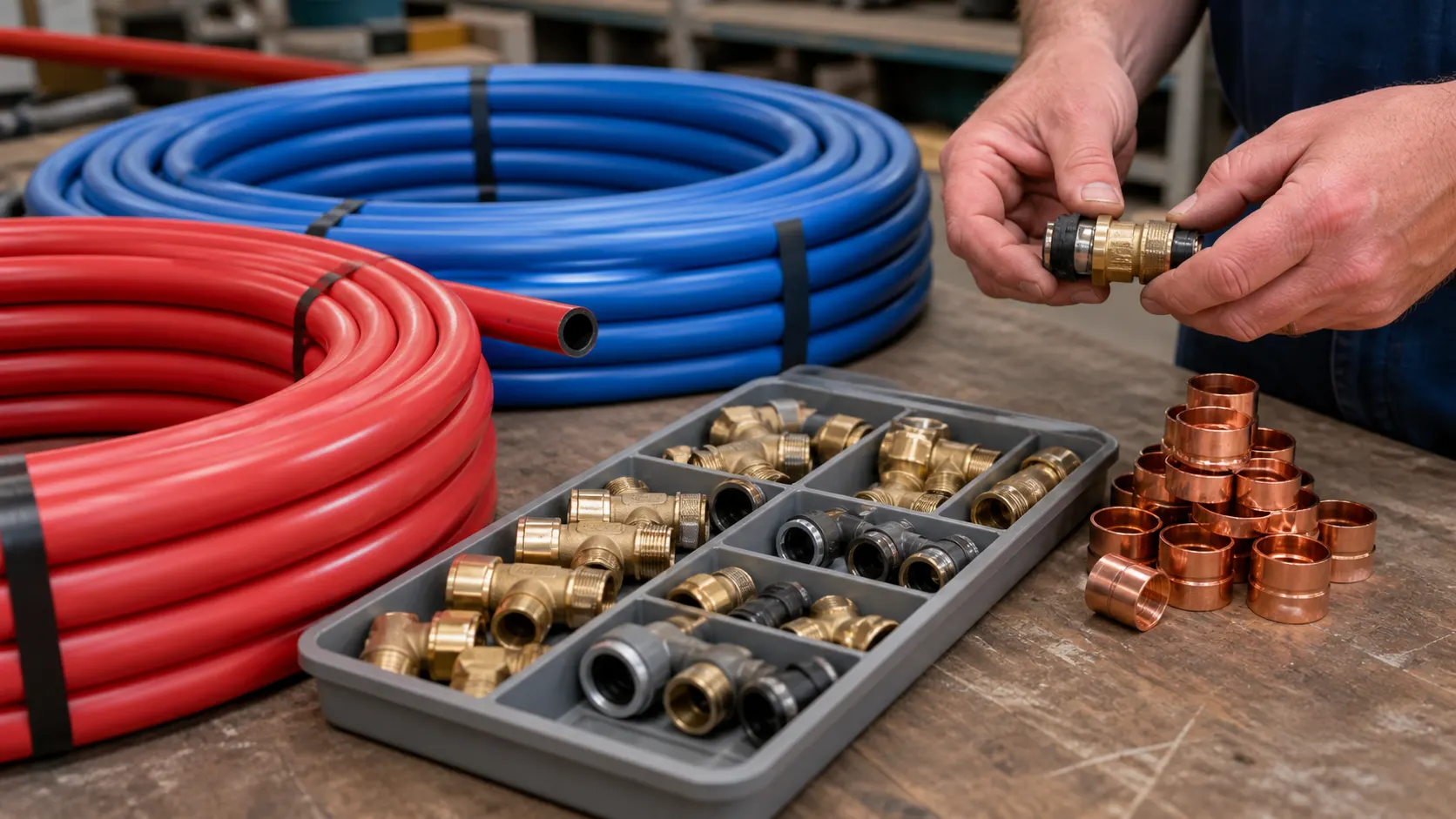
PEX ships as coils, and coil packaging protects both the pipe and your resale presentation. Specify coil length, whether coils are shrink-wrapped and boxed or bundled, and whether ends are capped to keep debris out. Loose coils rub and scuff in transit; boxed coils survive stacking. For container loading, coils should be stacked and braced so the load does not shift, and heavier boxed goods go on the bottom. A well-loaded 20ft or 40ft container avoids the crushed-coil claims that eat a first-order margin.
What We Check Before PEX Ships
At IFANPRO we treat these checks as the release gate, not a paperwork formality, because our name prints on the pipe and travels to 200+ countries. Our process is documented and repeated on every batch, and we share the records with the buyer as part of the shipment.
- We pull a batch cross-linking (gel content) certificate for each production run so the degree of cross-linking is tied to your order, not a generic sample.
- We run a temperature-rated pressure test at the pipe’s service class, not only a room-temperature check, and issue the report.
- We measure wall thickness and ovality with a caliper across the run and record the readings against the SDR tolerance.
- We map each certificate scope to the exact SKU shipped, so a WRAS, NSF, CE, or WaterMark listing actually covers the sizes on the packing list.
- We use virgin resin with a proper stabilizer package and keep no regrind in potable-line production, and we back that with our ISO 9001 and ISO 14001 systems.
Conclusion
Sourcing PEX from China rewards the buyer who checks the wall, the resin, and the certificate scope, and punishes the one who buys on price alone. Pick the grade your market installs, buy from the factory that owns the line, and make caliper and cross-linking data a contractual release point. Do that and the cost advantage becomes real margin instead of future warranty claims.
If you are ready to price a container or request samples from a running line, send us your target sizes, standards, and destination market, and you will get a certificate-to-SKU map alongside the quote.
Frequently Asked Questions
What is the typical MOQ to wholesale PEX pipe from China?
Minimums typically run around 3,000–5,000 meters per size, though a real factory can often combine several sizes into one mixed container for a first order. Treat any figure as approximate and confirm on your quote.
How do I know the PEX is not made from recycled resin?
Ask for a batch gel-content certificate, a hot-pressure test report, and caliper wall photos at inspection. Virgin PEX is uniform in color with no gray specks or sour smell; regrind usually shows both.
Which certifications do I need for my market?
It depends on destination and your role as importer: WRAS in the UK, NSF in the US and Canada, CE in Europe, WaterMark in Australia. Confirm the current requirement with the local authority or certification body.
How can I tell a factory from a trading company?
Check that the business license name matches the contract and bank account, ask for a live video tour of the extrusion lines, and confirm the license lists pipe manufacturing rather than only trading.
What is a realistic lead time for a first PEX order?
Lead times typically fall in a 25–45 day range depending on volume, custom printing, and season. Custom brand print usually adds a few days and a plate charge; treat all figures as approximate.







 English
  Français
  Русский
  Español
Recent Comments