
I once watched a client pay 40% above market rate because he unknowingly bought from a trading company posing as a factory. That costly mistake taught me the importance of finding the real source.
To wholesale high-quality PPR gate valves at factory-direct prices, you need to identify legitimate manufacturers, understand their volume requirements, verify quality systematically, and build long-term partnerships. This approach eliminates middlemen, secures better pricing, and ensures consistent product quality for your customers.
Let me walk you through the exact process we use at IFAN to help clients source successfully.
How do you identify manufacturers that offer true factory-direct pricing without middlemen?
The biggest challenge buyers face is distinguishing real factories from intermediaries. I’ve seen many clients pay premium prices thinking they were buying direct.
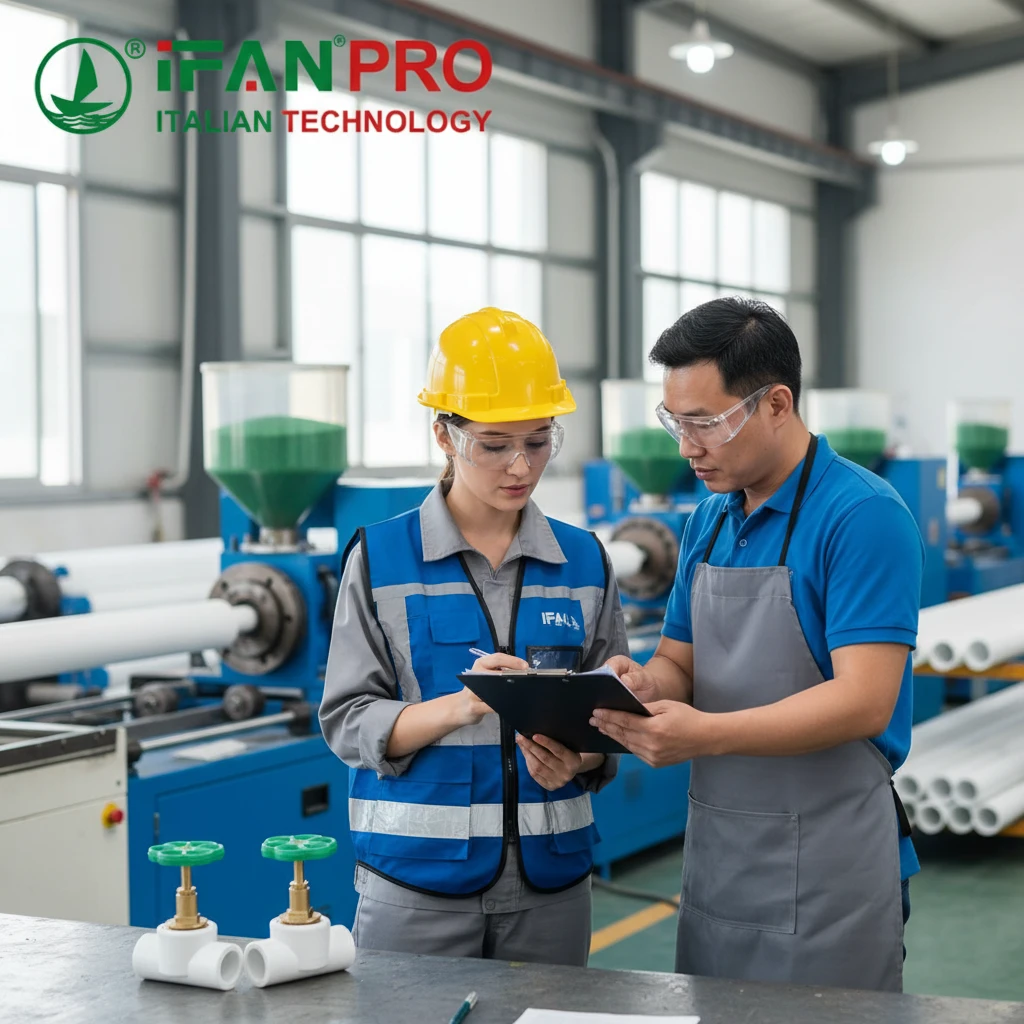
You can identify true factory-direct manufacturers by verifying business licenses, requesting factory visit evidence, checking export documentation history, and asking specific technical questions only genuine producers can answer. Also, look for manufacturers who own their tooling and raw material inventory, as trading companies typically don’t hold these assets.
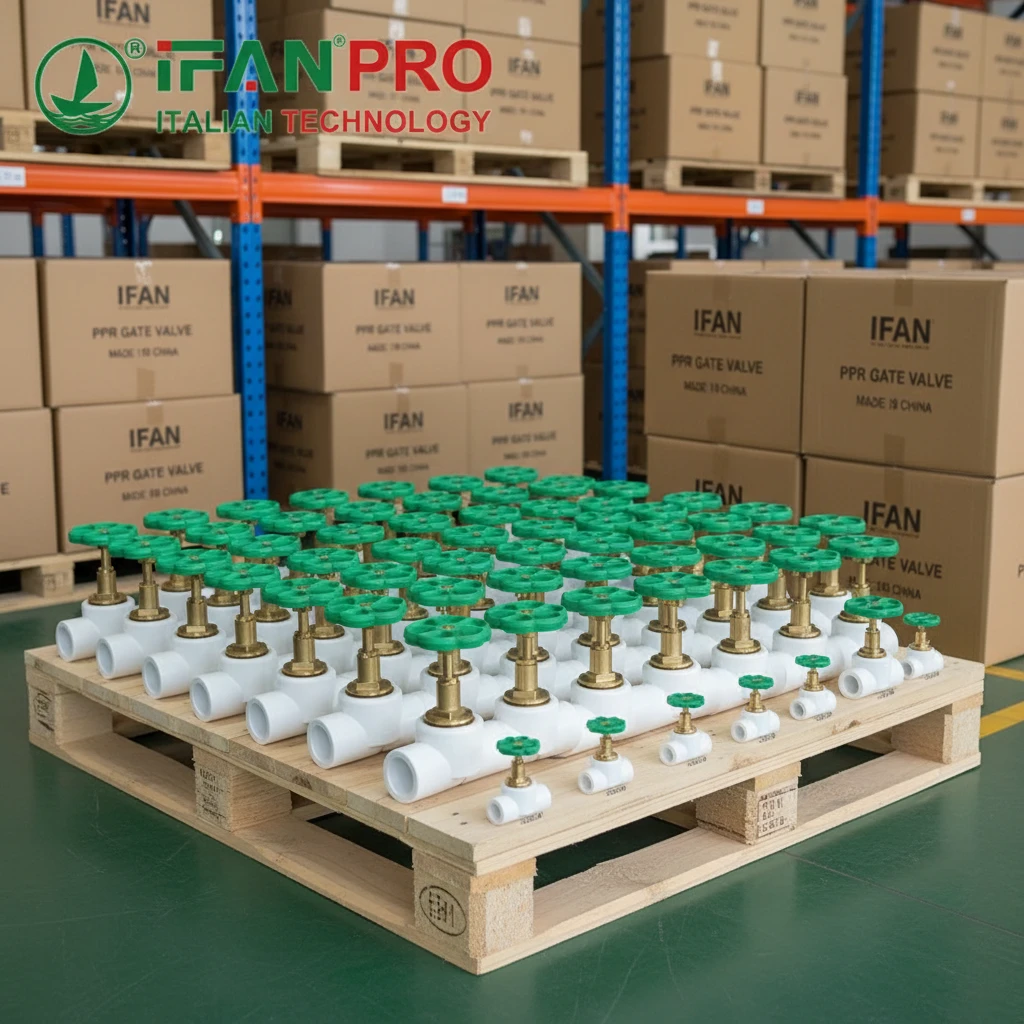
The Red Flags That Signal a Middleman
Let me share some practical signs that indicate you’re dealing with a trading company rather than a real factory.
First, trading companies often have very broad product catalogs. A genuine PPR gate valve manufacturer specializes in this product category. If a supplier offers everything from plumbing fittings to electronics and textiles, they’re almost certainly a trading company.
Second, pay attention to how they answer technical questions. Real factory representatives can discuss material specifications, mold details, and production processes in depth. They know their machines and their capabilities. Trading companies give vague answers or take time to “check with the factory.”
Third, check their communication patterns. Trading companies often respond outside normal business hours because they’re coordinating with multiple factories. They might also use generic email signatures without specific department names.
What to Look for in a Real Manufacturer
Here are concrete things to verify when evaluating potential suppliers:
| Verification Method | What to Look For | Why It Matters |
|---|---|---|
| Business License | “Manufacturing” in the registered scope, not just “trading” or “sales” | Legal proof they’re authorized to produce |
| Factory Photos/Videos | Current photos with workers, machinery, and raw materials | Shows actual production capability |
| Product Certifications | Certificates in the manufacturer’s name, not a third party’s | Confirms they passed the audits themselves |
| Sample Quality | Consistent dimensions, clean finishing, proper packaging | Reflects their production standards |
| MOQ Flexibility | Real factories often accept smaller trial orders | Trading companies push for larger quantities |
The IFAN Approach to Verification
At IFAN, we’ve developed a systematic verification process over years of serving global clients. We don’t just take a supplier’s word for it. We conduct physical audits, check their raw material purchase records, and verify their export history with customs data when possible.
This matters because when you find a genuine manufacturer, you eliminate the 15-30% markup that trading companies add. For a container of PPR gate valves, that saving is substantial.
What volume commitments are typically required to secure wholesale pricing tiers?
Volume requirements often confuse first-time buyers. I’ve had clients worry they can’t meet MOQs, only to discover they qualified for better pricing than they thought.
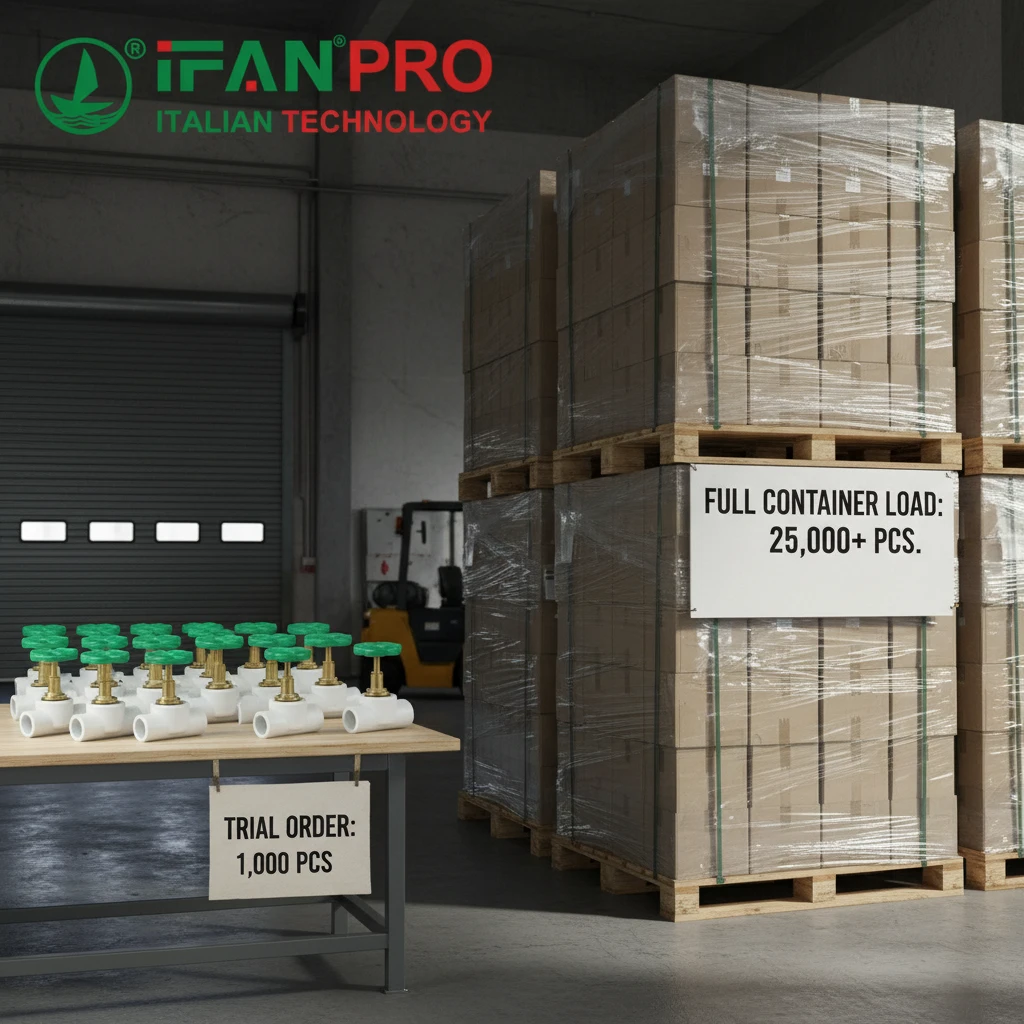
Wholesale pricing tiers for PPR gate valves typically start at trial order levels of 500-1000 pieces, with significant price breaks at 5,000, 10,000, and container-load quantities (20,000+ pieces). However, many manufacturers offer flexible entry points for serious buyers who demonstrate growth potential.
Understanding the Pricing Structure
Let me break down how manufacturers typically structure their wholesale pricing. This knowledge helps you negotiate better terms.
Tier 1: Sample Orders (1-50 pieces)
At this level, you pay the highest per-unit price. Manufacturers use this to cover setup costs and verify you’re a serious buyer. Expect to pay 30-50% above wholesale prices here.
Tier 2: Trial Orders (500-1,000 pieces)
This is where wholesale pricing begins. Manufacturers will run a production batch for you. The price drops significantly because they can set up machines efficiently for this quantity.
Tier 3: Standard Wholesale (5,000-10,000 pieces)
This tier gives you the best balance of volume and price. Manufacturers schedule dedicated production time, and you benefit from economies of scale in material purchasing.
Tier 4: Container Orders (20,000+ pieces)
This is the highest tier, with maximum discounts. Manufacturers prioritize these orders and often offer additional benefits like customized packaging or extended payment terms.
Typical Wholesale Pricing Breakdown
The table below shows approximate pricing tiers based on our industry experience:
| Order Quantity | Price Per Unit (Index) | Typical Discount from Sample Price |
|---|---|---|
| Sample (1-50 pcs) | 100 (baseline) | 0% |
| Trial (500-1,000 pcs) | 70-80 | 20-30% off |
| Standard Wholesale (5,000 pcs) | 55-65 | 35-45% off |
| Full Container (20,000+ pcs) | 45-55 | 45-55% off |
Negotiation Tips for Better Pricing
Based on IFAN’s experience working with hundreds of buyers, here are practical tips for securing better volume pricing:
Start with a clear forecast. If you show a manufacturer your projected annual volume, they’re more likely to offer tiered pricing from the first order. They want long-term partners.
Combine products in one container. Mixing different valve sizes or related fittings helps you reach container quantity faster while maintaining variety for your customers.
Consider seasonal ordering. Manufacturers have slow periods. Ordering during these times can sometimes get you better pricing even below standard tier levels.
Ask about material efficiency. PPR gate valves use raw materials efficiently at certain quantities. Understanding their production runs helps you align your orders with their optimal batch sizes.
How can you verify product quality matches the samples before bulk ordering?
Sample approval is exciting, but the real test comes with mass production. I’ve seen too many buyers receive bulk orders that didn’t match their samples.
You can verify bulk quality matches samples by implementing a three-stage inspection process: during production (to catch issues early), before shipment (using AQL standards), and upon arrival (comparing samples to bulk goods). Additionally, request videos of production runs and random samples from different points in the production cycle.
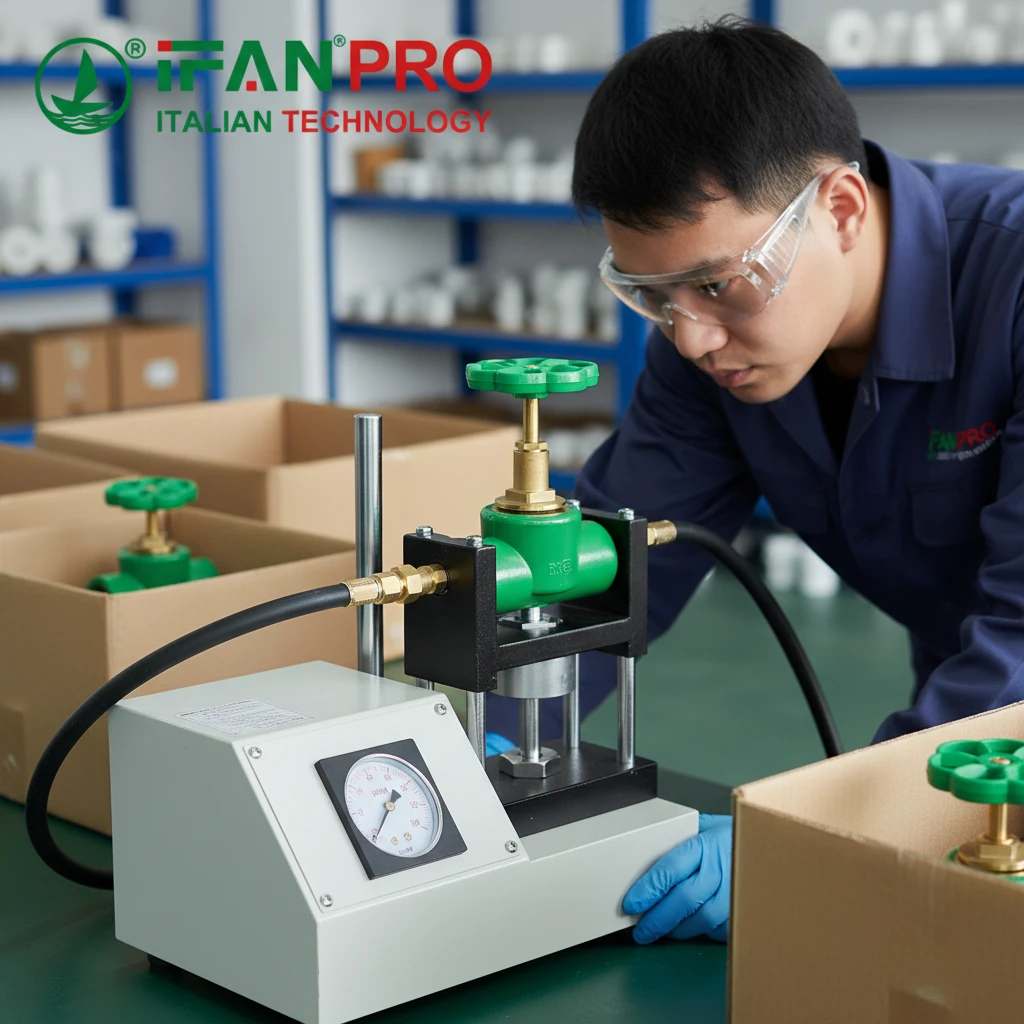
The Three-Stage Inspection Approach
Let me explain the inspection system we’ve refined at IFAN over years of quality control work.
Stage 1: During Production Inspection (DPI)
This happens when 20-30% of your order is complete. An inspector visits the factory to check:
- Raw material consistency (are they using the same virgin material as your sample?)
- Machine settings and production parameters
- Early production pieces for dimensional accuracy
- Visual appearance and finishing quality
Catching issues at this stage allows corrections before the entire order runs. It saves time and prevents rejections.
Stage 2: Pre-Shipment Inspection (PSI)
When 80-100% of the order is ready, we conduct a final inspection following international standards. This includes:
| Check Point | What We Verify | Acceptance Standard |
|---|---|---|
| Dimensional Accuracy | Critical measurements against your sample | Within specified tolerances |
| Visual Appearance | No scratches, bubbles, or contamination | AQL 1.0 or better |
| Function Test | Valve operation, sealing performance | 100% functional |
| Packaging | Carton strength, labeling accuracy | No damage, correct marks |
| Quantity | Exact count verification | 100% accuracy |
Stage 3: Comparison Testing
After receiving the bulk order, compare random pieces to your original sample. Check:
- Weight (significant differences indicate material changes)
- Color consistency
- Thread quality (if applicable)
- Pressure test performance
Common Quality Issues and How to Prevent Them
Based on our experience, here are frequent problems and solutions:
Issue 1: Material Substitution
Some factories switch to recycled material after sample approval.
Solution: Specify virgin material in your contract and conduct random material testing.
Issue 2: Dimensional Drift
Over long production runs, dimensions can shift slightly.
Solution: Request in-process dimensional checks every 2-3 hours during production.
Issue 3: Packaging Damage
Poor packaging leads to damaged goods during shipping.
Solution: Specify packaging requirements clearly and inspect during PSI.
The IFAN Quality Assurance Process
When clients work with us through IFAN, we handle all these verification steps. We’ve built relationships with testing laboratories and employ trained inspectors who understand PPR gate valve specifications. This systematic approach ensures that what you approve in samples arrives in your container.
Why is building a long-term relationship key to maintaining factory-direct benefits?
Many buyers treat each order as a separate transaction. They miss the real value of partnership. I’ve watched clients who built strong relationships get priority treatment during shortages and better terms over time.
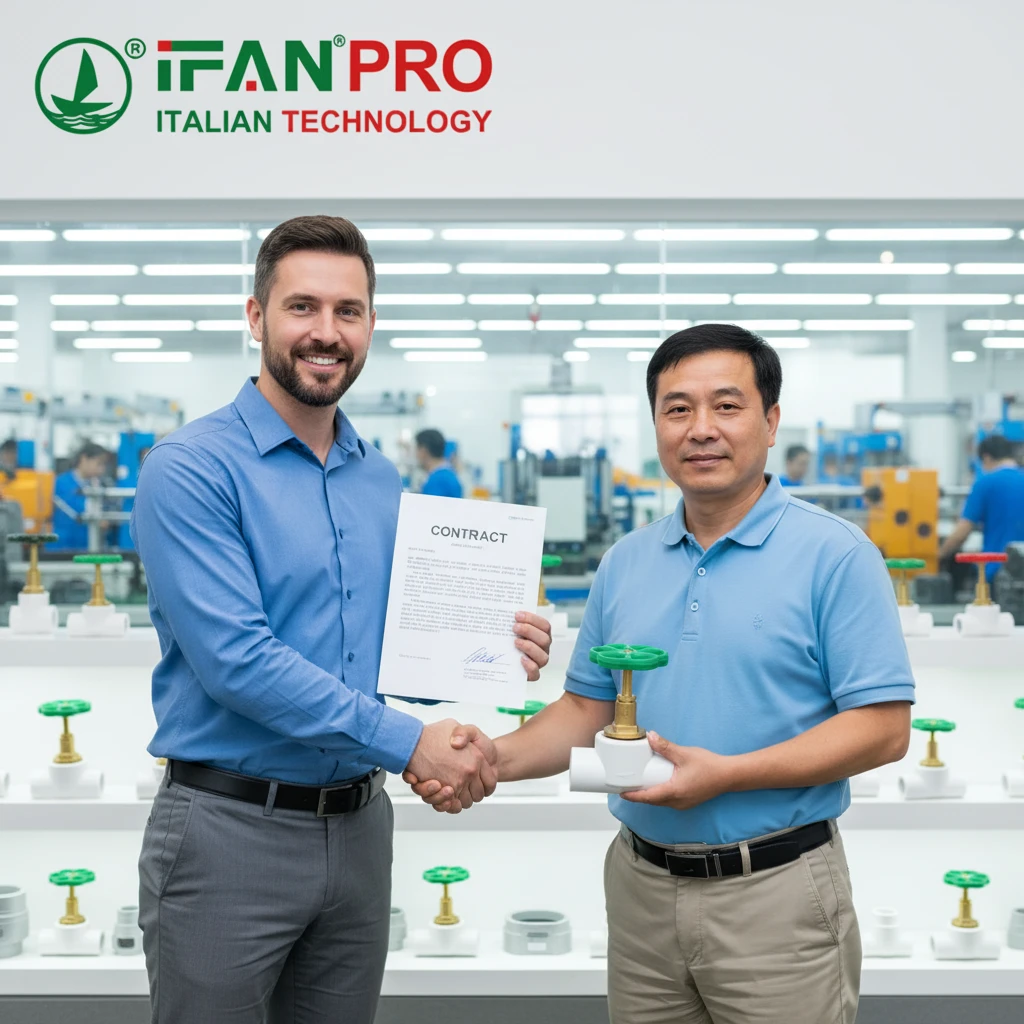
Building a long-term relationship with your factory partner ensures consistent quality, priority production scheduling, access to new products first, and better payment terms. It also means the manufacturer invests more in your success because they see you as a partner, not just another order number.
The Real Benefits of Partnership
Let me share what long-term relationships actually deliver, based on IFAN’s decade of experience connecting buyers with manufacturers.
Priority During Supply Crunches
When raw material shortages hit or demand spikes, manufacturers allocate limited production capacity to their best customers first. If you’re a regular, reliable buyer, you get your orders while others wait months.
Better Payment Terms
New buyers typically pay 30-50% deposits with balance before shipment. Long-term partners often secure 20% deposits, LC terms, or even net-30 payment after shipment. This improves your cash flow significantly.
Product Development Access
Manufacturers test new designs and improvements with trusted partners. You might get exclusive access to innovative products before competitors even know they exist.
Problem Resolution Speed
When issues arise (and they sometimes do), manufacturers prioritize solving problems for long-term partners. They absorb costs and find solutions rather than arguing about responsibility.
How to Build and Maintain Strong Relationships
Based on what works for IFAN’s most successful clients, here’s practical advice:
| Action | Why It Helps | How to Do It |
|---|---|---|
| Communicate Regularly | Builds personal connection beyond transactions | Monthly check-ins, share market updates |
| Pay on Time | Builds trust and financial reliability | Set up automatic payments, plan ahead |
| Visit When Possible | Strengthens personal bonds | Schedule factory visits, meet the team |
| Share Feedback | Helps them improve for you | Be specific about what works and what doesn’t |
| Grow Together | Shows commitment | Share your growth plans, ask for theirs |
Common Relationship Mistakes to Avoid
I’ve seen buyers damage good relationships with these behaviors:
Shopping every order. Constantly switching suppliers for small price differences signals you’re not committed. You lose all the long-term benefits.
Not communicating issues. Problems hidden until the next order create distrust. Address concerns immediately and professionally.
Unrealistic demands. Asking for impossible deadlines or prices strains the relationship. Be reasonable and transparent about your needs.
The IFAN Approach to Partnerships
At IFAN, we don’t just find factories for clients. We help build the relationship infrastructure. We facilitate communication, handle quality consistency, and ensure both sides understand each other’s needs and constraints. This is why our clients maintain relationships for years, not months.
When you treat a factory as a partner, they treat your business as their priority. That’s the real secret to maintaining factory-direct benefits over the long term.
Conclusion
Sourcing PPR gate valves at factory-direct prices requires identifying real manufacturers, understanding volume tiers, verifying quality systematically, and building lasting partnerships. For reliable sourcing with verified quality, consider IFAN’s comprehensive supply chain services for your valve requirements.










 English
  Français
  Русский
  Español
Recent Comments